Your insurance company's adjuster works for their bottom line, not your recovery. When you're standing in a flooded living room or a smoke-damaged office, the last thing you need is a lowball offer and a thick stack of confusing policy documents. Most property owners feel overwhelmed by the technical requirements of a claim and worry that they're leaving money on the table. Understanding what is a public adjuster is the first step toward regaining control of your recovery process.
You need a licensed advocate who understands the intricacies of fire, water, and storm damage claims. This article clarifies the role of these professionals and how they represent your interests against the carrier. We'll examine the specific ways an adjuster documents your loss, interprets your policy limits, and manages the communication with your insurer. You'll learn how to leverage professional expertise to pursue a settlement that reflects the true cost of your property repairs.
Key Takeaways
- Discover what is a public adjuster and why they're the only professionals legally authorized to represent your interests as a policyholder during a claim.
- Distinguish between staff adjusters who work for the insurance company and public adjusters who work exclusively for you.
- Learn how a thorough physical inspection and a detailed Proof of Loss statement can help identify the full extent of property damage.
- Identify the specific scenarios, such as fire or structural collapse, where professional advocacy is necessary to address underpaid or denied claims.
- Understand the contingency fee model that ensures you pay no fees unless a settlement is successfully obtained for your property damage.
Defining the Role of a Licensed Public Adjuster
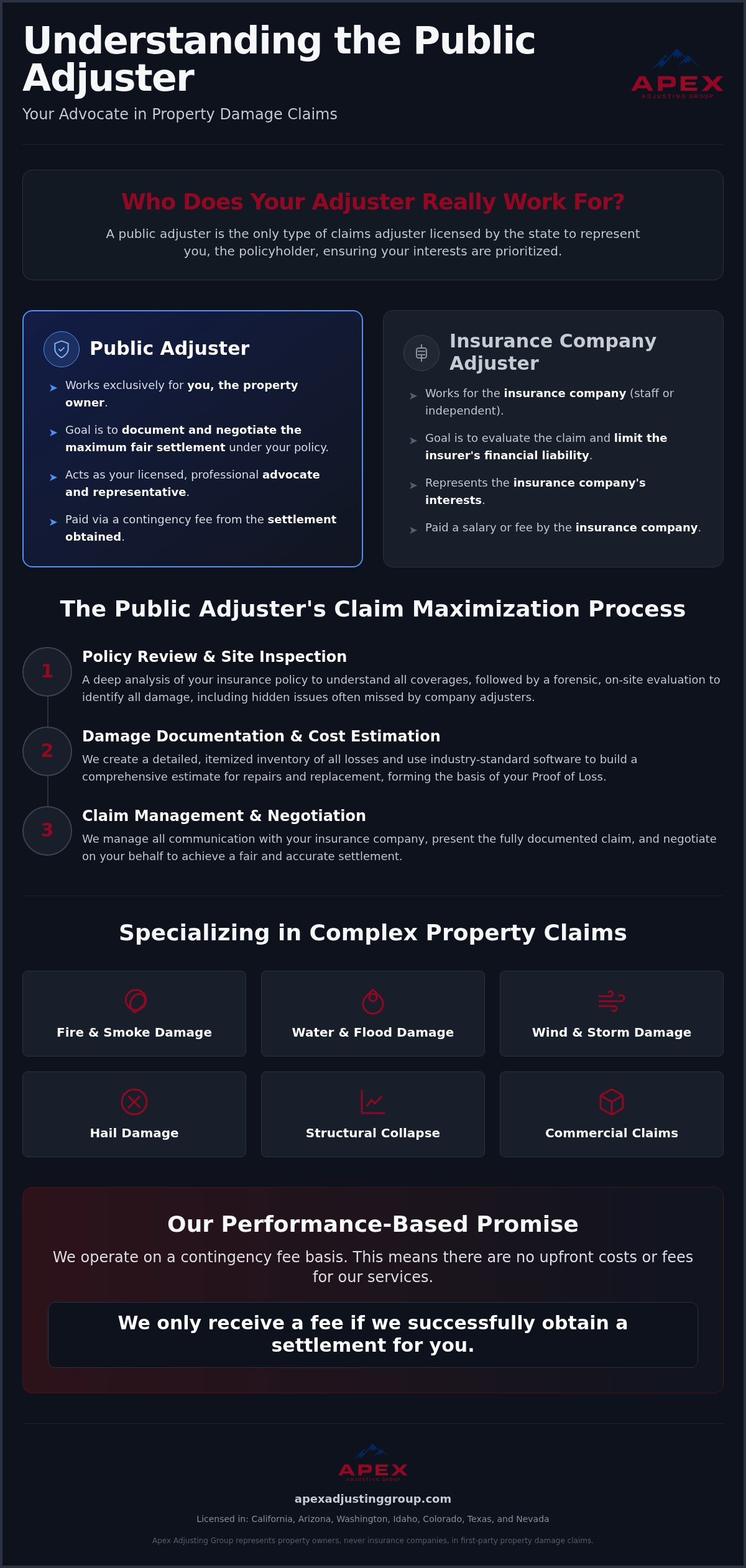
A Public adjuster is a licensed professional who works exclusively for property owners, never for insurance companies. They are the only type of adjuster legally authorized to represent the policyholder's interests during a claim. Their role focuses on the preparation, filing, and negotiation of first-party property damage claims to ensure you receive a fair settlement. Understanding what is a public adjuster helps you recognize that you don't have to face the carrier's technical experts alone. A public adjuster serves as a dedicated advocate for the policyholder, ensuring that the insurance system remains balanced and fair throughout the claims process.
These professionals act as your private representative. They don't just look at damage; they quantify it using industry-standard software and expert analysis. While the carrier’s adjuster looks for ways to limit the company's liability, a public adjuster looks for every valid point of recovery under your specific policy. They handle the heavy lifting of documentation so you can focus on your daily life or business operations.
Licensed Advocacy for Policyholders
Licensing isn't just a formality. Public adjusters must meet rigorous state-specific requirements and maintain professional standards through continuing education and bonding. This specialized training allows them to act as a steady hand for owners in Los Angeles, Phoenix, and Seattle. Their primary goal is to ensure the claim is settled fairly according to your specific policy provisions.
They understand that an insurance policy is a complex legal contract. By hiring a licensed expert, you ensure that someone who understands the fine print is fighting for your rights. This advocacy is crucial when carriers use confusing language to delay or underpay active claims. You gain a professional partner who knows the rules of the game and won't be intimidated by the insurer's size.
Scope of First-Party Property Claims
The expertise of a public adjuster covers a broad range of losses. They handle complex residential and commercial property claims with the same level of technical precision. Whether you're dealing with a family home or a large industrial warehouse, they focus on maximizing the recovery of your assets. When you ask what is a public adjuster, remember that they are technical specialists who bridge the gap between the damage you see and the financial recovery you need.
They specialize in identifying damage from fire, smoke, water, and earthquakes. Their scope of work typically includes:
- Analyzing structural integrity issues and identifying hidden damage.
- Managing personal property valuation and inventory documentation.
- Calculating business interruption losses for commercial entities.
- Securing additional living expenses (ALE) for displaced homeowners.
They don't just file paperwork. They build a comprehensive case for your recovery. This level of thoroughness is often the difference between a settlement that barely covers the basics and one that allows for a full restoration of your property.
The Public Adjuster's Process for Maximizing Claims
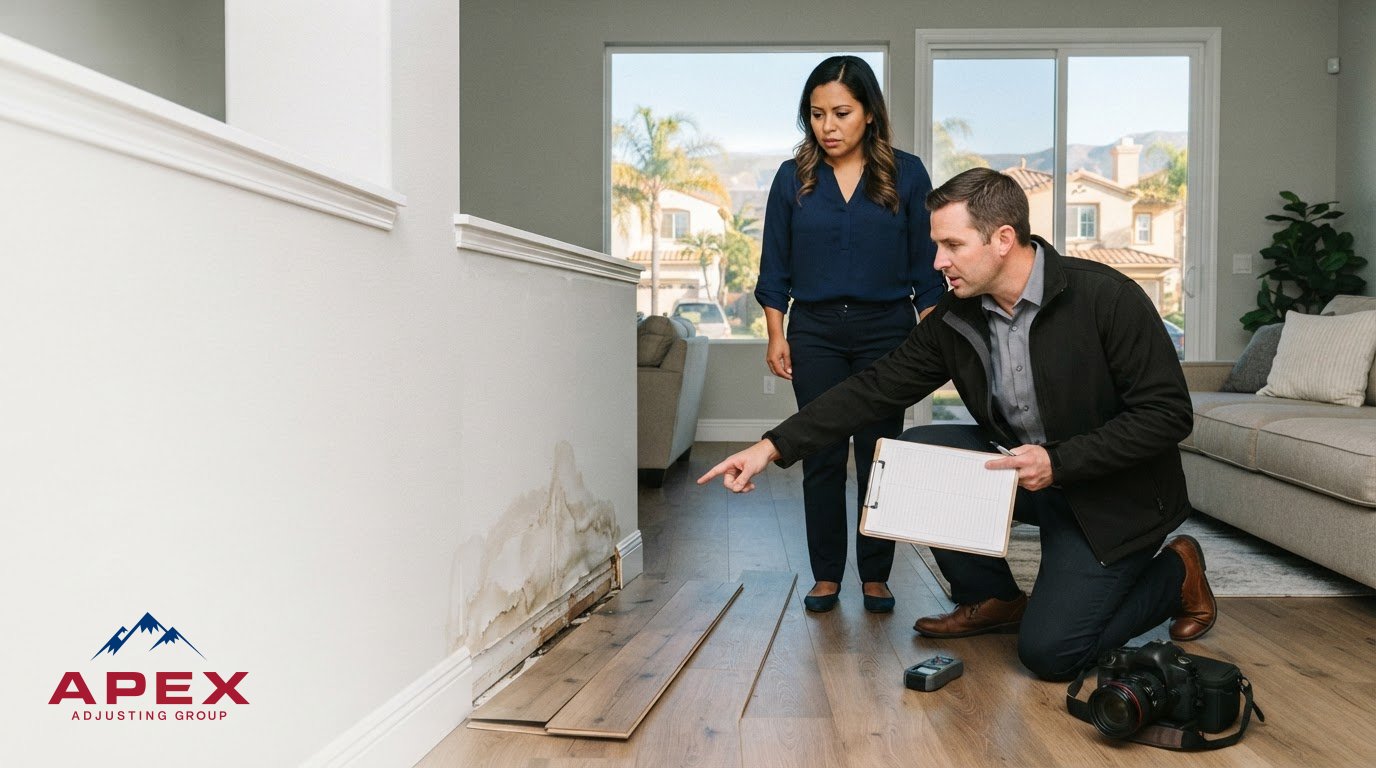
The technical process begins with a comprehensive site inspection. A public adjuster doesn't rely on the carrier's visual assessment; they conduct a forensic evaluation of the property. This includes identifying hidden smoke, soot, and structural damage that often goes unnoticed by staff adjusters. By documenting every category of loss, they ensure the claim file is built on a foundation of facts. This meticulous approach is central to understanding what is a public adjuster and why they're essential for complex claims.
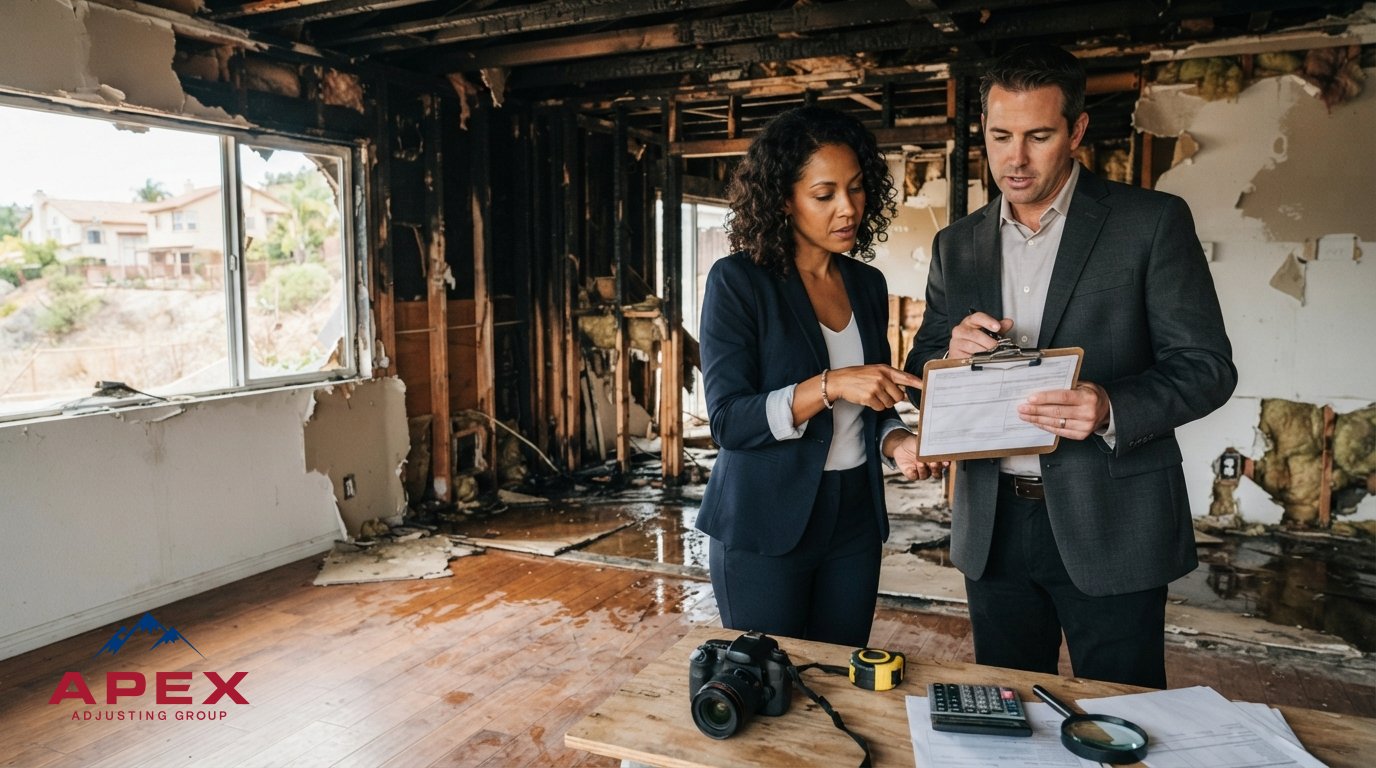
They create a detailed Proof of Loss statement supported by expert estimates and line-item documentation. By managing all communication with the insurance company, the adjuster prevents common filing errors that lead to delays. If you're unsure about the technical requirements of your filing, a professional claim evaluation can identify where your documentation may be lacking.
Documenting Damage and Estimating Costs
Expert documentation is the primary weapon in a property claim. Public adjusters compile a comprehensive list of damaged items, including structural components and personal property. They utilize industry-standard estimating software to determine the current Replacement Cost Value (RCV) of your loss. This ensures the estimate reflects local labor rates and material costs rather than generic national averages.
Every detail is photographed and logged to build a fact-based file. This level of evidence makes it harder for the carrier to justify an underpayment or a denial based on lack of proof. Knowing when to hire a public adjuster often depends on the scale of the damage and the complexity of the documentation required. For extensive fire or water damage, professional logs are indispensable.
Interpreting Complex Policy Provisions
Policy language is notoriously dense and difficult for most property owners to navigate. A public adjuster analyzes exclusions, endorsements, and limits that directly affect your final settlement. They explain the critical difference between Actual Cash Value (ACV), which includes depreciation, and Replacement Cost. This clarity helps you understand exactly what the carrier owes for your specific repairs.
They also ensure the policyholder meets all contractual duties. This includes the duty to mitigate further damage, such as tarping a roof or drying out a flooded basement. Failure to follow these provisions can lead to a claim denial. By managing these technical requirements, the adjuster protects your rights and keeps the carrier accountable to the terms of the policy.
Public Adjuster vs. Insurance Company Adjuster
Most property owners assume the adjuster sent by the insurance company is there to help them. This is a common misconception. There are three distinct types of adjusters in the industry, and their loyalties couldn't be more different. Staff adjusters are direct employees of the insurance carrier. Independent adjusters are third-party contractors hired by the carrier, often during catastrophes to process high volumes of claims quickly. Understanding what is a public adjuster means recognizing the need for an advocate who isn't beholden to the insurer's profit margins.
While staff adjusters look for ways to limit liability, public adjusters look for ways to maximize coverage.
The Company Adjuster’s Fiduciary Duty
Staff adjusters owe their fiduciary duty to the company that signs their paycheck. Their performance is often measured by how strictly they adhere to internal company protocols that prioritize cost-saving measures. This doesn't mean they're dishonest, but their perspective is inherently biased toward the insurer's financial interests. They don't have the time or the incentive to find every penny you're owed under the policy.
As a result, they may overlook non-obvious damages like smoke particles trapped in HVAC systems or subtle structural weakening from water intrusion. Their assessment is merely the carrier's opening offer; it's rarely the final word on what your claim is actually worth. If you rely solely on their inspection, you risk accepting a settlement that fails to cover the true scope of your property damage.
The Public Adjuster’s Role as Your Representative
Public adjusters are the only professionals focused exclusively on the policyholder's financial recovery. They act as a fierce champion for the owner, challenging insufficient offers with forensic evidence and itemized estimates. Organizations like the National Association of Public Insurance Adjusters emphasize that these professionals provide the technical expertise needed to level the playing field against large insurance corporations. They don't let the carrier dictate the terms of your recovery.
When you ask what is a public adjuster, you're looking for a partner who provides the technical expertise to challenge the carrier's findings. They represent your voice in every meeting and every email. For a deeper look at the financial impact of this advocacy, see our Public Adjuster vs. Insurance Adjuster comparison. This professional representation ensures that every provision in your policy is utilized to support your recovery, rather than being used as a tool to limit your payout.
Identifying When to Hire a Professional for Your Claim
Property owners often wait too long to seek professional help, leaving their recovery to chance. If your claim involves complex damage like structural collapse or extensive fire damage, the technical burden is too high for a layperson to manage effectively. Hiring an expert is a strategic move when the insurance company offers a settlement that doesn't cover the actual cost of repairs. Professional advocacy is a necessity for large commercial losses where business interruption complexities can stall your recovery for months.
Don't assume the carrier's first offer is the limit of your policy. If the claim process is delayed or your adjuster is unresponsive, a professional can often force the file forward by providing the technical proof the carrier requires. You need a representative who understands the timeline and the documentation hurdles that carriers use to slow down payments.
Signs Your Claim Is Underpaid or Delayed
Carriers often deny coverage for specific damage categories without providing a clear technical explanation. If their offer fails to match the line-item estimates from your local contractors, it's a clear sign of underpayment. Use the When to Hire a Public Adjuster Checklist to identify red flags in your claim file. An unresponsive insurer or a stalled timeline are internal triggers that suggest your file has been deprioritized. Understanding what is a public adjuster allows you to bring in a professional who can challenge these delays with expertise.
Complex Losses: Fire, Water, and Earthquake
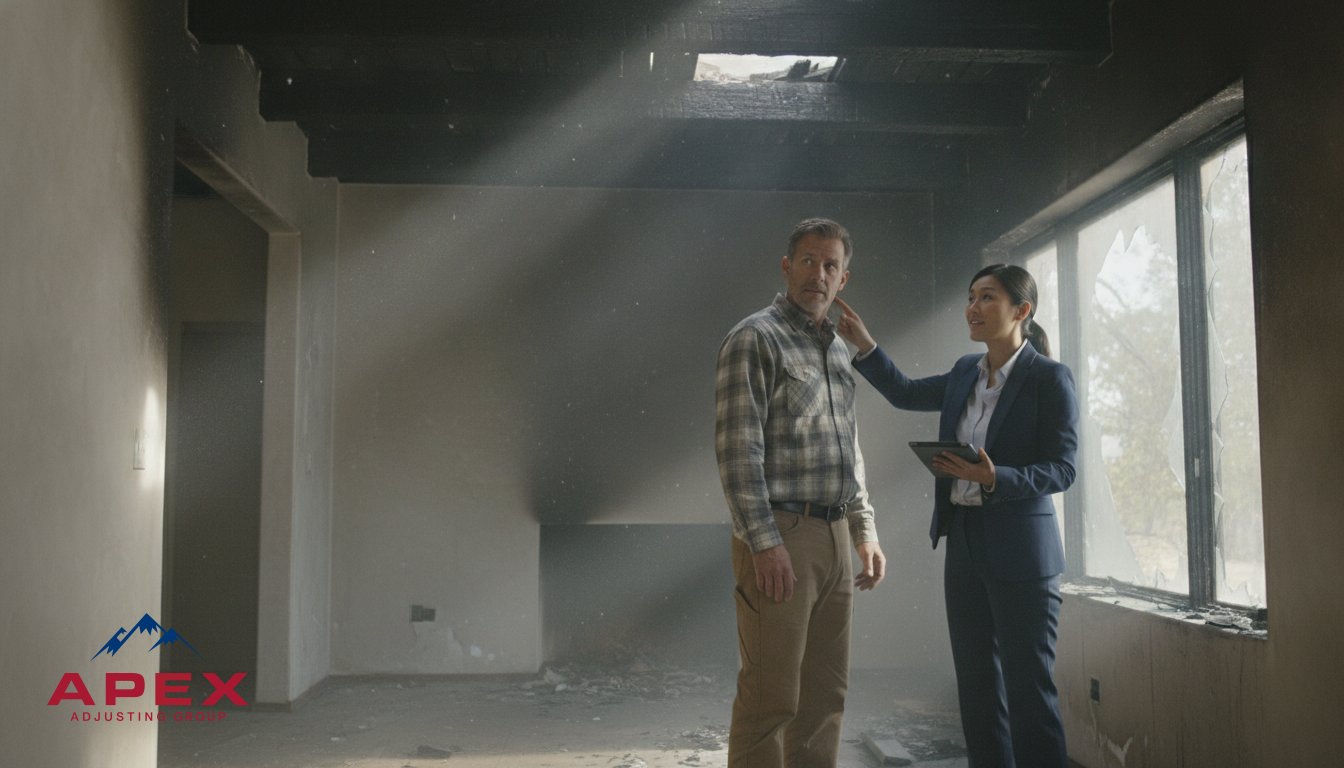
Fire damage claims are rarely as simple as they appear to the naked eye. Hidden smoke, soot, and char in wall cavities or HVAC systems require specialized testing that staff adjusters might ignore. Water damage claims present similar risks, as moisture trapped behind drywall leads to mold or structural rot if the scope is too narrow. Earthquake claims are perhaps the most technical, requiring engineering expertise to identify foundation shifts and structural issues that aren't immediately obvious.
Commercial losses add another layer of difficulty due to business interruption. Calculating lost revenue, payroll, and ongoing expenses requires an adjuster who understands forensic accounting. If you're managing a business while trying to document a massive loss, you're at a distinct disadvantage. Knowing what is a public adjuster means recognizing that you have the right to a representative who handles these technical burdens so you can focus on your operations.
Request a free claim review to identify underpayment
The Apex Advantage: Advocacy and Expert Results
Apex Adjusting Group acts as a shield for property owners across the Western United States. We provide assertive representation that shifts the power dynamic back in your favor. Our team manages the entire claim lifecycle, from the first physical inspection to the final negotiation with the carrier. By taking this technical burden off your shoulders, we allow you to focus on rebuilding your life or business while we focus on the recovery of your assets. We don't just file claims; we build comprehensive cases that stand up to the scrutiny of insurance company experts.
Transparency is the foundation of our work. We use professional documentation and forensic analysis to ensure that every single loss is accounted for in your claim file. Understanding what is a public adjuster means realizing that you have a partner who leaves no stone unturned. We identify hidden damages that staff adjusters often overlook, ensuring that the full scope of your policy's coverage is utilized. Our goal is to provide security and clarity during what is often the most high-stress period of a property owner's life.
Contingency-Based Representation
Apex operates on a contingency basis, ensuring that expert advocacy is accessible to every policyholder. Under this model, fees are only paid if a settlement is successfully negotiated. This structure aligns our interests completely with yours. We're motivated to identify every valid point of recovery because our success is directly tied to the outcome of your claim. There are no upfront costs or hidden fees, making it possible for homeowners and commercial owners to level the playing field without adding to their financial stress.
Local Expertise Across the Western United States
Our adjusters bring deep regional knowledge to every file. We serve major hubs including San Francisco, Las Vegas, and Houston. This local presence is vital because building codes and environmental risks vary significantly by state. We understand the specific challenges posed by California wildfires, Texas hailstorms, and the unique structural risks found in Washington and Idaho. Our team knows how to navigate the specific regulatory requirements in each of the seven states where we're licensed.
We combine this local insight with a "champion of the underdog" mentality. If you're struggling to understand what is a public adjuster and how they can help your specific situation, the best first step is a professional evaluation. We analyze your policy, inspect the damage, and provide a clear path forward. Protect your property rights by starting a Free Claim Review today to ensure your recovery is handled with the expertise it deserves.
Secure Your Property Recovery Today
Professional advocacy is the most effective way to balance the scales against the carrier's technical experts. By understanding what is a public adjuster, you gain the power to challenge insufficient settlements with forensic evidence and line-item documentation. This representation ensures that your fire, water, or structural collapse claim is evaluated for its true value. You don't have to manage the stress of complex insurance language while the carrier looks for ways to limit their liability.
Apex Adjusting Group operates on a contingency basis, so there's no fee unless we obtain a settlement. We're licensed in California, Arizona, Washington, Idaho, Colorado, Texas, and Nevada to provide the assertive advocacy you deserve. Don't leave your financial recovery to chance when you can have a champion in your corner. We handle the heavy lifting of documentation so you can focus on your property's restoration.
Reclaiming your peace of mind starts with a single step. We're ready to review your file and help you pursue the fair settlement your policy promises.
Common Questions About Public Adjusting
How much does a public adjuster cost?
Public adjusters typically operate on a contingency fee basis. This means there's no fee unless a settlement is successfully negotiated for your property damage. When asking what is a public adjuster in terms of cost; the fee is a percentage of the final recovery. This model ensures that the adjuster's interests are fully aligned with yours. You pay nothing upfront, making professional representation accessible for high stakes fire or water damage claims.
Can I hire a public adjuster if my claim was already denied?
Yes, you can hire a professional to review a denied claim. Many property owners don't realize that a denial is often based on the insurance company's interpretation of policy language or a lack of technical documentation. A public adjuster conducts a forensic inspection to identify missed damage and reviews the policy for applicable coverage. They present new evidence to the carrier to reopen the file and pursue the settlement you're entitled to receive.
Is it too late to hire a public adjuster if I already received a check?
It's often not too late to hire an expert even if you've already received a payment. Unless you signed a final release or the statute of limitations has passed, you can reopen a claim for supplemental payments. If the initial check doesn't cover the actual cost of repairs, a public adjuster can document the shortfall. They provide the technical proof needed to show the insurer that the original estimate was insufficient for a full restoration.
Will my insurance company cancel my policy if I hire a public adjuster?
No, your insurance company cannot cancel your policy simply because you hired professional representation. You have a legal right to hire an advocate to assist with your claim. Insurance carriers are accustomed to working with public adjusters on residential and commercial losses. Hiring an expert is a standard business decision that ensures your interests are protected during a complex negotiation. It doesn't change your status as a policyholder or your right to coverage.
How long does the public adjusting process typically take?
The timeline for the public adjusting process varies based on the complexity of the damage and the responsiveness of the insurance carrier. While an expert works to move the file forward, a thorough investigation of fire or structural collapse damage takes time. The process involves detailed inspections, inventory creation, and technical negotiations. A public adjuster manages these stages efficiently to prevent unnecessary delays while ensuring no category of loss is overlooked in the final settlement.
Can a public adjuster help with commercial business interruption claims?
Yes, public adjusters specialize in the complexities of commercial business interruption claims. They use forensic accounting to calculate lost revenue, ongoing payroll, and extra expenses incurred during a shutdown. Understanding what is a public adjuster involves recognizing their ability to handle these data heavy calculations. They ensure that your business receives the full support promised by your policy's endorsements, helping you manage the financial burden while your physical property is being repaired.
Do public adjusters handle small claims like a broken window?
Public adjusters typically focus on claims where the damage is extensive enough to justify professional intervention, such as fire, water, or earthquake losses. While they can technically handle any claim, their expertise is most valuable for complex losses where documentation is difficult. For very small repairs like a single broken window, the cost of the service might not be practical for the owner. Most firms provide a free evaluation to determine if your claim requires professional advocacy.
What is the difference between a public adjuster and an attorney?
The primary difference lies in their licensing and scope of work. Public adjusters are technical specialists licensed to inspect damage, interpret policy provisions, and negotiate settlements directly with insurance carriers. They focus on the administrative and technical aspects of the claim file. Attorneys are licensed to practice law and can provide legal advice or represent you in court if a dispute cannot be resolved through the standard adjustment or appraisal process.
Need Help with Your Insurance Claim?
Our licensed public adjusters can help you get the maximum settlement you deserve. Contact us today for a free claim evaluation.
Related Articles