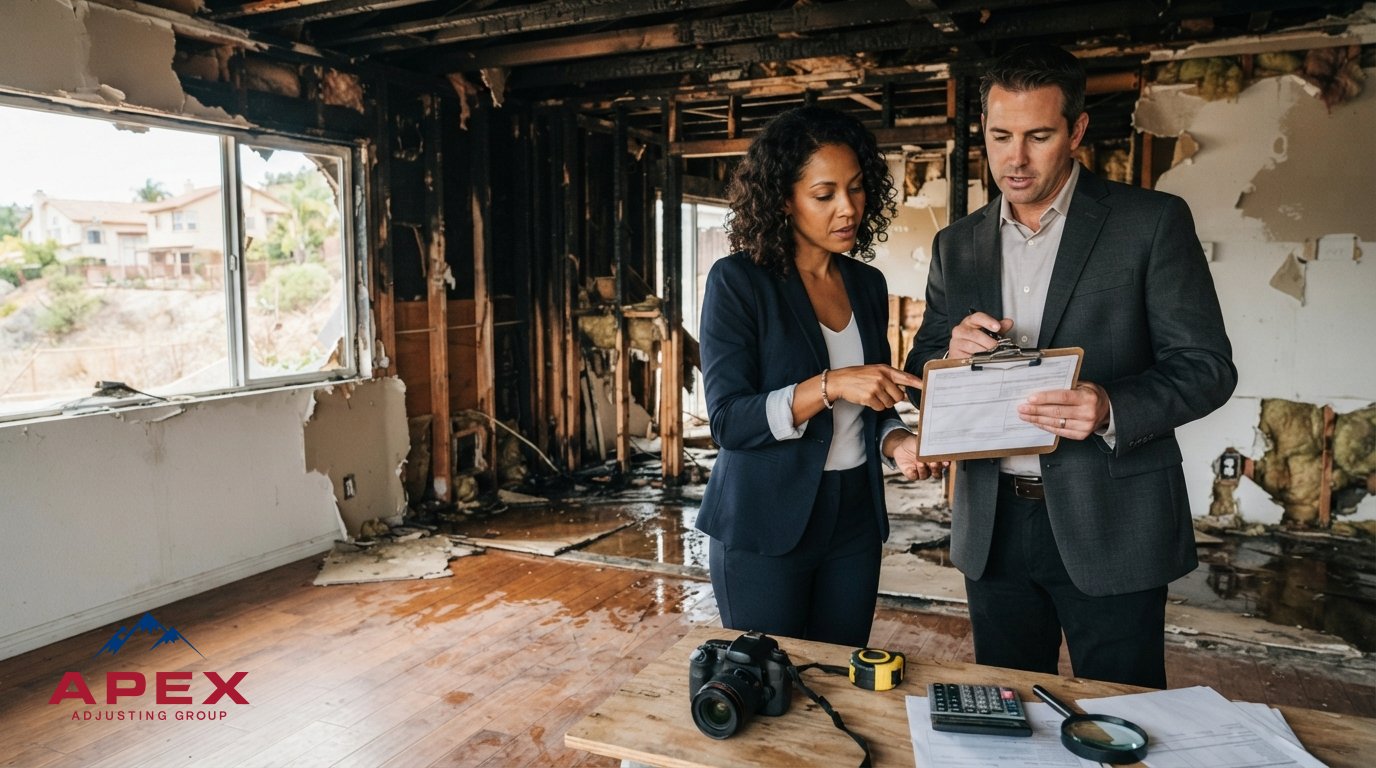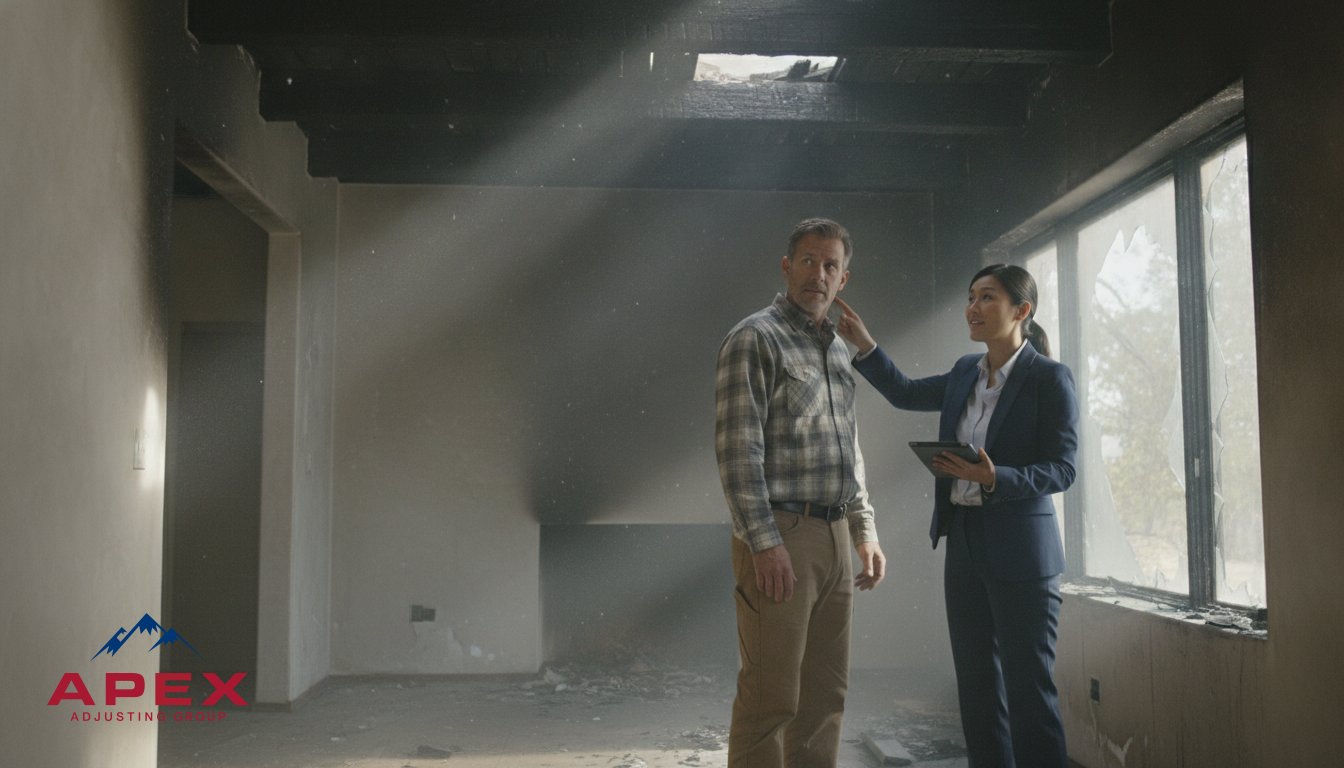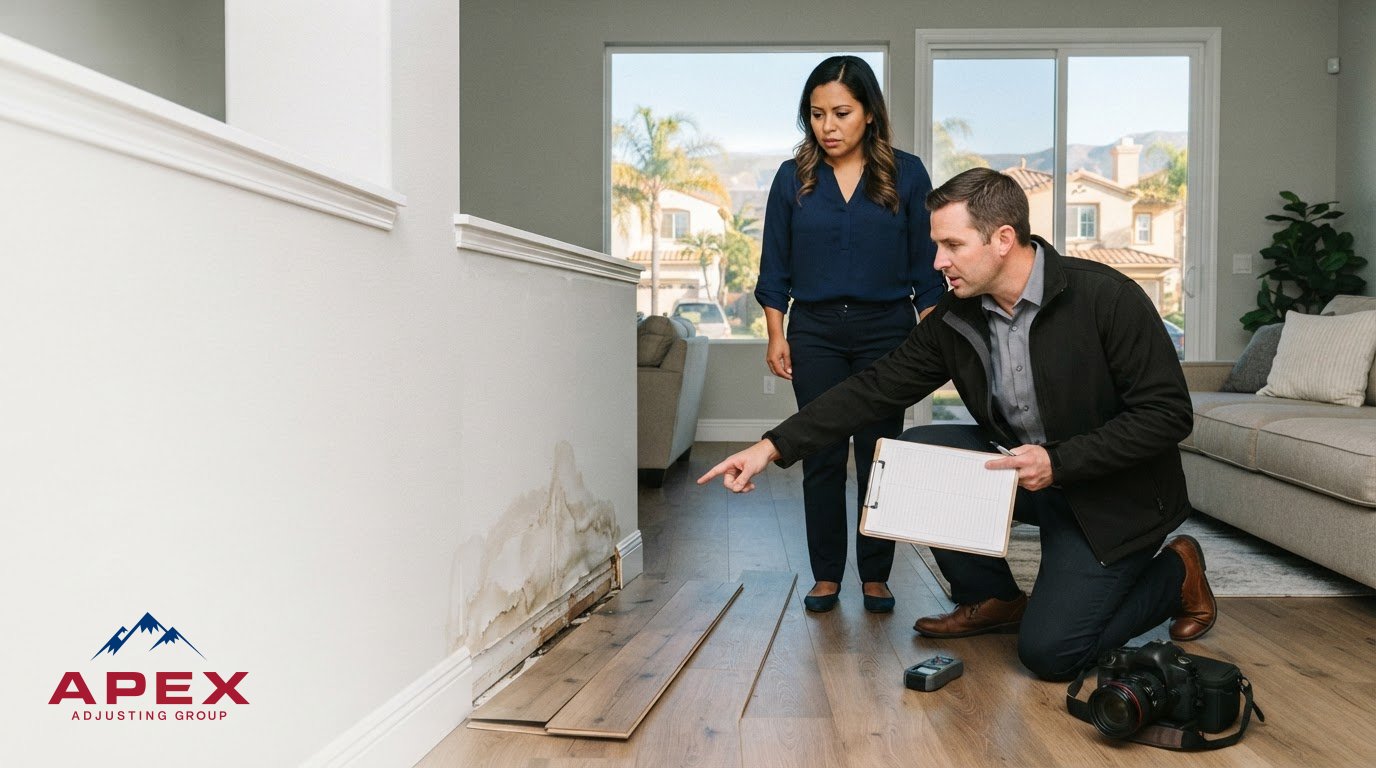
A water damage estimate is only as useful as the damage it captures. When rooms, materials, or related repairs are missing or unclear, an Orange County CA residential water damage adjuster can help review the claim file and identify what may need closer documentation. Homeowners may be weighing an insurer’s estimate against visible damage while trying to make sense of unfamiliar policy language.
A public adjuster represents property owners, not insurance companies. The adjuster can review and document damage, examine the estimate and relevant policy provisions, and present claim information for consideration. That support has limits: a public adjuster isn’t an attorney or repair contractor, and no adjuster can promise a particular claim outcome.
This guide explains what claim support may include, what records to gather, and what to ask about services and the written contingency-fee agreement before signing. It also offers a practical way to evaluate whether an adjuster’s experience and approach fit the scope of the damage. The aim is a clearer view of your options and a considered next step.
Key Takeaways
- Compare an Orange County CA residential water damage adjuster by representation, claim scope, communication, and written fee terms.
- Check a prospective adjuster’s California licensing status through official resources before choosing claim support.
- Photograph affected rooms and damaged belongings when safe and practical, then organize claim correspondence and estimates.
- Use the claim file and policy documents to focus a review on the reported damage, repair scope, and questions that remain unresolved.
- Apex Adjusting Group represents property owners in residential water damage claims and offers a free claim evaluation.
When an Orange County Homeowner May Need a Water Damage Adjuster
Water damage is visible, but the claim scope or payment still doesn’t make sense. The insurer’s estimate may list some repairs while leaving the homeowner unsure how those line items relate to affected rooms, materials, or repair records. A claim review can help organize those questions without promising that an item is covered, that payment will change, or that the claim will be resolved by a particular date.
An Orange County CA residential water damage adjuster may be worth considering when an active or recent claim appears underpaid, delayed, or denied. The adjuster reviews the available claim information and represents the property owner in a first-party property claim. Homeowners can learn more about Orange County public adjuster services when looking for local claim support.
Situations that may warrant an independent claim review
Start with the documents and the condition of the home. Compare the insurer’s estimate with visible damage and available repair documentation, such as photographs, invoices, or contractor estimates. For example, if a ceiling stain, affected flooring, or water-damaged cabinet appears in photos but is difficult to match to the estimate, note the location and ask how the item was evaluated.
A difference doesn’t establish that a repair is covered or that an estimate is incorrect. The policy provisions, reported cause of loss, and claim facts matter. An independent review can help identify unanswered questions, missing documentation, or areas where the estimate and observed damage don’t appear to align.
What an Orange County public adjuster represents
A public adjuster is a professional who represents a policyholder in preparing, documenting, and presenting a property insurance claim. To understand what a public adjuster is, it helps to distinguish the role from an adjuster who represents an insurer. A public adjuster works for the property owner, not the insurance company.
The role is also separate from legal representation and repair work. A public adjuster can review claim records, document reported damage, examine the insurer’s estimate, and communicate claim information on the property owner’s behalf. The adjuster doesn’t act as an attorney or repair contractor, and a review is not a guarantee of coverage or payment.
For a homeowner, the practical question is whether the claim file clearly connects the reported damage, the observed conditions, and the proposed repairs. If that connection is unclear, an independent review may help clarify what information is available and what questions remain.
What a Residential Water Damage Adjuster Does, and Does Not Do
A public adjuster can help bring order to a water damage claim by examining the file, documenting reported damage, reviewing the insurer’s estimate, and communicating claim information on the property owner’s behalf. The work is grounded in the available records, observed conditions, and relevant policy language. For details about residential water damage claim services, homeowners can review the support Apex provides.
An Orange County CA residential water damage adjuster may compare estimate line items with photographs, room measurements, repair documents, and other claim records. For example, the review may flag a difference between what is visible in the home and what the estimate describes. That difference is a question to examine, not proof that a specific repair is covered or that payment must change.
How a public adjuster differs from the insurer’s adjuster
The public adjuster’s client is the property owner. The insurer’s adjuster represents the insurer’s claim-handling interests. Each may review damage and claim documentation, but their roles differ, and neither role guarantees a particular coverage decision, payment, or timeline.
Public-adjusting support can include organizing evidence, preparing damage documentation, reviewing estimates for omissions or discrepancies, and communicating claim information. Policy language and the facts of the loss shape that review. A public adjuster can explain how a claim item is documented or identify a question for follow-up, but that isn’t legal advice or a guarantee of coverage.
How adjusting differs from restoration and legal services
Restoration professionals perform mitigation or repair work. Their work addresses the physical condition of the property; it is separate from claim representation. A public adjuster doesn’t perform repairs, and Apex doesn’t sell insurance or provide legal representation.
Questions about repair methods belong with an appropriately qualified restoration professional. For legal questions or advice about interpreting policy language, homeowners should speak with an appropriately qualified professional. The California Department of Insurance’s Residential Property Claims Guide is another source of general information about the claim process.
Homeowners with an active or recent water damage claim can use a free claim review to discuss the file and determine whether public-adjusting support may fit their needs.
How to Compare Orange County Water Damage Adjusters
Choose based on fit, not a promised result. An Orange County CA residential water damage adjuster should be able to explain who they represent, which claim tasks they handle, how fees work, and what the written agreement requires. Compare answers side by side, then verify California licensing status through official state resources before signing.
| What to compare | What to clarify |
|---|---|
| Representation | Does the adjuster represent the property owner or the insurance company? |
| Claim scope | Which review, documentation, estimate, and communication tasks are included? |
| Fee terms | How is the fee calculated, and under what conditions does it apply? |
| Communication | Who will communicate about the file, and how will updates and questions be handled? |
| Written agreement | Are responsibilities, exclusions, fee terms, and other conditions clearly stated? |
Questions to ask before signing an adjusting agreement
Ask the adjuster to describe the work in practical terms. Find out who reviews the estimate, documents damage, organizes claim materials, and communicates about the file. Request clear explanations of responsibilities and exclusions, and take time to read the written agreement before deciding.
Ask how the fee is calculated and when it applies. Apex Adjusting Group states that it works on a contingency basis, with a fee charged only when a recovery is achieved. Contingency terms can depend on the specific agreement, so check the written agreement for how the fee is calculated and when it applies.
Assessing experience and service fit
Ask whether the adjuster handles residential water damage claims in California and discuss the specific damage type, claim stage, records available, and concerns still unresolved. A useful conversation should address the file’s actual needs without promising coverage, payment, or a timeline. Review the firm’s residential property claim services to understand whether its scope may fit the claim.
The California Department of Insurance’s Residential Property Claims Guide provides general information about the claim process. Use it alongside the agreement and the adjuster’s answers, not as a substitute for reviewing the specific claim and policy documents.
A free claim review can provide a low-pressure opportunity to discuss an active or recent claim and consider whether public-adjusting support may fit.
What to Prepare for a Residential Water Damage Claim Review
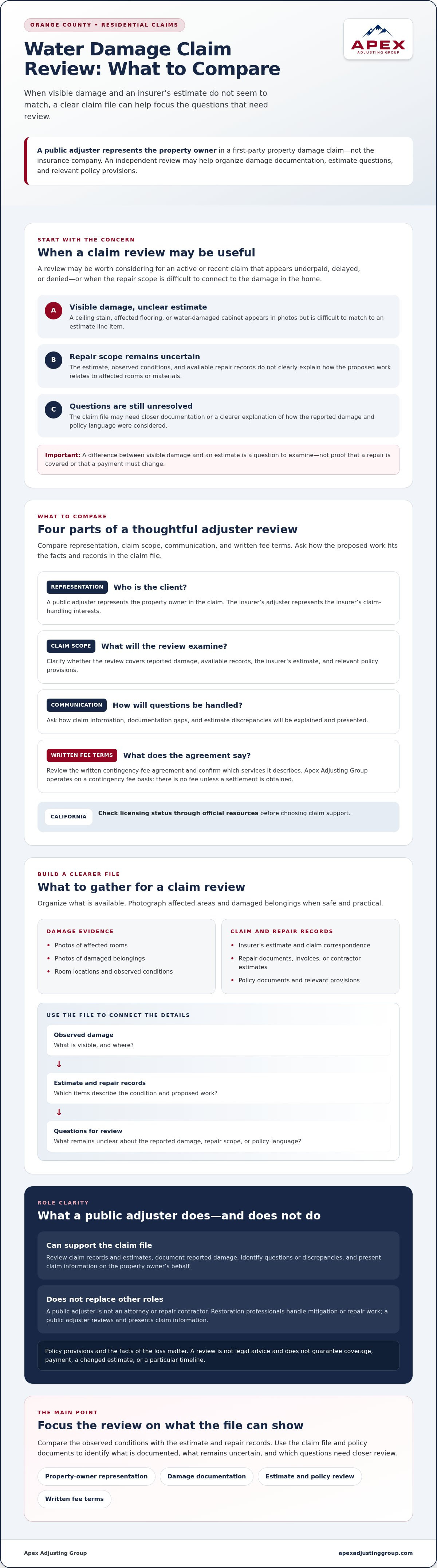
A claim review is more useful when the records tell a clear story: what was affected, what work has been done, and what the insurer has evaluated so far. Gather what’s available in stages. Don’t delay required notice or documentation while trying to assemble a perfect file. Follow the instructions in the policy and claim communications, and ask the insurer about any unclear submission requirements.
Photographs and records to organize
Before cleanup or disposal, photograph affected areas and damaged belongings when it’s safe and practical. Capture both wide views that show where damage is located and close-ups that show visible conditions. Keep copies of photos and records together, with dates or brief notes to identify when and where they were taken.
- Document the property: Photograph affected rooms, visible damage, damaged belongings, and relevant details such as water staining or damaged finishes.
- Track work performed: Keep invoices, mitigation records, repair estimates, and notes about inspections or work completed.
- Save communications: Retain claim letters, emails, messages, and records of calls, including the date and the subject discussed.
- Preserve evidence when practical: Avoid discarding damaged materials or belongings before documenting them, when circumstances allow.
Conditions may require prompt cleanup or work to protect the home. Don’t put safety at risk or delay necessary action to preserve evidence. Keep available records of the work and related expenses, and follow the policy’s instructions for reporting the loss and providing documents.
What to review in the policy and claim file
Gather the policy, insurer’s current estimate or scope, inspection notes, claim correspondence, and any repair or mitigation documents. Locate provisions that may relate to reporting, documentation, covered property, limits, exclusions, or conditions. Their meaning depends on the policy and claim facts, so use them to identify questions for the adjuster rather than making assumptions about coverage.
Then compare the insurer’s current scope with the records: Does the estimate address the areas shown in the photographs? Do invoices or inspection notes describe work or damage that isn’t reflected in the documents? Mark unclear items and keep the questions specific. This gives an Orange County CA residential water damage adjuster a more organized file to review.
For additional context, see the water damage claim support information.
Choosing Apex for an Orange County Residential Water Damage Claim
A homeowner comparing claim support needs a clear picture of who the adjuster represents, what claim type the firm handles, and what the next step involves. Apex Adjusting Group is a licensed public adjusting firm serving California, including Orange County. The firm handles residential water damage claims and represents property owners in first-party property claims, not insurance companies.
An Orange County CA residential water damage adjuster can review claim information and help document the property owner’s position. Apex offers a free claim evaluation, which can give homeowners a chance to discuss an active or recent claim and consider whether additional claim support may fit. An evaluation does not promise that a claim will be accepted, that a recovery will occur, or that a particular result or timeline is possible.
What happens when a homeowner requests a claim review
An initial discussion may cover the water damage, the claim’s current status, records already available, and the homeowner’s main concerns. Useful materials can include the insurer’s estimate and correspondence, photographs, repair or mitigation records, and relevant policy documents. Sharing what’s available can help focus the conversation on the questions still open in the file.
The review can help clarify whether public adjusting support may be appropriate for the claim. It doesn’t replace a full review of the policy’s specific terms, determine coverage on its own, or provide legal advice.
How to decide on the next step
Before deciding, compare the claim file with the proposed service scope and read the written agreement carefully. Check which tasks are included, who represents the property owner, and how the contingency fee is calculated and when it applies. Apex states that it charges a fee only when a recovery is achieved; the applicable terms should be confirmed in the written agreement. No particular recovery is guaranteed.
Keep policy-specific questions directed to an appropriately qualified insurance professional, and seek a qualified attorney for legal advice. A claim review is a way to discuss the file and possible adjusting support, not a substitute for either.
If a review would help clarify an active or recent water damage claim, homeowners can request a free claim review. There’s no pressure to proceed.
Take a Clear Next Step With Your Water Damage Claim
A water damage claim is easier to assess when the file connects the observed damage, repair documentation, and insurer’s estimate. Keep photographs, correspondence, estimates, and policy documents organized, and compare adjusters by representation, scope of work, communication, and written fee terms.
An Orange County CA residential water damage adjuster can review and document a claim, but no review can promise coverage, payment, or a particular timeline. Apex Adjusting Group is a licensed public adjusting firm serving California and represents property owners in residential water damage claims. Its contingency arrangement charges a fee only when a recovery is achieved; homeowners should review the written agreement for the applicable terms.
A free claim review offers a low-pressure way to discuss an active or recent claim, clarify what questions remain, and consider whether further support may fit. The next step is yours.
With a clearer file and a better understanding of the adjuster’s role, you can make your next decision with greater confidence.
Frequently Asked Questions
What does a residential water damage adjuster do?
A public adjuster represents the property owner in a first-party property claim. For a residential water damage claim, the adjuster can review claim records, document reported damage, examine the insurer’s estimate, and communicate claim information on the homeowner’s behalf. The policy language and claim facts shape the review. A public adjuster isn’t an insurer, attorney, or repair contractor, and can’t promise a coverage decision or payment.
When should I hire an Orange County water damage adjuster?
A homeowner may consider an Orange County CA residential water damage adjuster when an active or recent claim has an unclear estimate, status, or payment. A comparison of the estimate with visible damage, photographs, and available repair records can help identify unresolved questions. An adjuster may review the file and explain what documentation or concerns could use further attention. That review doesn’t guarantee a particular claim outcome.
Can a public adjuster help if my water damage claim was denied or delayed?
A public adjuster can review a delayed or denied claim, examine available correspondence and documentation, and help present claim information for consideration. The review may clarify what questions remain or what records could be relevant. It doesn’t guarantee that a denial will change, that payment will be made, or that the claim will be resolved by a particular date. The homeowner should follow policy notice and documentation instructions and consult an attorney for legal advice.
How does a public adjuster’s contingency fee work?
With a contingency arrangement, the adjusting fee depends on a recovery rather than being charged upfront for the service. Apex Adjusting Group states that it charges a fee only when a recovery is achieved. The written agreement should explain the applicable fee calculation and conditions. Before signing, the property owner should review those terms and ask which services are included and when the fee applies.
What documents should I bring to a water damage claim review?
A homeowner can provide available records, even if the claim file isn’t complete. Useful documents may include the insurance policy, the insurer’s estimate and claim letters, inspection notes, photographs of affected rooms and belongings, repair estimates, invoices, and mitigation records. Dated notes about communications and work performed can also help. Organized copies make it easier to follow the claim history and identify what information may still be missing.
Is a public adjuster the same as a water damage restoration contractor?
No. A restoration contractor performs mitigation or repair work on the property, while a public adjuster represents the property owner in the insurance claim. The adjuster may document damage, review estimates, and communicate claim information, but doesn’t perform repairs. Apex Adjusting Group provides public adjusting services, not construction or repair services. Homeowners can seek property work from a restoration professional and claim representation from a public adjuster.
Need Help with Your Insurance Claim?
Our licensed public adjusters can help you get the maximum settlement you deserve. Contact us today for a free claim evaluation.
Related Articles