A commercial insurance policy is a dense legal instrument designed to protect the carrier's bottom line as much as company assets. Filing a commercial water damage insurance claim is not a simple administrative task. It's a high-stakes negotiation where the burden of proof rests entirely on the property owner. Most business owners lack the specialized training to identify every hidden moisture pocket or calculate the true cost of business interruption. This gap in expertise often leads to settlements that fail to cover the actual scope of the damage.
Managing daily operations while deciphering complex policy language and documenting extensive physical losses creates an unsustainable burden. It's a common frustration to find that the carrier's adjuster represents the company's interests rather than the property owner's. This guide explains how hiring a commercial property damage adjuster can protect business revenue and secure a fair insurance settlement. It provides a roadmap for professional representation that handles carrier communication, interprets policy provisions, and builds a comprehensive claim file to minimize downtime.
Key Takeaways
- Recognize that commercial water losses involve hidden structural damage and business interruption costs that often exceed visible physical repairs.
- A public adjuster serves as your advocate, managing every phase of a commercial water damage insurance claim to protect your business revenue.
- Distinguish between insurance company staff adjusters and public adjusters who work exclusively for the property owner on a contingency basis.
- Evaluate candidates based on their specific licensing in states like California or Texas and their track record with complex commercial losses.
- Secure professional representation to handle all carrier communication and minimize business downtime during the recovery process.
Commercial Water Damage and Business Revenue Risks
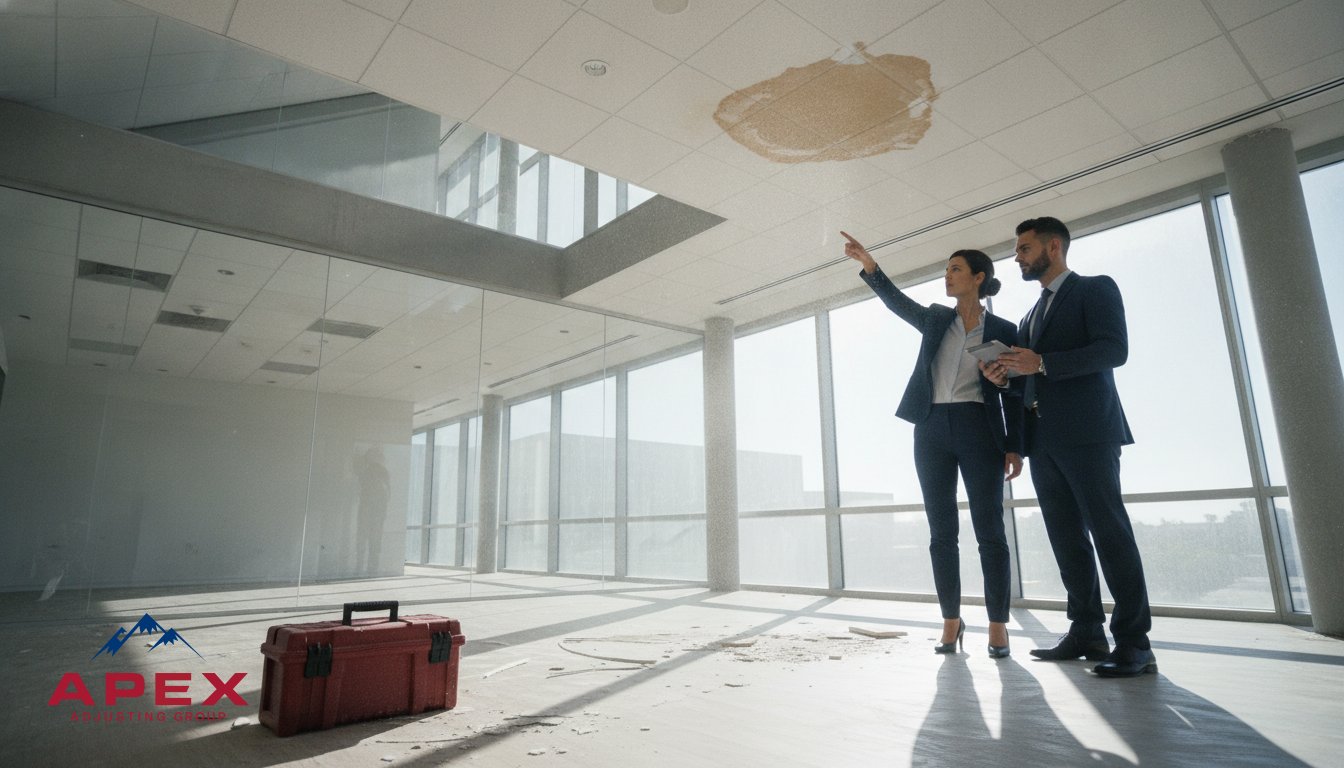
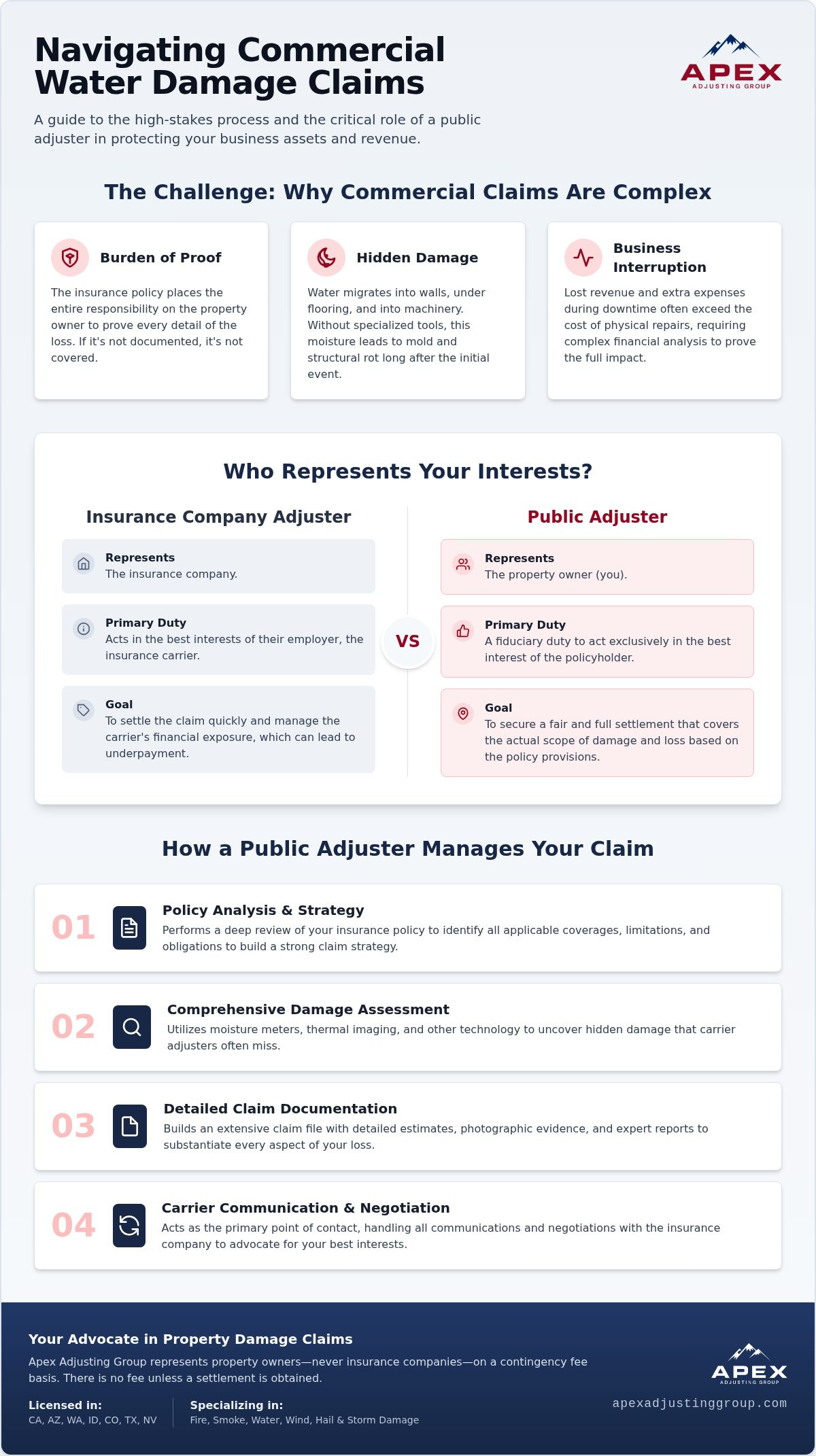
Commercial properties face unique risks when water enters the building. Unlike residential losses, a leak in a high-rise or industrial facility often triggers systemic failures that affect structural integrity and mechanical operations. The insurance carrier's adjuster typically focuses on visible damage, but the real financial threat lies in what remains hidden. According to standard policy provisions, the burden of proving every aspect of a commercial water damage insurance claim rests solely on the business owner. If you don't document the full scope of the loss, the carrier won't pay for it.
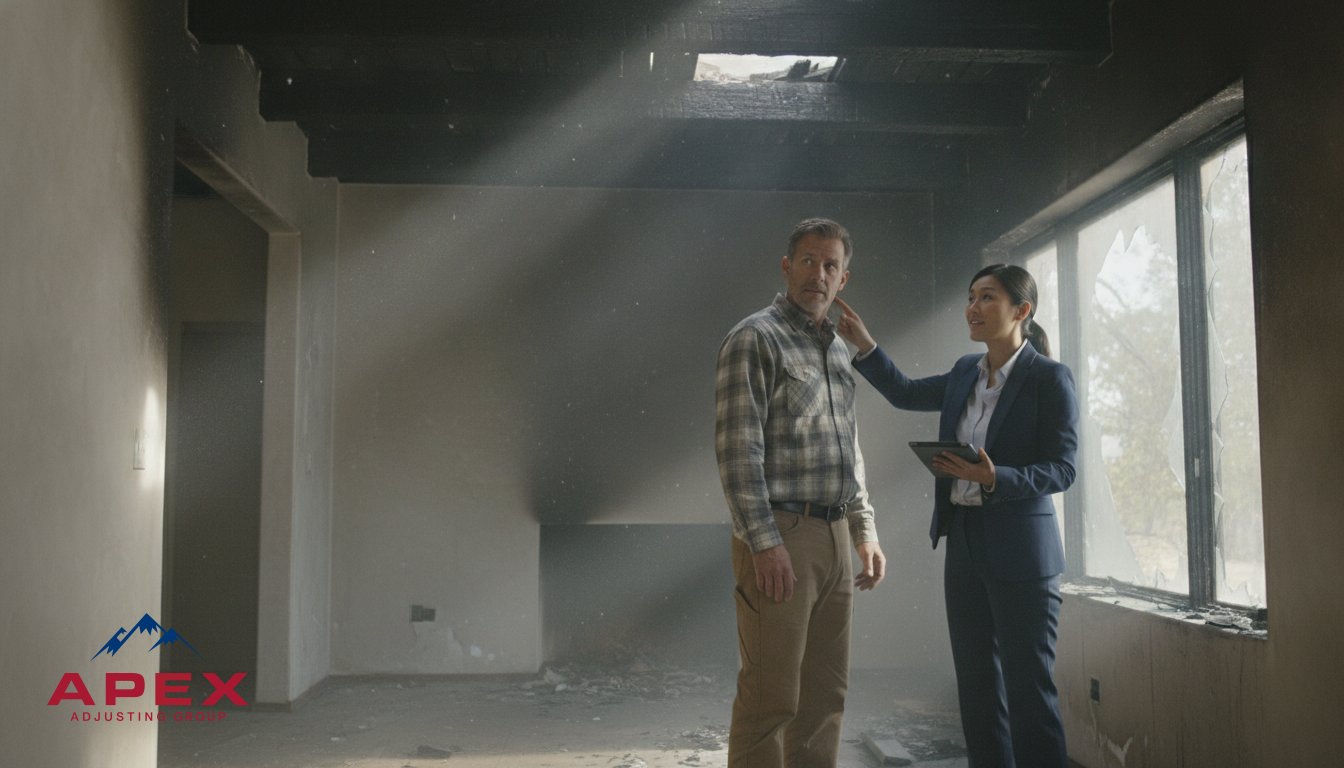
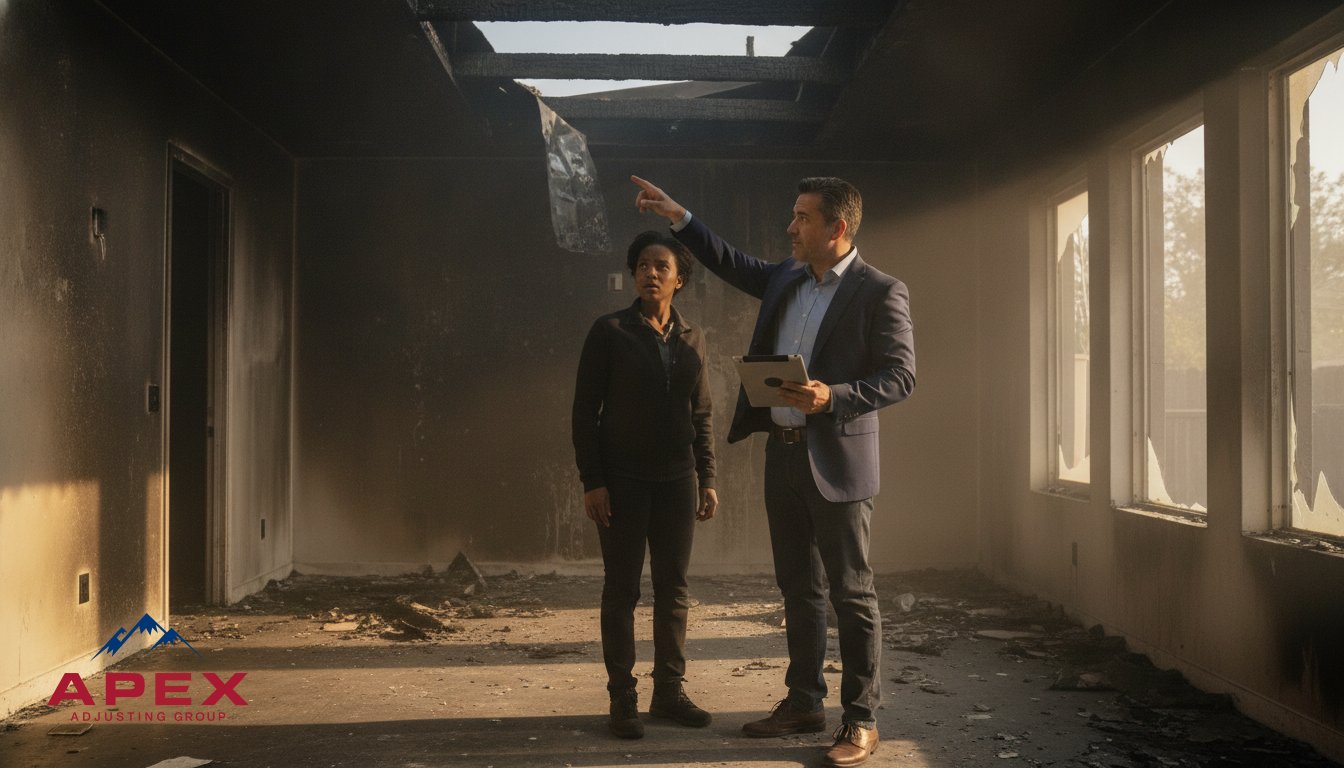
Insurers frequently overlook secondary damage categories or hidden moisture pockets to settle files quickly and cheaply. This is where understanding what is a public adjuster becomes essential for your recovery. These professionals act as your advocate, ensuring the carrier accounts for every affected square inch of the property. They specialize in identifying the subtle signs of damage that untrained eyes miss during a standard walkthrough.
Identifying Hidden Moisture and Structural Issues
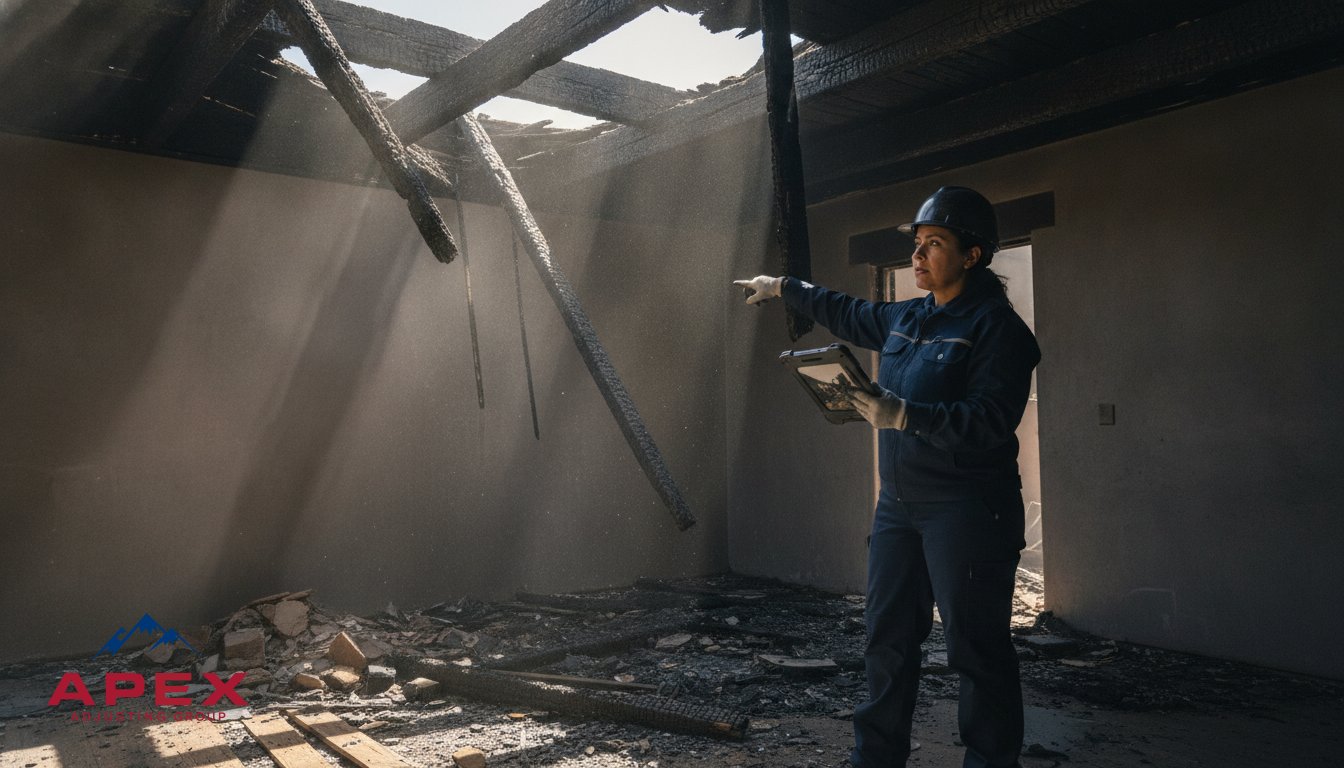
Visibility is a poor metric for assessing water damage in a business environment. Water migrates through wall assemblies, under heavy-duty flooring, and into specialized industrial machinery. Use thermal imaging and moisture meters to identify infiltration behind commercial-grade walls that look dry to the naked eye. Failure to detect this trapped water leads to structural rot and the rapid development of mold. Document these findings immediately to prevent the carrier from claiming the damage was pre-existing.
- Inspect electrical conduits and sub-panels for signs of moisture or corrosion.
- Document moisture levels in concrete slabs and subflooring using calibrated meters.
- Verify the functionality of computerized equipment and production lines affected by humidity.
Mitigation efforts must be documented in real-time. If you don't prove that you took prompt steps to dry the facility, the carrier may deny coverage for secondary damage. Keep detailed logs of all drying equipment used and the daily moisture readings taken during the process.
The Impact of Business Interruption on Recovery
Revenue loss often exceeds the cost of physical repairs in a commercial water damage insurance claim. Proving business interruption requires a sophisticated analysis of financial records. You must account for historical performance, seasonal fluctuations, and projected growth to establish what your revenue would have been without the loss. This is not a simple calculation; it requires a deep understanding of how your specific industry operates.
Policies frequently include coverage for extra expenses necessary to minimize downtime. These expenses include leasing temporary office space, expediting shipments of replacement equipment, or retaining essential personnel during the restoration period. The period of restoration is a critical policy term that defines how long the carrier will pay for these losses. Professional documentation ensures this period reflects the actual time needed to return to full operations rather than an arbitrary timeline set by the insurer for commercial claims.
Understanding the Commercial Public Adjuster Role
Insurance companies employ teams of adjusters, engineers, and accountants to protect their financial interests. When a property owner files a commercial water damage insurance claim, they enter a technical negotiation where the carrier holds the advantage of experience. A public adjuster is a licensed professional who works exclusively for the policyholder. They exist to level the playing field. According to the National Association of Public Insurance Adjusters, these experts are the only adjusters licensed to represent the public.
Public adjusters manage the entire claim lifecycle. This starts with the initial filing and continues through to the final settlement negotiation. They don't just accept the carrier's initial offer. Instead, they perform a comprehensive audit of the carrier's estimate. This ensures that every damaged asset, from industrial machinery to specialized flooring, is accounted for at its true replacement value.
Fiduciary Duty and Policyholder Representation
A public adjuster has a fiduciary duty to act in the best interest of the property owner. This is a significant distinction from staff adjusters who work for the insurance company. They act as a primary shield. They handle all carrier communications, which allows the business owner to focus on running the company.
Expertise in policy language is a primary weapon in this process. Many commercial policies contain endorsements or extensions that provide additional coverage for things like debris removal or code upgrades. An experienced adjuster identifies these opportunities that an owner might miss. If a claim is currently underpaid or delayed, the owner can request a professional claim review to identify potential gaps in the settlement.
Managing Complex Documentation Burdens
Proving a loss requires an overwhelming amount of paperwork. Public adjusters compile detailed inventories of every piece of damaged equipment and inventory. They don't rely on guesswork. They coordinate with structural engineers and restoration specialists to build a file based on hard evidence.
A professional claim package is designed to be undeniable. It includes high-resolution photos, moisture maps, and line-item estimates that use industry-standard software. By presenting a complete, organized file from the start, the adjuster minimizes the carrier's ability to request more information or delay the process. This thoroughness is essential for any complex commercial water damage insurance claim involving significant water intrusion.
Public Adjusters vs. Insurance Company Adjusters
When you file a commercial water damage insurance claim, the person who shows up to inspect your property is not your partner. They are there on behalf of the insurance company. Understanding the distinction between these roles is critical when evaluating a commercial property insurance claim. The outcome of your settlement often depends on who is performing the assessment and whose interests they represent.
Why Staff and Independent Adjusters Differ
Staff adjusters are full-time employees of the insurance company. Their primary loyalty is to their employer's internal guidelines and policy limits. They aren't incentivized to find every possible dollar for your recovery. Their goal is to close the file quickly while adhering to company-mandated cost-saving measures.
Independent adjusters are contractors hired by the carrier. While the name sounds neutral, they are still paid by the insurance company to handle specific files. These adjusters often manage hundreds of claims simultaneously. This high volume leads to overlooked details and rushed inspections that ignore hidden moisture or structural fatigue. They don't work for you; they work for the entity paying their invoice.
Public adjusters are the only professionals hired by and working exclusively for the business owner. They focus on maximizing the recovery based on the actual scope of damage. They operate on a contingency fee basis, which aligns their success directly with yours. There is no fee unless a settlement is obtained, ensuring they are motivated to document every legitimate loss.
Strategic Benefits of Private Representation
Private adjusters provide an independent assessment of the loss value. They use industry-standard software to capture the full reality of the damage, often uncovering costs the carrier's adjuster missed. Carrier adjusters frequently categorize legitimate water damage as wear and tear or pre-existing conditions to avoid payment. A public adjuster identifies these tactics and provides a technical rebuttal based on physical evidence.
Professional representation ensures the carrier receives a comprehensive file that is difficult to dismiss. Your adjuster documents the sudden and accidental nature of the loss with moisture logs, infrared scans, and expert reports. This level of detail forces the carrier to address the commercial water damage insurance claim with greater accuracy. Instead of an owner guessing at policy meanings, the carrier deals with a peer who understands the technical requirements of the contract.
Critical Selection Criteria for a Commercial Adjuster
Selecting a representative for a high-stakes business loss is a strategic decision that affects your company's future. A commercial water damage insurance claim involves technical layers that go far beyond a typical residential pipe burst. You need an advocate who understands the nuances of large-scale property damage and forensic documentation. Prioritize firms that operate on a contingency fee basis. This structure aligns the adjuster's interests with yours because they only get paid if you obtain a settlement. It removes the financial barrier to entry and ensures the firm is motivated to maximize every category of loss.
Verification of State Licensing and Compliance
Every state has specific regulations and ethical codes for public adjusters. Verify active licenses through the state's department of insurance before signing any contract. Ensure the firm is authorized to represent you in your specific jurisdiction, such as California, or other states where they operate. State compliance dictates the legal boundaries of how adjusters communicate with your carrier. A firm that ignores these regulations or lacks the proper credentials in your specific jurisdiction puts your entire claim at risk. Professional adjusters will provide their license information upfront and demonstrate a clear understanding of local policy statutes.
Experience with Specialized Commercial Assets
Commercial environments contain specialized machinery and computerized systems that require expert valuation. If water has sat in a facility for an extended period, the risk of structural collapse or long-term integrity issues increases. You need an adjuster who coordinates with forensic engineers and industrial hygienists to prove the full scope of damage. Demand to see a track record of handling business interruption for industrial or high-density commercial properties. Without this specific experience, the carrier will likely overlook the true cost of your downtime and the specialized cleaning requirements for technical equipment.
The firm must have the resources to manage extensive forensic documentation. This includes forensic accountants who analyze years of financial data to build an accurate revenue loss claim. If a firm lacks the staff to manage thousands of high-resolution photos and detailed moisture logs, they aren't equipped for a commercial-grade loss. Your settlement depends entirely on the quality and depth of the evidence presented to the carrier. Professional representation ensures that every physical and financial loss is backed by data that withstands carrier scrutiny during a commercial water damage insurance claim.
Professional Advocacy with Apex Adjusting Group
Apex Adjusting Group acts as a protective force for property owners. We don't just process paperwork. We lead the charge to secure your business recovery and protect your bottom line. Our expertise focuses on high-stakes commercial claims that demand technical precision and aggressive negotiation. We represent owners in California, Arizona, Washington, Idaho, Colorado, Texas, and Nevada. Our adjusters have established deep roots in major hubs like Los Angeles, Phoenix, Seattle, and Houston to provide localized, expert representation.
Our team understands the immense pressure of managing a commercial water damage insurance claim while trying to keep a business operational. We take the burden off your shoulders by handling all carrier communication and documenting the full extent of your physical and financial losses. We don't settle for the carrier's initial assessment. We build a comprehensive file that accounts for every damaged asset and every hour of lost revenue.
Contingency Fees and Aligned Interests
Protect your company's cash flow during a crisis. We operate on a strict contingency fee basis. This means our fee is a percentage of the settlement we successfully negotiate for you. If there's no recovery from the insurance carrier, there's no fee for our services. This structure allows business owners to access specialized help without any upfront costs. It ensures our interests are perfectly aligned with yours. We're motivated to maximize your recovery because our success depends entirely on yours.
Licensed Expertise Across the Western United States
Handling a complex water damage or smoke infiltration claim requires specific regional knowledge. Our experts are familiar with the local building codes and compliance requirements in cities like Sacramento and San Jose. This expertise allows us to identify code-related repair costs that carrier adjusters often ignore. We ensure your property is not just dried out, but restored to a condition that meets all current safety standards.
Don't leave your revenue protection to chance. A commercial water damage insurance claim is a technical battle that requires a professional advocate. We provide the steady hand and specialized knowledge needed to navigate the carrier's requirements. Our goal is to minimize your business downtime and secure the settlement you deserve under your policy provisions. Request a free claim review to evaluate your current offer and identify potential gaps in your recovery plan.
Secure Your Professional Recovery Strategy
Commercial property owners shouldn't face the insurance carrier's team of adjusters and accountants alone. A commercial water damage insurance claim involves technical complexities that require a licensed advocate to manage the burden of proof. Hidden moisture and complex business interruption calculations often represent the largest portion of a commercial loss. Securing professional representation ensures these damage categories are documented with the forensic detail required for a fair settlement.
Apex Adjusting Group serves as a fierce advocate for property owners across California, Arizona, Washington, and the Western United States. We specialize in complex commercial losses and structural issues. Our firm operates on a contingency fee basis. There is no recovery, no fee. This structure removes the financial risk and allows you to focus on your company's daily operations while we handle the carrier's demands.
Take the first step toward a full recovery today. Professional advocacy can be the difference between an underpaid claim and a settlement that covers your actual damages. Don't leave your business recovery to chance.
Frequently Asked Questions
What does a commercial property damage adjuster do?
A commercial property damage adjuster acts as your professional advocate throughout the entire claim lifecycle. They inspect the facility for hidden moisture, calculate business interruption losses, and manage all communications with the carrier. Their primary goal is to ensure the settlement accurately reflects the full scope of damage to your building and equipment. They interpret complex policy language to identify every available coverage category for your specific loss.
How much does it cost to hire a public adjuster for a business claim?
Public adjusters typically operate on a contingency fee basis. This means there are no upfront costs or out-of-pocket expenses to start your commercial water damage insurance claim representation. The fee is a percentage of the final settlement successfully negotiated for you. If the firm does not obtain a recovery from your insurance carrier, you don't owe a fee for the adjusting services provided during the process.
Can I hire a public adjuster if my claim was already denied?
Yes, you can often hire a public adjuster to review and potentially reopen a denied or underpaid claim. A professional evaluation identifies whether the carrier overlooked critical evidence or misinterpreted specific policy provisions. If the denial was based on a lack of documentation or a mischaracterization of the damage, an adjuster builds a technical rebuttal to challenge the insurer's decision and seek a fair settlement for your business.
What is the difference between a staff adjuster and a public adjuster?
The primary difference is whom they represent. Staff adjusters are full-time employees of the insurance company and must protect the carrier's financial interests. Public adjusters are licensed professionals hired exclusively by the property owner to act as their advocate. While a staff adjuster follows internal company guidelines, a public adjuster focuses on maximizing your recovery based on the actual physical and financial scope of the property loss.
How long does the commercial insurance claim process typically take?
The timeline for a commercial claim varies based on the complexity of the damage and the responsiveness of the insurance carrier. Large-scale losses involving structural issues or extensive business interruption take longer to document and negotiate than minor repairs. While a public adjuster cannot guarantee a specific timeline, they often streamline the process by presenting a complete, professional claim package that minimizes the need for repeated carrier requests.
Do I need a public adjuster if my insurance company is being helpful?
Helpfulness is not the same as a fair settlement. Even a friendly staff adjuster is bound by company policies that prioritize cost-saving measures. A public adjuster performs an independent audit of your commercial water damage insurance claim to identify losses the carrier might overlook, such as hidden mold or secondary structural fatigue. Professional representation ensures that "helpfulness" translates into a comprehensive settlement that covers all your actual physical and financial damages.
What states is Apex Adjusting Group licensed to work in?
Apex Adjusting Group is licensed to represent property owners in California, Arizona, Washington, Idaho, Colorado, Texas, and Nevada. We provide localized expertise in major hubs including Los Angeles, Phoenix, Seattle, Denver, and Houston. Our adjusters understand the specific building codes and state-mandated insurance regulations in these jurisdictions. This regional knowledge is essential for accurately documenting complex commercial claims and navigating the local requirements for property restoration and recovery.
Can a public adjuster help with business interruption losses?
Yes, calculating business interruption is a core service provided during a commercial property claim. Public adjusters work with forensic accountants to analyze your historical revenue, projected growth, and extra expenses incurred during the restoration period. They document the true financial impact of your downtime to ensure the carrier's offer accounts for more than just physical repairs. This advocacy protects your business revenue while your facility is being returned to full operation.
Need Help with Your Insurance Claim?
Our licensed public adjusters can help you get the maximum settlement you deserve. Contact us today for a free claim evaluation.
Related Articles