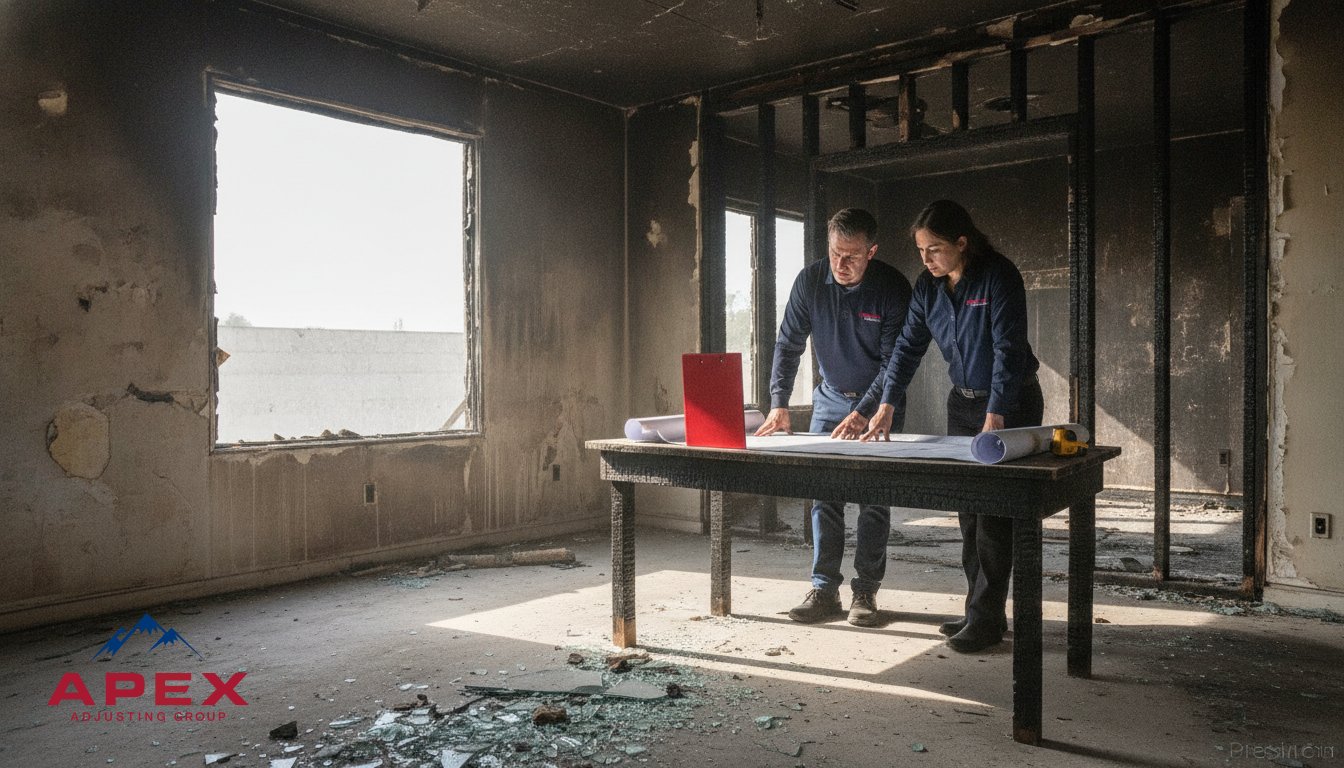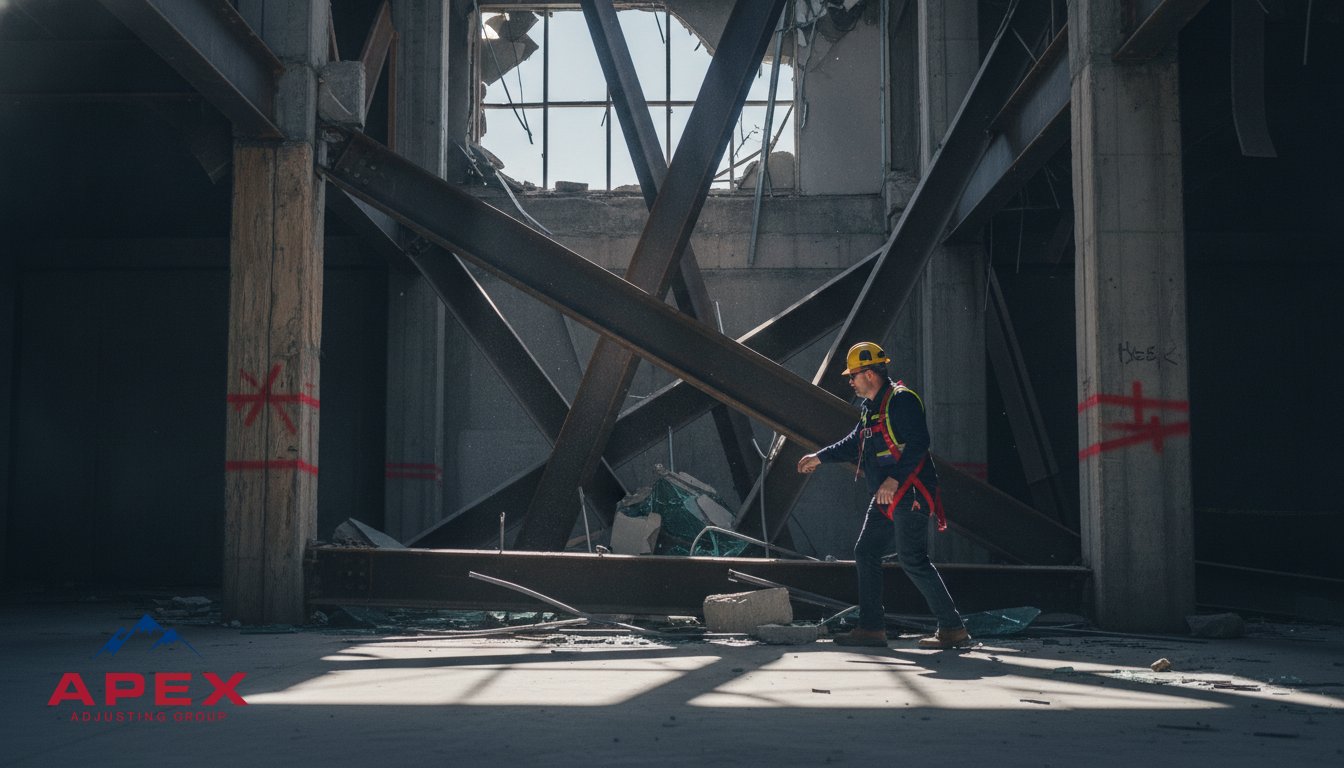
Your insurance policy likely defines "collapse" in a way that contradicts what you see with your own eyes. For most property owners, a structural collapse insurance claim feels like a straightforward matter of visible destruction. However, carriers often hide behind complex definitions of "abrupt" versus "gradual" movement to avoid paying what they owe. You're facing the potential total loss of your investment, and the last thing you need is a technicality standing between you and a fair recovery.
We understand the anxiety of watching an insurer minimize your damage or delay your file while your building's integrity hangs in the balance. This guide provides the clarity you need to navigate this high-stakes process with confidence. Learn how to identify specific policy triggers, document evidence that carriers can't ignore, and follow a filing strategy to help maximize your settlement. We explain the difference between abrupt and gradual damage while providing a checklist to help your property damage claims be handled with the professional scrutiny they deserve from experienced public adjusting services.
Key Takeaways
- Identify the technical distinction between abrupt ruin and gradual damage to ensure your policy triggers coverage correctly.
- Recognize physical warning signs of failure, such as tilting columns or popping sounds, before a total structural collapse insurance claim occurs.
- Use a comprehensive evidence checklist to capture high-resolution documentation that holds the insurance carrier accountable for every structural member affected.
- Navigate complex exclusions like "Earth Movement" or "Design Defect" clauses that insurers frequently use to minimize their financial liability.
- Learn how a public adjuster coordinates with independent engineers to provide a factual counter-assessment to the carrier’s assessment.
Defining Structural Collapse in Property Insurance
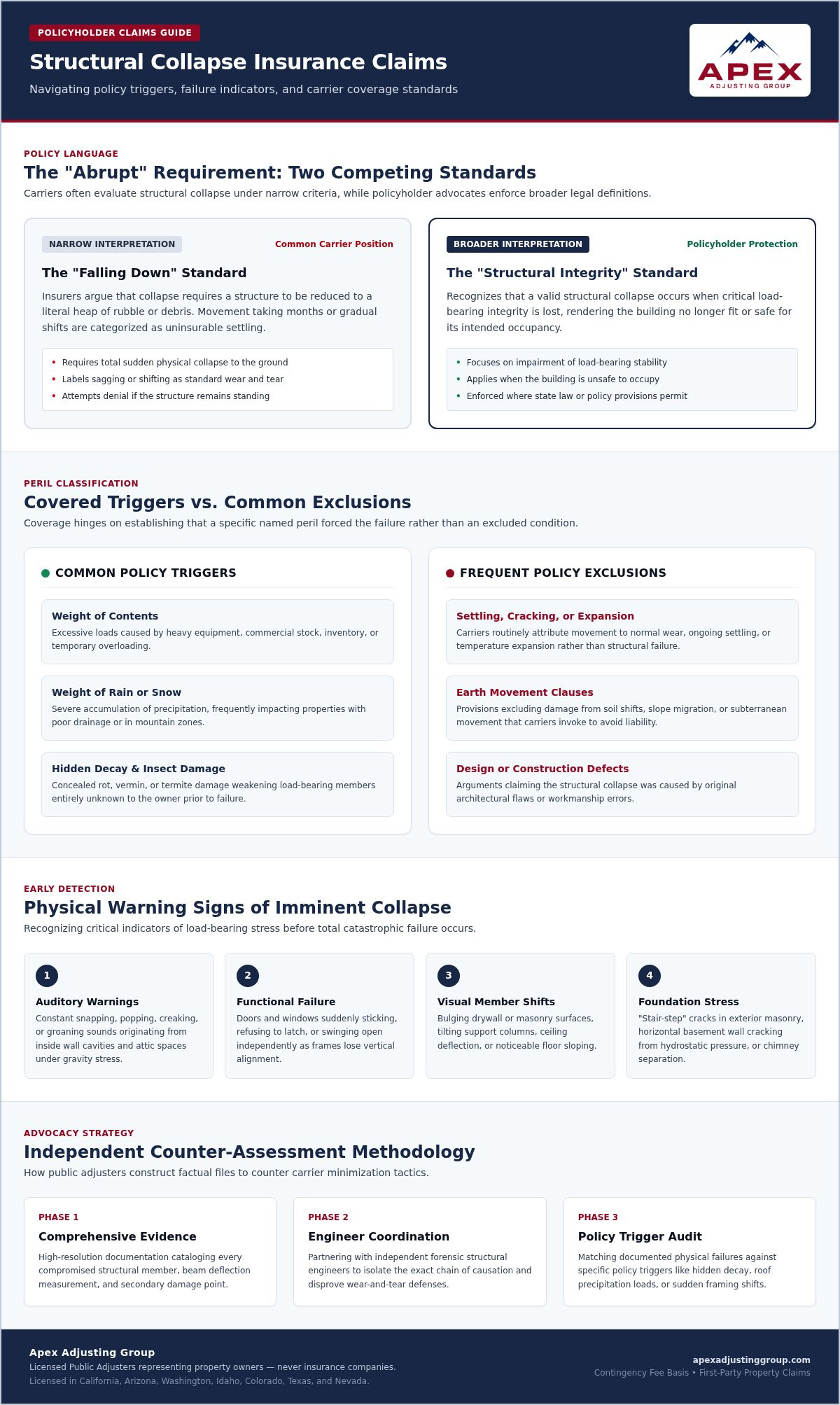
Insurers don't view collapse the same way you do. You see a roof sagging dangerously and recognize the building is unsafe. The carrier sees a structure that is still standing and may deny the file based on a narrow definition of "abrupt falling down." A valid structural collapse insurance claim often hinges on whether the failure meets specific policy triggers rather than just visible ruin. We focus on the technical language in your policy to ensure the carrier doesn't use semantic games to avoid their obligations.
Most policies exclude damage caused by settling, cracking, or expansion. These are labeled as maintenance issues or gradual wear and tear. To secure a settlement, we must demonstrate that the movement was a sudden failure of structural integrity and failure of load-bearing components. If your building is older, we look for the "hidden decay" provision. This clause can trigger coverage if a support beam fails due to rot or insect damage that was completely concealed from view until the failure occurred.
The 'Abrupt' Requirement and Policy Language
Speed is the primary weapon insurers use to deny these files. They argue that if a collapse took months to manifest, it isn't abrupt. This creates a conflict between the "falling down" standard and the "structural integrity" standard. The "falling down" standard requires the building to be a literal heap of debris. Conversely, the "structural integrity" standard recognizes a structural collapse insurance claim when the building is no longer fit for its intended use. We fight to hold carriers to the broader interpretation whenever the policy language or state law allows.
Common Perils That Trigger Collapse Coverage
Not every cause of failure is covered. You must identify a specific named peril that forced the collapse. Common triggers include:
- Weight of contents: Overloading a floor with heavy equipment, stock, or too many people.
- Weight of rain or snow: This is a frequent issue for properties in mountain regions or areas with poor roof drainage.
- Hidden insect damage: Termites or vermin weakening the building frame from the inside out without the owner's knowledge.
Proving these triggers requires technical precision. Carriers will try to blame design defects or earth movement to trigger an exclusion. We counter these tactics by documenting the exact sequence of events that led to the failure. Don't let an adjuster's initial denial be the final word on your property's future.
Identifying Signs of Structural Failure and Imminent Collapse
Don't ignore the sounds of your building fighting gravity. Property owners often mistake structural groaning for "natural settling," but these noises can signal a looming disaster. If you hear popping, creaking, or loud groaning coming from the building frame, your structure is under extreme stress. These auditory warnings often precede a total failure. Watch for doors and windows that suddenly stick or refuse to latch. When a frame shifts, these openings are the first to lose alignment, providing a clear sign that the load-bearing members are moving. Common indicators of a pending structural collapse insurance claim include:
- Auditory warnings: Constant popping or snapping sounds in the walls or attic spaces.
- Functional failure: Doors and windows that suddenly stick, fail to latch, or swing open on their own.
- Visual shifts: Bulging wall surfaces or tilting support columns in commercial property claims.
- Leveling issues: Significant floor sloping or ceiling sagging in residential properties.
Visual Indicators of Foundation and Frame Stress
Distinguishing between cosmetic issues and structural threats is vital for a successful structural collapse insurance claim. Hairline cracks in plaster are common, but "stair-step" cracks in brickwork or concrete blocks indicate foundation movement. Look for horizontal cracks in basement or retaining walls. These often signal intense hydrostatic pressure from saturated soil pushing against the foundation. Check the exterior for any separation between the chimney and the main structure. If you can see a gap widening at the top, the chimney's footing has likely failed. These physical changes are evidence that the building's core stability is compromised.
Regional Risks in the Western United States
Geography dictates the specific perils your building faces across the West. In California and Nevada, seismic stress from minor tremors or aftershocks can weaken connections over time, leading to an abrupt failure later. Property owners in Idaho and Washington must monitor flat commercial roofs during winter months. Heavy snow loads can exceed design limits, causing a roof to cave in without warning. In Arizona and Texas, soil subsidence and expansive clay frequently lead to foundation instability. Many policies include collapse additional coverage provisions that address these specific triggers, provided the damage is identified as a covered peril.
If you identify these red flags, act quickly to document the conditions. A carrier's adjuster may try to classify these signs as long-term wear and tear rather than an active failure. Having an expert review your policy and the physical evidence can prevent a lowball settlement. You may want to request a professional claim evaluation to determine if your property's symptoms qualify for coverage under your current policy terms.
Evidence and Documentation Checklist for Claimants
Secure your property immediately after a failure occurs. This is your first priority to prevent further damage, but you must preserve the scene for inspection. A successful structural collapse insurance claim relies on an undisturbed record of the event. Don't let the carrier's adjuster be the only person to document the site. You need a comprehensive evidence file that tells the full story of the loss before any debris is cleared or temporary repairs begin.
Capture high-resolution photos and video of every affected structural member. Focus on the points of failure, such as sheared bolts, buckled beams, or cracked masonry. Document the surrounding areas to show the full scope of the impact. This isn't just a suggestion; it's your primary defense against a lowball offer. Consult the NAIC guide to settling property insurance claims to understand your rights and duties during the documentation phase.
Organize your paperwork into a dedicated claim file. Include the following essential documents:
- Original blueprints and site plans: These establish the intended load-bearing capacity of the structure.
- Prior inspection reports: Use these to prove the building was in good standing before the event.
- Communication log: Record the date, time, and summary of every conversation with the insurance carrier.
- Contractor estimates: Secure detailed bids that itemize the structural repair costs.
Technical Reports and Expert Findings
Proving the cause of loss often requires the specialized knowledge of a structural engineer. These experts can identify whether the failure was abrupt or gradual, which is a critical distinction in structural collapse insurance claims. Collect official weather data or seismic records from the date of the event to link the damage to a covered peril. Search for "before" photos in recent appraisals or real estate listings to demonstrate the building's prior condition. These technical data points provide the objective proof needed to counter a carrier's denial.
Maintenance and Repair Records
Carriers frequently look for any sign of neglect to avoid payment. Assemble a file of all recent roof, foundation, or plumbing repairs to show you've maintained the property. If the collapse was caused by rot or insects, you must document that the decay was "hidden" and unknown to you. List all contents or heavy equipment that were on-site during the event. This helps establish the weight loads present at the time of failure. Providing this level of detail leaves the insurer with fewer opportunities to shift the blame onto the property owner.
Navigating Policy Provisions and Common Exclusions
Insurers use exclusions as shields to protect their bottom line. They frequently cite the "Earth Movement" exclusion to deny claims involving foundation shifts, even if a covered peril like a plumbing leak triggered the movement. Similarly, "Design Defect" clauses allow carriers to blame original contractors for structural failures. We scrutinize these assertions to determine if the proximate cause of loss was actually a covered event rather than an excluded one.
The "Wear and Tear" exclusion is the most common hurdle in a structural collapse insurance claim. Adjusters often claim the building simply reached the end of its lifespan to avoid issuing a payout. We counter this tactic by presenting forensic evidence that proves a specific, sudden event caused the failure. Don't accept a denial based on "maintenance issues" without a professional second opinion to verify the adjuster's findings.
Check your policy for "Ordinance or Law" coverage before you begin repairs. This provision is vital when local building codes require expensive upgrades during the reconstruction process. Without this coverage, you might be forced to pay out of pocket to bring a damaged structure up to modern safety standards. We review your declarations page to identify every available sub-limit that can be applied to your recovery.
The Hidden Decay and Insect Damage Exception
Policies often include an exception for collapse caused by hidden decay or insect damage. "Hidden" means the damage was out of sight and could not have been discovered by a reasonable inspection before the failure. This exception is a critical component of many Commercial Claims where large building systems can mask rot for years. Some forms require a total collapse of a building section, while others trigger coverage for part of a structure that is no longer safe.
Water Damage and Its Role in Structural Failure
Water is a silent destroyer of structural integrity. A slow, undetected pipe leak can rot support beams over time, leading to a sudden, catastrophic failure that qualifies for coverage. Our Water Damage Insurance Claim Help resources explain how to differentiate between excluded flood damage and covered plumbing failures. Proving the water source is essential to overcoming exclusions related to surface water or long-term seepage.
How a Public Adjuster Maximizes Your Settlement
The insurance company's adjuster works for the carrier, not you. Their priority is protecting the company's bottom line, which often leads to a narrow interpretation of your policy's collapse provisions. Proving a structural collapse insurance claim requires more than just showing damage; it requires a technical argument that ties the physical failure to a covered peril. We act as your fierce advocate, taking the burden of proof off your shoulders and forcing the carrier to acknowledge the full extent of the loss. We manage every administrative task and deadline, ensuring your file doesn't stall in the carrier's system.
Our team understands the intricacies of load-bearing failure and material stress. We don't just look at the visible debris; we negotiate based on the full scope of repair, including hidden structural needs that an insurer's adjuster might overlook. By documenting every affected component and interpreting complex policy language to your advantage, we build a case that is difficult to dispute. Handling a structural collapse insurance claim without professional representation puts you at a significant disadvantage in a system designed to minimize payouts.
The Advantage of an Independent Evaluation
Carrier adjusters often overlook signs of "imminent" collapse, dismissing them as maintenance issues or simple wear and tear. We bring in independent structural engineers to provide a factual counter-assessment that challenges the insurer's findings. This expert testimony is the primary weapon in our arsenal when fighting for a fair settlement. We operate on a contingency fee model, which means there is no fee unless we obtain a recovery for you. You can find more details on how we protect your interests in our guide for property owners.
Securing a Fair Recovery for Repairs
We build a comprehensive damage estimate that accounts for modern building codes and the true cost of structural stabilization. If a dispute arises over the value of the repairs, we can initiate the insurance appraisal process to break the deadlock and move toward a resolution. Our goal is to ensure your recovery reflects the actual cost of bringing the building back to a safe, occupied state. If you're struggling with a delayed or underpaid file, contact us for a free claim review to get your recovery back on track. We've the expertise to handle the most complex structural files across the Western United States.
Secure Your Building’s Future and Your Recovery
Proving structural failure is a technical battle that requires more than just photos of debris. You must understand how your policy defines collapse and identify the specific covered peril that triggered the event. Whether you are dealing with heavy snow load in Washington or foundation stress in Arizona, the burden of proof rests on your shoulders. Documentation and expert testimony are the primary tools for overcoming an initial denial or a lowball settlement offer.
Successfully managing a structural collapse insurance claim involves coordinating with forensic engineers and documenting "hidden" damage before evidence is cleared away. Don't let a carrier's adjuster dictate the value of your loss based on a surface-level inspection that ignores building codes or imminent failure signs. We serve as expert advocates for property owners across the Western United States, including CA, AZ, WA, ID, CO, TX, and NV. Our team understands the high stakes of total property loss and the technical precision needed to hold insurers accountable for every dollar of damage.
Our contingency-based services mean there's no fee unless we obtain a settlement for you. We provide the steady hand and professional expertise you need during a property crisis. Take the first step toward a full recovery today and ensure your building is restored to its proper structural integrity.
Frequently Asked Questions
Is structural collapse covered by standard homeowners insurance?
Coverage for collapse is typically included as an extension of coverage for specific named perils. Your policy may cover a structural collapse insurance claim if it's caused by the weight of snow, ice, or rain, or by hidden decay that was unknown to you. However, it's rarely a standalone coverage. You must identify the specific trigger in your policy's Additional Coverages section to ensure the carrier acknowledges the loss.
What is the difference between settling and structural collapse?
Settling refers to the gradual downward movement of a building into the soil over time, which insurers classify as an excluded maintenance issue. Structural collapse is defined as an abrupt falling down or caving in of a building or any part of a building. While settling causes hairline cracks, a collapse involves a catastrophic failure of load-bearing members that makes the structure unsuitable for its intended use and safety.
How long do I have to file a structural collapse insurance claim?
Time limits vary by state law and specific policy language in regions like Southern California, Arizona, and Washington. Most policies require you to provide prompt notice of the loss, which usually means as soon as the damage is discovered. Failing to report the event quickly can give the insurer grounds to deny the file. You should check your policy's Duties After Loss section to confirm the exact reporting window.
Can I stay in my building if a collapse is imminent?
Safety is the absolute priority if you suspect a structure is unstable. You should evacuate the premises immediately if you hear groaning sounds or see bulging walls. Your insurance policy often includes Additional Living Expenses or Loss of Use coverage to pay for temporary housing while the building is unsafe. Documenting the evacuation and the reasons for it can help support your structural collapse insurance claim later during the adjustment process.
Does insurance cover collapse caused by termite damage?
Standard termite damage is almost always excluded as a maintenance issue. However, many policies provide an exception if the insects cause a hidden collapse. This means the damage was concealed from view and you had no way of knowing the structural integrity was compromised. Proving the decay was hidden requires technical evidence from an expert who can confirm the damage was out of sight of a reasonable inspection before the failure.
What should I do if my structural collapse claim is denied?
Start by requesting a detailed denial letter that cites the specific policy language the carrier is using. You don't have to accept their initial decision as the final word. Licensed public adjusters can re-evaluate the physical evidence and policy provisions to build a counter-argument. If a value dispute remains, you may use the formal appraisal process to have an independent panel determine the true cost of the structural repairs needed for your property.
How much does it cost to hire a public adjuster for a collapse claim?
Apex Adjusting Group operates on a contingency fee basis for all structural files. This means there are no upfront costs or out of pocket expenses for our representation. We only receive a fee if we successfully negotiate a settlement for your structural collapse insurance claim. This model ensures that our interests are aligned with yours as we fight to maximize the recovery needed to restore your residential or commercial property safely.
Will my insurance pay for a structural engineer?
Carriers often hire their own engineers to find reasons to deny or minimize your file. While the insurer pays for their own consultants, they rarely pay for yours upfront. You may need to hire an independent engineer to provide a counter-report that supports your claim. A public adjuster can coordinate this technical assessment and include the findings in the comprehensive damage package submitted to the insurance company to justify a higher settlement amount.
Need Help with Your Insurance Claim?
Our licensed public adjusters can help you get the maximum settlement you deserve. Contact us today for a free claim evaluation.
Related Articles