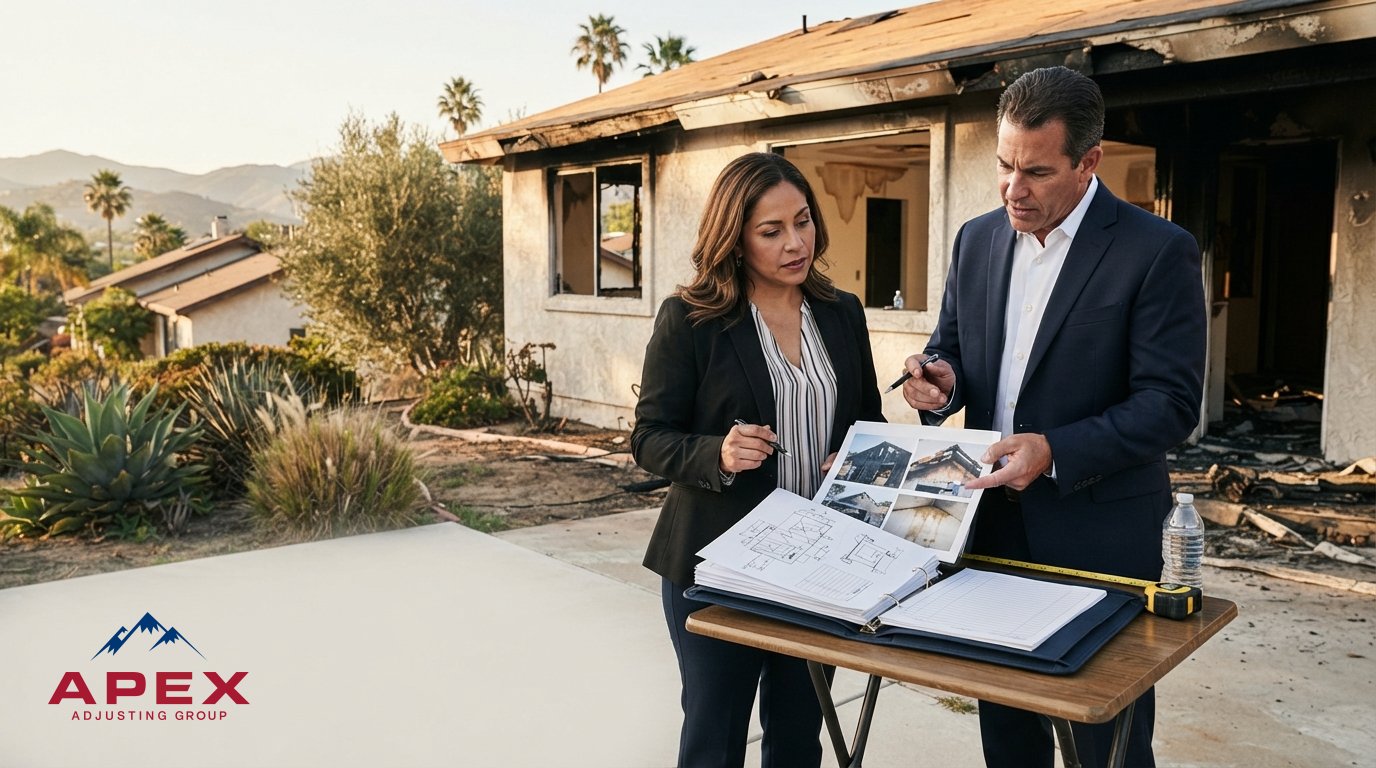
An insurer's initial payment is rarely the final word on what property repairs actually cost. When local contractor bids come in far higher than the adjuster's estimate, understanding how to get more money from insurance claim files becomes critical. Carrier adjusters often miss hidden moisture, overlook structural smoke damage, or draft incomplete scopes of loss that leave owners facing massive out-of-pocket bills.
It's frustrating to hold a settlement check that leaves essential repairs unfinished, especially while trying to decipher dense policy provisions alone. You don't have to accept an initial payout that fails to reflect real market labor and materials. Discover proven strategies to identify underpaid property damage, challenge inadequate insurer scopes, and secure a fair settlement that reflects your true loss.
Ahead, explore practical methods to spot line-item gaps in carrier estimates, file effective supplemental claims, and establish the documentation needed to recover full replacement cost value.
Key Takeaways
- Learning how to get more money from insurance claim settlements starts with auditing the adjuster's initial estimate against local contractor pricing.
- Understanding specific policy provisions, such as replacement cost value terms and depreciation recovery deadlines, protects funds you are entitled to collect.
- Building objective evidence through line-item repair scopes and detailed damage photography eliminates subjective debate during claim negotiations.
- Evaluating your options between filing supplemental requests and invoking the policy appraisal clause clarifies the most direct path to resolve underpayments.
- Partnering with an independent, licensed public adjuster ensures your property damage is thoroughly documented and negotiated strictly on your behalf.
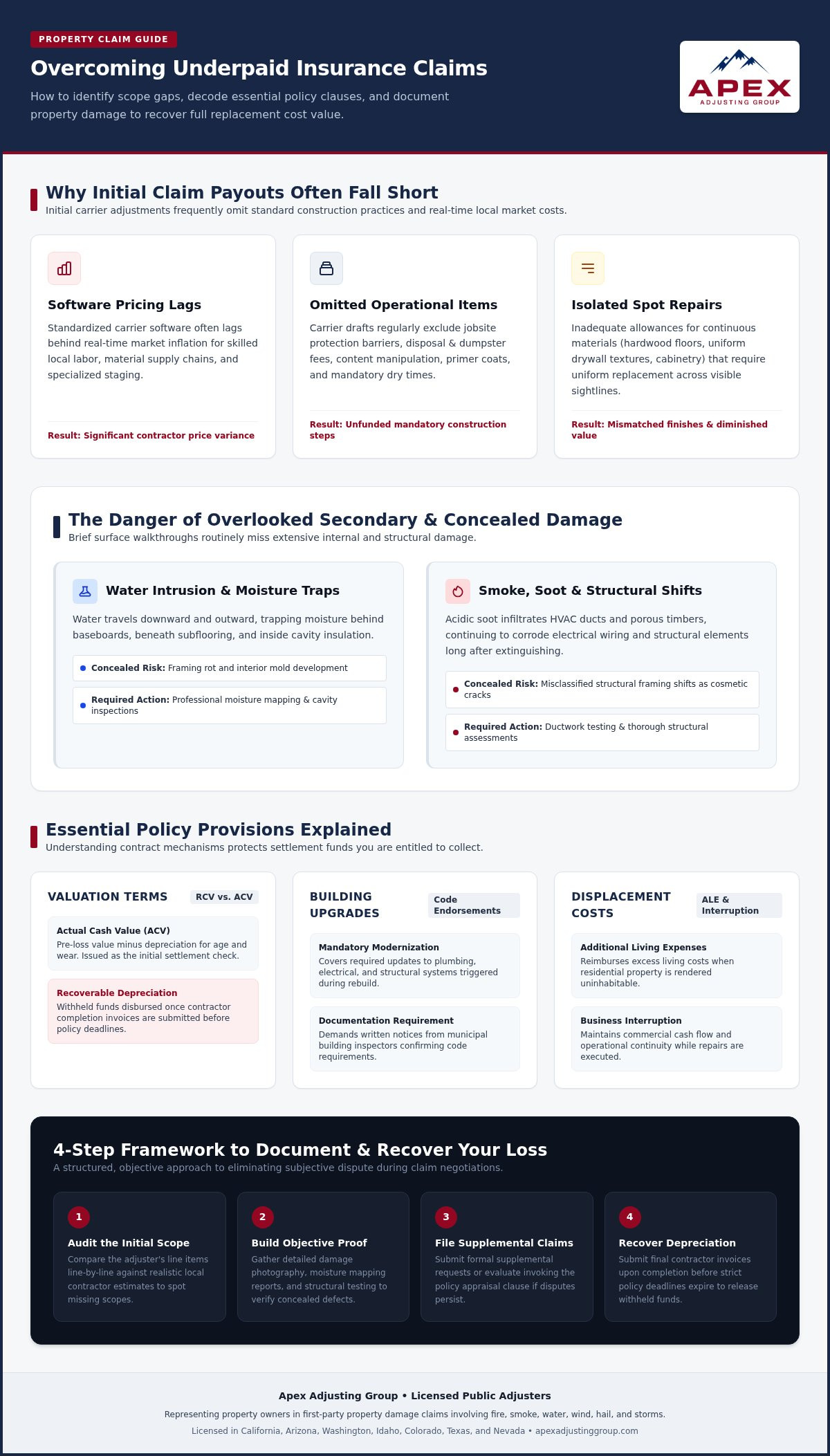
Why Initial Insurance Claim Offers Often Fall Short
Receiving a settlement check that doesn't cover contractor estimates is a harsh reality for many property owners. Carrier payouts rarely reflect actual local market rates for skilled labor and materials. Staff adjusters handle high caseloads, which often leads to brief property walkthroughs where structural nuances go unrecorded.
Most carrier scopes rely on standardized estimating software that lags behind real-time supply chain pricing. Essential operational expenses, such as dumpster rentals and specialized staging equipment, are routinely left off the initial summary. Understanding how to get more money from insurance claim estimates begins with treating the adjuster's initial statement as a preliminary draft rather than a binding final decision. Property insurance exists to restore your asset to its pre-loss condition, giving policyholders the clear right to file supplemental requests when estimates fall short.
Common Gaps in Carrier Scope of Loss
Carrier estimates frequently omit secondary construction activities required by local building standards. A line-item review of standard carrier adjustments regularly reveals systemic omissions, such as:
- Demolition, disposal fees, and jobsite protection barriers.
- Content manipulation to move, store, and reset undamaged items safely.
- Required surface preparation, including primer coats and adequate dry times.
Carriers also push for isolated spot repairs. When adjusting residential claims, continuous materials like hardwood flooring, uniform drywall textures, and adjoining cabinetry often demand complete replacement across sightlines rather than mismatched patches.
Overlooked Secondary and Concealed Damage
Visual inspections capture only visible surface defects, leaving severe structural issues unaddressed. Water travels downward and outward, trapping moisture behind baseboards, beneath subfloors, and within insulation cavities. Without specialized moisture mapping, this trapped humidity causes framing rot and interior mold development.
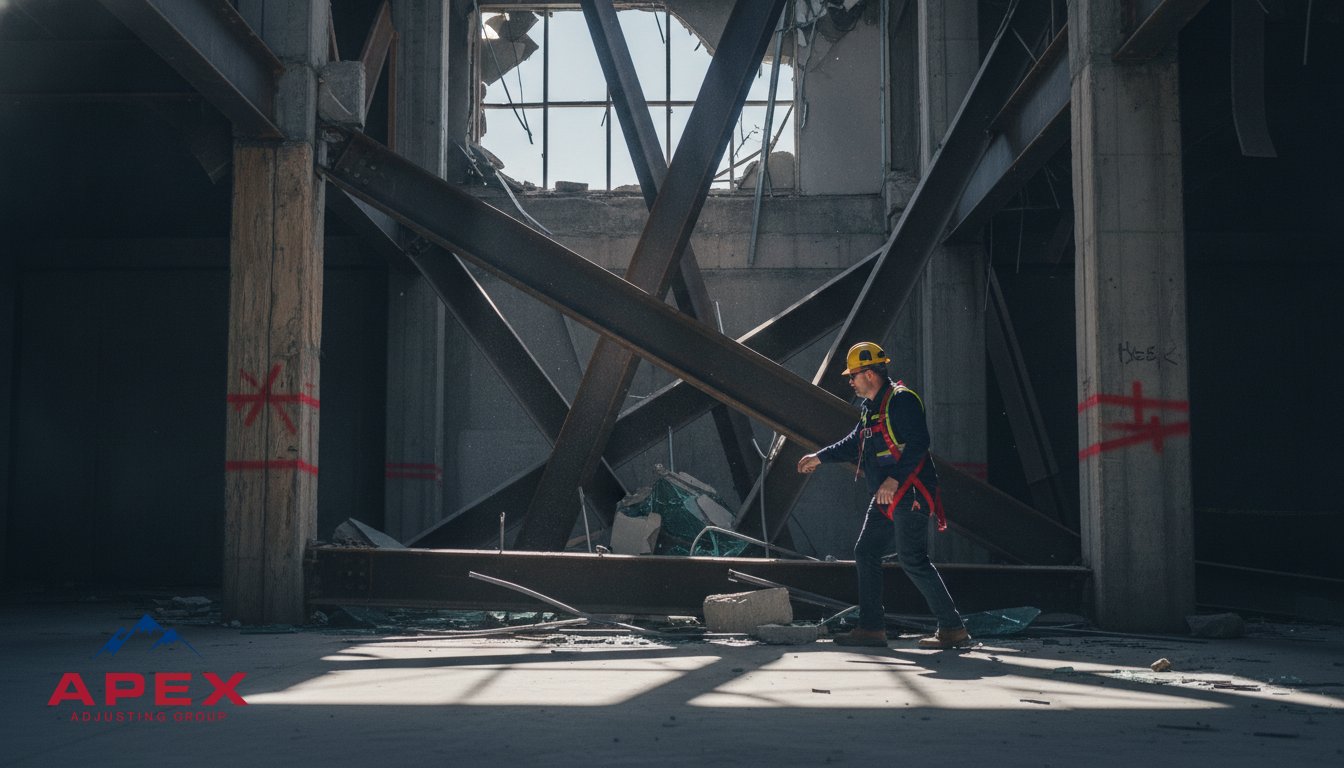
Fire and smoke incidents present similar challenges. Acidic soot penetrates HVAC ducts and porous attic timbers, leaving corrosive residues that continue to degrade wiring and framing long after the initial event. Adjusters frequently classify severe framing shifts or ceiling cracks as minor cosmetic flaws or normal settling. Documenting these concealed damages requires thorough testing rather than quick visual assumptions.
Key Policy Clauses That Impact Settlement Payouts
Insurance policies are binding contracts with precise valuation rules. When policyholders fail to parse the declarations and conditions, legitimate recovery funds get left on the table. State guidance on Understanding Your Insurance Policy emphasizes that the actual payout depends heavily on whether your coverage pays replacement costs or depreciated actual value.
Replacement Cost Value Versus Actual Cash Value
Most property coverage falls into two valuation categories: Replacement Cost Value (RCV) and Actual Cash Value (ACV). ACV pays the pre-loss value of damaged property, subtracting substantial depreciation for age and wear. The insurer issues an initial ACV disbursement, withholding the remaining funds as recoverable depreciation until work is done.
An insurance claim settlement too low often stems from carrier adjusters aggressively depreciating non-depreciable items like labor or simple tear-out costs. Unlocking how to get more money from insurance claim disbursements requires submitting contractor completion invoices before policy deadlines expire to collect all withheld depreciation.
Ordinance, Law, and Code Upgrade Provisions
Rebuilding damaged structures routinely triggers municipal building codes that did not exist when the property was built. Standard policies exclude the extra expenses required to bring undamaged framing, plumbing, or electrical systems up to modern code standards.
An Ordinance or Law endorsement bridges this gap by covering mandatory modernization costs. Securing these funds requires strict coordination with your builder. Contractors must submit explicit written notices from local building inspectors showing that specific code upgrades are legally required before permits will clear.
Additional Living Expenses and Business Interruption
Property claims often extend far beyond physical brick-and-mortar repairs. Homeowners forced out of their homes can recover temporary rent, moving costs, and storage fees through Additional Living Expense (ALE) provisions. Commercial owners can claim lost net profits, ongoing lease obligations, and essential payroll through business interruption riders.
- Retain every lodging receipt, meal invoice, and incremental utility bill.
- Compare post-disaster living expenses directly against pre-loss monthly budgets.
- Provide historical profit-and-loss statements, tax filings, and vendor contracts for commercial losses.
Owners uncertain about whether their policy contains these provisions can arrange a free claim review to audit endorsements and recover all available policy proceeds.
Comparing Methods to Increase Your Insurance Settlement
Disputing a low payout requires choosing an escalation route that fits your situation. Property owners typically choose between negotiating directly, demanding policy appraisal, or hiring licensed claims representation. Each path has distinct trade-offs in time, expense, and technical requirements.
Filing a state regulatory complaint rarely resolves monetary disputes because departments of insurance monitor statutory adherence rather than pricing disagreements. Deciding how to get more money from insurance claim files depends entirely on the size of the valuation gap and your comfort level reading complex construction estimates.
Self-Negotiation and Supplemental Filing
Handling discussions personally works best for minor pricing adjustments where damages are contained. You must secure itemized contractor bids that mirror standard line-item formats rather than submitting generic lump-sum proposals.
Send a structured comparison package directly to the desk adjuster showing missed square footage, omitted materials, or incorrect labor rates. Review our guide on how to dispute insurance claim settlement decisions to structure your written requests with clear photographic proof.
The Insurance Appraisal Process
When you reach an impasse regarding repair costs, most commercial and homeowner policies provide an alternative dispute mechanism. Invoking appraisal bypasses typical desk adjuster negotiations entirely:
- Appraiser Selection: Both you and the carrier retain an independent appraiser to calculate the physical loss independently.
- Umpire Appointment: The two appraisers agree on an impartial third-party umpire to resolve any disagreements.
- Binding Award: An agreement signed by any two of the three participants sets the final settlement figure.
This process evaluates only the scope and pricing of the loss, not policy coverage disputes. It provides a structured venue to resolve substantial pricing divides.
Hiring a Licensed Public Adjuster
Complex losses involving significant structural damage often demand dedicated professional representation. Independent adjusters and company adjusters protect the financial interests of the carrier. Licensed public adjusters work exclusively for the policyholder.
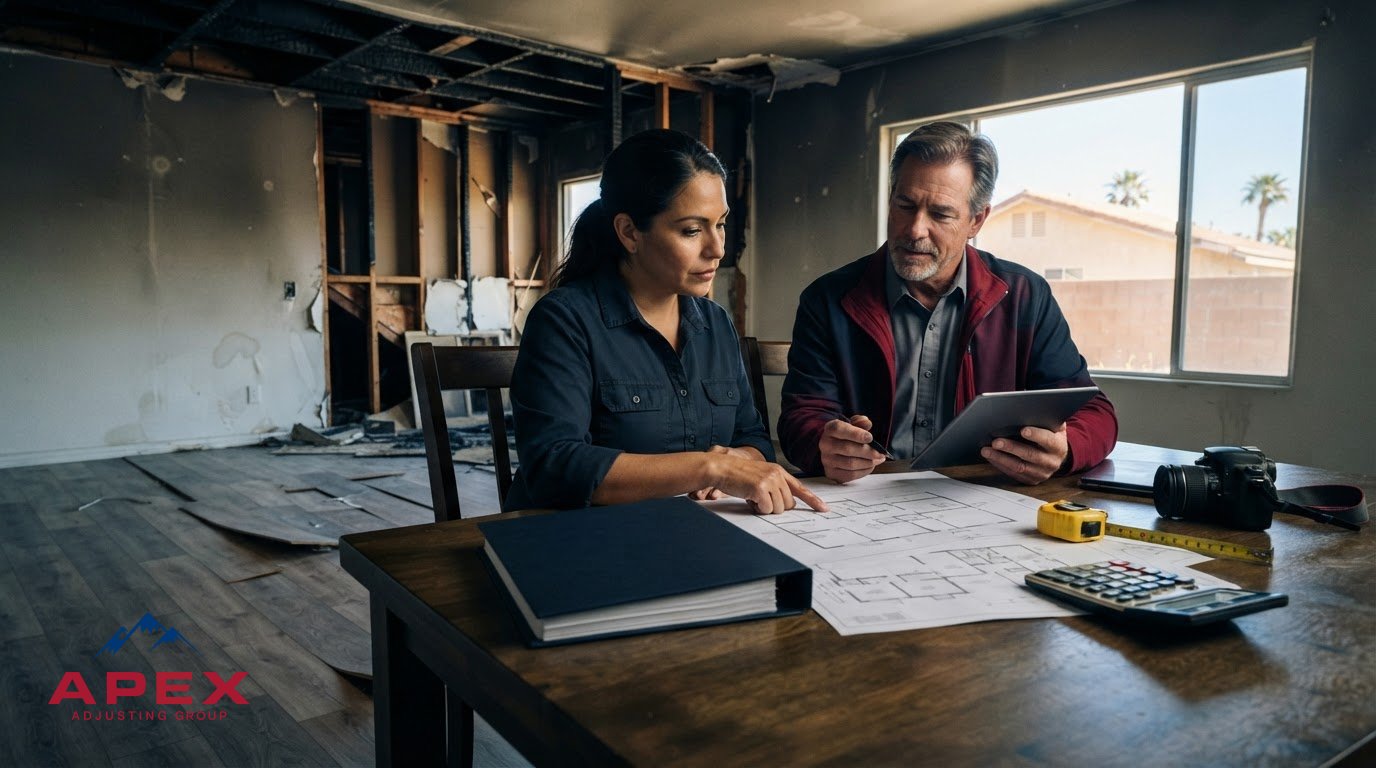
These professionals conduct exhaustive structural inspections, uncover hidden damages, and compile line-item Xactimate estimates identical to the systems insurers use. They negotiate directly with the carrier on your behalf. Public adjusters operate on a contingency fee basis, collecting payment solely out of the recovered settlement funds without upfront costs.
How to Build a Thorough Claim File That Demands Payment
Subjective complaints do not overturn a desk adjuster's valuation. Empirical evidence does. When learning how to get more money from insurance claim disputes, your claim file must present undeniable proof that ties directly to real repair costs and policy language.
Documenting Structural and Material Losses
Clear imagery establishes the baseline of your loss before cleanup begins. Capture wide-angle overview shots of every affected room alongside close-up images of damaged building components, trade markings, and material stamps.
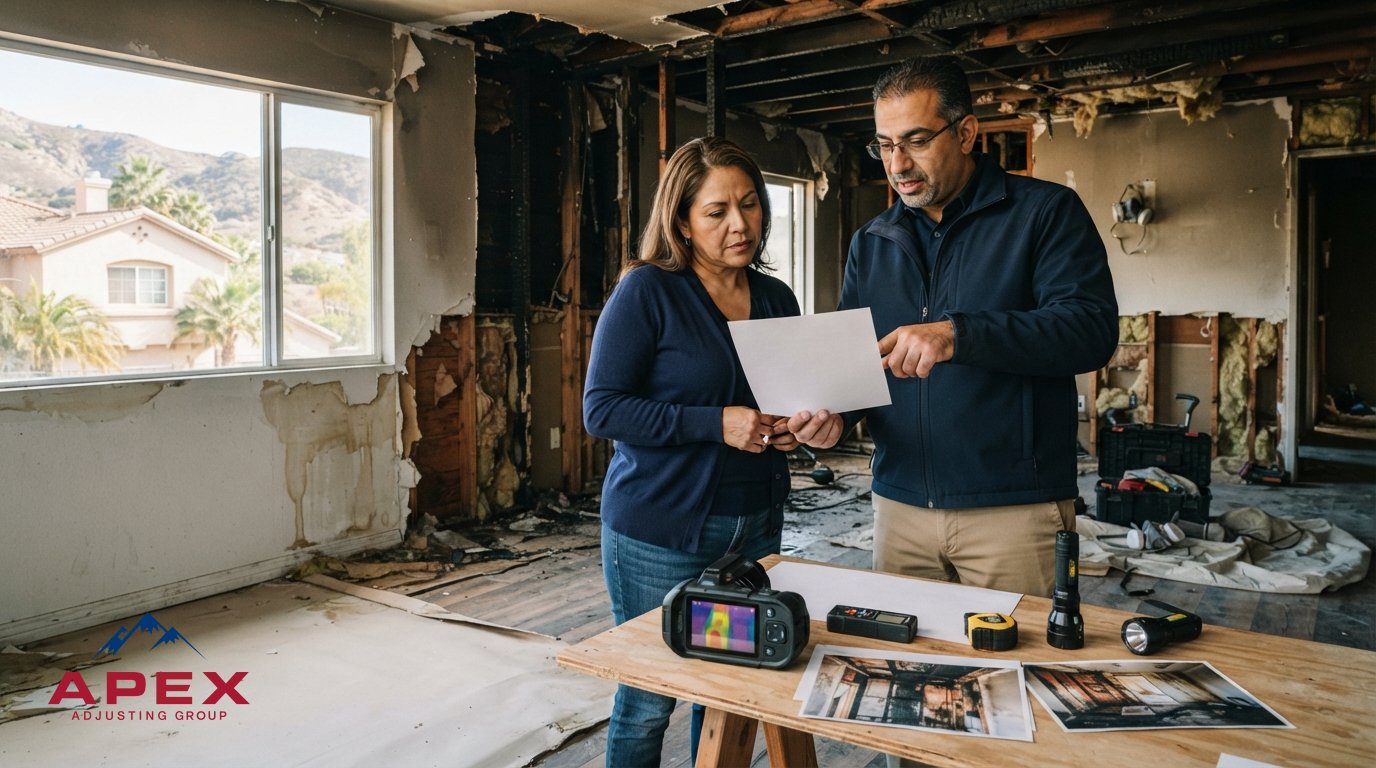
Moisture meters, thermal imaging cameras, and hygrometers generate objective data logs that prove water migrated deep into wall framing. If your roof, tile, or siding features discontinued product lines, secure manufacturer verification letters confirming matching replacement isn't possible. Property owners dealing with extensive structural damage often seek professional support for their residential claims to verify every hidden assembly is scoped correctly.
Creating a Granular Personal Property Inventory
Generic descriptions lead to deflated payouts. Carrier adjusters often price damaged property against entry-level store brands if an inventory list simply says "television" or "sofa."
Build an itemized schedule detailing the exact specifications of each item:
- List the precise make, model numbers, serial tags, and approximate purchase dates.
- Attach original purchase receipts, bank statements, and confirmation emails.
- Include active links to current retail listings for exact models or modern equivalents.
Managing Written Records and Communications
Paper trails prevent delays and unrecorded promises. After every phone conversation with an adjuster, send a brief follow-up email summarizing the discussion and confirming any agreed deadlines.
Save every letter, engineering report, and preliminary estimate in a dedicated digital file. Recognizing common carrier pitfalls, such as the tactics explained in our review of insurance adjuster lowball offer traps, keeps your claim moving forward without unnecessary administrative stalls.
Selecting the Right Professional to Maximize Your Recovery
Resolving major scope disputes requires technical property expertise rather than general negotiation tactics. Insurance adjusting is a specialized field with distinct building valuation rules. When evaluating how to get more money from insurance claim offers, partnering with the right licensed professional ensures your damages are calculated using the exact standards carriers recognize.
Qualifications to Demand from a Public Adjuster
Always verify licensing credentials before granting anyone authority to inspect or discuss your loss. Public adjusters must hold active state licenses specifically authorizing them to represent policyholders in California, Arizona, Washington, Idaho, or Nevada.
Technical qualifications matter just as much as credentials. Demand evidence that your representative regularly builds estimates using Xactimate, the same software platform utilized by carrier desk adjusters. Handling substantial business losses also requires proven experience preparing commercial claims, including machinery depreciation schedules, code compliance demands, and complex operational reviews.
Understanding Contingency Agreements and Client Rights
Legitimate public adjusters work on a contingency fee model. This arrangement requires zero upfront out-of-pocket costs from the property owner. The professional fee represents an agreed percentage collected solely from the actual settlement proceeds secured from the carrier.
Representation contracts should clearly outline services, scope of representation, and cancellation provisions required by state law. You maintain absolute control throughout the entire engagement:
- The public adjuster inspects the site, gathers technical data, and negotiates directly with carrier personnel.
- The carrier issues formal offers based on the substantiated scope adjustments.
- The policyholder retains the final authority to approve or reject any monetary settlement.
Taking the First Step Toward a Fair Settlement
Compare the initial adjuster scope against bids provided by local trade contractors. Look closely for missing tear-out line items, low material allowances, and unaddressed secondary issues like trapped moisture or structural soot.
Do not sign final settlement releases or cash checks marked "full and final payment" if repair estimates remain incomplete. Requesting a professional free claim review allows an independent adjuster to inspect the carrier's line items and determine the most direct strategy to recover what your property truly requires.
Take Control of Your Property Settlement
Accepting an initial adjuster estimate often means leaving necessary repair funds on the table. Discovering how to get more money from insurance claim disputes comes down to objective proof: itemizing missing demolition and labor costs, uncovering hidden structural damage, and understanding how recoverable depreciation rules apply to your loss. When carrier scopes fall short, you have the contractual right to challenge the valuation with verified evidence.
Apex Adjusting Group levels the playing field for property owners. As licensed public adjusters across California, Arizona, Washington, Idaho, Colorado, Texas, and Nevada, our team provides comprehensive Xactimate line-item scoping and detailed policy coverage analysis. Contingency-based representation ensures there is no fee charged unless a settlement is secured.
You don't have to carry the burden of an underpaid claim alone. Independent scoping protects your investment and ensures your property gets the full repair scope it deserves.
Frequently Asked Questions
Can you negotiate an insurance settlement after receiving a check?
Yes, you can negotiate after receiving a check, provided you haven't signed a release of claims. Initial checks typically cover undisputed amounts or initial actual cash value. Depositing these undisputed funds allows you to start emergency repairs without forfeiting your right to file supplemental requests for missed damage. Avoid cashing any check with language stating "full and final settlement" before auditing the adjuster's estimate against real contractor bids.
What happens if contractor estimates exceed the insurance adjusters payout?
When licensed contractor bids exceed the carrier's estimate, you can submit a formal supplemental claim. Provide your insurer with an itemized, line-item repair estimate rather than a single lump-sum bid. Your contractor's documentation must detail local labor rates, material specifications, and code requirements omitted by the adjuster. If the desk adjuster refuses to adjust pricing to match local trade realities, invoking the policy appraisal clause can resolve the scope divide.
How do public adjusters get more money from an insurance claim?
Public adjusters uncover how to get more money from insurance claim disputes by conducting comprehensive inspections that carrier adjusters often rush. They use thermal cameras and moisture meters to document concealed structural water or smoke damage. Then, they build detailed, line-item Xactimate estimates based on current local labor and material pricing. By aligning physical proof with specific policy endorsements, they eliminate scope gaps that suppress initial payouts.
Can my insurer cancel my policy for disputing a lowball offer?
Insurers cannot cancel your policy simply because you dispute a settlement offer or file a supplemental request. Property policies are contracts that provide specific mechanisms, such as supplemental filings and appraisal, to resolve valuation disputes. State insurance regulations across California, Arizona, Texas, Washington, and Nevada protect policyholders from retaliatory cancellations during active disputes. Disputing an inadequate scope is a standard contractual process, not grounds for policy termination.
How long do policyholders have to submit supplemental property claims?
Filing deadlines depend on specific policy conditions and state regulations. Most property policies allow policyholders between one and two years from the initial date of loss to discover hidden damage and submit supplemental claims. Certain jurisdictions require notice within specific timeframes once concealed problems are uncovered. Always review your policy's conditions page or consult a licensed professional promptly to avoid missing strict contractual submission windows.
What is the difference between an insurance adjuster and a public adjuster?
The core difference centers on representation. Staff adjusters and independent adjusters are hired and paid by insurance companies to protect the carrier's financial interests. In contrast, licensed public adjusters work exclusively for home and commercial property owners. A public adjuster evaluates damages, writes comprehensive scopes, and negotiates settlements on your behalf on a contingency fee basis, ensuring your property recovery remains the top priority throughout the claim.
Can commercial property owners reopen settled claims for hidden damage?
Commercial property owners can reopen claims if newly discovered damage stems directly from the original covered incident. If water or fire damage compromised structural components behind walls or under industrial equipment, you can request a supplemental file reopening. Achieving success requires thorough technical reports demonstrating that the concealed problems were omitted from the adjuster's initial scope and weren't caused by post-settlement neglect.
Need Help with Your Insurance Claim?
Our licensed public adjusters can help you get the maximum settlement you deserve. Contact us today for a free claim evaluation.
Related Articles