Your Austin fire insurance policy is a complex financial contract, not a simple repair budget. When pursuing an austin fire damage insurance recovery, most property owners feel a crushing sense of urgency to settle while the smell of smoke still hangs in the air. You may worry that hidden soot behind drywall or charring in the attic will stay unaddressed once the adjuster leaves. It's a high-stakes situation where the carrier's interests don't always align with your own.
As licensed public adjusters, not attorneys, we understand that securing a settlement for the true cost of repairs requires a technical approach to documentation. This guide outlines the professional steps to identify every category of loss, from structural damage to invisible smoke odors. We'll show you how to interpret your specific policy language and handle the heavy lifting of claim negotiation. By shifting from a passive claimant to an informed policyholder, you can protect your investment and find a clear path through the crisis.
Key Takeaways
- Take immediate action by securing the property and notifying the insurance carrier to establish a firm foundation for your claim.
- Identify hidden smoke and soot damage that often remains invisible to carrier adjusters but significantly impacts the total value of your recovery.
- Master the technical language of your Austin policy, including the critical differences between Replacement Cost Value (RCV) and Actual Cash Value (ACV).
- Utilize professional evidence and tactical negotiation strategies to ensure your austin fire damage insurance recovery covers the true cost of repairs.
- Partner with a licensed public adjuster who works on a contingency basis to level the playing field and advocate for your interests.
Navigating Austin Fire Damage Insurance Recovery
The minutes following a property fire are chaotic. You're facing structural instability and the overwhelming scent of burnt materials. This is the most critical window for your austin fire damage insurance recovery. You must act fast to protect your interests. Many owners mistake restoration contractors for claim experts. While a contractor cleans the mess, they don't negotiate your settlement. They often work through preferred vendor programs that prioritize the carrier's budget. A licensed Austin public adjuster manages the financial recovery, helping you pursue every line item required by your policy.
Immediate Steps for Property Safety and Claim Preservation
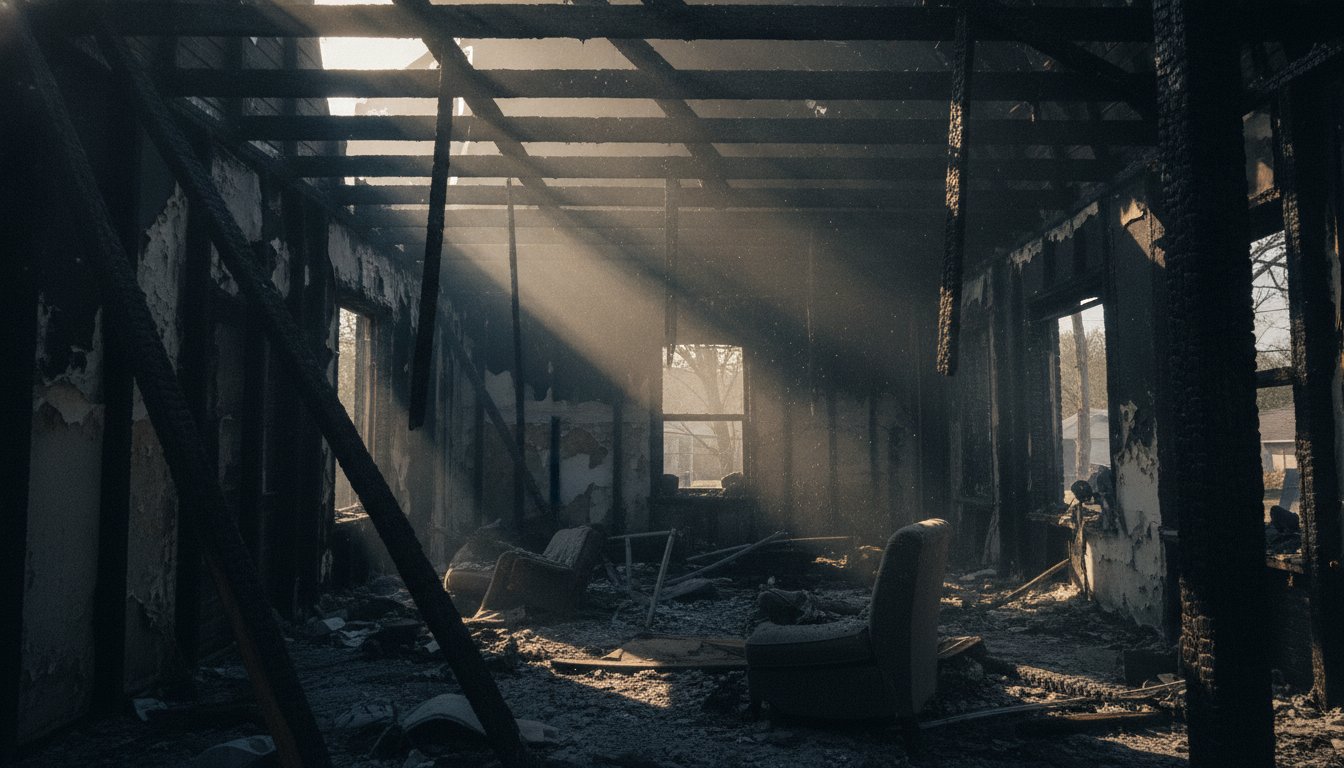
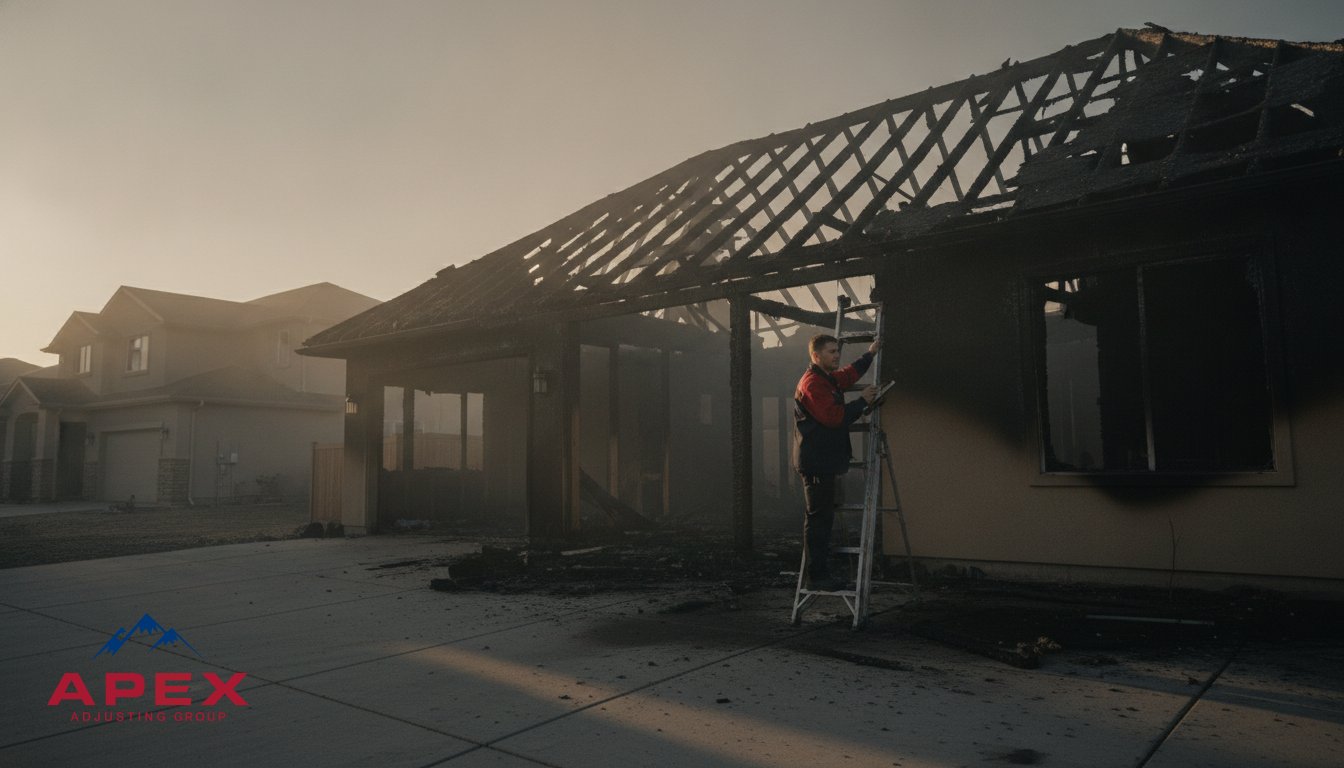
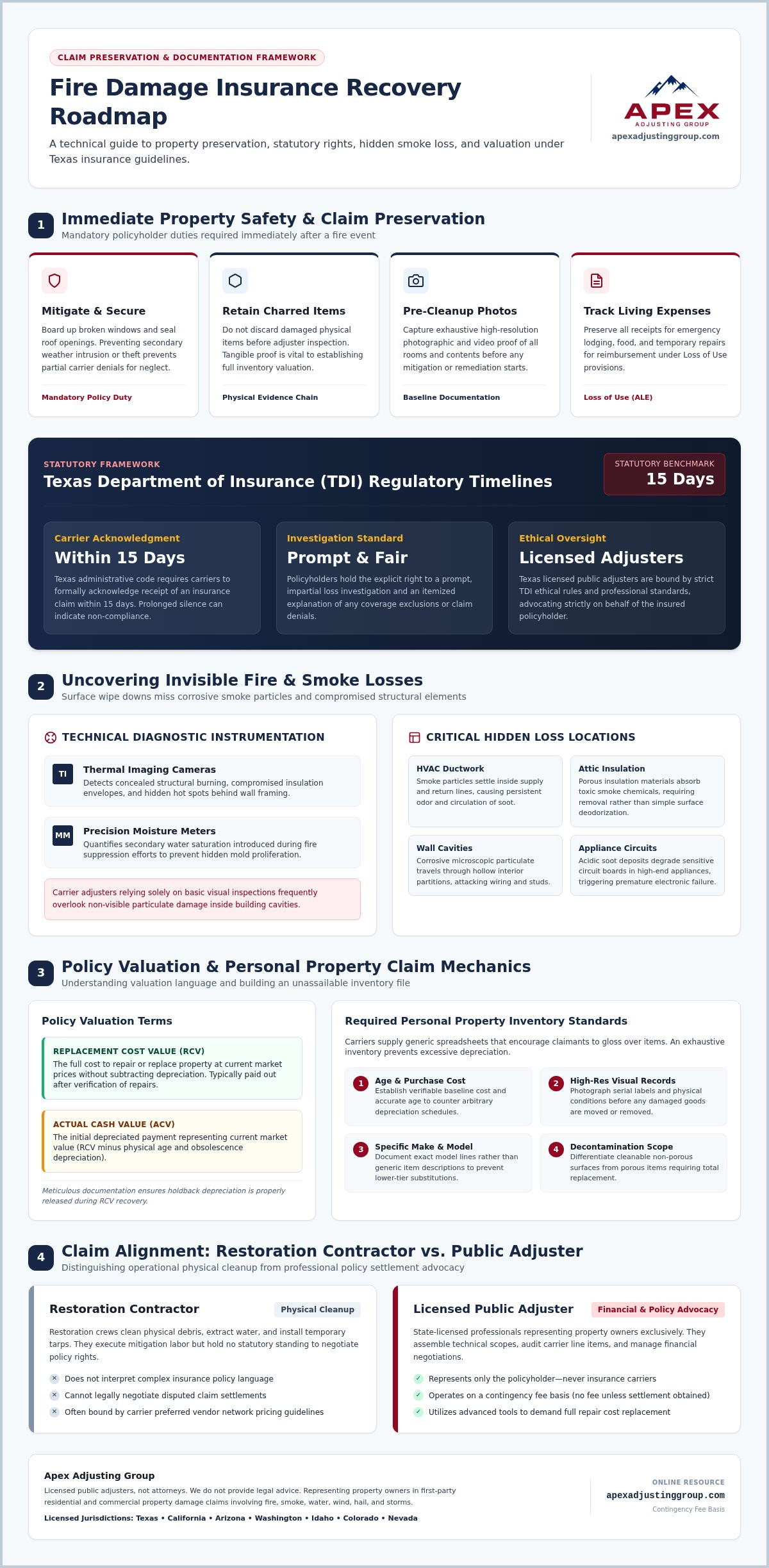
Protecting the property is your first duty under the policy. Board up broken windows and secure roof openings to prevent theft or weather damage. Failure to mitigate can lead to a partial denial if the carrier claims the damage worsened due to neglect. Don't discard any charred items yet. The adjuster needs to see the physical evidence of loss to calculate the inventory value. Take photos of everything before any cleanup begins. Keep every receipt for emergency lodging, meals, or temporary repairs. These costs fall under Loss of Use or Additional Living Expenses, which are standard components of homeowners insurance coverage limits. Documentation is your primary weapon in this process.
The Role of the Texas Department of Insurance (TDI)
Texas law protects policyholders through strict handling standards. The Texas Department of Insurance (TDI) mandates specific timelines for acknowledging claims and issuing payments. For example, carriers must typically acknowledge a claim within 15 days of receipt. If your carrier is silent for weeks, they may be violating state administrative codes. You have the right to a prompt investigation and a fair explanation of any denial. Licensed public adjusters in Texas are also governed by the TDI. We follow specific ethical and professional guidelines to ensure property owners aren't exploited during a crisis. Understanding these rights is vital for a successful austin fire damage insurance recovery. It prevents the insurance carrier from dictating the pace of your recovery and levels the playing field when you feel pressured to settle.
Documenting Fire and Smoke Damage for the Claim
Thorough evidence is the only way to secure a full austin fire damage insurance recovery. Insurance carriers often rely on surface-level visual inspections that miss the true scope of the loss. If you don't document a specific area of damage, the carrier won't pay for it. Professional adjusters use advanced tools like thermal imaging and moisture meters to detect structural compromises that the naked eye misses. This technical evidence forces the carrier to acknowledge damage they might otherwise ignore during their initial walkthrough.
Identifying Hidden Smoke and Soot Issues
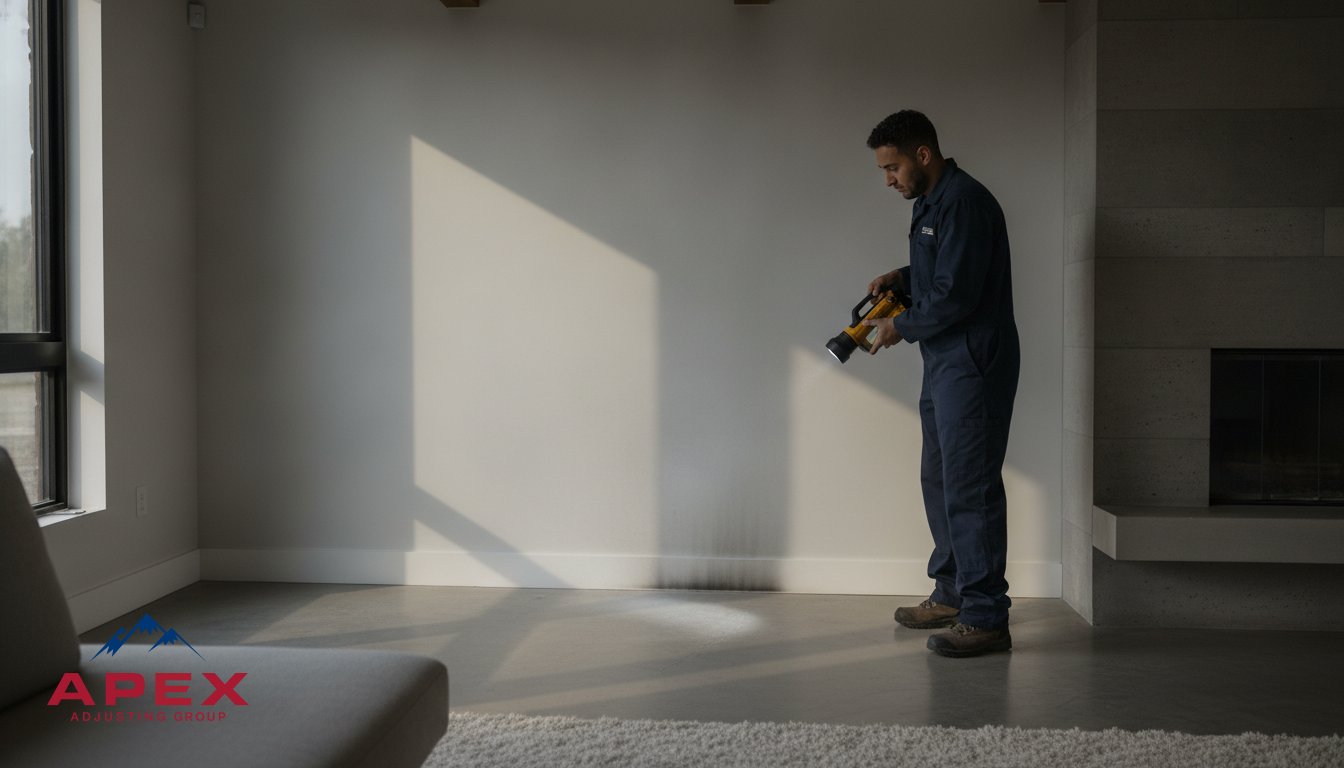
Smoke particles are microscopic and highly corrosive. They travel through wall cavities and settle deep within HVAC systems long after the flames are out. If these particles aren't addressed, they will cause long-term respiratory issues and degrade sensitive electronic components. You must inspect areas where soot naturally accumulates but stays hidden from view. This includes checking HVAC ductwork, attic insulation, and the internal circuit boards of high-end appliances.
The Texas Department of Insurance public adjuster guidance emphasizes the importance of hiring licensed professionals to identify these complex loss categories. A surface-level cleaning won't fix hidden soot; it requires a comprehensive decontamination plan. If you suspect your carrier is overlooking these technical details, a professional claim evaluation can pinpoint exactly what is missing from your current estimate.
Creating a Comprehensive Personal Property Inventory
Your personal property claim depends on a meticulous inventory. Carriers often provide a simplified spreadsheet that encourages you to gloss over smaller items. Don't fall for this trap. Whether you are filing residential property claims or commercial losses, the inventory must be exhaustive. Detailed records prevent the insurance carrier from applying excessive depreciation or omitting items entirely. It shifts the burden of proof from your memory to concrete facts.
- Record the age and original cost of every damaged item.
- Capture high-resolution photos and videos of goods before they are moved or discarded.
- Include specific model numbers for electronics and industrial equipment.
- Categorize items by room to ensure the total loss estimate stays organized and easy to verify.
This level of organization is what separates a partial settlement from a complete austin fire damage insurance recovery. By presenting a professional inventory, you demonstrate that you understand the value of your assets and expect the carrier to honor the contract. Never let the adjuster rush this stage of the process.
Interpreting Policy Provisions and Coverage Limits
Insurance policies are legal contracts, not suggestions. To secure a full austin fire damage insurance recovery, you must scrutinize the fine print of your declarations page. Carriers often rely on a policyholder's lack of specialized knowledge to limit their liability. They may highlight the 'Duties After Loss' section to pressure you into meeting impossible deadlines or providing unnecessary forms. As licensed public adjusters, not attorneys, we provide expert analysis of these provisions to ensure you remain in compliance while demanding every dollar owed under the contract.
Replacement Cost Value vs. Actual Cash Value
The math behind your settlement depends on which coverage type you own. Replacement Cost Value (RCV) covers the cost to purchase new items at today's prices. Actual Cash Value (ACV) only pays for the depreciated value of your property, which is often significantly less. Understanding the disaster insurance settlement process is vital because carriers frequently withhold a portion of the settlement as 'recoverable depreciation.' You may only receive these funds after proving the repairs are complete or the items are replaced. We identify these holdbacks and help you pursue the full RCV amount.
Additional Living Expenses (ALE) in Austin
Additional Living Expenses (ALE) provides a financial lifeline while your property is uninhabitable. This coverage handles the increase in your standard living costs caused by the fire. If you are displaced from an Austin home, ALE covers hotel stays, rental house deposits, and even the higher cost of dining out. Don't leave money on the table by failing to track these expenses. Keep a detailed log of every mile driven for claim-related errands and every meal purchased during your displacement. These costs add up quickly in the Austin market and are a standard part of most residential property claims.
Endorsements and riders can also change your available funds. Some policies include 'Law and Ordinance' coverage, which pays for required upgrades to meet current Austin building codes. Without this specific endorsement, you might be stuck paying for modern electrical or plumbing requirements out of pocket. Scrutinize your declarations page for these critical add-ons. They often represent the difference between a partial fix and a total restoration of your property value. If you are unsure what your policy covers, a licensed Austin public adjuster can provide a clear breakdown of your benefits.
How to Maximize Your Recovery Settlement
Maximizing an austin fire damage insurance recovery requires a shift in perspective. You aren't just asking for help; you're enforcing a financial contract. The burden of proof for the value of every damaged item and structural component rests entirely on your shoulders. Insurance carriers often utilize standardized estimating software that fails to account for the unique architectural details or high-end finishes common in Austin properties. A well-prepared, technical estimate backed by physical evidence can force the carrier to reconsider a lowball offer that ignores the true cost of restoration.
Avoiding Common Adjuster Lowball Traps
Don't accept the first settlement check as a final resolution. Carriers often issue an undisputed payment early in the process. While this provides immediate cash flow, it's rarely the full amount owed. Accepting this check is fine, but signing a final release of all claims is a mistake that can cost you thousands. Be cautious of preferred vendors suggested by the insurance company. These contractors may have established relationships with the carrier that prioritize cost-cutting over quality. If an item is denied or depreciated, demand a line-by-line written explanation. This documentation is essential if you need to challenge their findings later.
The Importance of Independent Damage Appraisals
Independent experts provide the leverage needed to move a stagnant claim forward. Your recovery should be based on actual Austin labor rates and current material costs, not national averages that don't reflect the local market. When a carrier refuses to acknowledge the scope of damage, the insurance appraisal process serves as a powerful tool to break the deadlock. This process allows independent parties to determine the value of the loss, often resulting in a more accurate settlement that reflects the property's true pre-loss condition.
Professional advocacy is the most effective way to ensure your commercial property claims or residential losses are handled fairly. We analyze every line item in the carrier's estimate to find omissions, from overlooked smoke sealing to incorrect tax calculations. By presenting a professional, evidence-based file, you demonstrate that you won't settle for less than what your policy promises. This proactive approach takes the pressure off you and places it back on the insurance company to fulfill its obligations.
Why an Austin Public Adjuster is Your Best Ally
The insurance carrier has a team of experts protecting their financial interests. You deserve the same level of professional support. An Austin public adjuster levels the playing field by providing expert representation that targets the maximum potential of your policy. We handle the technical documentation and assertive negotiation required for a successful austin fire damage insurance recovery. This advocacy takes the exhausting burden of carrier communication off your shoulders. It allows you to focus on your family or business while we manage the complex administrative hurdles.
How Contingency-Based Recovery Works
Financial stress is often the biggest hurdle after a property fire. Our services are contingency-based to remove that barrier. This means there are no out-of-pocket costs for property owners during the recovery process. Fees are a percentage of the final settlement negotiated for the client. This model ensures the adjuster is highly motivated to maximize the recovery. If we don't obtain a settlement, there is no fee. For local expertise and on-site inspections, contact Austin Public Adjusters to start your evaluation.
Professional Advocacy for Complex Claims
Insurance policies contain specific benefits and coverage extensions that most property owners overlook. We identify these provisions and apply them strategically to your specific loss. This professional oversight is especially vital for commercial property insurance claims. These files often involve business interruption, complex mechanical systems, and specialized inventory that require technical valuation. We analyze the carrier's initial estimate, find the omissions, and present a technical counter-argument based on current market data. Request a free claim review to evaluate your current offer before you sign any final releases.
Managing a fire claim is a full-time job. It requires constant follow-up and technical knowledge of building codes and policy language. Professional advocacy can reduce the time spent managing the claim process by streamlining the exchange of information. We ensure the carrier has everything they need to make a decision while preventing them from using unnecessary delay tactics. This proactive approach leads to a more efficient recovery and provides the peace of mind you need during a high-stress crisis. As licensed public adjusters, not attorneys, we focus on the facts of the damage and the language of your contract to get results.
Take Control of Your Property Restoration
Your austin fire damage insurance recovery depends on technical evidence and tactical negotiation. Insurance carriers often provide surface-level estimates that miss the true scope of structural restoration. You've learned that identifying hidden smoke damage and mastering complex policy provisions like Replacement Cost Value are essential to protecting your investment. Don't let the insurance carrier's internal guidelines dictate the final value of your home or business.
Apex Adjusting Group provides the professional advocacy needed to challenge underpaid or delayed claims. As Licensed Texas Public Adjusters, not attorneys, we specialize in Fire Damage Claims for both residential and commercial property owners. We operate on a contingency fee basis; there is no fee unless a settlement is obtained. This ensures our interests stay aligned with your goal of a complete and fair recovery.
You don't have to face the insurance company's adjusters alone. Put a seasoned expert in your corner and start rebuilding with confidence. We're here to handle the paperwork and the pressure so you can focus on moving forward.
Frequently Asked Questions
What is the difference between a public adjuster and an insurance company adjuster?
A public adjuster works exclusively for you, while an insurance company adjuster works for the carrier. The carrier's adjuster is tasked with protecting the insurance company's interests and minimizing their liability. In contrast, we advocate for your rights to ensure your austin fire damage insurance recovery reflects the true cost of repairs. We identify hidden damage and negotiate the technical details of the policy that carrier adjusters often overlook during initial inspections.
Can I hire a public adjuster if I have already started my fire damage claim?
Yes, you can hire a public adjuster at any stage of the claim process. Many property owners contact us after receiving an initial offer that feels too low or if their claim is being unnecessarily delayed. We review your existing file, identify missed line items, and present a professional counter-estimate to the carrier. Even if you have already received a partial payment, we can step in to handle the remaining negotiations.
How much does it cost to hire an Austin public adjuster for fire damage?
We operate on a contingency fee basis, which means there are no upfront costs or out-of-pocket expenses. Our fee is calculated as a percentage of the final insurance settlement we successfully negotiate for you. This structure ensures that our interests are completely aligned with yours. If we don't obtain a recovery from your insurance company, you don't owe us a fee. This makes professional representation accessible during a high-stress financial crisis.
What should I do if my insurance company denies my fire damage claim?
First, request a written explanation of the denial that cites specific policy language. Don't accept a verbal denial as final. Many denials are based on incomplete documentation or a misunderstanding of the cause of loss. Contact a licensed public adjuster for a free claim evaluation. We analyze the denial letter and your policy to determine if the carrier has misinterpreted the facts or overlooked coverage benefits that apply to your specific situation.
How long does the fire damage insurance recovery process usually take in Texas?
The timeline for an austin fire damage insurance recovery varies based on the complexity of the damage and the carrier's responsiveness. Texas law mandates specific deadlines for insurance companies to acknowledge claims and issue decisions, typically within 15 days of receiving the necessary information. However, complex fire claims involving structural instability or extensive smoke decontamination can take several months to resolve fully. Our role is to keep the process moving efficiently by providing thorough documentation.
Does homeowners insurance cover smoke damage if there was no actual fire in the house?
Yes, most standard policies cover smoke damage even if the fire occurred on a neighboring property or was confined to a kitchen appliance. Smoke particles are pervasive and corrosive, often causing extensive damage to electronics, upholstery, and HVAC systems. If your home smells of smoke or has visible soot deposits, you have a valid claim. We use technical equipment to document these particles and ensure the carrier pays for the professional decontamination required by your policy.
Can I reopen an insurance claim that has already been closed and paid?
You can often reopen a claim if you discover additional damage that was missed during the initial inspection. Many property owners find hidden soot or structural issues months after the initial settlement. As long as you are within the policy's time limits, you can pursue a supplemental payment. We specialize in reviewing closed files to identify underpaid items and negotiating with the carrier to secure the additional funds you deserve for a complete repair.
Will hiring a public adjuster delay my insurance settlement?
Hiring a professional typically streamlines the process rather than delaying it. While the carrier might take time to review our technical estimates, we prevent delays caused by incomplete paperwork or missing evidence. We handle the constant follow-up and provide the carrier with a comprehensive claim package that is difficult to ignore. By speaking the adjuster's language and meeting all policy requirements promptly, we often move the claim toward a resolution faster than an unrepresented property owner.
Need Help with Your Insurance Claim?
Our licensed public adjusters can help you get the maximum settlement you deserve. Contact us today for a free claim evaluation.
Related Articles