A repair estimate can look complete until disassembly reveals damage the first inspection could not see. For someone handling a USAA supplemental claim for hidden damage, the useful next step is to document each new repair finding and connect it to the original estimate, rather than simply requesting more money.
That gap can slow repairs and leave vehicle owners unsure what evidence to send or how to track a review. Create a clear record before newly discovered damage is repaired, then submit the supporting information through the claim’s stated process.
This guide explains how to photograph hidden damage, organize repair findings and estimates, and follow up on a supplement request. A separate loss to a home or commercial property requires its own claim records and review. Apex Adjusting Group’s licensed public adjusters represent property owners in first-party property damage claims.
- An auto hidden-damage supplement is clearer when it identifies specific repair findings missing from the earlier estimate.
- Follow a consistent sequence: identify the new damage, document it, prepare a revised scope, submit the supporting records, and track the review.
- Use photos that show both the affected area and enough surrounding detail to locate it, alongside itemized repair findings and relevant communications.
- If the review stalls or an item is disputed, identify the unanswered question or estimate difference before sending a concise written follow-up.
- Vehicle repairs involve an auto claim. Damage to a home or business is a separate property claim with its own records and review.
When a Vehicle Repair Estimate Misses Hidden Damage
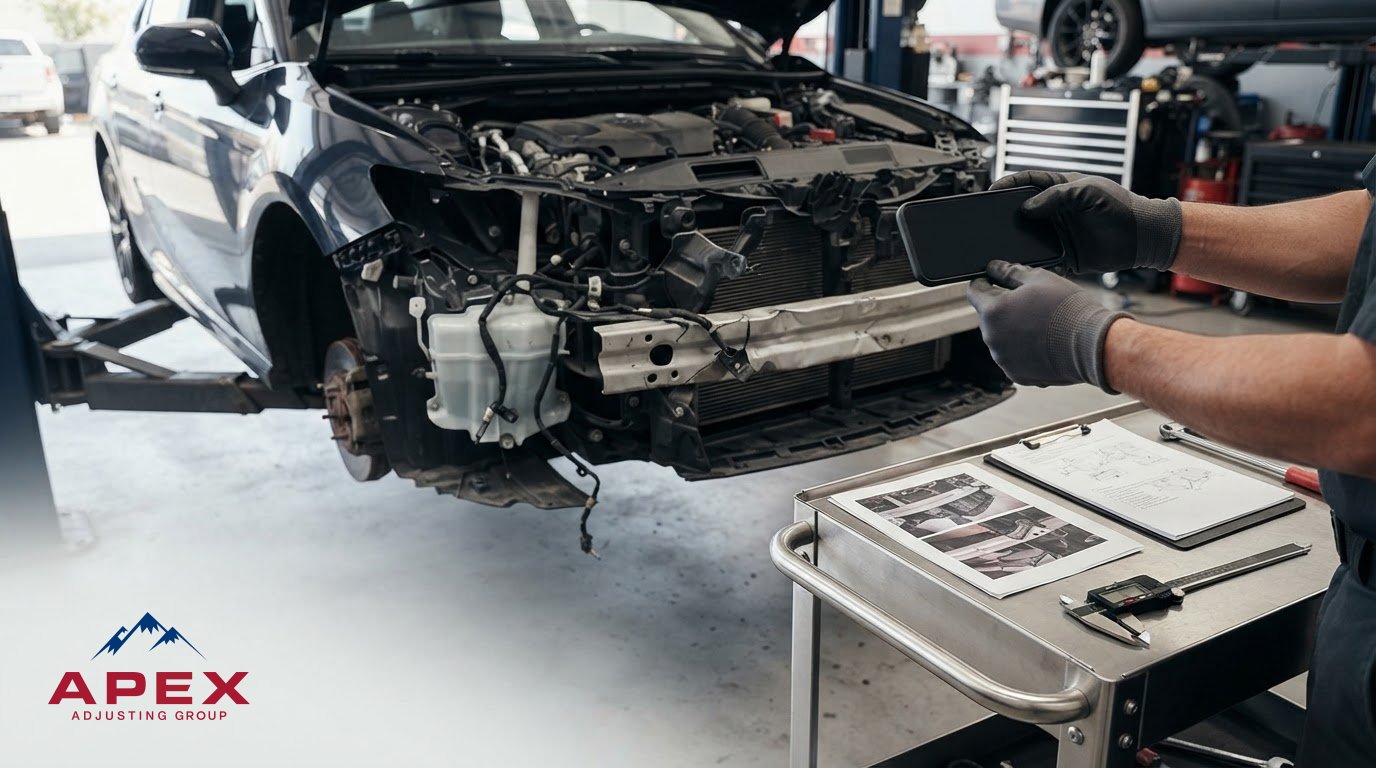
A repair facility may begin disassembly and find damage that was not visible during the initial vehicle inspection. A cracked mounting point, bent bracket, or damaged component beneath an exterior panel can change the repair scope. The initial estimate may not include that work because the affected area was concealed.
A supplement is a request to review documented repair items missing from an earlier estimate. It updates the repair information for consideration; it is not simply a request for additional money. The useful details are what was found, where it is, and how the finding relates to the reported event.
Why Damage May Become Visible After Disassembly
An exterior inspection shows only what is visible without removing damaged parts. Once a panel or component is taken off, the repair facility may identify an impact-related bend or a broken attachment point underneath. General information on Vehicle Inspection explains the broader role of inspections, while a repair teardown can reveal areas that were not accessible during an initial visual review.
Document the condition as it appears during disassembly. The repair record should identify the vehicle area and component, describe the observed damage, and explain why the finding is consistent with the reported event. “Additional damage” is less informative than a description tied to a specific part and location.
What a Supplement Does, and Does Not, Mean
A supplement gives the claim reviewer updated repair information to evaluate. It does not establish that the damage is covered or guarantee payment. The applicable policy and the facts of the claim guide the review, so a newly visible item still needs a supportable connection to the reported event.
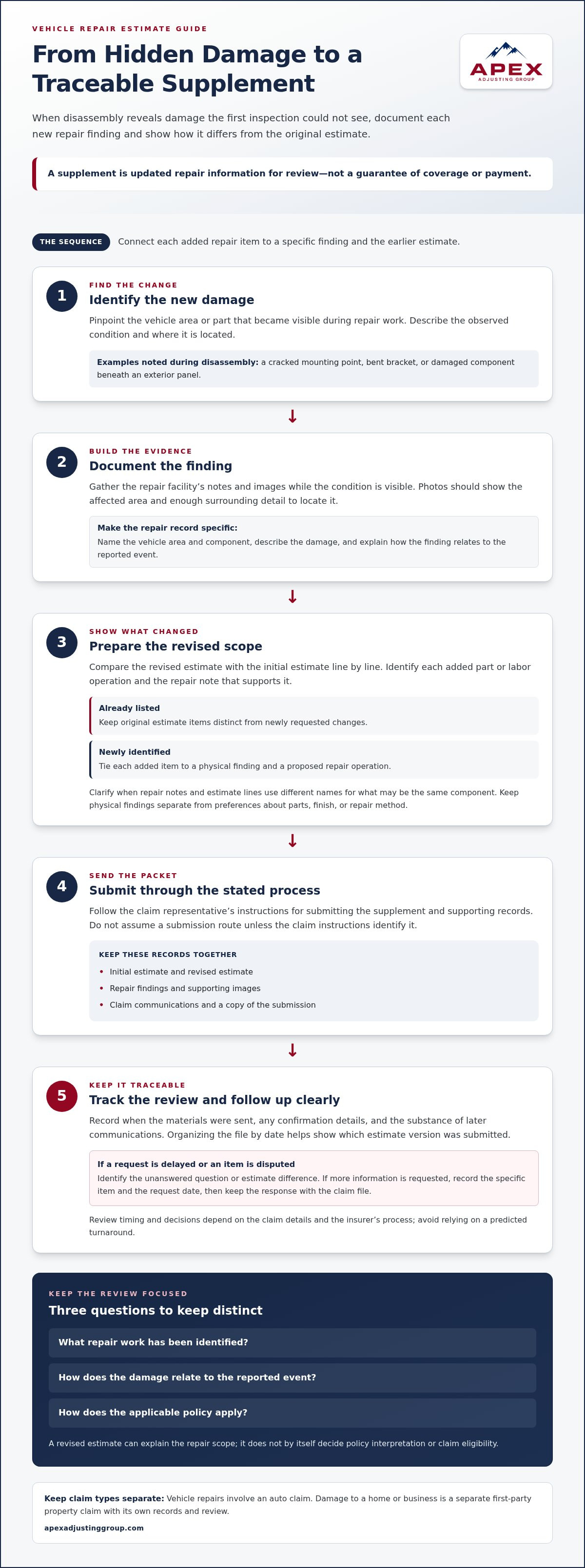
Keep three questions distinct: what repair work has been identified, whether the damage relates to the reported event, and how the policy applies. A revised estimate can explain the repair scope, but it does not decide policy interpretation or claim eligibility by itself.
That distinction matters when the repair plan changes. A newly documented damaged component is different from a preference for a particular part, finish, or repair method. The documentation should make clear whether an item reflects a physical finding or a choice about how to complete the repair.
Before submitting a revised scope, compare each added line with the original estimate. Identify the affected part, the newly observed condition, and the proposed repair operation. Do not present a preference or unrelated condition as newly discovered event damage. Clear distinctions help keep the supplement focused and make the request easier to assess.
How an Auto Hidden-Damage Supplement Is Reviewed
A supplement is easier to assess when each added repair item is tied to a specific finding and the original estimate. Keep the paperwork organized from the start. The repair facility may provide itemized findings and supporting images, while the claim representative reviews the added scope under the stated process.
Use this sequence to keep the request clear and traceable:
- Identify the new finding. Pinpoint the part or area and describe what became visible during repair work.
- Document it. Gather the repair facility’s notes and images that show the new condition.
- Prepare the revised scope. Compare the added work with the initial estimate and identify each requested change.
- Submit the materials. Follow the claim representative’s instructions for sending the supplement and supporting records.
- Track the review. Record when the materials were sent, any confirmation details, and the substance of later communications.
Keep the initial estimate, revised estimate, repair findings, images, and claim communications together. A file organized by date can show which version was submitted and whether a later request concerns an item already documented.
What the Initial Estimate and Revised Scope Show
Compare the original estimate with the revised scope line by line. Note which parts and labor operations were already listed, which items are new, and what repair notes support each addition. If the repair notes and estimate use different names for a component, clarify whether they refer to the same area.
This comparison helps the reviewer see what changed without having to infer the difference. It also helps the vehicle owner spot missing explanations or duplicated items before sending the packet.
How to Submit and Track the Supplement
Use the submission method provided by the claim representative. Do not assume a particular portal, email address, or other route is current unless the claim instructions identify it. Save a copy of the submission and note the date, confirmation details, and any follow-up communication.
Review timing and decisions depend on the claim details and the insurer’s process, so avoid relying on a predicted turnaround. If the representative requests more information, record the specific item and the date of the request, then keep the response with the same claim file. This creates a clear record of what has been provided and what remains under review.
Property damage to a home or business is handled as a separate first-party claim. Apex Adjusting Group represents property owners in these claims. Owners with a relevant property claim can request a free property claim review.
Evidence That Can Support a Hidden-Damage Review
A clear supplement packet connects each additional repair item to a visible condition and a specific vehicle part. Photos alone may not explain what changed, and an estimate alone may not show how the damage was discovered. Pair visual evidence with repair notes and an itemized revised estimate so the reviewer can follow the finding from discovery to requested work.
Keep the records focused on the reported event. For each added item, identify the component, describe the observed condition, and explain how the finding relates to the event. This connection is central to a hidden-damage auto supplement, although the evidence itself does not decide coverage.
Photographs and Repair Documentation
Photograph the damage before repairs continue when it is safe and practical. Take a wider view that shows where the area sits on the vehicle, then close-ups that capture the condition clearly. Include disassembled components when they help show the finding, but do not alter, move, or stage evidence in a way that changes its appearance.
Preserve original image files. Label copies by date, component, or repair stage, and keep repair notes that identify when and how each concealed condition was discovered.
A useful evidence packet typically includes:
- Clear photos of the affected area, with enough surrounding context to identify its location.
- Repair findings that describe the condition and how it became visible.
- An itemized revised estimate that identifies the additional repair work.
- Relevant communications about the finding, submitted documents, or requests for clarification.
Keep image labels factual. “Front-left bracket after panel removal” helps orient the reader without making conclusions the image may not support. If a photo does not show the component’s location clearly, pair it with a repair note explaining what the image depicts.
Organizing a Clear Supplement Packet
Arrange the packet so a reviewer can compare the original scope with the new information. Place the initial estimate first, followed by the revised scope, supporting photos, repair notes, and related communications. Keep a copy of the complete submission and file any response or request for more information with the claim documents.
For each added estimate line, include a brief explanation that answers three practical questions:
- What item or repair operation is new?
- What finding supports adding it to the scope?
- Where is the supporting photo or repair note?
Use matching component names across notes, photos, and estimate lines where possible. If terminology differs, explain the connection rather than leaving the reviewer to guess. Separate unrelated findings instead of combining them in a vague summary.
Before sending the packet, check that the files are readable, image labels match the written descriptions, and the revised estimate distinguishes added work from items already listed. An organized record cannot guarantee a particular decision, but it gives the reviewer a consistent account of what was found and why the repair scope changed.
What to Do When the Supplement Is Delayed or Disputed
A pending review or partial estimate can leave the repair facility unsure how to proceed. Before following up, identify the exact issue: an unanswered repair item, a document the reviewer requested, or a difference between the submitted scope and the estimate reviewed. A focused question is more useful than a general request for an update.
Following Up on a Pending Review
Use the claim’s established contact channel and include the claim reference as instructed. State when the supplement was submitted, list the documents provided, and ask whether anything remains outstanding. Keep the tone direct and neutral. Do not assume why the review is taking longer or suggest that information was ignored.
A concise written follow-up can include:
- The date the supplement and supporting records were submitted.
- A short list of the documents included, such as the revised estimate, repair findings, and images.
- The specific item or review status that needs clarification.
- A request to identify any additional information needed to continue the review.
Keep a copy of the message and any response with the claim file. If you speak by phone, note the date, the person or department contacted if known, and any next steps discussed. That record can prevent repeated explanations and make it easier to see what remains open.
Responding to a Partial or Disputed Estimate
Compare the estimate under review with the repair facility’s documented scope, item by item. Mark each added operation that appears omitted or changed, then match it to the relevant repair note or image. Keep the response specific: identify the estimate line, describe the difference, and point to the supporting record.
If the estimate excludes an item or changes the requested work, ask what information informed that difference and whether additional documentation is needed. Preserve the written explanation and any revised estimate. A disagreement over scope is not, by itself, a conclusion about coverage; policy terms and claim facts may affect how an item is assessed.
Keep repair decisions grounded in documented damage and current claim instructions. If a policy provision is unclear, review the policy documents and ask the claim representative how it applies to the item under review. For legal questions about rights or deadlines, consult qualified counsel rather than relying on general claim guidance.
For a separate first-party home or business property damage claim, Apex Adjusting Group represents property owners and can review the claim file. That review addresses the property claim, not an auto supplement.
When Hidden Damage Involves Property, Not Just a Vehicle
A single event can damage both a vehicle and a building, but a vehicle repair supplement does not address damage to the property. Each loss needs its own record and review. Keeping the claims distinct helps show what was damaged, where it happened, and which estimate or communication applies.
Separating Vehicle Damage from Building Damage
For example, a falling tree limb might damage a parked car and puncture a home’s roof. The vehicle repair estimate concerns the auto claim; roof damage is a separate property issue that may need its own claim review. Property owners can learn more about residential property claims and how they differ from vehicle repairs.
Maintain separate files, even when the damage came from the same event. Keep vehicle photos, repair estimates, and auto claim communications together. Organize building photos, repair findings, property estimates, and related claim correspondence separately. Label each file by damage location and claim reference, when available, so materials are not mixed or submitted in the wrong context.
When a Property Claim Review May Help
Apex Adjusting Group is a licensed public adjusting firm that represents property owners, not insurance companies, in first-party residential and commercial property damage claims. Public adjusters help document and present the property loss for review. Apex serves property owners across Southern California, Orange County, Los Angeles, San Jose, San Francisco, Oakland, and Sacramento, as well as in Arizona, including Phoenix and Tucson; Washington, including Seattle and Spokane; Idaho; and Nevada, including Las Vegas and Reno. The firm is licensed in California, Arizona, Washington, Idaho, Colorado, Texas, and Nevada.
A property owner may consider a review if damage to a home or business appears to be missing from the property estimate, the scope is unclear, or the claim is delayed or denied. The relevant policy, reported damage, and claim records shape the review. No particular coverage decision, payment, or timeline can be assumed in advance.
Apex works on a contingency basis: its fee is a percentage of what is recovered, and no fee is charged unless recovery is achieved. A free claim review is available for relevant property damage claims. The property claim can be assessed separately from any vehicle repair request.
If an event damaged both a vehicle and a home or business, keep each claim’s records distinct and direct each issue to the appropriate review process. Property owners with a separate first-party property damage claim can request a free review from Apex Adjusting Group.
Keep the Next Step Clear
Keep each unresolved decision tied to the correct claim file. A vehicle supplement concerns auto repair review; damage to a home or business belongs in a separate property claim record. If both were affected, do not let one estimate or set of communications stand in for the other.
For a USAA supplemental claim for hidden damage, continue with the auto claim process described by the claim representative. If a separate property loss is also underpaid, delayed, or denied, that issue may benefit from its own review. A property claim evaluation is separate from an assessment of a vehicle repair estimate.
Property owners with an active or recent first-party property damage claim can request a free review without pressure.
Clear records and the right review path can help you move forward with greater confidence.
Frequently Asked Questions
What is a hidden-damage supplement in an auto insurance claim?
A hidden-damage supplement is a request to review additional repair items documented after the initial estimate, often after disassembly exposes damage beneath a visible part. For a USAA supplemental claim for hidden damage, compare the original estimate with the revised scope and follow the claim representative’s submission instructions. Keep the supporting records with the claim file. Sending updated information does not by itself establish coverage or guarantee payment.
Can I submit a supplement after vehicle repairs have started?
A repair facility may identify additional damage after work begins, but the next step depends on the claim and the insurer’s process. Ask the claim representative how to submit the new finding, and keep a dated copy of the facility’s notes and revised estimate. If repair work is continuing, promptly clarify how to document the condition before it changes. The fact that repairs have started does not determine whether an item will be reviewed or covered.
What photos should I provide for hidden vehicle damage?
Provide clear, unaltered images that show the damaged part and enough of the surrounding vehicle to identify its location. A close-up of a damaged bracket, for example, is more useful when paired with a wider view showing where the bracket sits. If safe and practical, preserve images from before the repair progresses and of relevant disassembled components. Match each image to a repair note or estimate item so the reviewer can understand what it shows.
How do I check the status of an auto claim supplement?
Use the contact method or claim-management channel assigned to the active claim. Keep a simple log of the submission date, documents sent, any confirmation received, and later follow-ups. In a status request, identify the repair items still under review and ask whether anything else is needed. A specific question, such as whether a particular estimate line needs additional support, can make the next step clearer. Do not assume a review timeline.
What if the revised repair estimate is not fully accepted?
Compare the reviewed estimate with the repair facility’s documented scope and note each item that was omitted or changed. Refer to the relevant estimate line and supporting record, then ask the claim representative what information would help clarify the difference. Save the response with the claim file and keep the discussion factual and focused on the documented repair work. For questions about policy interpretation or legal rights, consult the policy or an appropriate qualified professional.
Does an auto claim supplement also cover damage to my home or business?
No. A vehicle supplement concerns the auto claim; damage to a home or business is a separate property claim with its own records and applicable policy. Keep building damage, estimates, and claim communications apart from vehicle repair documents. Apex Adjusting Group represents property owners in first-party residential and commercial property damage claims. The firm is licensed in California, Arizona, Washington, Idaho, Colorado, Texas, and Nevada.
Need Help with Your Insurance Claim?
Our licensed public adjusters can help you get the maximum settlement you deserve. Contact us today for a free claim evaluation.
Related Articles