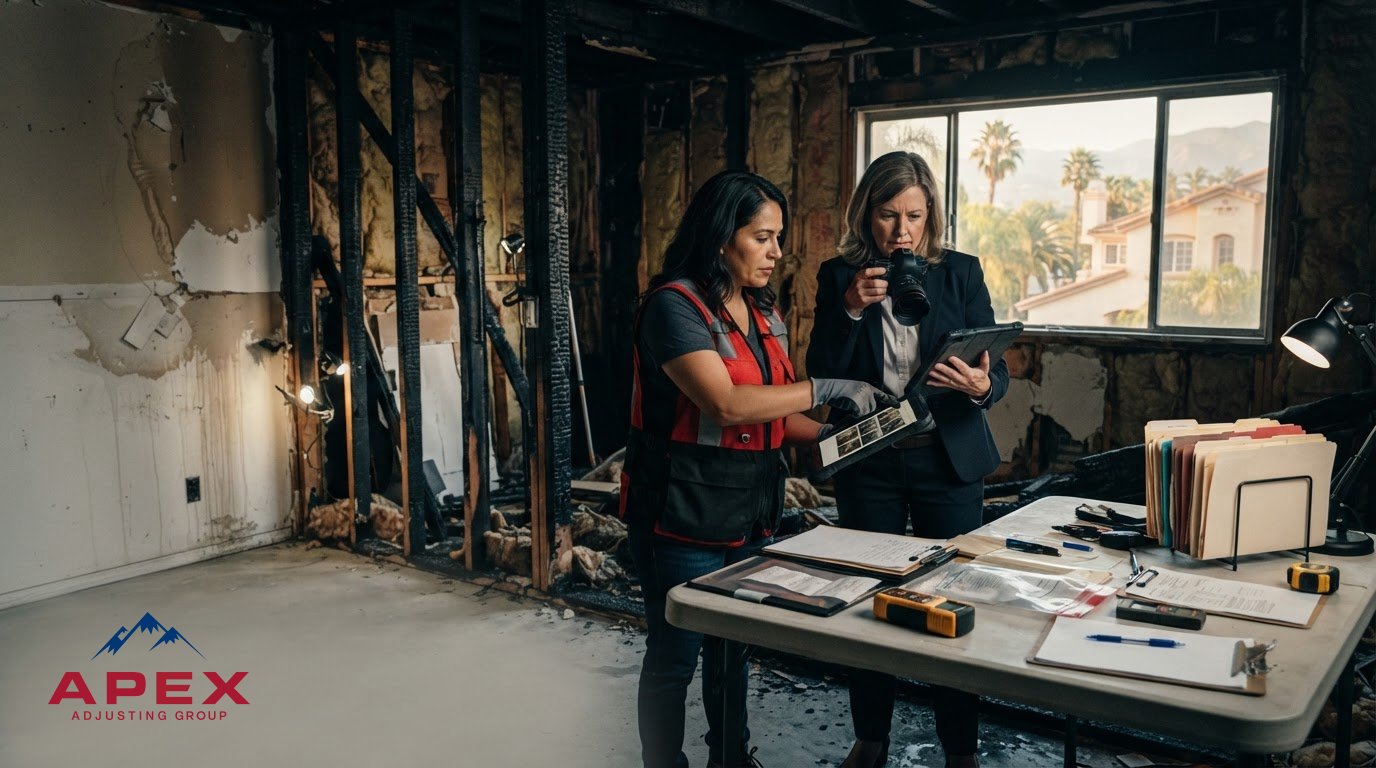
An earthquake claim denial can leave a property owner with a technical explanation that doesn’t match visible cracks, separation, or other damage. Knowing how to fight a denied earthquake claim in Los Angeles starts with comparing the denial’s reasoning with the policy language and the documented damage, rather than simply repeating that the property was affected.
A clear record can support a request for further review. Gather photographs, inspection findings, repair estimates, and evidence that addresses disputed causes. The denial letter is the insurer’s stated position, not a substitute for comparing the decision with the policy and the property’s damage records.
This guide explains how to review the denial, identify relevant policy provisions, organize damage documentation, and respond to disputed findings. Apex Adjusting Group is a licensed public adjusting firm that represents property owners, not insurance companies. Public adjusters can help review and present claim documentation; they aren’t attorneys and don’t provide legal advice.
Key Takeaways
- Compare the denial letter with your declarations page and relevant policy wording to identify the coverage issue the insurer raised.
- Photograph damage in wide and close-up views, and record each photo’s location and date when available.
- Connect each disputed finding to specific records, estimates, or damage evidence.
- If the denial doesn’t explain how a policy provision applies, request clarification in writing and focus on the unresolved findings.
- A public adjuster represents the property owner and can help review damage records, assess claim scope, and present the claim to the insurer.
Denied Earthquake Claim in Los Angeles: What the Denial Actually Means
A denial letter states the insurer’s position on coverage or payment, but may not explain how that position relates to every damaged item. To understand how to fight a denied earthquake claim in Los Angeles, compare the stated reason with the policy wording and the damage record. Don’t treat the letter as a complete explanation of the building’s condition.
A full denial rejects the submitted claim for payment. A partial denial may accept some damage while excluding other items. A scope dispute is different: the insurer may recognize damage but disagree about the repairs needed. Los Angeles public adjusting services can help property owners review how the damage and proposed repair scope are represented in a first-party claim file.
Common reasons an earthquake claim may be denied
Policy exclusions, disputed causes of damage, and missing documentation can affect how a claim is evaluated. Standard homeowners policies generally exclude earthquake damage, so the applicable earthquake policy or endorsement matters. The Earthquake Insurance Overview offers general background, but the owner’s own policy and denial letter determine which terms are relevant to the claim.
A pre-existing condition is a question to investigate, not an automatic explanation for every crack or separation. Compare records from before and after the earthquake, inspection notes, and dated photographs. The goal is to establish what changed and what evidence supports the connection, without assuming either that all damage resulted from the earthquake or that none did.
Scope differences matter as well. If a wall joint has separated but the insurer’s estimate includes only surface patching, the disagreement may concern the extent of repair rather than whether damage exists. Identify each disputed item and match it to photographs, inspection findings, or repair documentation.
Why Los Angeles earthquake damage needs careful documentation
In a seismically active area such as Los Angeles, visible damage may appear alongside conditions that aren’t apparent in a room-by-room walkthrough. Foundation cracks, wall separation, and shifted building components are examples worth documenting. A crack by itself, however, doesn’t establish when it formed or what caused it.
Record what you can observe without overstating what it proves. Take a wide photograph showing the room or building location, then close-ups of the affected area. Note the date and location when available, and preserve earlier photos, maintenance records, and inspection documents that may help establish the property’s prior condition.
Questions such as whether framing has shifted or what a crack means may require a qualified inspection. In a claim-file review, it helps to distinguish visible conditions from questions that need further evaluation. Consider the policy, denial letter, and supporting damage records together to show what was reported, what was evaluated, and what remains in dispute.
Review the Earthquake Policy and Denial Before Responding
A denial letter may quote a policy provision without explaining how it applies to each claim item. Before responding, compare the letter with the declarations page and the specific policy sections it cites. This helps distinguish the insurer’s stated reason from the policy wording and identify what still needs an answer.
Keep the documents together and review them in sequence. Start with the declarations page for the named insured, covered property, and listed limits, then find the relevant coverage and conditions in the policy. The California Earthquake Authority (CEA) provides general information about earthquake policies; the terms that govern a particular claim are in the owner’s policy.
Find the policy language tied to the denial
Locate the provisions for coverage, exclusions, deductible, limits, and loss settlement. An exclusion describes a circumstance or type of loss the policy doesn’t cover. A deductible affects the amount payable under the policy, and a limit caps specified coverage. Definitions can shape how terms such as “earthquake” or “building” apply. Read cited wording in context, including nearby conditions and exceptions.
Check whether the cited provision addresses both the damaged property and the cause stated in the denial. Don’t assume a homeowners policy and a separate earthquake policy use identical terms, or that another policy has the same definitions and settlement provisions. If the insurer cites an exclusion but doesn’t explain how it applies to a specific item, record that as an unanswered question.
Check the denial letter and claim communications
Create a reference record from the written claim file. Capture the stated reason, inspection findings, documents the insurer says it reviewed, and any information it requested. Note response dates and any review process described in the correspondence. Keep emails and letters with the policy documents so each statement can be traced to its source.
- Mark the policy section cited for each denied or limited item.
- Note what the inspection report says was observed and what it doesn’t address.
- Compare the report with available photographs, estimates, and submitted records.
- List unclear terms, missing explanations, and disputed findings, noting when each question was identified.
For example, a letter may say a repair item isn’t covered while an inspection note describes the condition but doesn’t explain the coverage decision. Flag the gap without assuming the reason. A dated question list keeps follow-up focused on specific wording, findings, or records.
Reviewing the policy alongside the claim records is a practical first step in how to fight a denied earthquake claim in Los Angeles. If comparing the documents and claim scope is difficult, a free claim review can help clarify what the file shows.
Document Los Angeles Earthquake Damage to Support the Claim
A useful damage file shows what was observed, where it appeared, and which records support the repair scope. Preserve existing records, photograph affected areas, organize estimates and inspection materials, then identify missing evidence. Keep observations separate from conclusions. “A diagonal crack is visible above the doorway” describes an observation; a finding about its cause or structural significance belongs to the qualified inspector who made it.
Dated, location-specific records make a file easier to review. They connect a photograph or estimate to a room, building component, and claim item, rather than leaving the reviewer to guess what the evidence shows.
Photograph structural and interior damage clearly
Photograph each affected area in context and detail. Start with an overview that identifies the room or exterior location, then take closer images of the condition. Capture foundation cracks, wall separation, ceiling damage, shifted fixtures, and affected finishes where present. Include a familiar reference point if it helps show location or scale, but don’t alter or mark the original image.
Keep original image files and record when and where each photo was taken. A simple log can identify the room, wall, or building area, the date, and a neutral description such as “crack at the east side of the living room doorway.” Don’t label a condition as earthquake-caused unless a professional finding supports that conclusion.
Organize inspections, estimates, and repair records
Collect inspection reports, contractor estimates, invoices, receipts, and records showing the property’s prior condition. Group documents by building area, such as foundation, interior walls, ceilings, or attached structures. Label each with its date and the item it supports. If an estimate covers multiple areas, mark the relevant line items so a reviewer can find them quickly.
Use a simple tracker to identify gaps before sending a response:
- Area: Identify the room or building component.
- Observed condition: Describe what is visible without assigning a cause.
- Supporting record: List the photo, report, estimate, or receipt.
- Open item: Note missing documentation or a question requiring further inspection.
This structure helps show where the documented repair scope differs from the insurer’s assessment. It also keeps the claim file consistent, with photographs, estimates, and inspection records supporting the property conditions and proposed work.
For general California guidance on earthquake coverage and claim resources, consult the California Department of Insurance Earthquake Resources. An organized file can’t establish causation by itself, but it gives the reviewer clear material to assess. A record-based approach is an important part of how to fight a denied earthquake claim in Los Angeles.
Respond to a Denied Earthquake Claim with a Clear Record
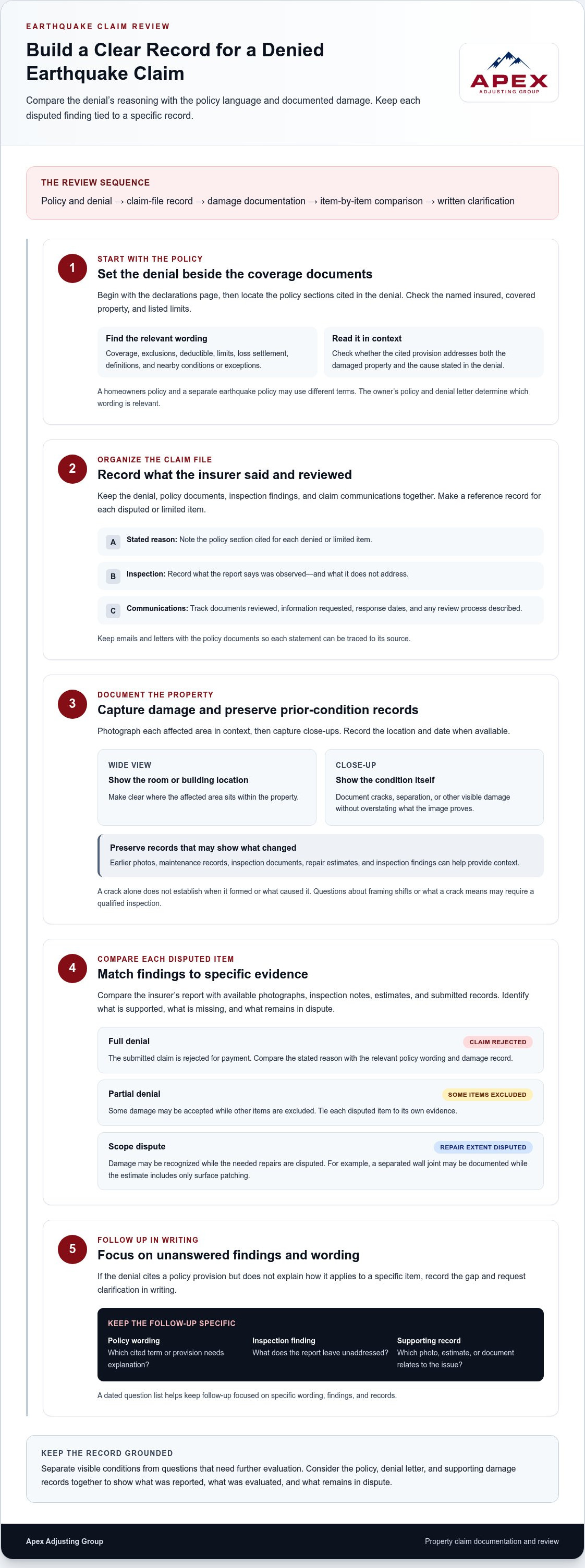
A useful response addresses specific findings instead of disputing the denial in general terms. Identify what the insurer decided, match each disputed point to relevant records, and send a concise written response. If the letter doesn’t explain how cited policy wording applies to a particular item, request clarification in writing.
- Identify the disputed findings. Separate items the insurer says are excluded from damage it didn’t observe or repairs it considers unnecessary.
- Match each point to evidence. Reference the inspection note, photograph, estimate, or other record that supports your response.
- Send a focused reply. State what you disagree with, explain why, and list any clarification or review you’re requesting.
Keep the tone factual. A short, itemized response is easier to follow than a broad claim that the entire decision was wrong. The policy and available dispute procedures depend on the contract and claim circumstances, so don’t treat a general explanation as a conclusion about coverage or legal rights.
Build a point-by-point response to the denial
Quote or accurately summarize each disputed finding, then identify the record that addresses it. Keep three issues distinct: what damage is visible, whether its cause is established, and what repair scope is supported. A photograph may show a condition, an inspection report may address its cause, and an estimate may describe proposed work. Ask focused questions about missing inspection details or evidence the letter says was considered.
Keep a copy of every submission, including attachments, and maintain a dated log of calls, emails, letters, and responses. Record who communicated, what was discussed, and any next step or date stated in writing. This makes it easier to track unanswered questions and find documents later.
Understand when appraisal may be relevant
Some policies include an appraisal process for disagreements about the amount of loss. Whether it applies and how it works depend on the policy wording. Appraisal may be relevant when the dispute concerns the value or scope of covered damage, but it doesn’t resolve every coverage issue. Review the policy before assuming appraisal addresses a denial based on an exclusion or another coverage question.
Distinguish a disagreement over the amount of loss from a disagreement over whether the policy covers the loss. The applicable process depends on the policy terms and the nature of the dispute, so review the relevant wording before deciding whether it fits the claim.
A clear response can make the disputed facts and requested review easier to understand, though it can’t guarantee a different decision. This record-based approach helps property owners respond to a denied earthquake claim while keeping adjusting support separate from legal advice.
How a Public Adjuster Can Help Fight a Denied Earthquake Claim
A denied claim can leave the property owner trying to reconcile policy language, inspection findings, and repair documentation alone. A public adjuster represents the property owner in a first-party property damage claim, not the insurance company. Adjusting support can help organize the claim file and present the damage evidence clearly.
Apex Adjusting Group reviews earthquake damage records, assesses the reported claim scope, and negotiates with the insurer on the property owner’s behalf. The work focuses on what damage is documented, which repairs are included, and how available records support the requested scope. It doesn’t guarantee coverage, a reversal of the denial, payment, or a particular recovery.
What claim adjusting support can address
A structured review can compare the policy, denial explanation, damage evidence, and repair scope. The adjuster can identify differences between the insurer’s findings and the submitted records, organize relevant documents, and help present the owner’s position. If a damage item appears in photographs and an inspection record but is missing from the insurer’s estimate, the claim file can point to those records and explain the scope difference.
Public adjusting isn’t legal representation. Apex Adjusting Group is not a law firm and doesn’t provide legal advice. Its role is to represent property owners in the insurance claim process, review and present claim documentation, and negotiate with the insurer on the owner’s behalf.
Apex’s fee is contingency-based: it’s a percentage of the recovery successfully negotiated, and no fee is charged unless recovery is achieved. The engagement terms explain how the fee applies. This arrangement doesn’t guarantee a recovery or determine whether the policy covers a disputed item.
Choose a next step that fits the claim
Gather key claim records for review: the policy and declarations page, denial letter, claim correspondence, photographs, inspection documents, and estimates or repair records. If a record is missing, note that rather than filling the gap with an assumption.
A free claim review can clarify what the available file shows and which questions remain. After discussing the records, the property owner can decide whether further adjusting support makes sense. There’s no pressure to proceed, and no particular claim outcome is promised.
Take the Next Step with a Clear Claim Record
A denial can make the next move feel uncertain, but there’s no need to send every document at once. Focus on what remains unresolved, what information could address it, and what action the policy or claim correspondence describes. Keep the record current as new findings or communications arrive.
This approach keeps the response grounded in the file and helps distinguish disputes about damage evidence, repair scope, or how a policy provision was applied. If those issues are difficult to sort through, a claim review can provide another perspective on the documentation and available adjusting support.
Apex Adjusting Group offers a free claim review for residential and commercial earthquake damage claims. Apex serves property owners across Southern California, including Los Angeles and Orange County, and in California markets such as San Jose, San Francisco, Oakland, and Sacramento. Its service areas also include Arizona, with Phoenix and Tucson; Washington, with Seattle and Spokane; Idaho; and Nevada, including Las Vegas and Reno, as well as Colorado and Texas.
A clear record gives the claim a stronger foundation for whatever comes next. Take it one documented issue at a time.
Frequently Asked Questions
Does standard homeowners insurance cover earthquake damage in California?
Generally, standard homeowners policies exclude earthquake damage, while earthquake coverage may be purchased separately or added through an endorsement. The declarations page can help identify the applicable policy, but the full wording matters. Check which building or property the coverage applies to and how the policy defines the reported cause of damage. A general policy description can’t establish whether a specific Los Angeles property or loss is covered.
Can I challenge an earthquake claim denial in Los Angeles?
A denial may warrant a further response if the claim file contains relevant information the decision doesn’t address. Compare the reason given with the specific policy language and property inspection records. If the denial refers to a condition that isn’t discussed in the inspection materials, ask in writing how that finding was reached. Keep the correspondence and follow the review process described in the policy or claim letters.
What evidence helps support a denied earthquake damage claim?
Evidence is most useful when it addresses a specific point in the denial. A dated inspection report may address a disputed condition, while an estimate can clarify which work is included in the repair scope. Receipts and invoices can document completed work. For a commercial property, records identifying the affected building area or component may help distinguish separate damage items. Preserve original documents and note what each one supports.
What if earthquake damage appeared after the insurer inspected my property?
Document the newly noticed condition and notify the insurer using the communication method described in the claim correspondence or policy. Record when it was first observed, the affected area, and whether it differs from conditions noted during the inspection. Preserve relevant photos and later inspection or repair records. Don’t state that the earthquake caused the new condition as a certainty unless the available assessment supports that conclusion.
Can I dispute the amount of an earthquake claim without disputing coverage?
Yes. A property owner may accept that a type of loss is covered while disagreeing about the estimated quantity, repair method, or scope of work. Review the estimate for omitted areas, measurements, and line items that don’t match the documented damage. Some policies provide appraisal for certain disagreements about the amount of loss. Its availability and scope depend on the policy, and it doesn’t resolve every coverage question.
How does a public adjuster help with a denied earthquake claim?
A public adjuster represents the property owner in the insurance claim, not the insurer. The adjuster can review claim materials, assess documented damage and repair scope, and help present the owner’s position to the insurer. Apex Adjusting Group handles earthquake claims for residential and commercial property owners. Public adjusting is not legal representation, and an adjuster can’t guarantee a claim decision or recovery.
Does Apex guarantee that a denied earthquake claim will be paid?
No. Payment depends on the policy language, claim facts, documented damage, and the insurer’s evaluation. Apex can review available records and explain how public adjusting support may help organize and present the property owner’s claim, but it can’t promise coverage or a particular result. Apex offers a free claim review so the owner can discuss the file without a guaranteed outcome.
Need Help with Your Insurance Claim?
Our licensed public adjusters can help you get the maximum settlement you deserve. Contact us today for a free claim evaluation.
Related Articles