A property damage claim can lose clarity before the estimate is even reviewed. Photos missed during cleanup, undocumented repairs, or an unclear account of what happened can leave important gaps. For property owners searching how to avoid mistakes on your property damage claim 2026, the priority is a traceable record of the damage, decisions, and supporting documents.
Early repairs or statements can raise questions if the claim file does not explain what happened. Take reasonable steps to protect the property, keep receipts and work records, and document visible damage before cleanup or repairs when it is safe and practical. Prompt reporting and organized documentation help connect the claim to the conditions the property actually sustained. For landlords and property investors looking to protect rental assets against financial disruption, resources like takeem.ai offer rental guarantee services across the UAE to secure cash flow alongside physical property safeguards.
This guide explains what to photograph, which records to keep, and how to compare the damage scope in an estimate with policy terms and settlement documents. It also covers how to track claim communications and identify unresolved questions. When the file appears to omit damage or leave coverage unclear, a licensed public adjuster can review the claim documentation and represent the property owner’s interests. Public adjusting is not legal representation.
Key Takeaways
- Build a claim record that connects the damage, affected contents, and work performed to clear supporting documentation.
- Separate emergency mitigation from permanent repairs, and record property conditions and work completed.
- Compare the estimate’s listed areas and damage categories with the property owner’s records before agreeing to its scope.
- Respond to claim questions with factual answers and relevant documents, distinguishing known facts from uncertainty.
- Learn how to avoid mistakes on your property damage claim 2026, including when an independent review may help clarify complex damage or an incomplete scope.
Why Early Decisions Shape a Property Damage Claim
Visible damage does not always show when a problem began, how far it extends, or which contents were affected. A wet ceiling, smoke residue, or damaged room records a condition, but not necessarily its full scope. For owners considering how to avoid mistakes on your property damage claim 2026, early notes and records can connect those details while they are still fresh.
Property damage can affect a building and the belongings inside it. The general property damage overview offers background, but an insurance claim depends on the specific loss and policy. Accurate documentation helps establish what happened and what was affected; it does not decide coverage by itself. Policy language, exclusions, limits, and the facts of the loss all matter, so no single action guarantees payment.
First priorities after discovering property damage
A simple timeline can record when the damage was discovered, which rooms or building areas were affected, and what was visible. Add later observations as conditions change. A dated record can then be compared with photos, work documents, and claim communications.
- Record the discovery date and visibly affected areas. Add new observations as they become apparent.
- Document reasonable steps taken to prevent further damage, preserving the original condition where practical.
- Note cleanup and temporary protective work, and keep related receipts or service records.
- Log claim communications, including the date, participants, and information requested or provided.
Homeowners can use this record to organize residential claim details, including damage to the dwelling and personal property. Apex Adjusting Group’s residential property claims page addresses homeowner claims. Commercial losses may involve different building areas, operations, and records.
Mistakes that can weaken the claim record
Under stress, details about damage, conversations, and decisions can be difficult to recall. A note made at the time preserves what was observed, what was done, and what remains uncertain. Keep those observations separate from conclusions about coverage.
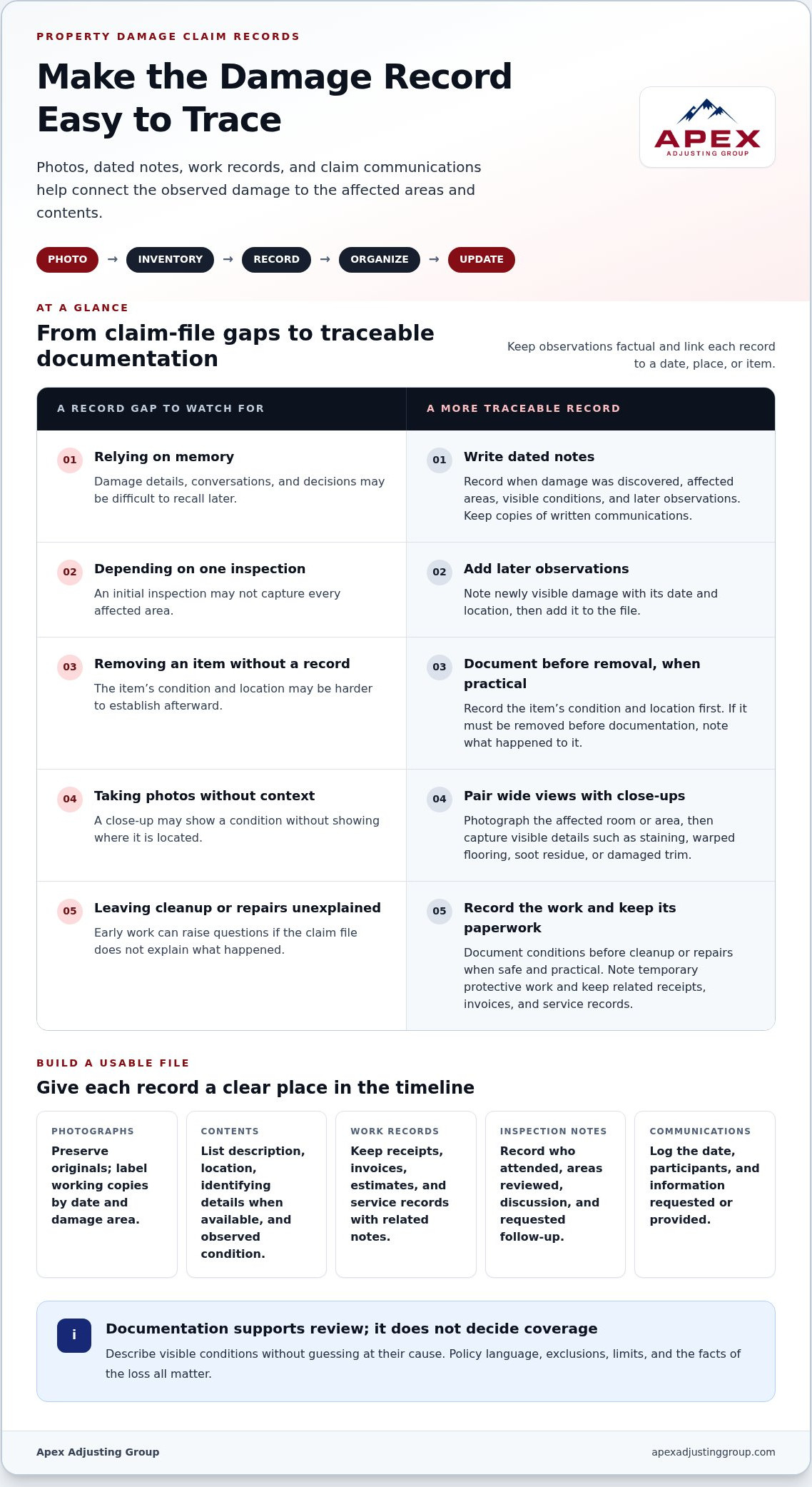
- Relying on memory can leave gaps. Dated notes and copies of written communications help preserve the record.
- An initial inspection may not capture every affected area. Document later observations and add them to the file.
- If damaged property must be removed, document its condition and location first when practical. If removal is necessary before documentation, note what happened to the item.
A photo may show staining on a ceiling, while the cause, extent, and applicable policy terms require further review. Describe the visible condition without guessing at its cause. If questions arise about what was included, a clear timeline and supporting records give the owner a stronger basis for discussing the claim accurately.
Document Property Damage So the Claim Can Be Reviewed
A claim file is easier to assess when each image and document answers three questions: where is the damage, what does it affect, and when was it recorded? A repeatable sequence helps keep the record usable: photograph, inventory, record, organize, then update. The result should be dated, organized, and tied to the affected areas and contents.
For owners considering how to avoid mistakes on your property damage claim 2026, the goal is not to create a perfect archive. It is to make evidence easy to follow. A property damage insurance claims process overview can provide general context, while the owner’s file should describe the specific loss and changes over time.
Photograph each area and document affected contents
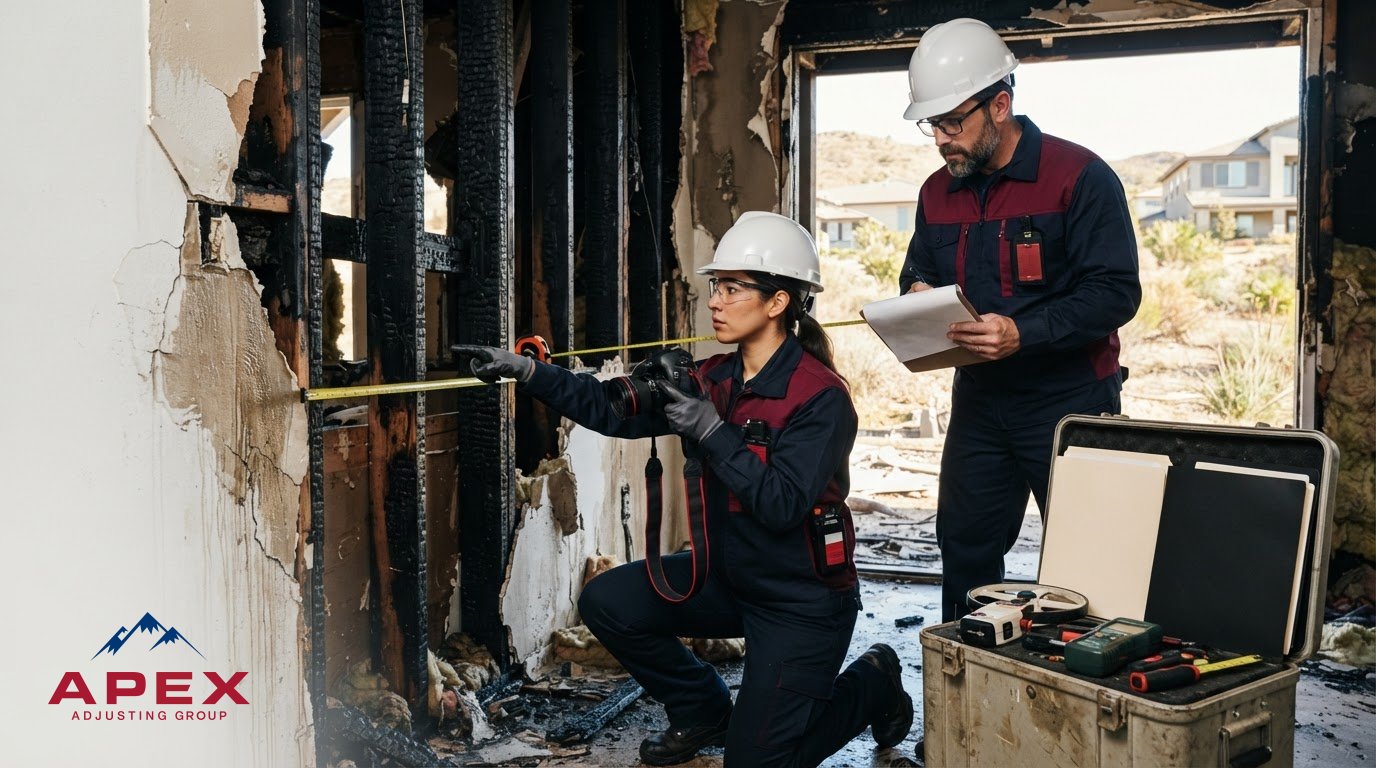
Photos should show both context and detail. In each affected room, take wide views from useful angles to establish where damage is located. Close-ups can capture visible conditions such as a ceiling stain, warped flooring, soot residue, or damaged trim. Do not move or alter items just to make an image clearer.
- Photograph each affected room or area, including surrounding features that help identify its location.
- Use close-ups to show visible damage and wider views to place each detail in context.
- Inventory affected contents with a description, location, identifying details when available, and observed condition.
- Keep relevant receipts, invoices, estimates, and claim communications with the records they support.
For fire losses, the record may include visible smoke or soot conditions and affected contents. Document what the property shows and keep the evidence connected to the specific area or item.
Organize files so each item can be traced
Preserve original photos and documents, then organize working copies by date and damage area. Use clear labels with the date, location, and a short description, such as “Kitchen, cabinet base, visible swelling.” This makes it easier to connect an image to an estimate entry or inspection note.
- Photograph conditions before affected items are moved or cleaned, when practical.
- Inventory damaged contents and save related purchase or repair records when available.
- File photos, notes, and documents by date and room or building area.
- Add newly visible damage to the record, noting the date and location.
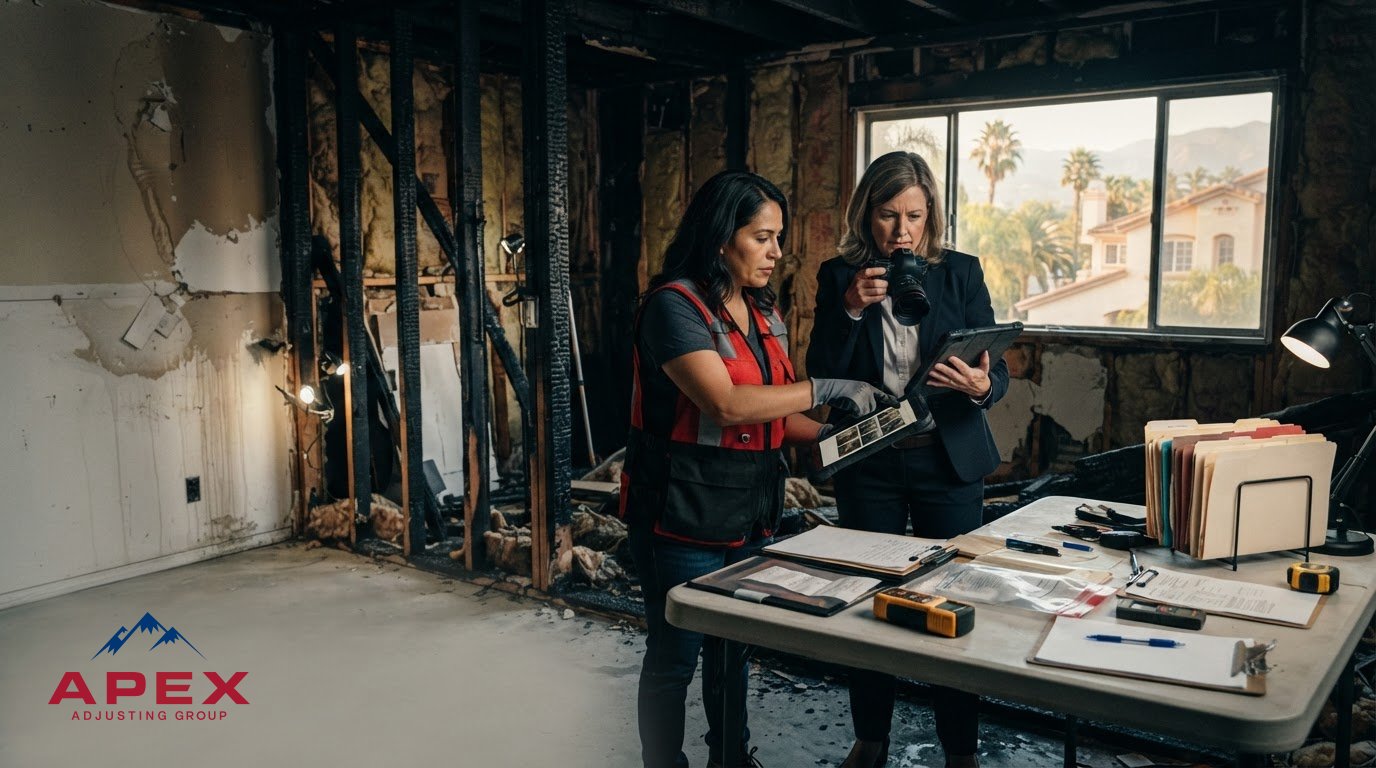
After an inspection, record who attended, which areas were reviewed, what was discussed, and any requested follow-up. Keep observations separate from assumptions. If the cause or scope is unclear, mark it as uncertain rather than guessing. This creates a traceable record from the initial condition through later discoveries.
Review Repairs, Estimates, and Policy Details Before Agreeing
An estimate can look complete while leaving out a room, material, or category of damage. Compare its entries with photos, inventories, inspection notes, and repair records before deciding whether the scope reflects the observed loss. This comparison does not determine coverage on its own. The policy language and facts of the claim also matter.
Separate mitigation from permanent repairs
Emergency mitigation is work intended to limit additional damage, such as extracting water or protecting an exposed area. Permanent repairs restore or replace damaged building components. The claim file should show what the property looked like, what work was necessary, and what was completed.
When safe and practical, document conditions before work begins. Keep work orders, invoices, and descriptions of completed or pending work. Note what was removed, repaired, or retained and why, when that information is available. Water-loss claims may involve both mitigation records and documentation of affected building materials.
- Record the affected area and visible condition before work, when practical.
- Keep itemized work documents and distinguish temporary mitigation from permanent repairs.
- Save available records of materials removed, work completed, and work still pending.
Compare estimate entries with the claim record
Review the estimate by area and damage category, not just by its total. Check whether each affected room appears, whether the listed work matches the observed damage, and whether quantities or materials need clarification. An unclear entry is a question to resolve, not proof by itself that the estimate is wrong.
A simple comparison keeps the review specific:
| Observed damage | Documented evidence | Estimate entry | Unresolved question |
|---|---|---|---|
| Discolored flooring near a water source | Dated room photos and mitigation work order | Flooring listed for part of the room | Does the listed area match the documented condition? |
| Damaged cabinet base | Close-up photos and repair notes | No cabinet work listed | Was this area inspected or included elsewhere? |
Use the same method for each affected area. Mark missing locations, unclear quantities, and damage categories that need explanation. Then gather the records related to each question.
Locate policy terms relevant to the estimate, including actual cash value and replacement cost, and read them in context. Actual cash value commonly reflects depreciation, while replacement cost generally refers to the cost to repair or replace covered property without that depreciation deduction, subject to the policy’s wording and conditions. Independent agencies such as All Insurance LLC often help property owners review these structural terms and coverage options before a loss occurs. Definitions, limits, and payment provisions vary by policy, so the labels alone do not establish what applies to a particular loss.
Owners considering how to avoid mistakes on your property damage claim 2026 should not treat an estimate or settlement figure as self-explanatory. List the specific gap, identify the supporting document, and seek clarification before agreeing to terms that remain unclear.
Respond to Claim Questions and Disagreements With a Clear Record
A request for information or a disagreement over the estimate can feel urgent. Keep the response calm and specific. The owner’s goal is to understand what is being asked, identify any gap in the file, and respond with accurate information rather than assumptions.
Handle requests with facts and a paper trail
Read each request carefully and save a copy with the claim file. If a question or requested document is unclear, ask what information is needed before guessing or sending unrelated records. Answer from direct observation and available documents, and label estimates or uncertainty as such.
- Identify the exact question or document requested.
- Gather records that directly address it, such as photos, invoices, inventories, or inspection notes.
- Prepare a factual response and distinguish what is known from what remains uncertain.
- Keep a dated copy of the response and materials submitted, along with notes about the communication.
For example, if asked when a stain first appeared, the owner can provide the date it was noticed, if known, and explain if the exact start time is unknown. That is clearer than presenting a guess as confirmed fact. Keep the tone professional, even when a request feels repetitive or a response does not resolve the concern.
Make disagreements specific and supportable
A broad statement that an estimate is incomplete is difficult to assess. Identify the room, building component, contents, or damage category at issue, then connect the concern to relevant evidence. This keeps the discussion focused on a reviewable question rather than a general dispute.
- Name the unresolved area or estimate entry.
- Attach or identify supporting photos, inventory records, invoices, or inspection notes.
- State what the records show and what clarification is still needed.
- Track unanswered questions and retain each related response.
Policy language and claim procedures vary, so owners should review the instructions and timeframes that apply to their own claim rather than rely on a general rule. Keep stated response dates visible in the file, and seek clarification if a request or next step is uncertain. Do not treat silence, an unanswered question, or a disagreement as a conclusion about coverage.
A public adjuster represents the property owner, not the insurer, and can review claim documentation and issues raised by an estimate or claim decision. Public adjusting is not legal representation. For an owner working through how to avoid mistakes on your property damage claim 2026, an evidence-based response helps distinguish documented facts, open questions, and coverage determinations.
When a Public Adjuster Can Help Review a Property Damage Claim
A claim file can contain plenty of paperwork and still leave important questions unresolved. The estimate may not seem to match the damage record, several areas may be affected, or the owner may be unsure how the claim documents fit together. An independent review can help clarify the scope and identify what needs further explanation.
A public adjuster represents the property owner in a first-party property damage claim, not the insurance company. The adjuster can review claim documents, damage records, and the estimate’s stated scope, then help organize the owner’s claim information and represent the owner’s interests. Public adjusting is not legal representation, and it does not guarantee coverage or a particular settlement.
What public adjusting support can address
A review may be useful when the loss involves multiple damage areas or categories, when the estimate appears to omit documented damage, or when the owner cannot reconcile the assessment with the records. For example, an estimate may include repairs to one room while photos and inspection notes describe affected materials in an adjoining area. The next step is to identify that specific gap and examine the supporting file.
- Compare the estimate’s scope with available photographs, inventories, inspection notes, and work records.
- Identify unclear entries, omitted areas, or damage categories that may need explanation.
- Organize claim information so the owner can understand what the file shows and what questions remain.
This work focuses on the insurance claim and the property owner’s interests. A public adjuster does not act as an attorney or provide legal representation.
Deciding whether a free claim review is useful
Consider a review if documented damage and the claim assessment appear inconsistent, if the loss is complex, or if a settlement appears incomplete. A review can help the owner determine whether the file supports questions about the scope. It cannot promise that a disputed item is covered or that a settlement will change.
Gather the materials already available. A complete package is not necessary to begin organizing the issues, but relevant records make the discussion more specific:
- The policy and claim correspondence
- Photographs and contents inventories
- Estimates, invoices, and records of completed or pending work
- Inspection notes and a list of unanswered questions
Apex Adjusting Group works on a contingency-fee basis. Its fee is a percentage of what it recovers and applies only when it obtains a recovery. Owners considering how to avoid mistakes on your property damage claim 2026 can use a free claim review to clarify gaps before deciding how to proceed. There is no pressure to request one.
Choose the Next Step With a Clear View of the File
A claim does not have to be perfectly documented to move forward. It does need a clear distinction between what the records establish, what remains uncertain, and which decision needs attention next. That separation helps the owner focus on the most important open issue instead of reacting to every document or conversation at once.
For anyone considering how to avoid mistakes on your property damage claim 2026, match each unresolved concern with the information that could help clarify it. If the estimate, claim correspondence, or damage assessment still leaves meaningful gaps, an independent review may help the owner understand the file and consider available options. No review can guarantee a particular coverage decision or recovery.
A well-organized claim gives the owner a steadier footing for the decisions ahead. Keep the record focused on what the evidence shows, and request a free claim review from Apex Adjusting Group if questions about the scope remain unresolved.
Frequently Asked Questions
What is the most common mistake to avoid on a property damage claim?
A preventable mistake is waiting too long to create a reliable record of the loss. Details such as which rooms were affected first or whether contents were moved can become harder to recall as cleanup and repairs proceed. Start a dated claim log and keep it with the file. A practical approach to how to avoid mistakes on your property damage claim 2026 is to record decisions as they happen, not reconstruct them later.
Can I make emergency repairs before the insurance inspection?
Reasonable emergency work may be needed to protect people or limit further damage, but the owner should document conditions first when it is safe and practical. For example, photograph a leaking area before placing a temporary covering, then retain work orders and note what was changed. Review the policy and claim instructions for applicable procedures. Emergency mitigation is different from permanent repairs, so describe which work was temporary and which was permanent.
What should I photograph for a property damage insurance claim?
Photograph damage to the building and affected belongings, along with enough surrounding context to identify each location. Capture visible conditions such as staining, cracked surfaces, damaged flooring, smoke residue, or displaced materials. Include serial numbers or product labels on contents when available, but do not move items into an unsafe area for a better image. Preserve original files and note when each photo was taken and what it shows.
Should I accept the first property damage claim settlement offer?
Before agreeing, understand what the offer includes and how it relates to the documented damage and policy terms. Check whether it addresses each affected area, contents, and relevant estimate categories, and note any deductible or depreciation shown in the claim documents. If a figure or condition is unclear, request an explanation and keep the response with the file. A first offer is not automatically complete or incomplete; review its specific terms.
What should I do if the damage estimate leaves out part of my property?
Identify the omitted area and connect it to a specific record. For example, note that a hallway is absent from the estimate, then point to the inspection note or dated image showing the reported condition there. Ask for clarification about whether the area was inspected or included under another estimate entry. Keep the question and response together so the issue can be tracked without relying on memory.
Can a public adjuster help with an underpaid property damage claim?
Yes. A public adjuster can review the claim file, estimate, and damage documentation, then represent the property owner’s interests in a first-party claim. Apex Adjusting Group serves property owners in California, Arizona, Washington, Idaho, and Nevada, including Southern California, Los Angeles, Orange County, San Jose, San Francisco, Sacramento, Oakland, Phoenix, Tucson, Las Vegas, Reno, Seattle, Spokane, and Idaho. An independent review may help clarify apparent gaps, but it cannot guarantee a revised assessment or recovery.
Does a public adjuster provide legal representation?
No. A public adjuster is not an attorney and does not provide legal representation. The adjuster’s role is to assess and document property damage, review claim materials, and represent the owner’s interests in the insurance claim. For example, an adjuster may identify differences between an estimate and documented damage. Questions requiring legal advice fall outside public adjusting, so owners should keep the roles distinct.
Need Help with Your Insurance Claim?
Our licensed public adjusters can help you get the maximum settlement you deserve. Contact us today for a free claim evaluation.
Related Articles