A property damage insurance expert witness in Seattle, Washington can assess the cause and scope of damage, explain how the loss was evaluated, and analyze whether repair estimates and claim documentation support the amount in dispute. The opinion should stay within the expert’s experience and address the specific property, damage, and insurance issues involved. A clear, evidence-based evaluation can help make a complicated claim easier to understand.
When a property insurance claim is delayed, denied, or appears underpaid, the dispute often turns on the records and how the damage was measured. This guide explains what a property damage insurance expert witness may address, how property damage is assessed, and which materials can support an evaluation.
It also explains how to assess an expert’s qualifications and understand the role of an independent evaluation in a property insurance dispute. You’ll learn what to gather and what to expect from a review, so you can approach the next step with a clearer picture of the issues.
Key Takeaways
- Identify the claim issues an insurance expert may evaluate, including damage scope, coverage disputes, and settlement assessments.
- Follow a structured damage review that connects observed conditions, repair estimates, and claim records.
- Organize photos, reports, policy documents, and correspondence so the basis for an expert review is clear.
- Assess an expert’s credentials by matching their training and experience to the specific property damage and insurance issues.
- Consider a claim review when a fire or other covered property loss appears underpaid, delayed, or denied.
What Can a Property Expert Witness Opine On?
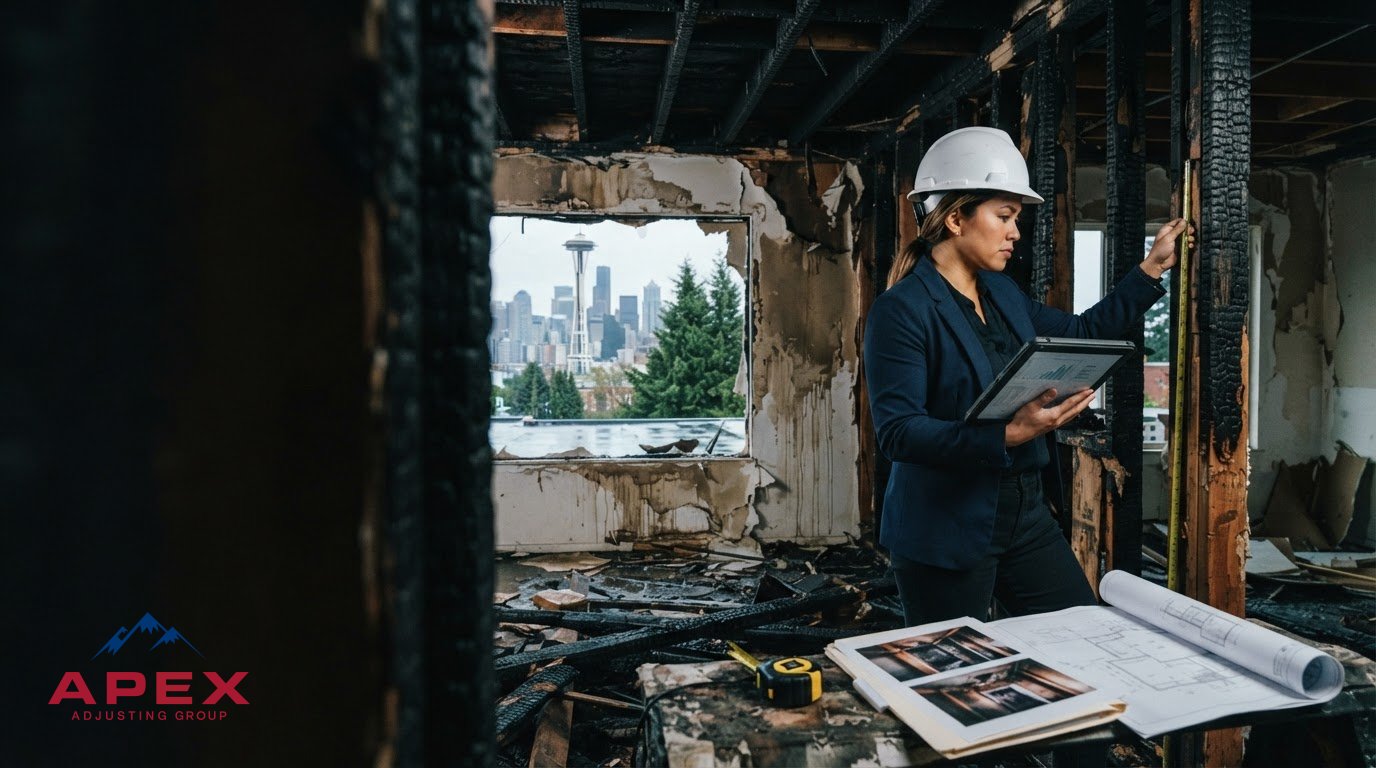
A property expert witness can explain how damage, coverage issues, and valuation were assessed in an insurance claim. In a Seattle fire claim, for example, an expert may compare observed smoke damage with repair estimates, inspection records, and the policy language at issue. The opinion should connect evidence to a specific question, not purport to decide the entire dispute.
Property and casualty claims can involve disagreements over cause, damage scope, repair methods, or settlement value. An expert may review the claim file, identify gaps between documented damage and an estimate, and explain the methods used to value the loss. Policy wording and industry practices may also be examined, while legal conclusions remain for the court.
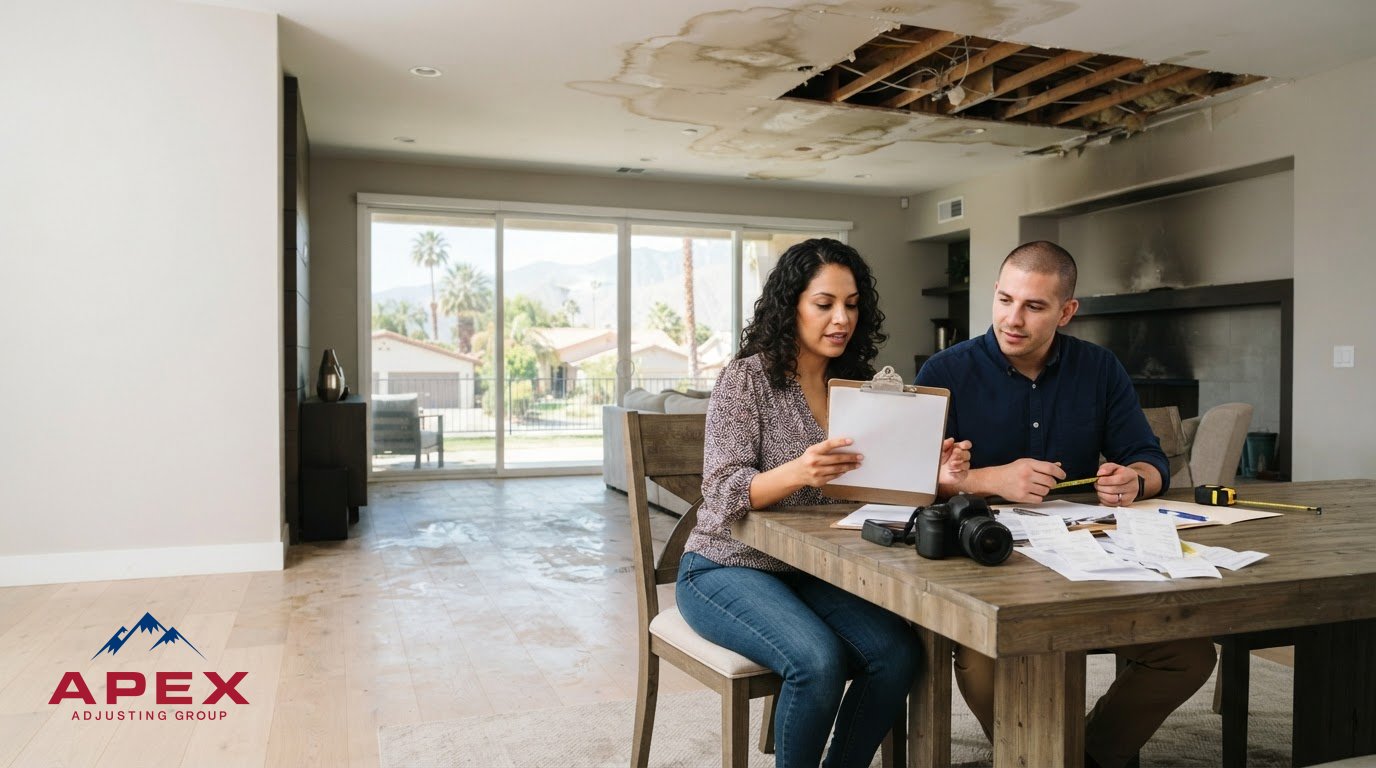
A property damage investigation focuses on evidence from the site and the claim record. An expert may assess photographs, inspection notes, repair estimates, invoices, and work records. For water damage, the analysis might distinguish visible staining from damage to materials documented during mitigation. The expert can explain what the evidence supports and which questions remain unresolved.
A public adjuster, expert witness, and contractor have different roles. A public adjuster represents a policyholder in a first-party claim; a contractor documents or performs repair work; an expert witness provides specialized analysis of a disputed issue. In a Seattle claim, all three roles may involve the same damaged roof, but each has a distinct function.
A settlement analysis may compare the insurer’s estimate with documented repair scope, materials, labor assumptions, and supported additional damage. An expert can explain the differences and whether the valuation method is consistent. An expert opinion alone does not negotiate the claim, and testimony should distinguish technical findings from advocacy.
Property claims may also raise questions about compensation for covered repairs or loss of use. An expert can quantify or explain property-related losses when the assignment and evidence support that work. For a rental property, records showing damaged units and periods of unavailability may clarify the claimed impact.
Personal injury and accident claims can overlap with property damage when one event affects both a building and a person’s belongings. A property expert can address building or contents damage within their expertise, such as damage to a vehicle-storage structure after an impact. Medical causation and injury opinions require separate expertise.
Bad faith may be alleged in a claim dispute, but an expert’s role is narrower. The expert may analyze claim records, relevant industry practices, and the basis for decisions, then explain the findings. The court determines legal issues; a technical opinion is not a legal ruling.
Washington court procedures and case-specific court orders govern expert disclosures and testimony. The expert’s assignment should identify the opinions, supporting materials, and relevant expertise, and testimony should stay within that scope. For the legal requirements in a particular case, counsel applies the governing rules.
Fees for an independently retained expert depend on the assignment and the agreement with the retaining party. Those arrangements are separate from Apex Adjusting Group’s public adjusting fees, which are contingency-based and tied to a successful claim increase.
Investigation and damage evaluation
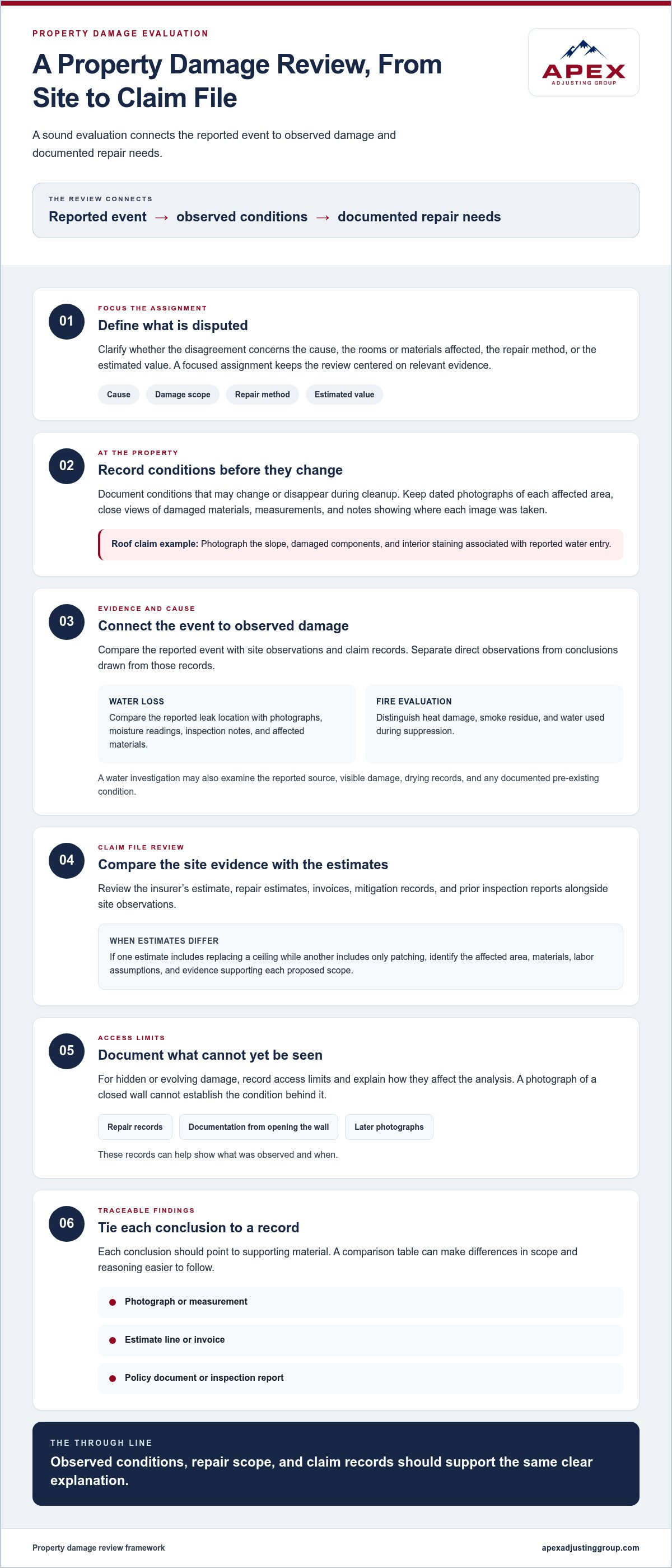
A sound evaluation connects the reported event to observed damage and documented repair needs. For a Seattle water loss, an expert can compare the reported leak location with photographs, moisture readings, inspection notes, and affected materials. The analysis should distinguish direct observations from conclusions drawn from records.
Start by defining the disputed issue. Is the disagreement about the cause, the rooms or materials affected, the repair method, or the estimated value? A focused assignment helps the expert gather relevant evidence instead of reviewing unrelated claim documents.
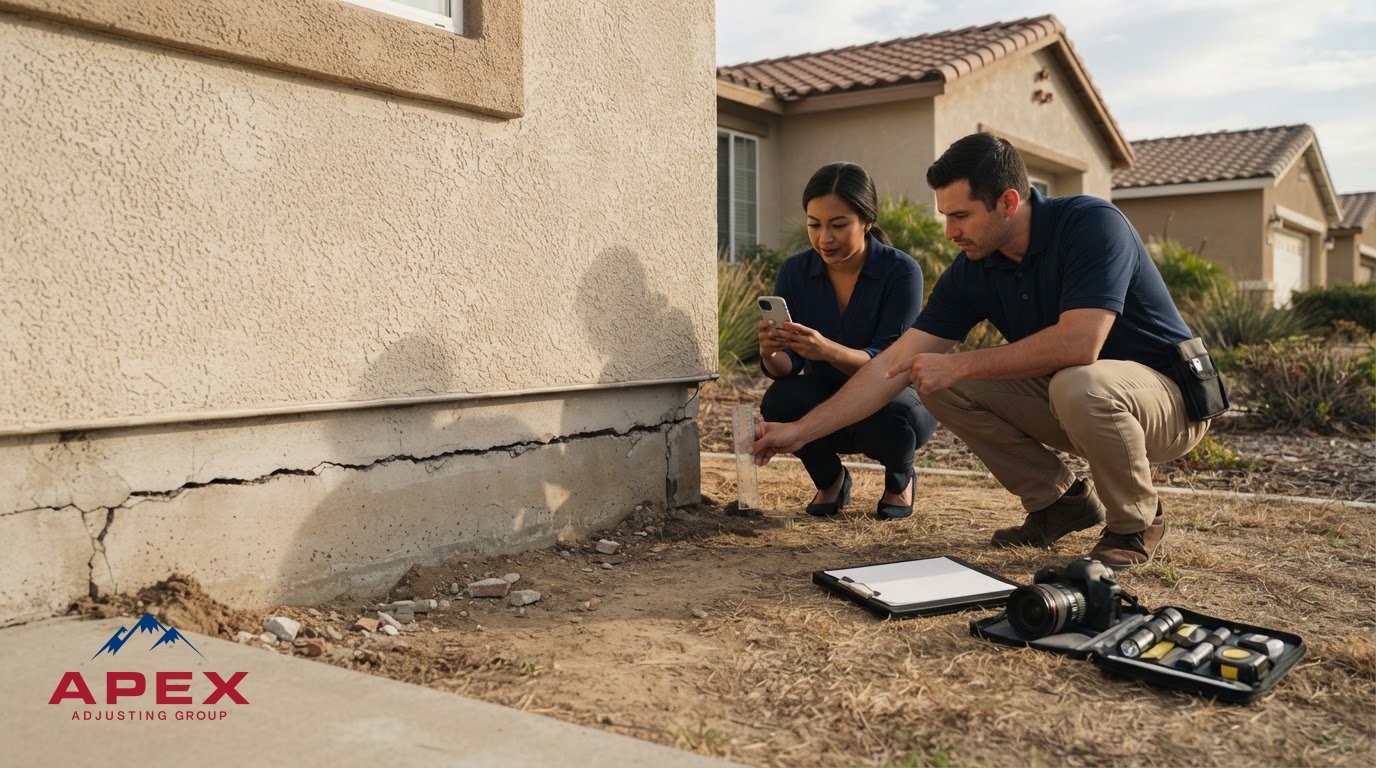
At the property, document conditions that may change or disappear during cleanup. Useful records include dated photographs of each affected area, close views of damaged materials, measurements, and notes identifying where each image was taken. For a roof claim, photographs can show the slope, damaged components, and interior staining associated with reported water entry.
Next, compare site observations with the claim file. Review the insurer’s estimate, repair estimates, invoices, mitigation records, and prior inspection reports. If one estimate includes replacing a ceiling while another includes only patching, identify the affected area, materials, labor assumptions, and evidence supporting each proposed scope.
Analyze cause with the same care. A fire evaluation may distinguish heat damage, smoke residue, and water used during suppression. A water investigation may examine the reported source, visible damage, drying records, and any documented pre-existing condition. National weather records may help assess a reported storm event, while site evidence connects that event to the specific property.
For a building with hidden or evolving damage, the expert should document access limits and explain how they affect the analysis. A photograph of a closed wall cannot establish the condition behind it. Available repair records, documentation from opening the wall, and later photographs can help show what was observed and when.
Keep the analysis traceable. Each conclusion should point to a photograph, measurement, estimate line, invoice, policy document, or inspection report. A comparison table can show the disputed item, how each estimate treats it, the supporting evidence, and the expert’s reasoning.
- Damage observed: Record the location, material, and visible condition.
- Repair scope: Compare proposed work with documented damage.
- Valuation: Identify estimate assumptions and supporting records.
- Open questions: Note what additional inspection or documentation could clarify.
An attorney may retain an expert to address a defined technical issue, but the evaluation remains grounded in property evidence. Reports should distinguish firsthand observations, reviewed records, and professional conclusions. For an active claim with conflicting damage assessments, a free claim review can help organize the file and identify the issues needing closer assessment.
Evidence and materials for engagement
A focused engagement starts with a defined question and a complete claim file. The expert needs enough information to understand the property, reported damage, prior inspections, and disputed opinions. Organize records by topic, then flag the documents that directly support or challenge the claim position.
Core materials may include title documents, leases, building plans, valuations, correspondence, photographs, reports, and relevant court pleadings or instructions. For a commercial water loss, a lease may identify the affected unit, while floor plans locate damaged areas and invoices document mitigation work. Each item should relate clearly to the issue under review.
Photographs are most useful when they show both context and detail. Include wide views that identify each room or exterior elevation, followed by close images of the damaged material. Preserve original files and available dates; captions can note the location, visible condition, and photographer. For example, a photo of a stained ceiling should identify the room and reported source.
Build a timeline from claim correspondence and inspection records. Include the notice of loss, requests for information, inspection summaries, estimates, repair proposals, and responses. This sequence helps an expert track what was reported, inspected, accepted, or disputed during claim handling. Keep email attachments with their original messages to preserve the context.
- Property records: Gather title documents, leases, plans, and available valuations.
- Damage evidence: Sort photographs, inspection notes, mitigation records, and repair documents by location.
- Claim communications: Collect correspondence, estimates, reports, and written explanations of disputed items.
- Engagement materials: Include relevant pleadings or instructions that define the requested opinions.
Forensic analysis depends on preserving the link between a conclusion and its source. Label estimate versions by date or author, and do not replace earlier files with revised copies. If a report identifies damage in a particular area, include the photographs and repair records for that same area. This makes the supporting evidence easier to follow.
Separate established facts from open questions. A valuation may document a building’s condition before the loss, while later photographs show post-event damage. Note missing room views, inaccessible areas, or conflicting measurements, then explain why each gap matters to the requested analysis. The expert can then distinguish direct observation from inference.
Choose materials to match the assignment rather than accumulating documents indiscriminately. If the issue concerns repair scope, prioritize estimates, plans, photographs, and work records. If it concerns compensation for property loss, include relevant valuations and documents describing the claimed impact. Consulting work may also require a concise issue summary and specific questions for the reviewer.
Keep sensitive records organized and share them through the process established for the engagement. For properties or claims involving multiple states, identify each location and keep its records separate. A clear index helps the expert find the right file, compare reports, and explain how each document supports or limits an opinion.
Expert qualifications and selection
Match the expert’s technical background to the disputed property issue. A question about roof damage and a building valuation dispute require different experience.
Qualifications and Selection Criteria
Review credentials, licensing, specialized experience, publications, and testimony in similar disputes. For structural questions, Washington Professional Engineer Daniel Robles holds license number 44394. For a homeowner’s fire claim, prioritize experience evaluating fire, smoke, building materials, and repair scope. Years of experience matter most when they relate directly to the loss and requested opinions.
Check whether the expert can support each conclusion with records, inspection findings, and a clear method. Ask how their prior assignments compare with the property, damage type, and insurance issue in your case. A résumé alone does not show whether someone can address the disputed facts. Relevant experience should include comparable property conditions and claim questions.
Also consider testimony experience and communication skills. An expert may need to testify in state or federal court or explain findings to people without technical training. Review sample reports where appropriate, focusing on whether observations, assumptions, and conclusions are clearly separated. If insurance bad faith is alleged, the expert should stay within specialized insurance or claims knowledge, not offer legal conclusions.
Finding an Expert in Seattle
To find a property damage insurance expert witness in Seattle, define the issue first, then look for professionals whose credentials match it. A local building engineer may suit a structural damage dispute, while a property insurance specialist may address claim handling or valuation methods. Counsel can help identify the expertise required and whether testimony is expected.
Compare candidates by reviewing their licenses, relevant assignments, reports, and prior testimony. Ask whether they have inspected similar properties in the Seattle area and can assess the specific type of damage. Local familiarity may help with property context, but subject-matter fit and evidence-based opinions should guide the choice.
Check for conflicts and confirm the expert’s availability for the expected work. Clarify whether the assignment includes document review, a site inspection, written opinions, consulting, or testimony. These distinctions help prevent a mismatch between the requested analysis and the expert’s actual role.
Hiring an Expert for a Case
To hire an expert for a Seattle case, give counsel a concise summary of the issue and the relevant claim records. Identify the property, reported cause, disputed estimate items, and opinions needed. Counsel and the expert can then define the scope, review materials, and decide whether an inspection would add useful evidence.
Before retaining the expert, agree on the assignment, deliverables, fee terms, and communication process. Provide organized photographs, reports, estimates, policy materials, and correspondence. For a homeowner with a smoke claim, identify the disputed rooms and building components instead of sending an unindexed file.
Keep the expert’s work independent and focused. The expert should distinguish personal observations from assumptions and explain the basis for each opinion. Counsel manages legal strategy and case requirements; the expert addresses technical issues. Clear boundaries make the resulting analysis easier to evaluate and present.
Property insurance expert witness services
A property insurance expert witness helps clarify technical issues that drive a property claim dispute. The assignment may concern damage cause, repair scope, policy valuation, or claim-handling practices. For a Seattle commercial building, the expert could compare documented damage with estimates and explain which assumptions affect the stated loss.
The central deliverable is an evidence-based opinion, not a legal decision. An expert may review claim records, inspect property, analyze estimates, and explain the methods used to calculate damage. In litigation, counsel may use that analysis to explain disputed technical issues. The expert does not decide liability or determine whether a party has committed a legal wrong.
Valuation work can include independent assessment, market analysis, and calculations based on documented loss. For example, an expert reviewing a damaged rental building may compare the repair scope with property records and available valuation materials. The report should explain the data considered, assumptions made, and how each supports the opinion.
Some assignments examine how property insurance claims were handled. An expert may assess whether claim decisions align with relevant industry practices, based on the records and questions presented. If a dispute concerns an alleged failure to consider repair documentation, the expert can explain what the file shows and how that omission affects the technical analysis. Legal conclusions remain outside the opinion.
Coverage disputes require careful separation of policy wording from damage facts. An expert may identify how a policy provision relates to an estimate or loss calculation, while counsel addresses legal interpretation. For a fire claim, the review might distinguish building damage, smoke impacts, and contents valuation, then connect each category to supporting records.
Property owners, insurers, plaintiffs, or defendants may retain an expert, depending on the case. The expert’s obligation is to provide opinions grounded in relevant expertise and evidence, not to advocate for a preferred result. That distinction matters when parties disagree about the same roof, water intrusion, or repair proposal.
- Consulting: Review records, identify technical issues, and help clarify what evidence matters.
- Inspection: Document relevant property conditions and connect observations to claim materials.
- Valuation: Explain loss calculations, estimate assumptions, and supporting documentation.
- Testimony: Present specialized opinions within the expert’s experience and assignment.
Choose a defined assignment before retaining an expert. Specify whether the need is consulting, an independent valuation, a written report, or testimony. A narrow question, such as whether a repair estimate accounts for documented smoke damage, gives the review a clear purpose and helps keep the analysis tied to evidence. A free claim review can help property owners organize a disputed claim file before deciding on next steps.
Apex Adjusting Group: Fire Damage Claims
Apex Adjusting Group represents property owners in first-party fire damage claims, including disputes involving fire, smoke, and water damage from firefighting. Its licensed public adjusters review documented damage, claim estimates, and supporting records when a residential or commercial property claim appears underpaid, delayed, or denied.
For a fire loss, a careful claim review can help identify whether the file accounts for affected building materials, smoke impacts, and documented repair scope. Apex provides property claim support, not legal representation or construction work. Owners with a fire damage claim can gather estimates, photographs, inspection reports, and insurer correspondence for a free claim review.
For a no-pressure next step, request a free claim review from Apex Adjusting Group.
Choose the Next Step for Your Property Claim
A disputed estimate can leave a property owner unsure whether the next step is further claim review, a technical evaluation, or both. A property damage insurance expert witness in Seattle can address defined technical questions; claim representation addresses the owner’s first-party insurance claim. Keep these roles clear when deciding what support fits the next stage.
Apex Adjusting Group handles fire, water, and commercial property claims for property owners. If your claim appears underpaid, delayed, or denied, Apex can review the records and clarify the issues and potential next steps. Its fee is contingent on a successful claim increase: no recovery, no fee, and no upfront costs.
Gather your estimates, photographs, inspection reports, and claim correspondence for a free claim review with Apex Adjusting Group. A well-organized file gives the review a practical starting point and helps you move forward with greater clarity.
Frequently Asked Questions
What does a property damage insurance expert witness do?
A property damage insurance expert witness provides specialized analysis of a defined issue in a claim dispute. For example, the expert may explain whether a building inspection supports a reported cause of damage or whether an estimate accounts for documented materials. The expert clarifies technical evidence rather than deciding legal responsibility. In a Seattle claim, the assignment should connect directly to the property and disputed question.
What qualifications should a Seattle property damage expert witness have?
A Seattle property damage expert witness should have credentials and practical experience that match the issue being evaluated. A structural damage question calls for relevant building expertise; a policy valuation dispute calls for insurance or valuation experience. Consider applicable licenses, prior work on similar losses, publications, and testimony history. The expert should also explain technical findings clearly, such as how inspection observations support an opinion on repair scope.
What types of property damage cases do insurance expert witnesses handle?
Insurance experts may work on residential or commercial claims involving fire, smoke, water, wind, hail, storms, earthquakes, or structural collapse. An assignment might concern a fire-damaged apartment building, storm-related roof impacts, or water damage in a business space. Some matters focus on building components, while others address contents or valuation. The expert’s experience should match the specific damage type and disputed question.
How can I verify a Seattle property damage expert witness's credentials and experience?
Compare the expert’s résumé with the precise issue in your Seattle case. Review license details, education, relevant claim assignments, publications, and prior testimony. Look for specific examples involving similar property types and damage, rather than relying on a broad title alone. Ask for comparable assignments and assess whether the expert can explain their methods and conclusions in clear, consistent language.
What should I ask when interviewing a property damage expert witness?
Ask which issues the expert can evaluate, what records or inspection access they need, and what work product the assignment includes. For a roof dispute, ask how they distinguish storm impacts from other observed conditions. Clarify whether they have handled comparable property claims, how they document assumptions, and whether they can explain evidence limitations. Confirm the scope and fee terms before retaining the expert.
Can a property damage expert witness assess repair estimates, causation, and claim valuation?
Yes, an expert may assess those issues when they fit the expert’s training and assignment. For example, they can compare proposed roof work in an estimate with inspection findings, then explain whether documented conditions support the stated scope. Causation analysis may consider the reported event and property observations. Valuation opinions should identify the records and assumptions used, including differences between competing estimates.
What are typical expert witness hourly rates and retainer fees in Washington state?
In Washington state, typical hourly rates for property damage insurance expert witnesses generally range from $250 to $500 or more per hour, depending on the expert's specialized credentials, industry reputation, and the complexity of the case. Retainer fees are commonly required upfront to secure the expert's time for reviewing records, conducting site inspections, and preparing reports, often starting at several thousand dollars. Experts working with firms like Apex Adjusting Group typically outline their specific fee schedules, deposition rates, and trial appearance costs clearly in their initial engagement agreements.
Need Help with Your Insurance Claim?
Our licensed public adjusters can help you get the maximum settlement you deserve. Contact us today for a free claim evaluation.
Related Articles