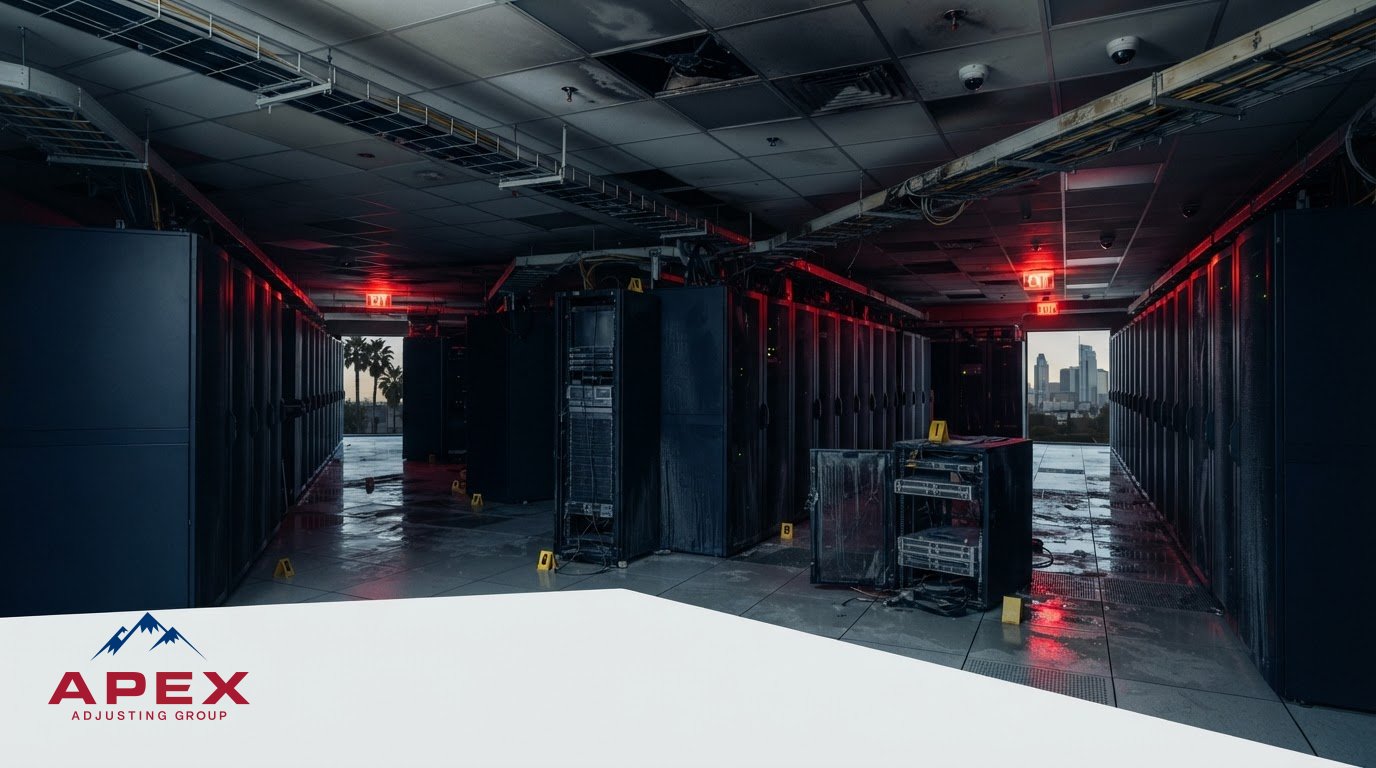
A suppression discharge can damage a data center even when the system contains the fire. A San Jose data center fire suppression damage claim may involve servers, building components, cleanup, and operational impacts. Document fire effects separately from conditions associated with the discharge so the claim file shows what was observed and where.
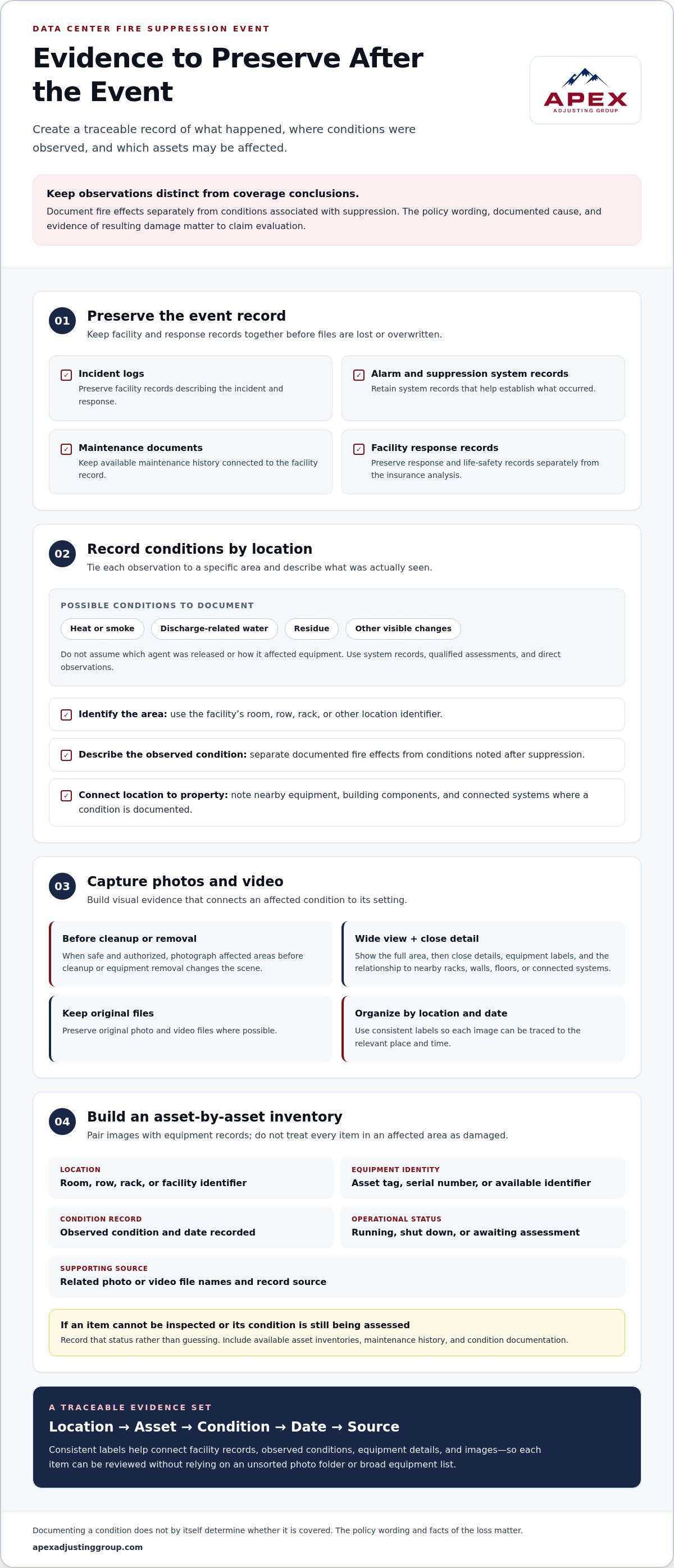
Equipment damage, system records, and business interruption documentation often sit with different teams. Preserve incident logs, alarm and suppression system records, photographs, maintenance documents, and affected equipment details before records are lost or overwritten.
Apex Adjusting Group represents property owners in fire damage claims in California, including San Jose, San Francisco, Oakland, Sacramento, Los Angeles, Orange County, and Southern California; Arizona, including Phoenix and Tucson; Washington, including Seattle and Spokane; Idaho; and Nevada, including Las Vegas and Reno. Owners reviewing a local fire loss can also visit San Jose fire damage claim support.
This article explains how to document suppression-related damage, identify property and potential operational-loss categories for policy review, and compare the documented scope with the claim assessment. Coverage depends on the policy wording and the facts of the loss, so the policy and facility records matter.
Apex Adjusting Group is a licensed public adjusting firm that represents property owners, not insurance companies. An independent claim review can help clarify whether the documented loss scope reflects the known damage and impacts.
Key Takeaways
- Separate observed suppression-related damage from the question of what the policy may cover.
- Organize evidence by location, equipment, condition, and date so records can be traced to specific areas of the facility.
- Use a comparison table to flag gaps between documented damage, the claim estimate, and unresolved questions in a San Jose data center fire suppression damage claim.
- Keep life-safety and facility response records distinct from the insurance analysis, while preserving both for review.
- An independent review can compare policy materials, damage documentation, and the recorded loss scope.
San Jose Data Center Suppression Damage: What the Claim Must Capture
A suppression event can leave a facility owner sorting through several issues at once: possible damage to servers, affected building areas, and interruptions to normal operations. A clear San Jose data center fire suppression damage claim distinguishes conditions observed after the incident from what the policy may cover. Owners assessing a local fire loss can also review San Jose fire damage claim support.
Start with the incident record, not an assumption about the system or cause. The policy wording, documented cause, and evidence of resulting damage all matter to how a claim is evaluated. A condition can be real and worth documenting without automatically qualifying as a covered loss.
How a suppression event can create more than one damage category
Record fire effects separately from conditions observed after suppression. Depending on the incident, records may describe heat or smoke, discharge-related water, residue, or other visible changes. Don’t assume which agent was released or how it affected equipment. Use system records, qualified assessments, and direct observations to establish what occurred.
Map each condition to its location and potentially affected property. A room-by-room or rack-by-rack account can clarify whether reported damage involves:
- Servers, storage devices, and other IT equipment, with each item’s location and observed condition.
- Racks, cabling, power or cooling components, and connected systems where a condition is documented.
- Building finishes or other structural components, with the affected area identified.
- Cleanup or mitigation work, supported by incident records and related documentation.
These categories describe the scope to investigate, not a conclusion that every item is damaged or covered. For example, record a damp area near a rack as an observed condition. Further documentation may be needed to establish which equipment was affected and how.
Why a data center loss needs a facility-specific review
Dense equipment layouts and interconnected operations can make it difficult to tie a visible condition to a specific asset or area. A room-level note may not show which racks were examined, what was found, or whether a connected component was included in the reported scope. Facility records can connect location, equipment identity, condition, and incident timing.
Suppression-related property loss is the documented physical damage associated with a suppression event, not an automatic determination of insurance coverage. A claim review compares those documented conditions with the policy’s terms and the recorded cause. Property assessment is separate from fire prevention or system-design advice. This section concerns identifying and documenting the loss after an event.
Incident paperwork may identify the responding agency. The San Jose Fire Department page provides general background, while facility-specific incident records establish what happened at the property. Keep those records connected to affected locations and assets so the claim scope can be reviewed against the evidence.
Evidence to Preserve After a Data Center Fire Suppression Event
Scattered files can make it difficult to connect a condition to a specific room, asset, or date. Build one evidence set with consistent labels: location, equipment or asset identifier, observed condition, date and time, and record source. This structure lets a reviewer trace each item instead of relying on an unsorted photo folder or broad equipment list.
Contemporaneous records help compare facility conditions before and after the event, making changes easier to identify and evaluate.
Photographs, video, and equipment records
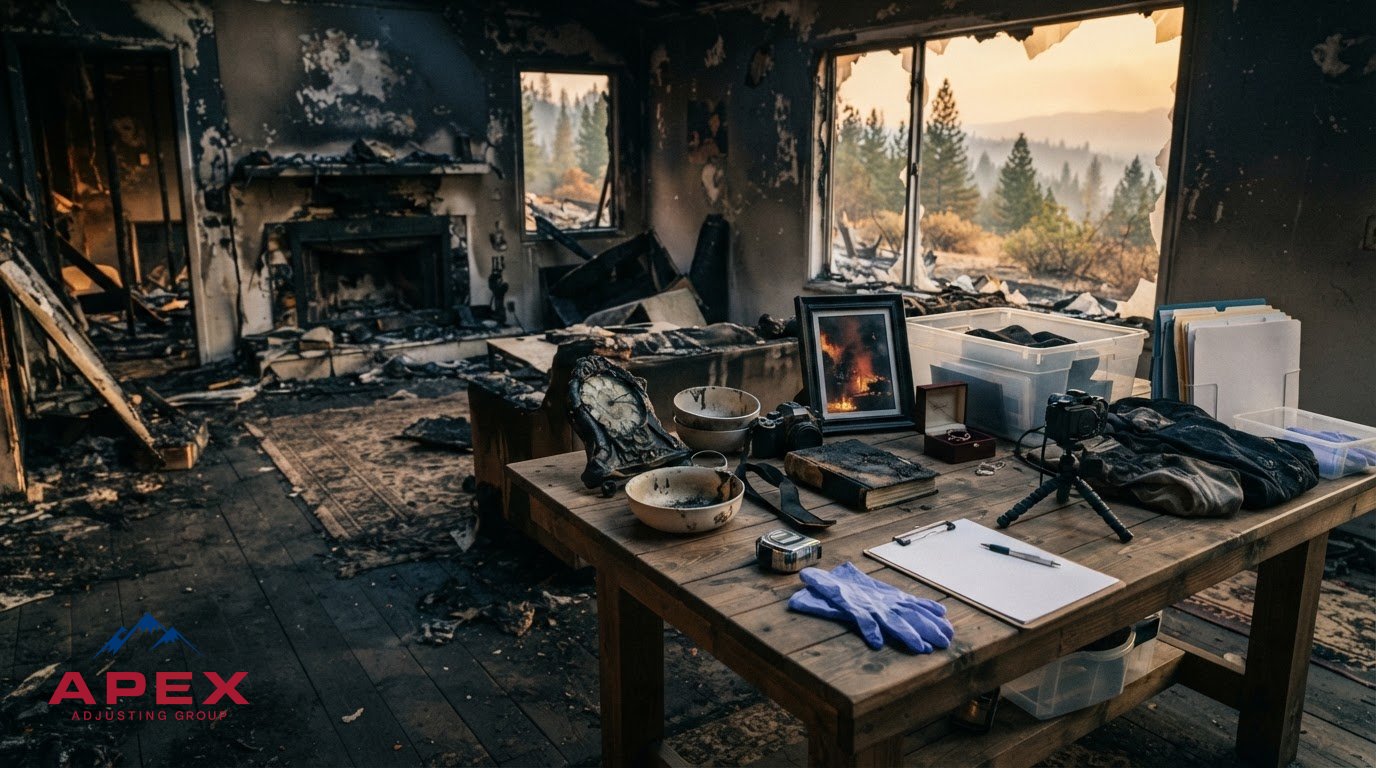
When it’s safe and authorized, photograph affected areas before cleanup or equipment removal changes the scene. Capture both the full area and close details, including equipment labels and how affected items relate to nearby racks, walls, floors, or connected systems. Preserve original files where possible, and organize copies by location and date.
Pair images with equipment records. Useful material may include asset inventories, maintenance history, available condition documentation, and records showing an item’s known operational status. If an asset cannot be inspected or its condition is still being assessed, record that status rather than guessing.
For each potentially affected item, create an inventory entry that can be matched to facility records. Include:
- Room, row, rack, or other location identifier used by the facility.
- Asset tag, serial number, or another available equipment identifier.
- Observed condition and the date it was recorded.
- Known operational status, including whether it was running, shut down, or awaiting assessment.
- Related photo or video file names and the record source.
This inventory keeps the evidence specific without treating every item in an affected area as damaged. It also helps reviewers identify missing details and distinguish recorded observations from conclusions.
System and incident documentation
Preserve available alarm logs, suppression-system records, inspection reports, and service documentation. These records can show what the facility’s systems recorded and what work occurred, but they should be reviewed alongside physical evidence. The NFPA 75 Standard is a relevant data-center fire-protection reference. Facility-specific records remain essential to documenting a particular event.
Build a timeline from facility incident reports and staff observations. Note when a condition was first observed, when areas or equipment were inspected, and when cleanup or mitigation took place. Keep original reports and identify who created each entry. Separate firsthand observations from later summaries.
Retain invoices and work descriptions for cleanup, mitigation, and emergency response, along with their dates. Preserve the connection between each record and the relevant room or asset. A free claim review can help assess whether the collected documentation reflects the recorded loss scope.
Compare the Claim Scope With Data Center Loss Records
A claim estimate and the facility’s records may describe the same event differently. Compare them item by item instead of relying on a single total or broad room description. For a San Jose data center fire suppression damage claim, identify what the estimate includes, what the records document, and which questions still need answers.
An estimate is a document to review, not a substitute for the facility’s loss records. Apex Adjusting Group’s commercial property claim support includes reviewing documented property losses.
Use a comparison table to identify gaps
Build a working table with one row for each affected area, asset, or loss category. Use descriptions specific enough to match facility inventory, inspection notes, photographs, invoices, or operational documentation.
| Loss category | Facility documentation | Estimate description | Unresolved question |
|---|---|---|---|
| Building components | Location, observed condition, inspection note | Listed repair or scope description | Does the estimate address each documented area? |
| Equipment and contents | Asset identifier, location, condition, status | Listed item or group description | Are any recorded assets absent or grouped too broadly? |
| Mitigation | Work description, date, supporting invoice | Included work or line description | Does the estimate reflect the documented work? |
| Potential operational impacts | Interruption records and additional measures | Any related estimate category | What policy wording and records apply? |
Match property and equipment to the evidence
For each listed item, match the estimate description to its location, asset identifier, observed condition, and supporting record. A group entry such as “server equipment” may be difficult to reconcile if the facility inventory identifies individual assets or distinct rack locations. Record the mismatch and note which document could clarify it.
Mark uncertain status plainly. An item awaiting inspection or testing should not be described as confirmed damaged or undamaged based on an assumption. Keep observed conditions separate from proposed repair or replacement decisions. Those decisions require support and may depend on the policy and claim assessment.
Review operational impacts against policy wording
Property scope is only one part of the review. Identify documented interruption periods and additional operating measures, such as work recorded to maintain or resume facility operations. Preserve the records supporting each period or expense, and connect them to the incident and facility activity.
Business interruption or extra expense may depend on the policy language and the circumstances of the loss. Review the actual provisions and supporting records rather than assuming that an operational effect is covered.
Compare an estimate against each documented loss category instead of treating it as a complete account of the facility’s loss. Use the comparison to mark items that align, items that need explanation, and records still needed for review.
A Practical Claim Review Process for San Jose Facility Owners
A facility team may be handling safety, restoration, and insurance communications at the same time. Keep life safety and incident response first. Insurance analysis is a separate workstream that can begin as records are secured. A clear process turns scattered material into a reviewable claim file.
- Secure and preserve records. Follow facility procedures for life safety and incident response. Preserve available photographs, video, alarm and suppression records, incident reports, and relevant facility documentation without delaying necessary response activity.
- Gather the claim documents. Collect the policy, claim correspondence, estimates, inspection notes, and any requests or responses related to the claim. Keep complete copies, including attachments and referenced documents.
- Build a dated chronology. Connect observed conditions, inspections, mitigation work, and claim communications in sequence. Note the date, source, and location for each entry so readers can trace how the record developed.
- Group evidence by category and location. Store building records, equipment inventories, photos, system documentation, and invoices in clearly labeled folders. Use consistent room or asset identifiers across records where available.
- Mark gaps without filling them with assumptions. Flag missing documents, uninspected equipment, and unresolved damage questions. Keep possible issues distinct from confirmed observations until supporting information is available.
- Compare the file with the claim assessment. Match each documented loss category to the relevant estimate description. Record what aligns, what appears absent or unclear, and which supporting record may resolve the question.
Organize the file before evaluating differences
A dated chronology prevents important records from being read out of context. Distinguish an initial observation from a later inspection or a condition recorded after mitigation. Keep claim communications with the related estimate or request, and label missing records as outstanding rather than treating them as proof of damage.
Review the actual policy wording alongside the documented facts. A policy provision describes terms relevant to coverage, but its application depends on the language and circumstances of the claim. A category name or estimate line is not a coverage decision by itself.
Know when independent claim support may help
A public adjuster represents the property owner in a first-party property claim. Apex Adjusting Group reviews policy materials, available documentation, and the recorded loss scope, then identifies questions or gaps for further consideration. In a complex commercial file, this owner-side perspective can help assess how facility records and the claim assessment align.
Independent support does not guarantee a particular claim outcome. It provides another assessment of the documented scope and can clarify what the file establishes.
How Apex Adjusting Group Reviews a Data Center Fire Claim
A data center claim can involve policy language, facility records, equipment documentation, and an estimate that describes the loss at a different level of detail. Apex Adjusting Group reviews these materials as a licensed public adjusting firm representing property owners, not insurance companies. For a San Jose data center fire suppression damage claim, the focus is the documented loss scope and how it relates to the policy and claim assessment.
What owner-side claim representation means
Public adjusting is insurance claim representation, not legal representation. Apex works on behalf of the property owner to review and document a first-party property claim, including reported damage and the records supporting its scope. The review may identify questions or gaps for consideration. It does not promise claim acceptance, a particular settlement, or a specific timeline.
That distinction matters in a complex facility loss. A policy provision must be considered in context alongside the documented cause and observed conditions. Apex’s review organizes those elements into a clearer picture of what the file establishes and where additional support may be relevant.
What to prepare for a free claim review
A complete file helps the review start with the available facts. Property owners can gather the records below, even if some items are still outstanding:
- The insurance policy and related claim correspondence.
- The estimate and any inspection or scope documents received.
- Incident records, photographs, video, and facility notes describing observed conditions.
- Equipment inventories, asset identifiers, maintenance history, and available service records.
- Cleanup or mitigation invoices with work descriptions and dates.
- Records of operational impacts or additional measures taken after the event.
Keep original records intact and label materials by date, location, and source where possible. If an item is missing or an equipment condition remains unresolved, note that clearly. A gap in the file is a question to track, not proof of a loss or a coverage decision.
Apex offers a free claim evaluation. Its fee is a percentage of what it recovers, with no fee unless recovery is achieved. This structure lets property owners understand the review process before deciding whether independent claim support fits their situation.
A free review can clarify how the policy materials, damage documentation, and recorded scope fit together. Property owners can request a free claim review.
Keep the Claim File Ready for the Next Review
A data center claim can continue to develop as inspections, testing, and documentation add detail. Keep a working record of what’s established, what remains uncertain, and which facility records may answer open questions. This helps the owner evaluate the next assessment without treating an assumption as a confirmed loss.
For a San Jose data center fire suppression damage claim, make sure the documented scope reflects the available evidence and clearly identifies unresolved items. An independent review can help the owner assess whether the file is ready for that comparison.
A well-organized claim file gives the owner a clearer basis for moving forward, one documented question at a time.
Frequently Asked Questions
Does insurance cover water damage from a data center fire suppression system?
Coverage depends on the policy’s terms and the facts of the loss. Review applicable limits, exclusions, deductibles, and endorsements alongside the documented cause and resulting damage. A policy may treat different causes or property categories differently. The presence of water, or the fact that suppression equipment discharged, doesn’t establish coverage by itself. The facility’s actual policy controls the assessment.
Can a data center file a claim if the suppression system worked as designed?
Yes. A system can operate as intended while the event still results in reported property damage. The claim file should distinguish whether the system malfunctioned from whether a fire or discharge caused a documented loss. Record what happened, what property was affected, and which records support that sequence. System performance alone doesn’t determine whether a resulting loss falls within the policy.
What records should a San Jose data center preserve after a suppression event?
Along with incident and property records, preserve the context that helps others interpret them. Note who created each record, when it was generated, and any relevant time-zone or system-clock differences. If records are exported from facility systems, retain the original export and identify its source. Document unavailable or overwritten material and why it couldn’t be retained, rather than leaving unexplained gaps.
Can a data center claim include damaged servers and networking equipment?
Potentially, subject to the policy and evidence for each item. Equipment schedules can help establish what the facility owned before the event, while inspection findings can describe its post-event condition. Keep repair, testing, and replacement assessments distinct from the initial observation. For example, a device that powers on may still need a documented evaluation; operation alone doesn’t establish its full condition or the applicable claim treatment.
May business interruption be part of a data center fire claim?
It may be, if the policy wording and circumstances support that category of loss. Identify which services or facility functions were affected, when the effects occurred, and what records support the claimed period. Financial and operational records may help explain the effect, but the relevant policy terms determine how interruption or extra expense is assessed. A disruption alone doesn’t establish coverage.
Can a public adjuster review a commercial data center fire claim?
Yes. An independent review may help when an estimate appears to omit documented property, combines distinct items, or leaves questions about the recorded scope unanswered. Apex Adjusting Group can compare claim materials with available facility documentation and identify points that may need clarification. The review doesn’t guarantee a coverage decision or claim outcome. The applicable policy and loss facts remain central to the assessment.
Need Help with Your Insurance Claim?
Our licensed public adjusters can help you get the maximum settlement you deserve. Contact us today for a free claim evaluation.
Related Articles