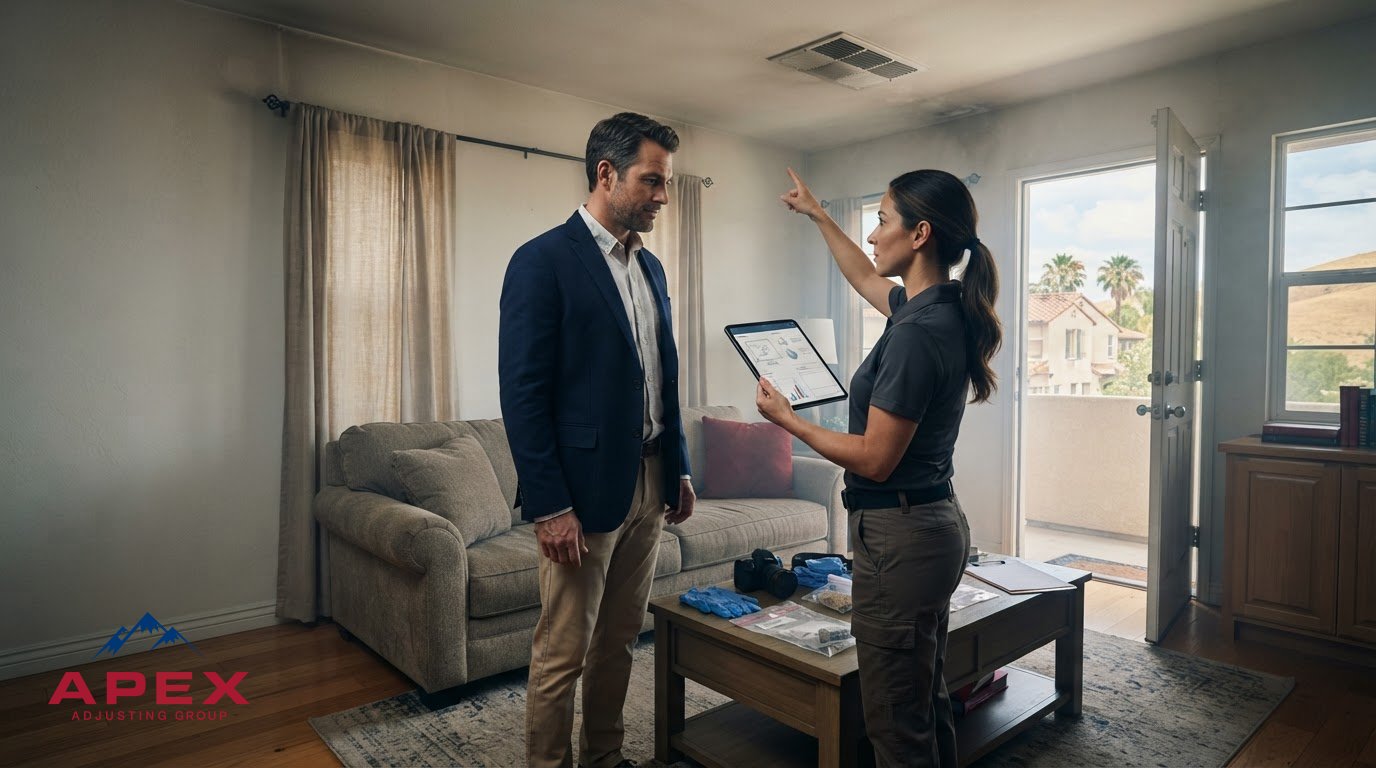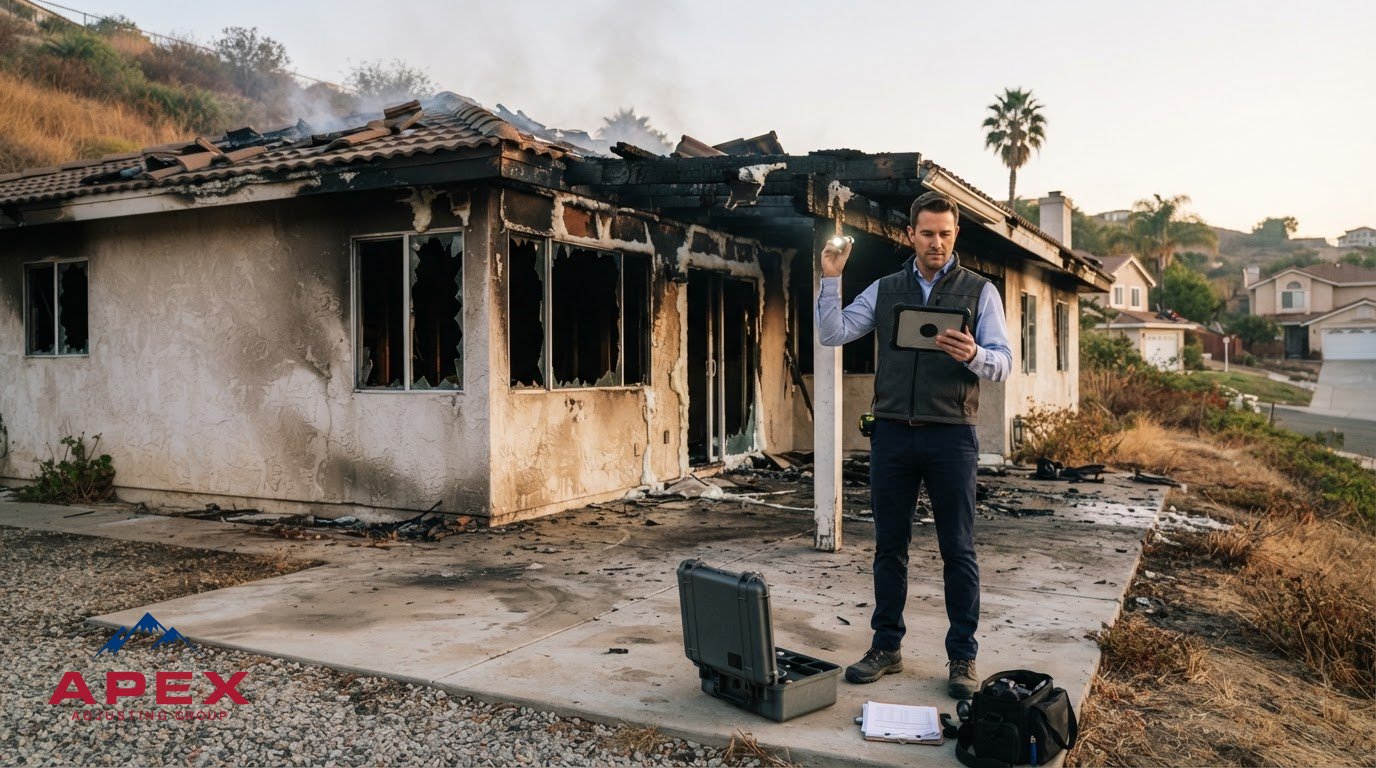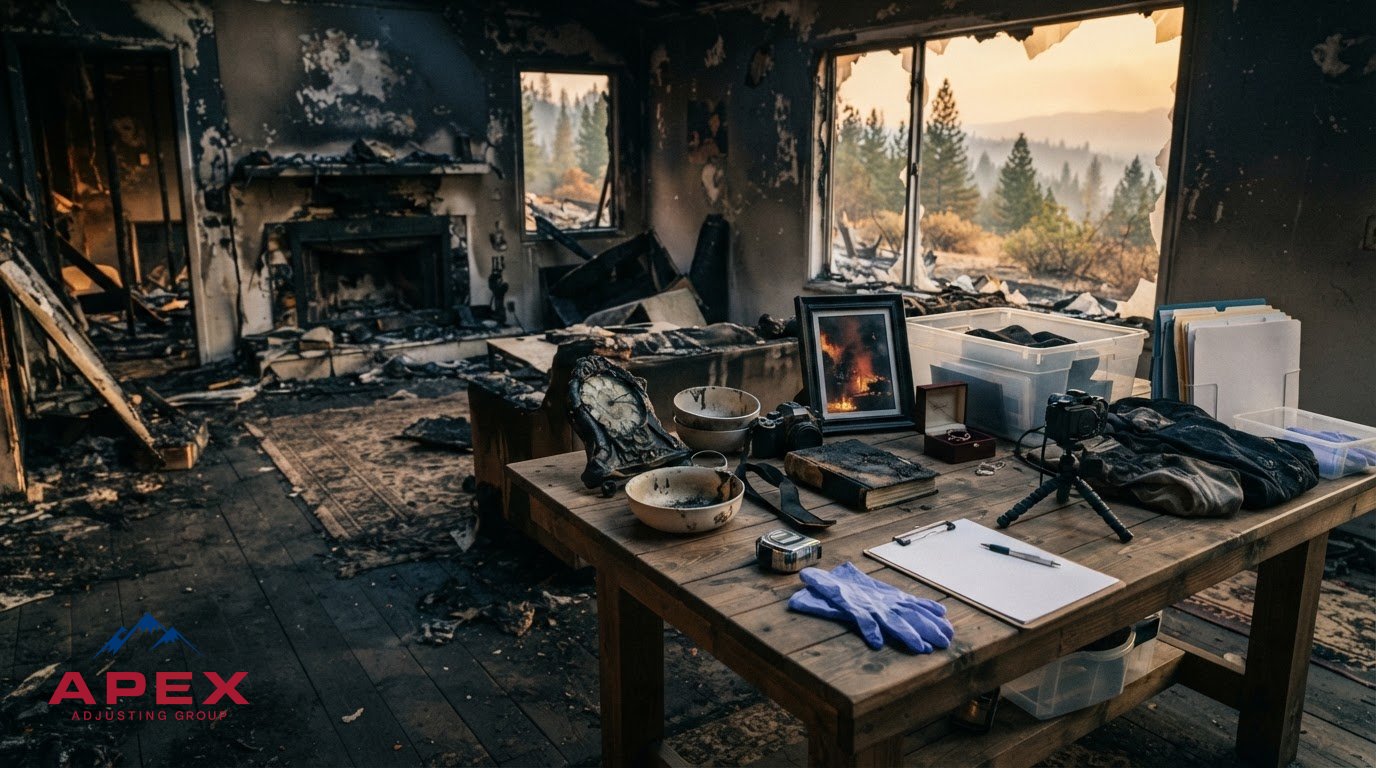
After a wildfire or other property loss, belongings may be damaged, missing, or inaccessible, and receipts or records may be gone. A contents inventory loss in Nevada City, CA, calls for more than a rough total based on memory. An itemized record can show what was affected and give a claim reviewer specific details to assess. Local information is available on the Nevada City location page.
It’s understandable to feel uncertain when the insurer’s inventory or valuation doesn’t match what was in the property. Record each item you can identify, its condition, and any available photos or purchase details. Missing paperwork doesn’t make an item impossible to describe. Mark what’s known and what’s estimated so the record remains clear.
This article explains how to build a more complete contents record, how policy terms such as actual cash value and replacement cost may affect valuation, and what to gather before a claim review. Apex Adjusting Group reviews residential and commercial property claims on the owner’s side when the contents scope or valuation appears incomplete.
Key Takeaways
- Record contents by room, noting each item’s description, approximate age, quantity, pre-loss condition, and observed damage.
- Photograph affected belongings and keep supporting records, such as purchase details, with the inventory.
- Review policy limits, exclusions, conditions, and valuation terms to understand how they may affect individual items.
- Organize policy documents, room photos, insurer correspondence, and dated notes about claim conversations and inventory submissions.
- If the contents scope or valuation appears incomplete, Apex Adjusting Group can review the claim file, documentation, damage scope, and relevant policy terms on the property owner’s side.
Contents Inventory Loss in Nevada City: What the Claim Covers
After a property loss, belongings may be burned, coated with smoke residue, exposed to water, contaminated, missing, or inaccessible. A contents inventory gives the personal-property portion of a claim a clear record instead of relying on memory or a single estimated total. Start by distinguishing personal belongings from damage to the building itself.
A contents inventory is an itemized record of personal property affected by a loss, prepared to support the contents portion of an insurance claim. It documents belongings; it is not restoration, cleaning, or a decision about what the policy covers. Contents insurance generally concerns personal belongings inside a home, though policy terms vary across providers such as Verdant Insurance, and the exact policy wording determines how specific items and circumstances are treated.
Which belongings may belong on a contents inventory?
Start with movable items owned by the household or business. Depending on the property and loss, examples may include furniture, clothing, cookware, electronics, tools, merchandise, office equipment, and portable appliances. These are examples to assess, not a guarantee that every item qualifies for coverage.
Building materials and permanently attached components, such as built-in cabinetry or installed flooring, are generally considered part of the structure rather than movable contents. The distinction can be less clear for some fixtures or equipment, so identify each item and its location instead of deciding coverage based on appearance alone. Ownership, reported damage, and the policy’s limits, exclusions, and conditions all matter.
How fire, smoke, and water losses affect contents records
Visible flames are not the only reason to document an item. After a wildfire or structure fire, smoke may leave residue or odor on belongings outside the area of direct burning. Water used during firefighting or from a separate leak may also affect contents. Record what can be observed and where it occurred. These details support claim review but do not, by themselves, establish coverage.
For each affected item, note its room or storage area, describe its condition, and take clear photos when it’s safe to access the property. Capture close views of residue, discoloration, water marks, or other visible changes, along with a wider image showing the item’s location. If access is restricted or an item is missing, record that accurately rather than guessing about its condition.
Wildfire-related smoke and water impacts can make it especially important to distinguish personal-property damage from building damage. A claim may involve both categories. Apex Adjusting Group handles fire damage claims involving fire and smoke damage. For general background, this overview of contents insurance explains how it typically covers loss or damage to personal belongings inside the home. Use it as context, then rely on the actual policy language to understand how an item may be handled.
How to Build a Detailed Contents Inventory After a Nevada City Loss
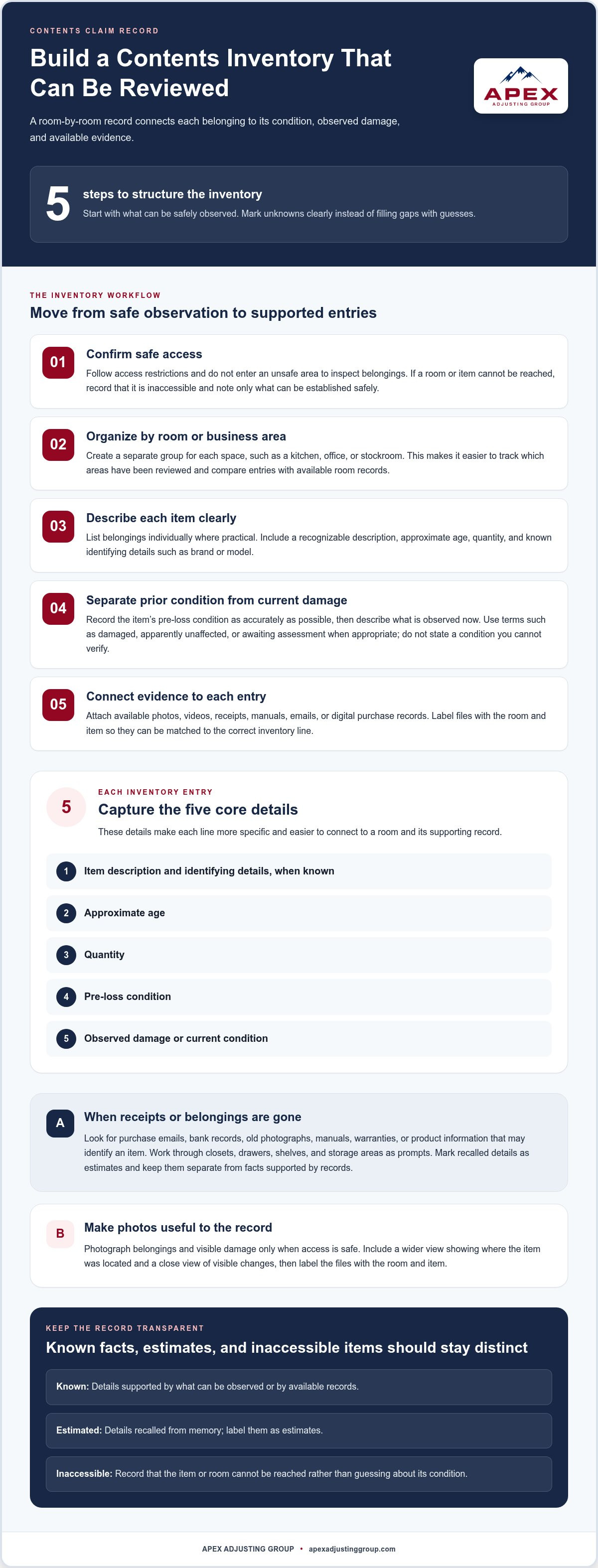
A contents record is strongest when each entry can be tied to a room, a condition, and available supporting evidence. After a contents inventory loss in Nevada City, CA, belongings may be destroyed, moved, or inaccessible, and original paperwork may be missing. Start with what can be safely observed, and mark unknowns clearly rather than filling gaps with guesses.
A useful entry captures the item’s description, approximate age, quantity, pre-loss condition, and observed damage. Add identifying details or supporting evidence when available, and connect each entry to a specific room or business area.
- Confirm safe access. Follow access restrictions and don’t enter an unsafe area to inspect belongings. If a room or item can’t be reached, note that it’s inaccessible and record only what can be established safely.
- Organize by area. Create a separate inventory group for each room or business space, such as a kitchen, office, or stockroom. This helps track which areas have been reviewed and compare entries with available room records.
- Describe items clearly. List belongings individually where practical. Include a recognizable description, approximate age, quantity, and known identifying details, such as a brand or model. Be specific when the information is available.
- Separate prior condition from current damage. Note the item’s pre-loss condition as accurately as possible, then record what’s observed now. Use descriptions such as damaged, apparently unaffected, or awaiting assessment when appropriate. Don’t state a condition you can’t verify.
- Connect evidence to each entry. Attach available photos, videos, receipts, manuals, emails, or digital purchase records. Label files with the room and item so the supporting record can be matched to the correct inventory line.
Reconstructing an inventory when receipts or items are gone
Look for records that may identify a belonging even if the item itself was destroyed, including purchase emails, bank records, old photographs, manuals, warranties, or product information. Then work through the property room by room, using prompts such as closets, drawers, shelves, and storage areas. Mark details recalled from memory as estimates, and keep them separate from facts supported by records.
Recording condition, damage, and possible salvage
Photograph belongings and visible damage only when access is safe. Take both a wider view showing where an item was located and a closer view showing its condition. If it’s safe and practical, document items before cleaning or discarding them. Don’t handle anything that may pose a hazard, and note when an item’s condition hasn’t been assessed.
Keep copies of each inventory version and note when it was updated or submitted. If the contents documentation or claim scope still raises questions, Apex Adjusting Group offers a free claim review with no pressure to proceed.
How Policy Terms and Valuation Shape Contents Inventory Loss
A contents list can be detailed and still differ from the insurer’s estimate. The difference may come from a missing item, a different description of its condition, or a valuation method that doesn’t match the policy wording. For a contents inventory loss in Nevada City, CA, compare each difference with the item record and policy, not just the estimate’s total.
Policy limits, exclusions, conditions, and definitions determine how individual contents items are considered. A limit may cap the amount available for a category or item, while an exclusion or condition may affect whether a particular loss is covered. Don’t assume the same rule applies to every belonging. Check the specific wording that applies to the item and reported damage.
Replacement cost and actual cash value are not interchangeable
Replacement cost generally refers to the cost of replacing an item with a comparable one, subject to policy terms. Actual cash value generally reflects an item’s value at the time of loss, with the calculation governed by the policy and applicable terms. Neither phrase alone establishes what a claim pays. Definitions, conditions, and other policy provisions control.
The same item may be evaluated differently depending on its age, pre-loss condition, documented features, and the valuation method that applies. A record showing the item’s model and condition can help clarify what’s being compared. Don’t treat a generic estimate as an item-specific answer.
| Concept | What it generally describes | Policy-dependent questions |
|---|---|---|
| Replacement cost | Cost to replace an item with a comparable one | What qualifies as comparable, and what conditions apply? |
| Actual cash value | Value assigned to an item at the time of loss | How does the policy define value and account for condition? |
| Limit, exclusion, or condition | A provision that may affect how an item is handled | Does a category limit, exclusion, or condition apply to this entry? |
When the insurer’s contents list differs from yours
Compare the lists entry by entry. Flag items that are missing, quantities that differ, descriptions or damage conditions that don’t match, and valuations that need an explanation. Attach supporting records to each disputed entry, then note the relevant policy language. This makes the disagreement specific instead of reducing it to a dispute over one total.
For example, an entry may appear on both lists but show a different quantity or condition. Separate that issue from a completely omitted item, and identify what documentation supports each correction. If contents questions are part of a broader fire loss, the fire damage claim review may also address the scope of damage to the property. A structured comparison keeps the contents review focused on the records and applicable policy terms.
What Nevada City Property Owners Can Gather for a Contents Claim
A review file should show what was claimed and how the claim has been handled so far. Keep the latest insurer estimate and any earlier versions, along with the policy declarations and provisions cited in claim correspondence. Label each document by date and source so it’s clear which version is current and what information was available at each point.
Evidence and records to organize before a claim review
Build a simple file index before arranging the documents. Separate records into policy terms, insurer evaluations, communications, and owner responses. For each estimate or request, note the date received, what it addresses, and whether a response or revised document followed. Keep original files unchanged, and make working copies for notes or annotations.
A dated claim log can connect those documents. Record the date of each conversation or written request, the topic discussed, any information requested, and any response or follow-up that remains outstanding. If a request was answered in a later submission, note where that submission appears in the file. This creates a clear timeline without relying on memory.
Questions to resolve when the inventory and estimate do not match
Before review, group unresolved issues by type: an item not addressed, damage not described, or a valuation explanation that remains unclear. For each issue, note what the estimate says, what needs clarification, and which document or communication relates to it. Keep confirmed facts separate from open questions, and don’t fill gaps with assumptions.
When seeking clarification, refer to the specific entry and ask which policy provision or documented condition informs the decision. A public adjuster represents the property owner in a first-party claim and can review the claim file from that perspective. Apex Adjusting Group’s claim FAQs provide more context on the role.
How Apex Adjusting Group Reviews Contents Inventory Loss Claims
A contents list may leave important questions unresolved. Are items missing from the estimate? Does the recorded damage match the evidence? Does the valuation reflect the applicable policy terms? Apex Adjusting Group represents property owners, not insurance companies, in first-party property claims and reviews the file from the owner’s side.
For a contents inventory loss in Nevada City, CA, a review can bring the inventory, claim estimate, damage documentation, and relevant policy language into one organized assessment. Apex is licensed in California, Arizona, Washington, Idaho, Colorado, Texas, and Nevada. Its regional coverage includes Southern California, Orange County, Los Angeles, Sacramento, San Jose, San Francisco, Oakland, Arizona, Phoenix, Tucson, Seattle, Spokane, Idaho, Las Vegas, and Reno. The review focuses on the claim record and contents scope, not on a promised decision, settlement, or timeline.
What a contents claim review can clarify
Apex reviews the claim file, contents documentation, reported damage scope, and policy terms relevant to disputed items. This may help identify omissions, differences in item condition or quantity, and valuation questions that warrant closer examination. The review can also consider how contents concerns connect to a broader fire, smoke, or other property damage claim.
Some questions may be straightforward to document, while others may depend on policy wording or further claim information. A review helps organize those issues and explain what the available records show. It doesn’t guarantee that an insurer will change its position or establish a particular outcome.
A public adjuster is a licensed insurance professional who represents the policyholder in preparing, presenting, and negotiating a property claim. Apex’s work is claim representation, not restoration or cleanup. If the inventory appears incomplete or the valuation doesn’t align with documented damage, a professional review can help the owner understand the issues in the file and possible next steps.
Prepare for a free claim review
Gather materials showing what was reported and how the claim has been evaluated. A complete file is useful, but owners can start with the records they have and identify what remains missing.
- Policy information: The declarations page and policy documents relevant to personal property.
- Claim materials: The insurer’s estimate, contents list, and correspondence or requests.
- Inventory records: Submitted drafts or versions, with disputed items clearly identified.
- Supporting evidence: Available photos, receipts, purchase records, or product information tied to particular entries.
Make a short note beside each disputed item explaining the concern, such as “not listed,” “quantity differs,” or “damage description unclear.” If a detail is uncertain, label it rather than presenting an estimate as fact. This gives the review a clear starting point.
Apex Adjusting Group works on a contingency fee, meaning its fee is a percentage of the recovery it achieves. There is no fee unless a recovery is achieved. Property owners can request a free contents claim review without pressure to proceed.
Move Forward With a Clearer Contents Claim
The next step is to turn unresolved inventory questions into a focused review. Keep the item list, supporting records, insurer’s estimate, and relevant policy documents together, then flag entries that remain unclear. This gives the contents portion of the claim a defined starting point instead of leaving it buried in a larger file.
Apex Adjusting Group represents property owners, not insurance companies, in first-party property claims. The firm is licensed in California and Nevada and works on a contingency fee, a percentage of any recovery achieved. There’s no fee unless a recovery is achieved.
If the contents scope or valuation still appears incomplete, a review can help clarify what the documentation supports and which questions remain open. A well-organized file can make it easier to discuss a contents inventory loss in Nevada City, CA, and determine a practical next step.
Take the process one documented question at a time. A clearer record is a practical place to start.
Frequently Asked Questions
Can I create a contents inventory if my belongings were destroyed?
Yes. A contents inventory loss in Nevada City, CA, can still be documented using records that survived the loss. Look for pre-loss room photos, purchase emails, bank records, or product details that identify belongings. Room-by-room recollection can add context, such as where an item was kept. Mark what a record confirms separately from estimated age, quantity, or description, and don’t present uncertain details as verified facts.
Does homeowners insurance cover smoke-damaged belongings?
It may, but coverage depends on the policy, documented damage, and facts of the claim. Record smoke residue or odor on an item with photos and a description of where it was found, but remember that documentation alone doesn’t establish coverage. Note which belongings appear affected and preserve available images or records. The policy’s definitions, exclusions, limits, and conditions govern how each item is considered.
What is the difference between replacement cost and actual cash value for contents?
Replacement cost generally describes the cost to replace an item with a comparable one. Actual cash value generally describes the item’s value at the time of loss, as determined under the policy. These terms can lead to different valuations for the same belonging, but their precise meaning and application depend on the policy wording and conditions. Check the applicable provisions rather than assuming one method applies to every item or claim.
What should I do if the insurer’s contents inventory leaves items out?
Identify each omitted item separately and connect it to available evidence, such as a pre-loss photo, purchase email, or product record. Note the room where it was kept and whether its description or condition is uncertain. Keep a copy of the inventory you submitted and record the omission as a specific question for claim review. A focused list helps distinguish missing entries from valuation or damage disputes.
Can belongings be documented before entering a fire-damaged property?
Yes. Use existing photos, videos, purchase records, or other accessible documentation while the property remains unsafe or access is restricted. Don’t enter an unsafe area to inspect or photograph belongings, and don’t handle items that may pose a risk. Once access is safe, gather additional documentation if practical. Note which items haven’t been inspected so the record separates known information from details that still need assessment.
Should I throw away belongings damaged by fire or smoke before the claim is reviewed?
If it’s safe and practical, document an item’s condition before cleaning or discarding it. Take photos showing both the item and visible damage, and keep related records, such as purchase information or correspondence. Don’t handle or retain anything that could create a safety concern. Follow applicable claim instructions about damaged property, and if disposal becomes necessary, note what was removed, when, and why.
Can a public adjuster help with a contents inventory dispute in California?
A public adjuster can represent a property owner in a first-party property claim and review contents documentation, damage scope, and relevant policy terms. That role is different from legal representation: a public adjuster does not act as an attorney. A review may help clarify omitted items or valuation questions, but it can’t guarantee that the insurer will change its assessment or produce a particular claim outcome.
Need Help with Your Insurance Claim?
Our licensed public adjusters can help you get the maximum settlement you deserve. Contact us today for a free claim evaluation.
Related Articles