The adjuster sent to inspect your property after a blaze does not work for you; their job is to protect the carrier's bottom line. When smoke, soot, and heat damage disrupt your home or commercial building, you face an immediate battle against dense policy language, rigid deadlines, and low initial repair estimates. Partnering with an experienced Southern California fire damage claim consultant shifts that leverage back to your side. You already know that proving hidden structural char, testing for toxic ash, and cataloging rooms of ruined property can quickly exhaust your time and focus.
This guide shows you how to evaluate and select a licensed fire damage claim consultant to document complex property losses across Southern California. We examine the exact qualifications to demand from an advocate, how thorough documentation exposes concealed smoke and structural damage, and how contingency-based public adjusting protects your interests from the initial site inspection to a fair settlement.
Key Takeaways
- Verify state licensing, regional wildfire experience, and fee structures before choosing a Southern California fire damage claim consultant to handle your file.
- Identify critical damage categories frequently missed during initial carrier walkthroughs, including attic smoke migration, compromised framing, and HVAC contamination.
- Learn how an independent, itemized scope of loss strengthens your sworn proof of loss and prevents delays during claim review.
- Understand the assessment and negotiation workflow that establishes full repair costs on a contingency basis, requiring no upfront fees.
Understanding the Role of a Fire Damage Claim Consultant
Property owners face overwhelming administrative burdens immediately following a residential or commercial blaze. Between securing the site, answering inquiries from claims examiners, and tracking down policy forms, the process rapidly exhausts policyholders. A fire claim consultant operates as a licensed public adjuster advocating exclusively for your interests. Instead of accepting insurer-directed scopes that often overlook structural compromises, an independent consultant prepares an exhaustive valuation of your real property and contents loss.
Understanding what is a public adjuster clarifies why policyholder representation matters. Public adjusters represent property owners exclusively and never work for insurance carriers. When dealing with complex losses across the region, hiring an experienced Southern California fire damage claim consultant ensures your claim strategy focuses entirely on securing the full recovery your policy provides.
Public Adjusters Versus Insurance Company Adjusters
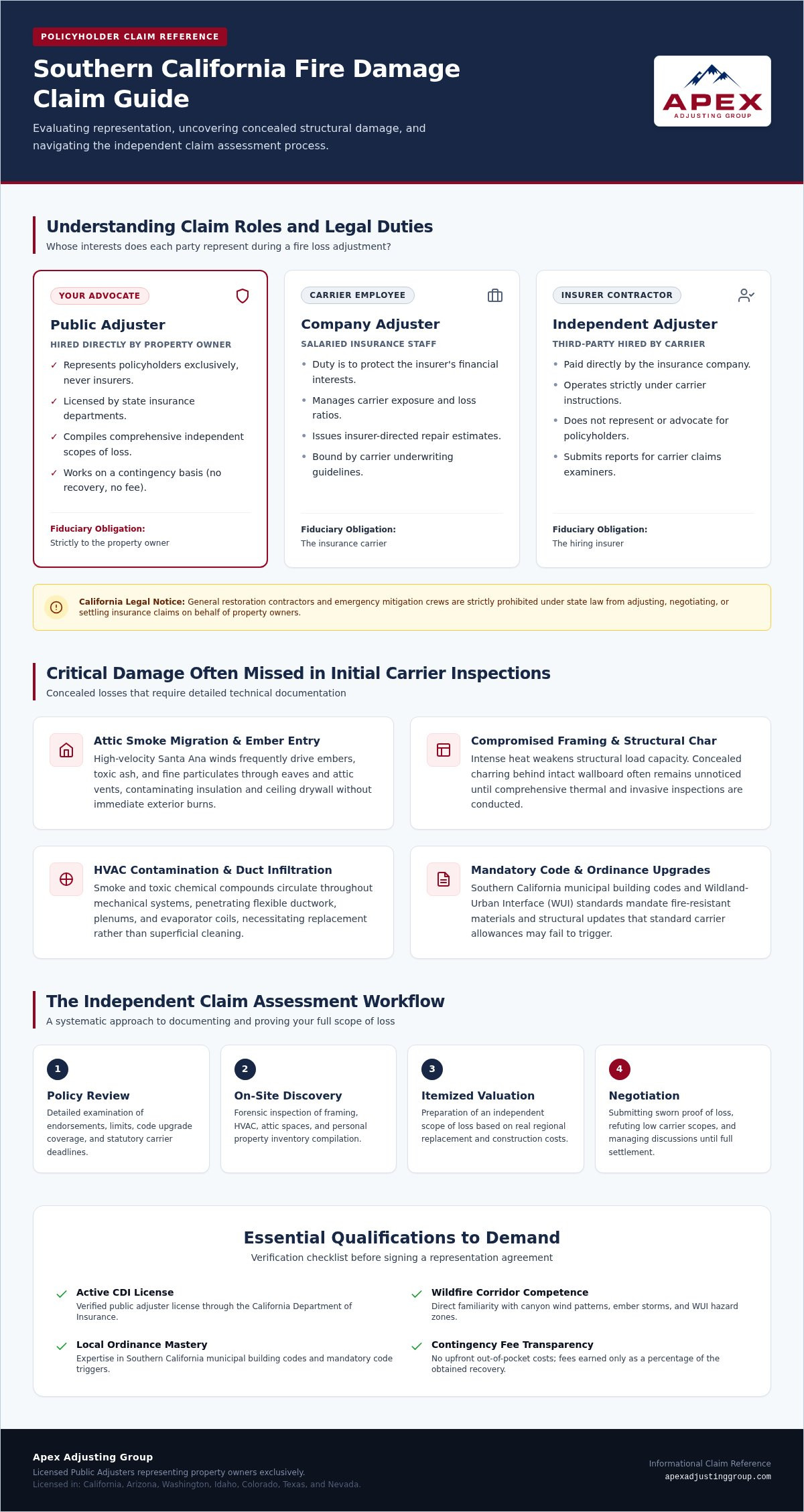
Insurance claims involve distinct roles with conflicting obligations:
- Company adjusters: Salaried employees of the insurer whose legal duty is to protect the financial interests of the insurance company.
- Independent adjusters: Third-party contractors hired and paid by the insurer to manage your file on their terms.
- Public adjusters: State-licensed professionals hired directly by you to document the true scope of damage, challenge lowball scopes, and manage negotiations.
To establish baseline documentation for your loss, review our dedicated guide to navigating a fire damage insurance claim before submitting preliminary paperwork to your carrier.
Why Restoration Contractors Cannot Adjust Your Claim
Emergency restoration contractors provide crucial immediate services, such as board-ups, roof tarping, and water extraction. However, California law strictly prohibits general contractors and emergency mitigation crews from negotiating, adjusting, or settling insurance claims on your behalf. Contractors specialize in the physical labor of construction and drying, but they lack the state license required to interpret policy endorsements, navigate exclusions, and argue valuation disputes.
Entrusting policy interpretation to an unlicensed party can jeopardize your settlement. A dedicated Southern California fire damage claim consultant analyzes coverage triggers, complies with strict statutory timelines, and builds an itemized financial recovery scope that reflects actual replacement costs rather than standard mitigation allowances.
Essential Criteria for Choosing a Southern California Consultant
Do not hire representation based on high-pressure pitches or post-disaster solicitations. Choosing the right advocate requires a methodical evaluation of professional credentials, regional competence, and contractual transparency. Southern California property losses involve unique factors, including fierce Santa Ana winds that drive ember storms into attic spaces and strict local building ordinances. Securing the right Southern California fire damage claim consultant ensures these regional challenges are addressed directly in your claim package.
Verifying State Licensing and Regional Wildfire Experience
Your first step is confirming that any representative holds an active public adjuster license directly through the California Department of Insurance (CDI). Review the state's official California Residential Property Claims Guide to understand the regulatory standards adjusters must follow. A qualified consultant must demonstrate specific familiarity with wildland-urban interface (WUI) fire hazards, local municipal rebuilding codes, and mandatory upgrades for fire-resistant materials.
Before signing an agreement, verify the following regional criteria:
- Active CDI credential: Verify that the individual and their firm maintain unblemished licenses in California.
- Wildfire corridor expertise: Ensure they understand how high-velocity canyon winds force ash and soot deep into wall cavities and subfloors.
- Local building code mastery: Confirm they account for municipal ordinance or law coverage triggers required by Southern California jurisdictions.
If your property sits in dense brush corridors or urban hill zones, consult our localized guide on Los Angeles fire damage claims to evaluate your neighborhood's rebuilding standards.
Evaluating Fee Structures and Professional Agreements
A reputable Southern California fire damage claim consultant works strictly on a contingency fee basis. This arrangement aligns your consultant's goals with your financial recovery: they receive an agreed-upon percentage of the settlement, with no out-of-pocket costs charged to you. Walk away immediately from any firm demanding upfront deposits, scoping fees, or retainers before inspecting your property.
Examine the written agreement carefully before executing it. California law grants policyholders the right to cancel a public adjusting contract without penalty within three business days of signing. Transparent contracts clearly define the scope of services, outline carrier communication protocols, and exclude insurance proceeds that have already been paid. If you have questions about your existing settlement offer or need a professional assessment of your loss, you can request a free claim review to examine your options before committing.
Key Damage Categories Your Consultant Must Document
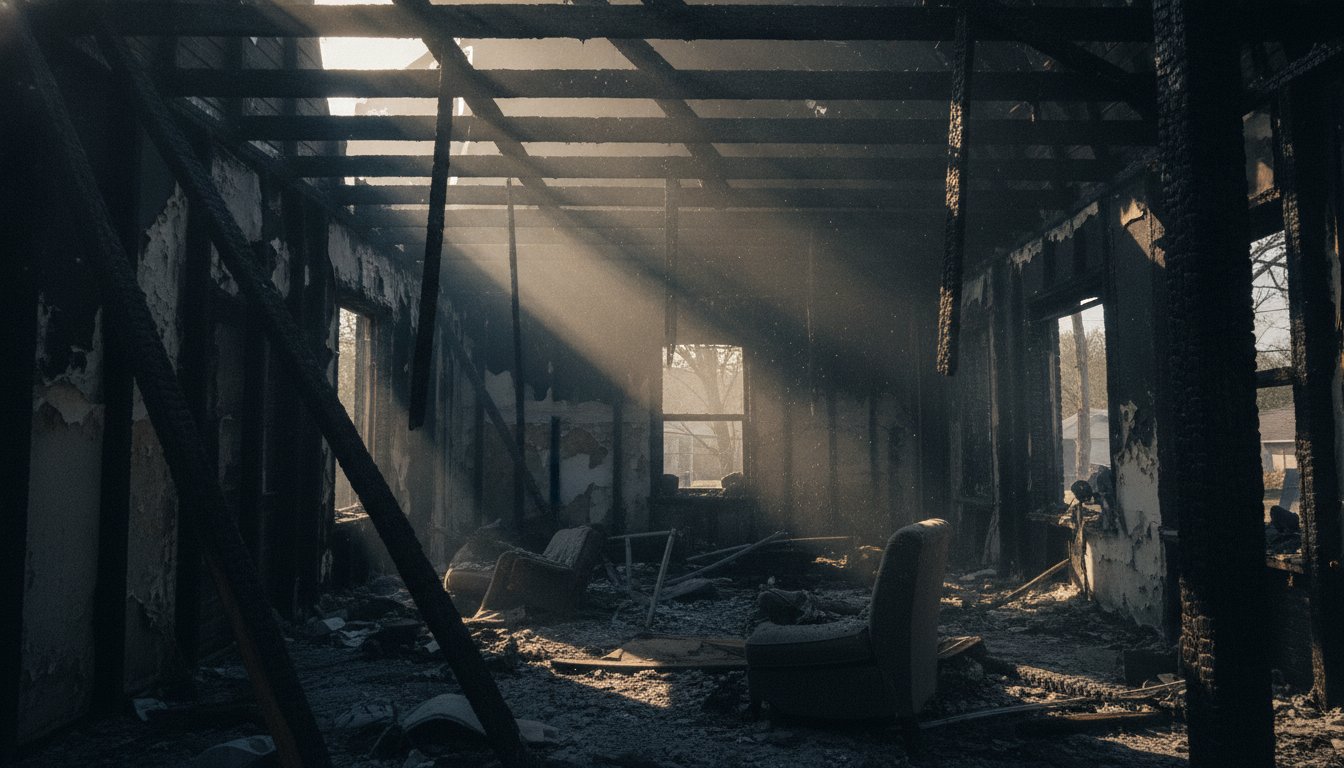
Insurance carrier scopes routinely account for obvious surface burns while dismissing the silent, pervasive destruction left behind. A fire compromises structural stability, indoor air quality, and mechanical infrastructure long after the flames are extinguished. Without an exhaustive site inspection, property owners face significant repair shortfalls. A skilled Southern California fire damage claim consultant ensures every affected material is accounted for under your policy's real property limits.
Detailed guidance published by the California Department of Insurance highlights the necessity of thorough post-disaster documentation. To protect your building from settling for cosmetic fixes, review our overview of comprehensive fire damage claim practices before allowing the insurer to close your file.
Structural Framing, Char, and Hidden Heat Damage
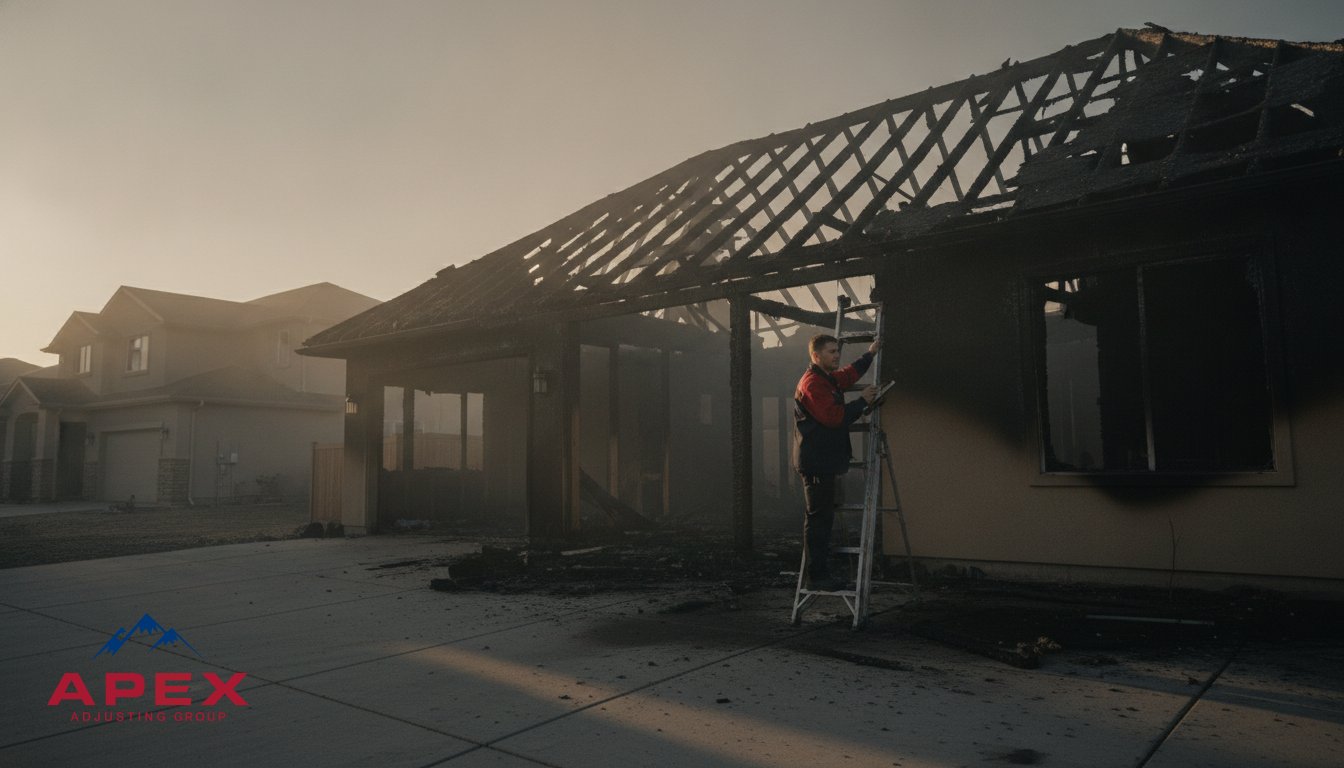
Intense heat alters the structural load capacity of wood framing, roof trusses, and concrete foundations without directly burning them. Drywall often conceals charred wall studs, melted wiring insulation, and weakened connection brackets. A knowledgeable consultant coordinates thermal imaging, borescope inspections, and structural engineering reviews where necessary. When local building codes mandate full-span replacements for engineered trusses, your consultant ensures the carrier pays for total reconstruction rather than superficial sistering repairs.
Smoke, Soot, and Corrosive Residue Migration
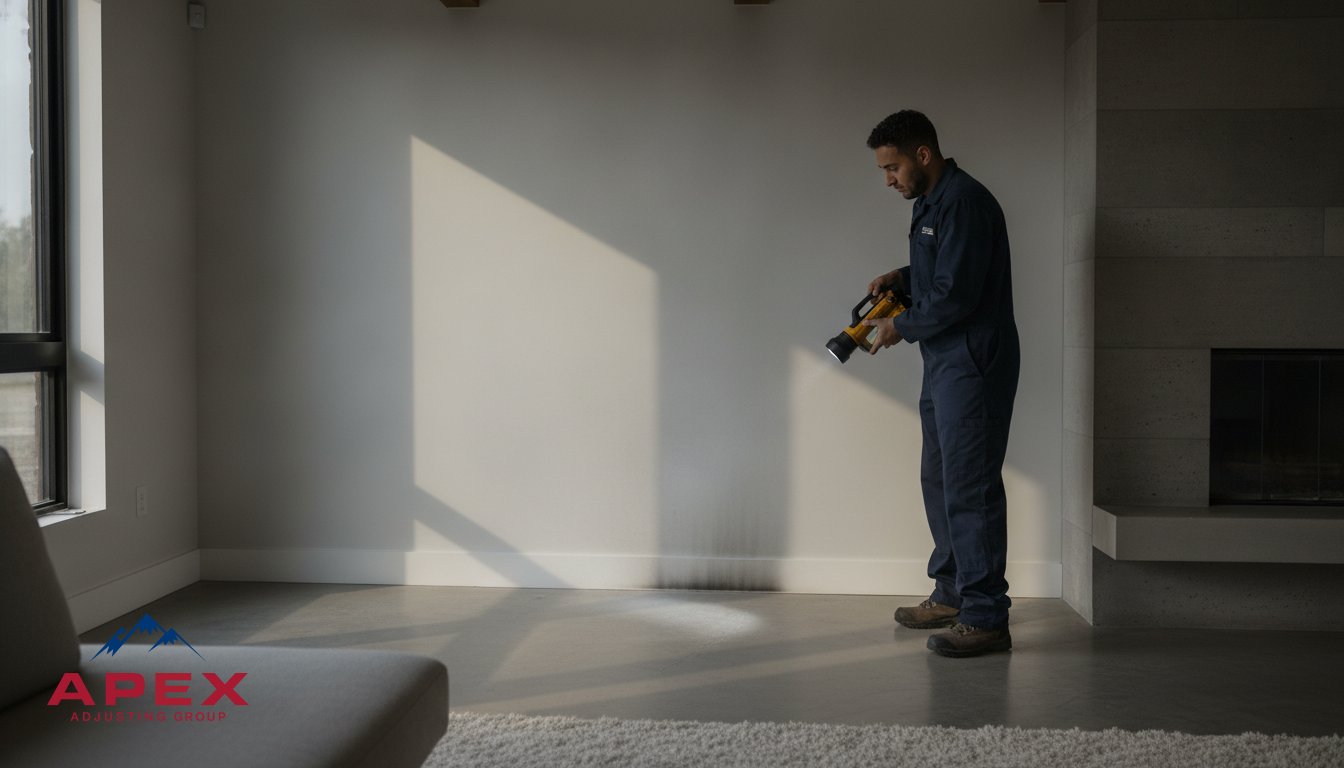
Smoke does not stay contained in fire-origin zones. Hot combustion gases pressurize and travel through attic spaces, interior wall cavities, and HVAC duct networks. This contamination creates distinct secondary hazards:
- Chemical etching: Acidic soot particulates react with ambient moisture, causing permanent pitting on plumbing fixtures, appliances, and exposed metals within days.
- HVAC contamination: Smoke deposits coat internal duct linings, air handlers, and coils, requiring full mechanical tear-out rather than simple sanitizing.
- Attic and insulation infiltration: Blown-in and batt insulation trap toxic polycyclic aromatic hydrocarbons, requiring complete removal and encapsulation of sub-framing.
Water Damage and Suppression Chemical Residue
Extinguishing a structure fire requires thousands of gallons of water, frequently accompanied by chemical retardants. This suppression runoff pools across floor assemblies, runs down interior drywall, and collects inside insulated crawlspaces. If mitigation crews fail to extract this moisture immediately, secondary microbial growth can develop inside wall cavities within forty-eight hours.
A proficient Southern California fire damage claim consultant documents every wet ceiling joist, saturated subfloor, and chemically degraded building finish. This independent proof ensures your carrier funds the full scope of structural drying, sanitization, and material replacement before finish carpentry begins.
The Independent Claim Assessment and Negotiation Process
Securing professional representation transforms a chaotic loss into a methodical, evidence-driven workflow. Policyholders often find themselves outmatched during negotiations because carrier adjusters utilize specialized software and restrictive cost guidelines to control claim reserves. Retaining a dedicated Southern California fire damage claim consultant establishes parity. Your consultant builds an airtight claim package supported by physical evidence, local trade pricing, and precise policy endorsements.
Conducting On-Site Inspections and Line-Item Scoping
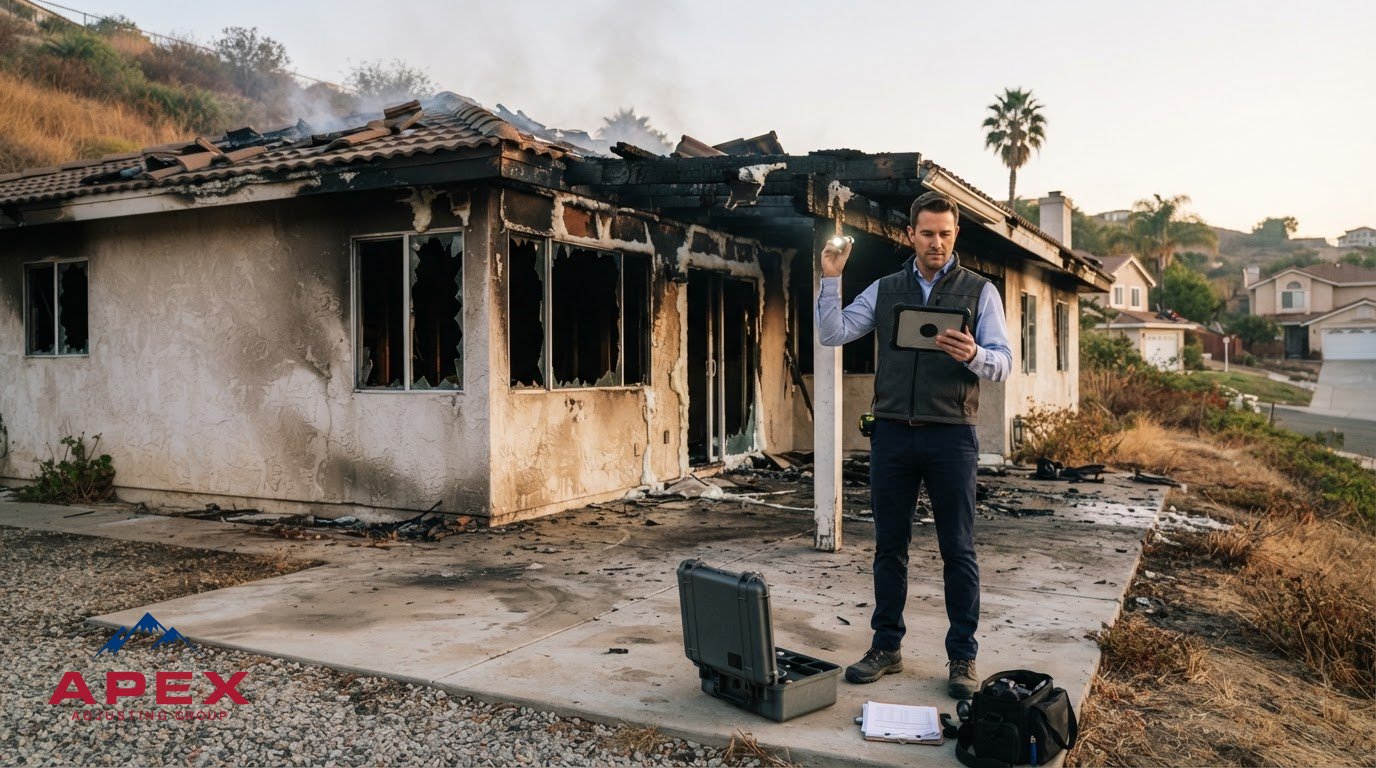
A rigorous assessment begins with a forensic, room-by-room walkthrough of the property. Your consultant records high-resolution photographic evidence and exact structural dimensions while inspecting finishes, framing, and mechanical equipment. They compile these findings into line-item scopes using industry-standard pricing databases calibrated to current Southern California construction costs. They also verify mandatory ordinance or law provisions, ensuring building code updates for electrical systems, insulation, and roof assemblies are fully funded.
Compiling Personal and Business Contents Inventories
Documenting personal possessions or commercial inventory is one of the most grueling requirements after a fire. Consultants eliminate this administrative burden by building exhaustive inventories containing:
- Asset identification: Detailed descriptions including manufacturer, model, serial numbers, and purchase dates.
- Valuation verification: Current replacement cost pricing backed by vendor quotes and retail documentation.
- Restoration classification: Clear technical distinctions separating items suitable for specialized cleaning from total losses.
This organized inventory prevents carrier representatives from applying arbitrary depreciation or omitting high-value items during claim valuation.
Managing Carrier Communications and Settlement Discussions
After finalizing the scope of loss, your consultant submits your formal sworn proof of loss directly to the insurer. They take over daily carrier correspondence, enforce statutory response deadlines, and challenge unsupported claim reductions. When the insurer requests a joint reinspection, your consultant attends in person, walking the site to verify that the carrier's team documents every hidden compromise and structural fracture.
Steps to Engage an Advocate for Your Fire Recovery
Taking prompt, decisive action safeguards your financial recovery under your policy. Delaying action allows physical evidence to deteriorate, debris removal to obscure origin damage, and statutory response windows to close. Before reaching out for guidance, organize your complete insurance policy declarations page, all written carrier correspondence, and any preliminary adjuster estimates. Presenting these records to an experienced Southern California fire damage claim consultant allows them to identify valuation gaps immediately.
Recognizing Signs That Your Claim Is Underpaid or Delayed
Insurers handle catastrophic property losses with standard containment strategies. Recognize the warning signs that your file requires independent intervention:
- Omitted damage categories: Initial insurer estimates exclude attic smoke abatement, HVAC ductwork replacement, or mandatory municipal building code upgrades.
- Administrative stalls: Carrier adjusters fail to answer written inquiries, request redundant documentation, or repeatedly transfer your claim to new file handlers.
- Premature settlement pressure: Checks arrive with restrictive release endorsements designed to close your file before contractors complete tear-outs and identify concealed char.
Never sign a full release or endorse a final settlement check if uninspected structural or personal property damages remain unresolved.
What to Expect During an Initial Claim Review
A professional file evaluation provides immediate clarity on where your insurer's estimate falls short. During this review, your advocate analyzes policy limits, deductible applications, code upgrade riders, and Additional Living Expense (ALE) provisions. They cross-reference the carrier's line-item pricing against observed physical damage and local labor rates across the region.
This assessment determines whether engaging a Southern California fire damage claim consultant will benefit your financial recovery. You receive direct, practical feedback on your settlement position without upfront financial risk. Schedule a free claim review to evaluate your current settlement status and protect your property recovery.
Take Control of Your Fire Insurance Settlement
Rebuilding after a structure blaze requires an aggressive, evidence-backed claim strategy. Insurer-appointed adjusters inspect losses with carrier loss-control goals in mind, often leaving property owners to shoulder uncounted smoke, soot, and structural damages. Retaining a dedicated Southern California fire damage claim consultant levels the playing field, ensuring hidden framing compromises, HVAC contamination, and mandatory code upgrades are fully accounted for.
Licensed public adjusters represent policyholders exclusively, managing file documentation, scope drafting, and insurer negotiations for complex residential and commercial fire losses across California. Operating on a contingency fee basis means you face no upfront costs and pay nothing unless a settlement is obtained.
You don't have to face carrier delays or incomplete scopes on your own; seasoned claim representation gives you the leverage to restore your property fully.
Frequently Asked Questions
What does a Southern California fire damage claim consultant do?
A Southern California fire damage claim consultant acts as a licensed public adjuster representing property owners in residential and commercial claims. They inspect structural losses, compile itemized personal property or business inventories, and calculate accurate replacement costs. Your consultant handles carrier correspondence, prepares your sworn proof of loss, and negotiates directly with insurer representatives to secure the comprehensive settlement your policy provides.
How does a public adjuster charge for fire damage claim services?
Reputable public adjusting firms operate on a contingency fee basis. You pay nothing upfront, and the firm charges an agreed-upon percentage of the final claim recovery paid by your insurer. If no settlement is achieved, you owe no fee. Initial claim evaluations are provided free of charge, allowing property owners to review their policy and current loss valuation without any financial risk.
Can I hire a claim consultant if I already received an insurance settlement?
Yes, you can hire a consultant to reopen an underpaid file if you haven't signed a final release. A Southern California fire damage claim consultant reviews your initial settlement against actual structural damage and code upgrade requirements. If your carrier omitted smoke remediation, water extraction, or framing repairs, your consultant files supplemental claims with detailed documentation to secure the remaining funds needed for full restoration.
What is the difference between a public adjuster and an insurance company adjuster?
The fundamental difference is who they represent. Insurance company adjusters work directly for the insurer, and independent adjusters are hired contractors assigned to manage files on the carrier's behalf. Both protect the company's financial interests. Public adjusters are state-licensed professionals hired exclusively by policyholders. They advocate solely for property owners, preparing independent loss valuations and negotiating for the complete settlement allowed under the policy terms.
Does a fire claim consultant handle smoke and soot damage claims?
Yes, evaluating smoke, soot, and toxic ash contamination is a primary component of fire claim consulting. Consultants inspect hidden areas where combustion byproducts migrate, including attic crawlspaces, exterior wall cavities, and HVAC duct systems. They document corrosive particulate settling on appliances, wiring, and structural framing. This comprehensive proof ensures insurers pay for complete thermal cleaning, air scrubbing, and material replacement rather than superficial cosmetic fixes.
How do municipal building codes affect Southern California fire repair settlements?
Local building codes dictate rebuilding standards, often requiring upgrades that increase repair costs beyond baseline construction. In Southern California, jurisdictions enforce strict Wildland-Urban Interface standards, requiring ember-resistant attic vents, fire-rated roofing, and dual-pane tempered glass. If your policy includes ordinance or law coverage, your consultant documents these mandatory upgrades line by line so the insurance carrier funds code-compliant reconstruction rather than paying only for preexisting construction specs.
Need Help with Your Insurance Claim?
Our licensed public adjusters can help you get the maximum settlement you deserve. Contact us today for a free claim evaluation.
Related Articles