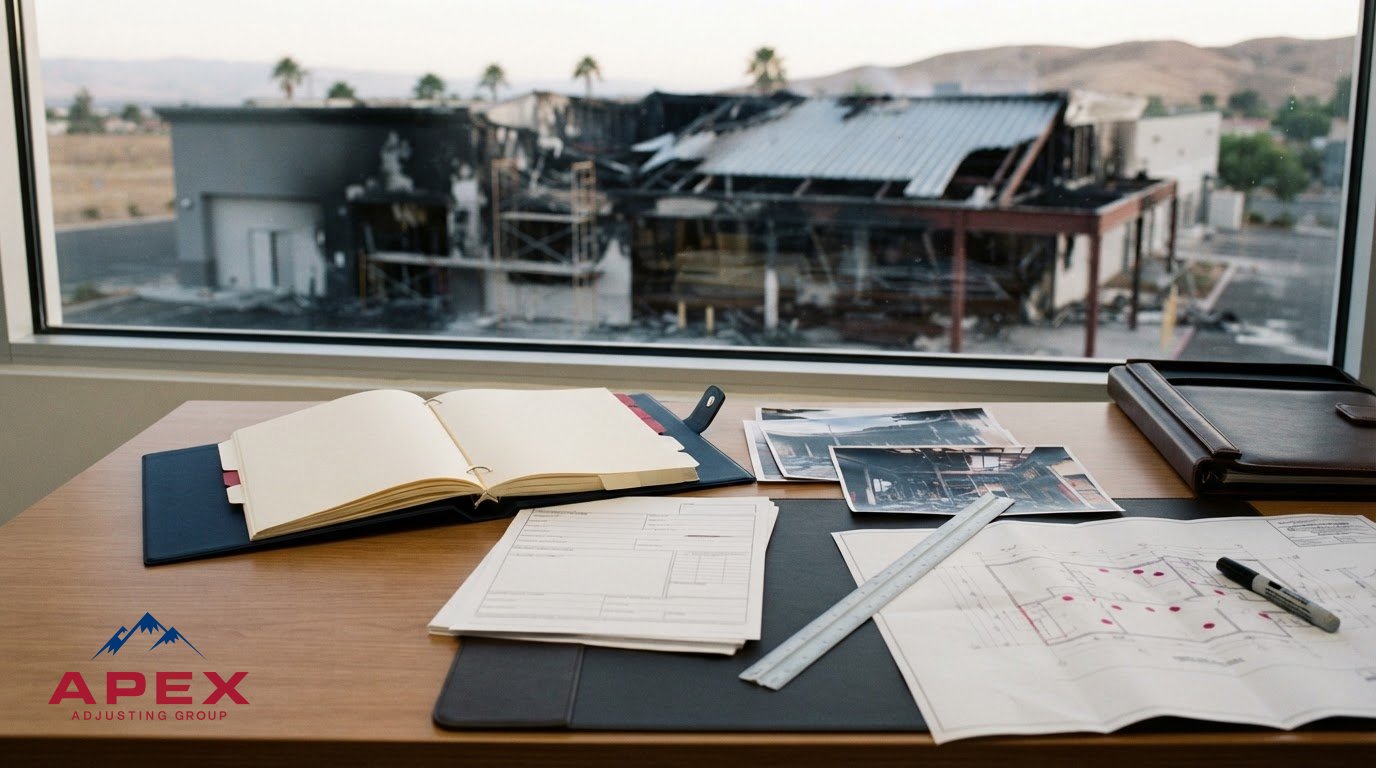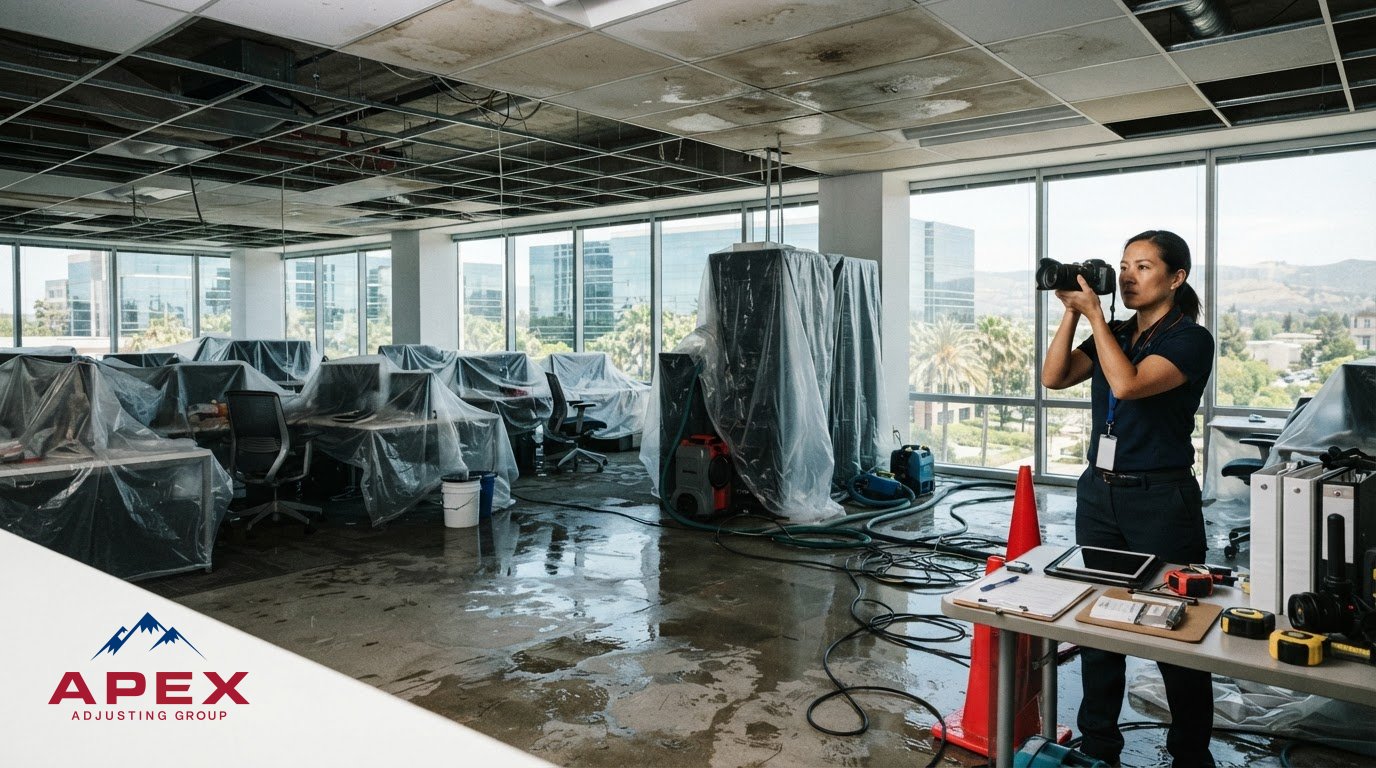
A rental-property claim can become harder to assess when cleanup starts before the damage is documented. For owners learning how to handle insurance claim for rental property in Phoenix, the first priority is to preserve a clear record of what happened, what was damaged, and how the loss affects the property. Owners can find local claim information on the Phoenix location page.
It’s understandable to worry that an estimate may leave out damaged areas or necessary work. A strong claim starts by separating physical property damage from tenant-caused damage, lost rental income, and routine maintenance concerns. Those issues may involve different records and policy terms, so clear documentation matters.
This guide explains what to photograph and save before repairs, how to compare the damage with the claim estimate, and which policy provisions may affect coverage. It also covers rental records and what to consider when deciding whether to manage the claim yourself or seek professional support.
Key Takeaways
- Start with safety, then document visible conditions before cleanup or repairs change the evidence.
- Learn how to handle insurance claim for rental property in Phoenix by organizing damage records, claim communications, and rental documents.
- Read the declarations page, coverage provisions, exclusions, deductibles, and limits to understand how policy wording relates to the documented loss.
- Compare each estimate area with dated photos, inspection notes, repair records, and what can be seen at the property.
- Consider a public adjuster’s review when the damage scope is complicated, the estimate is unclear, or claim documentation is disputed.
First steps for a Phoenix rental property insurance claim
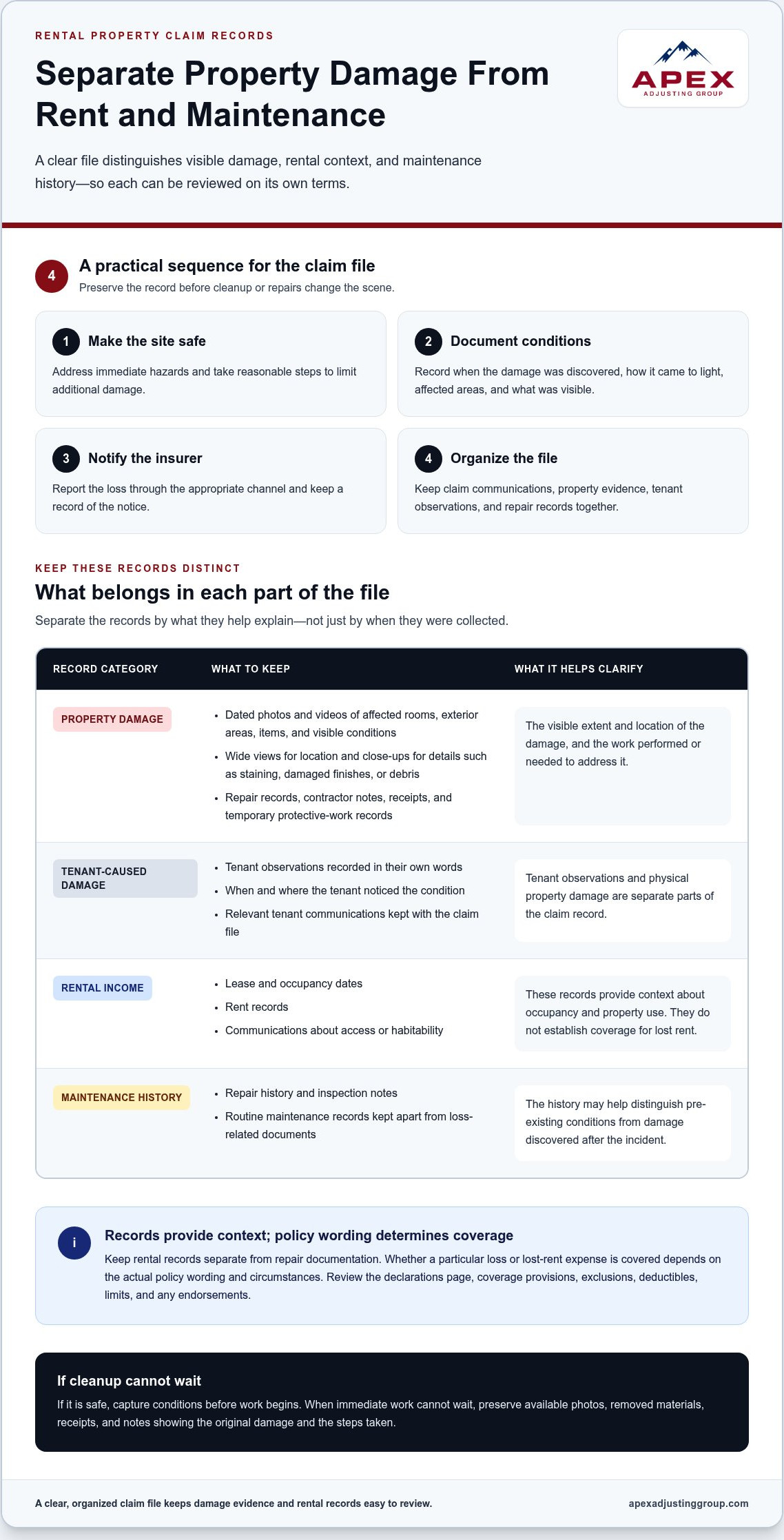
Damage at a rental can trigger urgent repairs, tenant questions, and uncertainty about what to do first. A practical answer to how to handle insurance claim for rental property in Phoenix starts with a clear sequence: make the site safe, document conditions, notify the insurer, and organize the records. Owners can also find Phoenix property-claim information relevant to the local claim process.
Keep emergency work focused on safety and preventing further damage. Record what was done, when, and why. Before cleanup changes the scene, capture the conditions if it’s safe to do so. If immediate work can’t wait, preserve available photos, removed materials, receipts, and notes that show the original damage and the steps taken.
- Make the site safe. Address immediate hazards and take reasonable steps to limit additional damage.
- Document conditions. Record the discovery date, how the damage came to light, affected areas, and what was visible.
- Notify the insurer. Report the loss through the appropriate channel and keep a record of the notice.
- Organize the file. Keep claim communications, property evidence, tenant observations, and repair records together.
Document the property before cleanup or repairs
Photograph and video every affected room, exterior area, damaged item, and visible condition. Start with wide views that establish where the damage is, then take close-ups showing details such as staining, damaged finishes, or debris. Capture adjoining areas too when they help show the extent and location of the loss.
Save receipts, contractor notes, and records of temporary protective work. Note which areas were affected and whether any items had to be moved or removed. Keep routine maintenance records separate from loss-related documents; the history may help distinguish pre-existing conditions from damage discovered after the incident.
Notify the insurer and keep a clear claim record
Use one claim log to track the claim number, contact names, dates, information requested, and responses received. After calls or inspections, write down the main points while they’re fresh. Keep communications factual: identify what was observed and when, and label any explanation of the cause as an assumption unless it’s been established.
- Save dated photographs and videos in a clearly labeled folder.
- Keep the lease, occupancy dates, and relevant tenant communications with the claim file.
- Store repair history, inspection notes, receipts, and temporary-work records together.
- Record tenant observations in their own words, including when and where they noticed the condition.
Rental records can help explain occupancy and the property’s use, but they don’t establish what the policy covers. Keep any records related to interrupted rent separate from repair documentation. The term Rent insurance is associated with protection for lost rental income, but whether a particular loss is covered depends on the actual policy wording and circumstances. A careful file gives the owner a stronger foundation for reviewing the claim scope as the process continues.
Phoenix rental property coverage: connect the loss to policy language
A damaged room doesn’t answer the coverage question by itself. The claim file needs to connect the reported cause, the areas affected, and the applicable policy wording. For owners assessing how to handle insurance claim for rental property in Phoenix, that means treating the policy as the reference point, not assuming that every loss or related expense is covered.
Start with the declarations page, which summarizes key details such as the insured property, policy period, listed coverages, limits, and deductibles. Then review the policy provisions that describe coverage and the exclusions or conditions that may affect it. The declarations page is a guide to the policy, not a substitute for its full wording.
Review the policy sections that relate to the reported damage
Match the reported cause and damaged property areas to the relevant provisions. For example, water staining on a ceiling is an observed condition; the policy review also needs to account for the documented source and circumstances. Don’t treat an initial suspicion about the cause as an established fact.
Check definitions, conditions, exclusions, deductibles, limits, and any endorsements, which are policy changes that may add to or modify standard wording. Note which passage relates to each part of the reported loss. If language is unclear, flag it for careful review rather than presenting an assumption as a coverage decision.
Keep separate categories separate. Physical damage to the dwelling, damage to furnishings or other personal property, liability questions, and lost rental income may involve different policy provisions and facts. A reference to one category doesn’t establish that another applies. A residential property claim review can focus on the documented building damage and the scope being considered.
Organize rental records without assuming lost-rent coverage
Rental records explain how the property was being used around the time of the loss. Keep the lease, occupancy dates, rent records, and communications about access or habitability together. Note changes in rental use or occupancy that may help clarify the circumstances, such as a vacant period or a change in who occupied a unit.
These records provide context; they don’t establish that lost rent is covered. Rental-income coverage depends on the policy terms and applicable facts, including how the loss affected the property’s use. Keep any claimed interruption period and its supporting records distinct from physical repair documents.
- Declarations page: Identify the listed property, policy dates, limits, and deductibles.
- Coverage and exclusion wording: Match relevant provisions to the documented cause and affected areas.
- Rental records: Organize occupancy, lease, rent, and access information separately from repair evidence.
A public adjuster can review documented damage and claim scope on the property owner’s behalf. If the estimate or policy-related claim assessment leaves unresolved questions, owners can request a free claim review without pressure.
Compare the Phoenix damage record with the insurer’s estimate
An estimate is a scoped assessment of the damage and proposed work. It isn’t proof that every affected room, building component, or necessary repair has been included. The owner’s task is to reconcile the estimate with the property record, then identify specific gaps or questions that need follow-up.
A practical part of how to handle insurance claim for rental property in Phoenix is checking the scope line by line. Compare the rooms, materials, and conditions described in the estimate against dated photos, inspection notes, repair records, and what remains visible at the property. Stay precise: a difference needs clarification, but it doesn’t by itself establish why the difference occurred.
Check whether the estimate reflects the documented damage
Start with each affected area. Does the estimate identify the right room and building component? Does its description match the observed material and damage? A ceiling stain, for example, may appear in a photo but not as a corresponding estimate entry. Record that as a potential omission and attach the image and its date.
Track concerns in a comparison table. Keep each row focused on one area or item so the follow-up is easy to understand.
- Observed damage: Room, component, and visible condition.
- Estimate entry: Matching description, quantity, or no apparent entry.
- Supporting evidence: Dated photo, inspection note, or repair record.
- Follow-up: The specific question or additional documentation needed.
Look for damage described differently, unclear quantities, and areas with no apparent estimate entry. Also note when an item needs more inspection before the scope can be determined. Separate direct observations from unresolved questions; that distinction helps keep the review credible and focused.
Keep repair scope and claim communications aligned
Compare contractor observations with the estimate, but don’t treat either document as conclusive on its own. A repair note may describe work the estimate doesn’t address, while an estimate may include a scope item that needs explanation. Add the relevant evidence and ask a focused written question, such as which documented area a particular line item covers or how a quantity was determined.
Keep follow-up factual and specific. Identify the room or component, cite the related photo or note, and state what needs clarification. If further inspection or records are needed, log that separately instead of presenting an unverified condition as established damage. Owners handling residential losses can review residential property claim support when they need help assessing documented damage and claim scope.
For broader context on a claim that appears underpaid, consult a low-settlement discussion alongside this line-by-line review. A public adjuster can assess the documented loss and estimate on the property owner’s behalf. Owners who want another set of eyes on the file can request a free claim review.
Manage Phoenix claim communications, inspections, and repair records
Inspections, tenant reports, and repair activity can add new details to a claim file. A consistent workflow helps the owner preserve what changed, what was observed, and what was submitted, without mixing firsthand facts with guesses about the cause. Check the policy for any applicable notice, inspection, or documentation requirements, and follow the terms that apply to the specific claim.
Prepare for an inspection and preserve useful observations
Before an inspection, make affected areas accessible where safe and practical. Keep a location-by-location list of rooms, building components, and items that need attention. Note any access limits or areas that have changed since the initial documentation so the inspection record reflects the conditions at that time.
Record tenant observations in a way that preserves who saw what and when. For example, distinguish “tenant reported water on the kitchen floor after returning home” from “storm damage caused a roof leak.” The first records a reported observation; the second assigns a cause that may require further assessment.
Keep earlier images even if the condition changes. If a stain spreads, a damaged surface is opened during repairs, or water is removed, take new dated photos and label them as later conditions. The sequence can help clarify how the visible damage developed without replacing the original record.
Track requests, responses, and repair developments
Use a dated claim log to track each inspection, document request, submission, and written response. For every item sent, record what was provided and when. If a response asks for more information, note the request and the related evidence so the owner can follow up with the right materials.
Keep estimates, invoices, repair records, and relevant tenant communications in a shared claim folder, organized by date or property area. A short index can identify what each file shows. If repair work reveals a condition that wasn’t visible earlier, record where it was found, when it appeared, and what documentation supports the update. Keep the original estimate and earlier photos alongside the new material.
Phoenix weather belongs in the file only when it matches the reported event and observed damage. If the loss followed a monsoon storm, for instance, record the reported date and visible conditions such as displaced roofing or water intrusion. Don’t attribute damage to a storm based only on timing; keep the observation separate from a conclusion about cause.
For a practical claim workflow, owners can maintain a running record with these fields:
- Date and event: Inspection, request, submission, or repair development.
- Source: Owner, tenant, inspector, or repair record.
- Observation or action: What was seen, requested, or completed.
- Evidence and follow-up: Related documents and any open question.
This record helps keep communications consistent as the file develops. Owners who want a professional review of documented damage and claim scope can request a free claim review.
When a Phoenix rental property owner may benefit from claim support
Some property claims are manageable with organized records and clear scope. Others become harder to assess when damage crosses multiple rooms or building components, an estimate leaves documented areas unclear, or the parties disagree about what the evidence shows. Those are practical signals that an owner may benefit from professional claim support.
For owners weighing how to handle insurance claim for rental property in Phoenix, the key question is whether the file clearly connects the reported loss, observed damage, policy wording, and estimate. If important details remain unresolved, a public adjuster can review the documentation and claim scope on the property owner’s behalf.
- Complicated scope: Damage affects several areas or materials, and the full repair scope is difficult to track.
- Unclear estimate: Documented damage appears absent, described differently, or listed with quantities that need clarification.
- Disputed documentation: The owner’s records and the claim assessment appear to describe different conditions.
- Time-consuming follow-up: The owner needs help organizing claim evidence and communicating about scope.
Understand what a public adjuster does for a property owner
A public adjuster represents the property owner, not the insurance company, in a first-party property damage claim. The work can include reviewing photographs and records, assessing the documented damage scope, and communicating with the insurer about the claim. Apex Adjusting Group is licensed in Arizona and represents property owners in residential and commercial property claims.
A public adjuster isn’t an attorney and doesn’t provide legal representation. The role is focused on the property claim: what damage is documented, how the estimate describes it, and what questions remain about the scope. Owners comparing claim support options can use these distinctions to understand which kind of professional assistance fits the issue.
Decide whether a free claim review fits the situation
Before seeking a review, summarize the reported loss, current claim status, and the specific estimate or documentation concerns. Gather the policy, available photographs, inspection or repair records, and claim communications. A clear summary helps focus the review on the unresolved points instead of requiring the owner to retell the file from scratch.
Apex Adjusting Group serves Arizona and offers a free claim evaluation. Its fee is contingency-based and applies only when a recovery is obtained. The arrangement does not guarantee coverage, a particular recovery, or a timeline; the claim still depends on its documentation, circumstances, and policy terms.
When the damage scope or estimate remains unclear, a review can help the owner understand the file and available next steps. A free claim review is available without pressure.
Move forward with a clear claim file
The next step is to decide whether the available records answer the main questions about the loss and claim scope. If important details remain unresolved, an organized file can help an owner explain what still needs review and why. Keep the next communication focused on specific evidence and outstanding questions.
A useful approach to how to handle insurance claim for rental property in Phoenix is to make decisions from the documented file, not from assumptions about what the policy or estimate means. Before taking the next step, note the issue, the record that supports it, and the clarification still needed. That gives the owner a clear starting point for further discussion.
If another review would help, Apex Adjusting Group offers Phoenix-area property owners a free claim evaluation. There’s no pressure to proceed; the owner can use the review to better understand the claim file and possible next steps.
With a well-organized file and the right support, a rental property owner can move forward with greater clarity.
Frequently Asked Questions
What should I do first after discovering damage at my Phoenix rental property?
First, address immediate hazards and limit further damage, then contact the insurer to report the loss. If it’s safe, capture conditions before moving damaged items. Note when the tenant first noticed the damage and which units or systems are affected. A practical approach to how to handle insurance claim for rental property in Phoenix is to record what was changed, removed, or temporarily protected during emergency work.
Does landlord insurance cover lost rent while a Phoenix rental is being repaired?
It may, but lost-rent payment depends on the policy wording, the cause of damage, and the conditions for any rental-income coverage. Check whether the policy includes a rental-income provision and what circumstances may trigger it. Keep lease terms, rent records, and dates the unit could not be occupied. A repair period alone doesn’t establish that lost rent is covered.
How much will insurance pay for damage to a rental property?
There’s no single amount that applies to every rental claim. Payment depends on applicable coverage, limits, the deductible, documented damage, and how the policy values repairs or damaged property. Compare the estimate’s scope with the affected areas, then review any depreciation or other adjustments explained in the estimate. The property type alone isn’t enough to determine what a claim may pay.
Can I repair my Phoenix rental property before the insurance inspection?
Necessary emergency work may need to happen before an inspection to protect people or limit additional damage. If it’s safe, document the condition first, keep removed materials when practical, and save invoices and notes describing the work. Notify the insurer and ask how to arrange an inspection or submit evidence. Review the policy’s conditions, but don’t leave an active hazard untreated just to preserve an inspection opportunity.
What records should I provide for a rental property insurance claim?
Provide records that help connect the property, reported event, and claimed damage. Useful items may include the policy and declarations page, claim correspondence, dated photos, inspection notes, repair estimates and invoices, and relevant lease or occupancy documents. For a roof leak, prior roof-service records may help establish the property’s condition before the reported event. Keep routine maintenance documents distinct from records of loss-related work.
What can I do if the insurance estimate does not include all visible damage?
Send a written, itemized follow-up rather than a general objection. Identify the room or component, the estimate entry that appears incomplete, and the photo, inspection note, or repair record supporting the concern. Ask whether the area was considered and what additional documentation may be needed. Keep the response and any revised estimate with the claim file so unresolved differences remain clear.
Can a public adjuster help with a rental property insurance claim in Arizona?
Yes. A public adjuster represents the property owner in a first-party property damage claim and can review documented damage, assess estimate scope, organize claim materials, and communicate with the insurer about the property claim. This support may help when a loss affects several areas or the owner is struggling to resolve gaps in the claim file. A public adjuster does not provide legal representation.
Need Help with Your Insurance Claim?
Our licensed public adjusters can help you get the maximum settlement you deserve. Contact us today for a free claim evaluation.
Related Articles