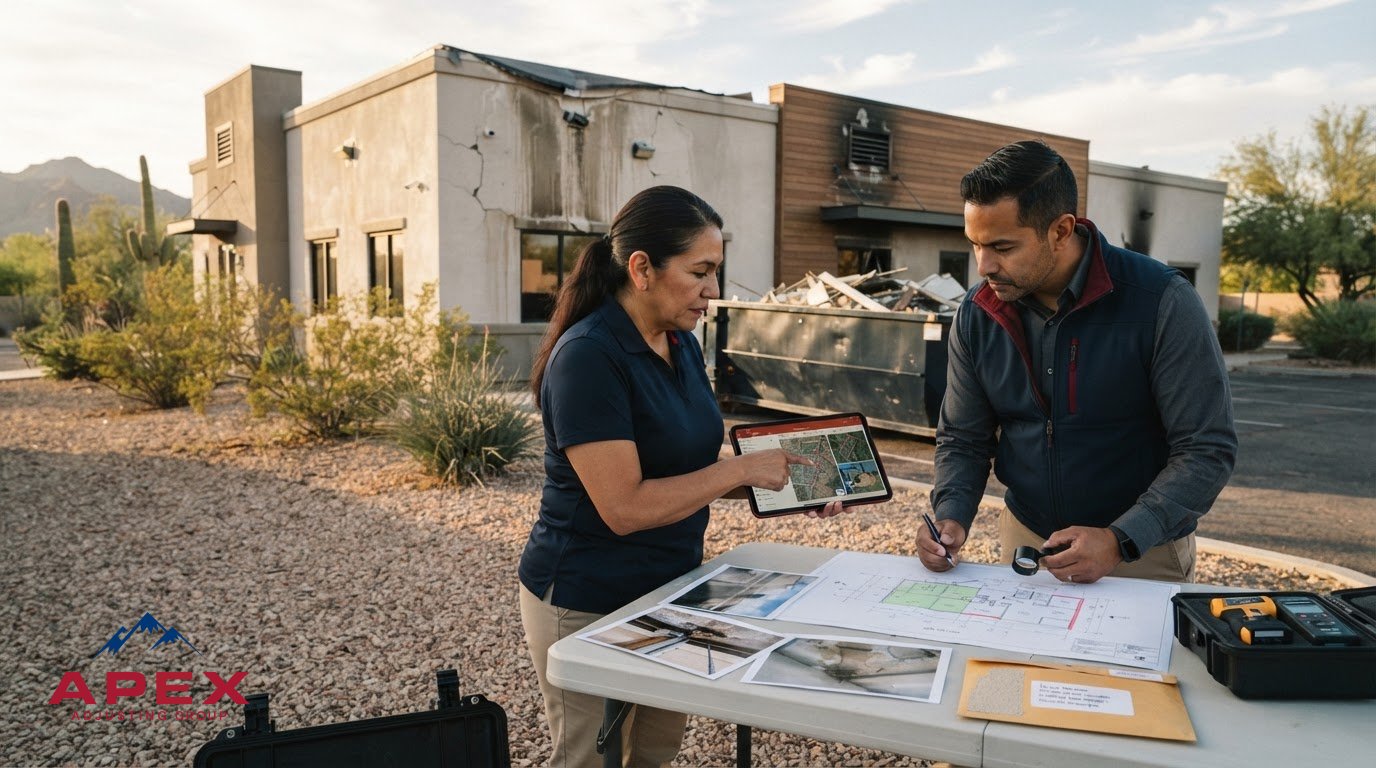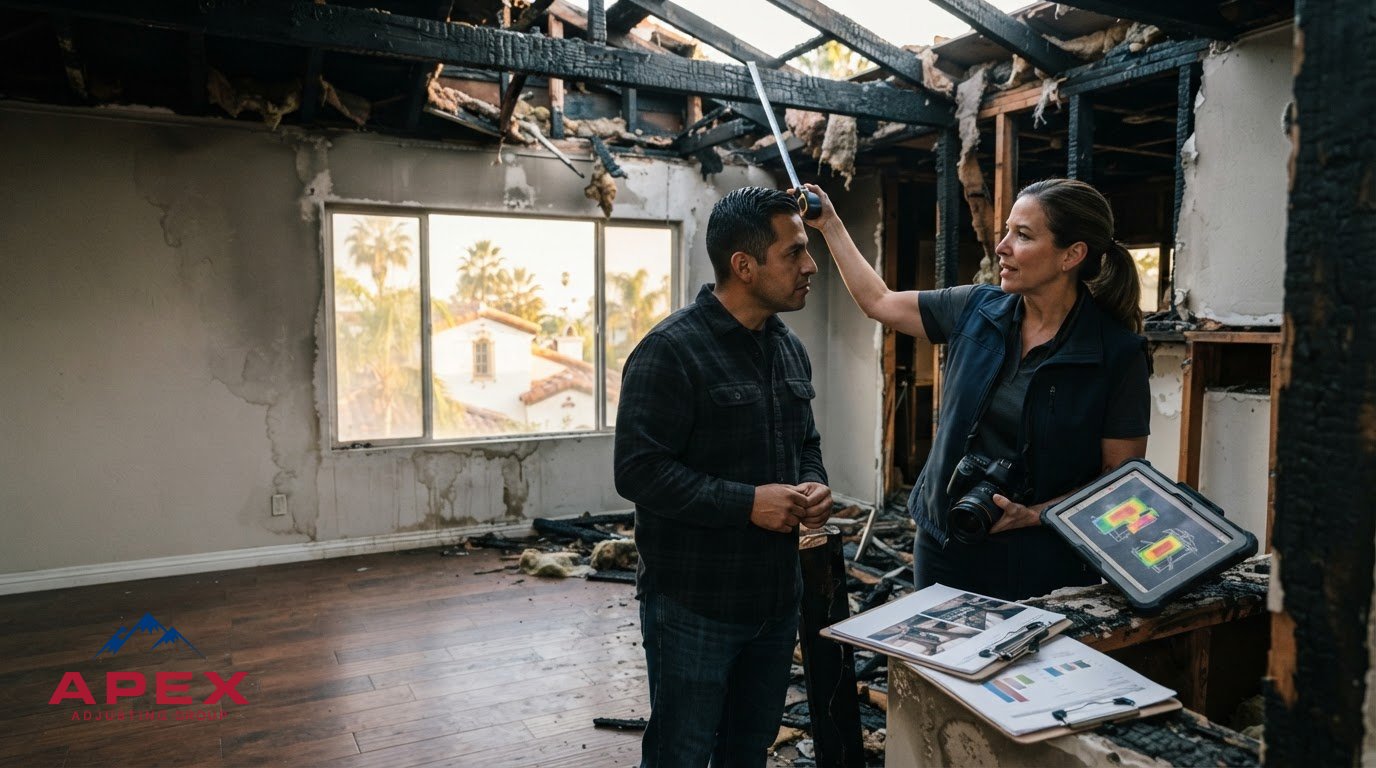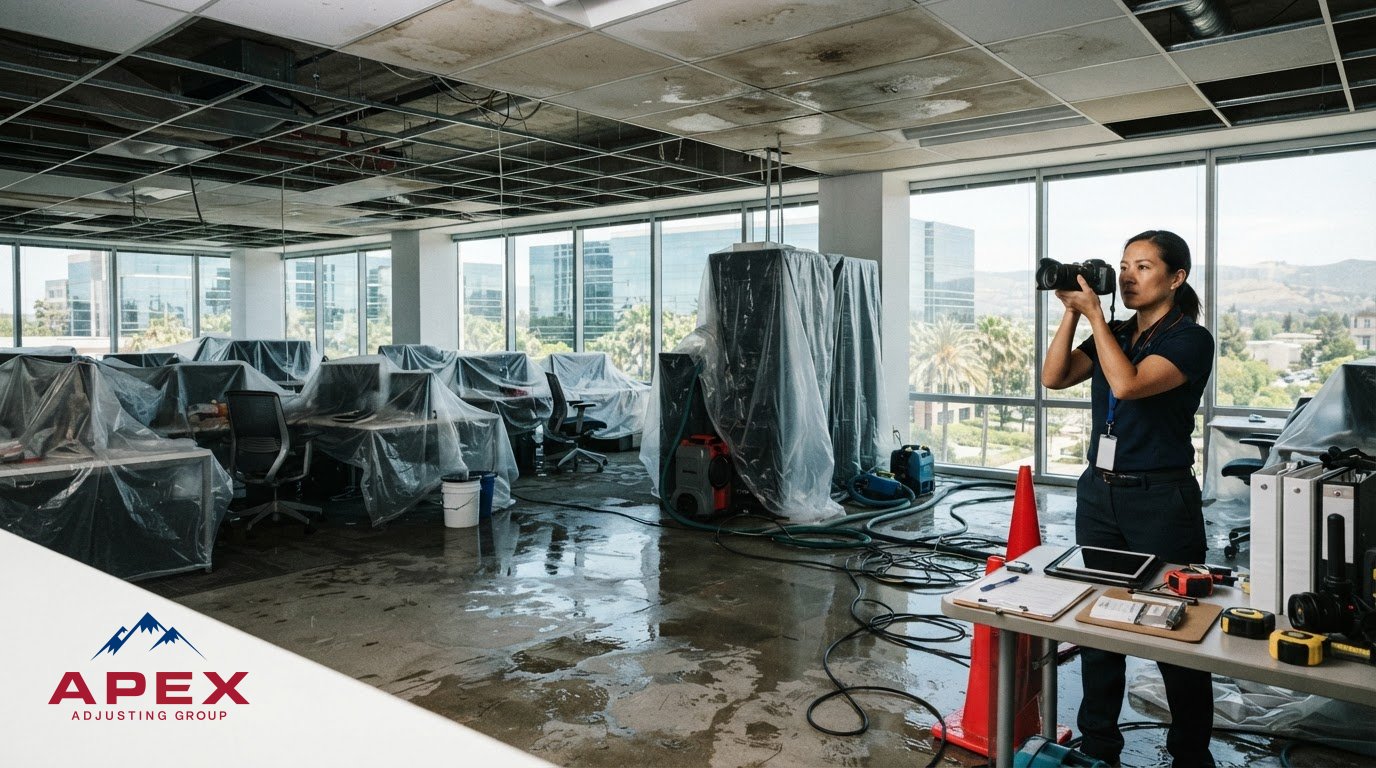
A water loss in a tech office can damage far more than floors and walls. A San Jose tech office water damage insurance claim may involve equipment, records, research spaces, and interrupted operations, each requiring clear documentation. Building repairs alone may not capture the full scope of the loss.
Downtime can make decisions about access, equipment, and cleanup feel urgent. This guide explains how to document affected areas and property, organize records of business disruption, and compare the written claim scope with the evidence. San Jose property owners can also review information about San Jose water damage claims.
When it is safe, start with dated photos and notes, then gather equipment inventories, repair assessments, cleanup records, and documents showing operational impacts. Policy wording matters: coverage for building damage, business property, business interruption, and technology-related losses depends on the applicable terms and documented facts. The sections below explain how to organize and present a commercial water damage claim and when a professional review may help clarify whether the scope reflects the documented loss.
Key Takeaways
- Separate building damage, business property, technology impacts, and operational disruption so each part of the loss is clearly documented.
- Photograph affected areas and equipment before items are moved, when it is safe, and keep related records together.
- For a San Jose tech office water damage insurance claim, compare the written scope with documented damage and review the relevant policy terms.
- Track claim communications and business impacts alongside restoration activity to keep the file organized.
- A public adjuster can review claim documentation and scope on the property owner’s behalf, without guaranteeing a particular outcome.
San Jose Tech Office Water Damage: Identify the Full Claim Problem
A leak above a work area can soak ceiling materials, affect equipment, and make part of an office unusable. While work is disrupted, the property owner may also need to determine whether the claim scope accounts for the documented loss. A San Jose tech office water damage insurance claim should address more than visible building damage. San Jose property owners can review San Jose water damage claims information as they assess the claim.
Build a clear record by separating building damage, business property, technology, and operational impacts. These categories are connected, but each may require different evidence and policy review. Coverage depends on the cause of loss, the policy language, and the documentation supporting each claimed item or impact.
Separate Building Damage From Business Property and Technology
Record damage to walls, floors, ceilings, fixtures, and other building components separately from affected contents. For business property, identify computers, servers, office equipment, furnishings, and business records. Note each item’s location, condition, ownership, and use. When practical, photograph labels or other identifying details to help distinguish damage to the premises from damage to property used in business operations.
Property damage is a broad category, but a claim still benefits from item-level support. Ownership, policy terms, and available records affect how each item is evaluated. Keep purchase or inventory records, maintenance information, and available repair or replacement assessments with the relevant photos. Do not assume that every item in the office is covered under the same policy provision.
Connect Physical Damage to Operational Disruption
Identify which rooms, work areas, or business functions were affected, and record when the disruption began and changed. For example, note when a team relocated from a wet workspace or equipment was taken offline for assessment. Preserve schedules, internal notices, expense records, and other documents showing operational changes and related costs. Keep these records factual and tied to the water loss.
Do not assume business interruption or extra expense is covered simply because work was disrupted. Review the policy wording for relevant coverage, definitions, limits, and conditions, then connect the records to the specific impact being presented. The cause of the water loss also matters, so preserve information that helps explain where the water came from and what was affected. An organized file lets the claim review address building damage, business property, technology, and documented operational impacts as separate parts of the loss.
Build a Water Damage Claim File for a San Jose Tech Office
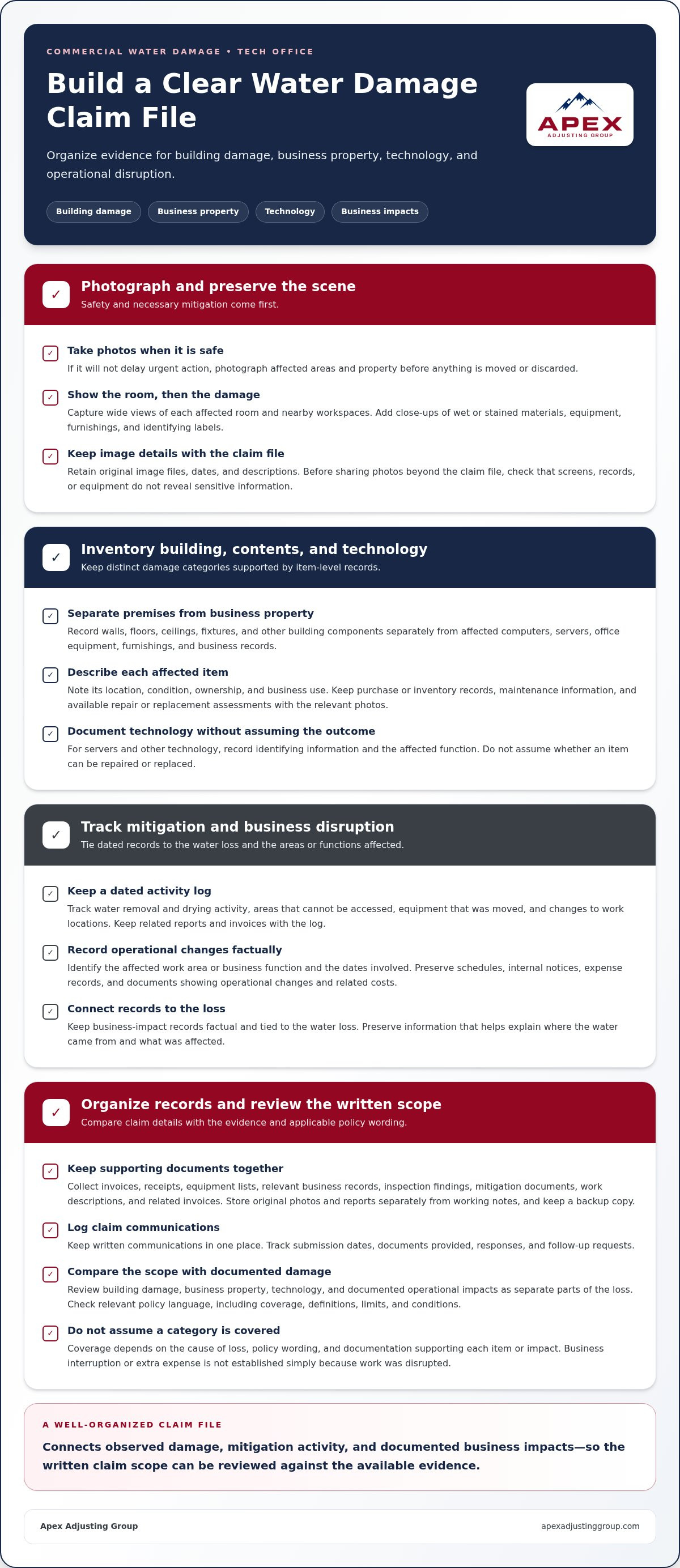
A strong file is built as the loss unfolds, rather than reconstructed from memory later. Safety and necessary mitigation come first. If it is safe and will not delay urgent action, photograph affected areas and property before anything is moved or discarded. A consistent record helps connect observed damage, mitigation activity, and business impacts in a San Jose tech office water damage insurance claim.
Apex Adjusting Group handles water damage claims. The steps below can help property owners assemble a clear record for claim review, whether they are preparing a submission or organizing an existing file.
Photograph, Inventory, and Preserve Evidence
When it is safe, begin with wide views showing each affected room and how the damage relates to nearby workspaces. Close-up photos can capture wet or stained materials, equipment, furnishings, and other visible damage. Identifying labels can help connect images to specific items. Retain original image files, dates, and descriptions. Before sharing photos beyond the claim file, check that screens, records, or equipment do not reveal sensitive information.
An itemized inventory can record each item’s description, location, ownership, condition, and business use. Attach available purchase, inventory, maintenance, or repair records. For servers and other technology, record identifying information and the affected function without assuming whether an item can be repaired or replaced.
- Keep invoices, receipts, equipment lists, and relevant business records together.
- Retain inspection findings, mitigation documents, work descriptions, and related invoices in the claim file.
- Store original photos and reports separately from working notes, and keep a backup copy.
Track Mitigation, Downtime, and Claim Communications
A dated log can track water removal and drying activity, areas that cannot be accessed, equipment that was moved, and changes to work locations. Keep related reports and invoices with the log. This record distinguishes what happened after the loss was discovered from the later evaluation of the insurance claim.
Operational records can identify the affected work area or business function, the dates involved, and related expenses. These records support policy-specific review, but do not establish that interruption or extra expense is covered. The California Commercial Insurance Guide provides background on commercial coverage. The policy governs the claim’s terms.
Keep written claim communications in one place. A log of submission dates, documents provided, responses, and follow-up requests makes the file easier to track. When the documentation or written scope remains unclear, an Apex free claim review can help the property owner discuss the claim file.
Review the San Jose Office Claim Scope Against the Documented Loss
A written estimate may address visible building repairs without explaining how business property, technology, or other documented impacts were evaluated. Review the scope line by line, matching each item to supporting records and noting what is included, omitted, or unclear. The listed repairs do not necessarily describe the entire documented claim.
For a San Jose tech office water damage insurance claim, a factual comparison is most useful. A difference between the documentation and written scope is a question to clarify, not proof of wrongdoing. Coverage conclusions depend on the policy, the cause of loss, the facts, and the records available for review.
Compare Each Documented Damage Category
A comparison can show where the scope aligns with the file and where more explanation may be needed. The questions below guide review but do not determine coverage.
| Loss category | Supporting records | Scope question | Policy-specific consideration |
|---|---|---|---|
| Building components | Photos, inspection notes, repair-related documents | Are each affected area and component addressed? | Review applicable building coverage, limits, exclusions, and conditions. |
| Business property | Itemized inventory, ownership details, purchase or repair records | Are documented items identified and evaluated? | Consider the policy’s treatment of business contents and any applicable limits. |
| Technology and records | Equipment inventory, identifying details, assessments, business records | Does the file explain the documented impact on each item? | Review relevant policy provisions rather than assuming coverage. |
Review Policy Wording and Unanswered Scope Questions
Review the written scope alongside relevant policy sections. Provisions addressing covered property, limits, exclusions, and conditions may help explain which language the claim decision cites. A limit sets a boundary on specified coverage; an exclusion describes a circumstance or property the policy may not cover. How either applies depends on the complete wording and the facts of the loss.
Record unanswered questions with the related evidence. For example, if a damaged component appears in photos but not in the estimate, ask whether it was inspected or how it was evaluated. If an item is omitted, identify the inventory entry and supporting record. Keep questions and responses with the claim file.
For business recovery planning, the U.S. Small Business Administration’s disaster assistance information is a separate resource. It does not replace a comparison of the insurer’s scope with the policy and documented loss.
Manage the Water Damage Claim Without Losing Track of Business Impacts
A claim can involve two parallel tracks: work to address physical damage and adjustment of the insurance claim. Restoration activity may include water removal, drying, and repairs. Claim adjustment involves documenting the loss, reviewing the policy, and evaluating the scope. Keep records from both tracks, but do not treat restoration work as proof that every claimed item or business impact has been assessed.
For a San Jose tech office water damage insurance claim, a steady record helps track the building, business property, technology, and operational impacts while keeping the claim’s status clear.
Keep the Claim Record Organized and Current
Use one dated log to track claim communications, document submissions, responses, and open questions. Group supporting evidence into folders for building damage, business property, technology, and operational impacts. For each submission, keep a copy of what was sent and note when and how it was provided.
- Record the date and subject of each communication, along with any requested follow-up.
- Keep written estimates, decisions, reports, invoices, and supporting photos with the relevant loss category.
- Update the log when new damage is documented, work areas change, or the claim scope is revised.
This structure makes it easier to compare the current scope with evidence already submitted. For commercial property claims, organize the file around the damage categories, supporting records, and policy provisions relevant to the loss.
Respond to Delays, Denials, or a Disputed Estimate
If the claim is delayed, denied, or appears under-scoped, start with the written communication or estimate. Compare its stated basis with the applicable policy wording and the evidence in the file. Identify specific gaps, such as a documented building component missing from the scope or a business property item that needs further support.
Ask focused questions in writing. Request clarification about omitted damage categories, why an item was excluded, or what additional records are needed. Keep the tone factual and retain the response. If a settlement offer seems low or the scope remains disputed, the claim settlement review guide offers related information.
Apex Adjusting Group represents property owners, not insurance companies, in first-party property damage claims. Its public adjusting work includes reviewing claim documentation, policy information, and the presented scope. The firm does not perform restoration or construction. A free review can help an owner understand the claim file and consider next steps without pressure.
Details about the claim review are available through the free claim review page.
When a San Jose Tech Office May Benefit from Public Adjuster Support
A claim can become difficult to manage when the written scope does not address documented damage, a decision is delayed or denied, or the business has to coordinate a complex file while work is disrupted. A public adjuster represents the policyholder in a first-party property damage claim. For a San Jose tech office water damage insurance claim, that representation can help bring the building, business property, technology, and related records into one organized claim presentation.
Understand What a Public Adjuster Does
The insurer evaluates the claim on its side. A public adjuster works for the property owner, reviewing damage documentation, policy information, and the insurer’s written scope. The adjuster can identify gaps in the file, organize supporting evidence, present the documented loss, and negotiate the claim settlement on the policyholder’s behalf.
This role is distinct from restoration or construction work. A public adjuster does not perform repairs and is not an attorney or a provider of legal representation. The work focuses on the insurance claim: what damage is documented, how the policy may apply, and whether the submitted scope reflects the evidence.
Decide Whether a Free Claim Review Fits
A review may be useful when a commercial water claim is active or recent and the owner has concerns about the scope, a delay, a denial, or how documented items were evaluated. Helpful materials may include the policy, claim correspondence, estimates or scope documents, photos, inventories, mitigation records, and evidence of business impacts. An organized file can make it easier to identify what is supported and what questions remain.
Apex Adjusting Group represents property owners, never insurance companies. Its review can assess the available claim documentation, relevant policy information, and written scope, then discuss potential next steps without promising a particular result or timeline. The firm’s fee is contingency-based, calculated as a percentage of recovery, with no fee unless a recovery is achieved.
Apex Adjusting Group serves property owners in California, Arizona, Washington, Idaho, Colorado, Texas, and Nevada, including San Jose, Los Angeles, Orange County, Oakland, Sacramento, San Francisco, Phoenix, Tucson, Las Vegas, Reno, Seattle, Spokane, and Southern California. Details about an active or recent water damage claim can be shared through the free claim review page.
Put the Claim File to Work
A well-supported San Jose tech office water damage insurance claim accounts for more than visible building repairs. Keep building damage, business property, technology, and operational impacts documented separately, then compare each category with the insurer’s written scope and relevant policy wording.
Clear records make gaps easier to identify and questions easier to raise. If an active or recent claim remains delayed, denied, or under-scoped, a public adjuster can review the documentation and represent the property owner in the first-party claim. Apex Adjusting Group represents property owners, not insurers. Its contingency fee is a percentage of recovery, with no fee unless recovery is achieved.
A free claim evaluation can help clarify what the file shows and what options may be worth considering. There is no pressure to take a next step before understanding the review.
Frequently Asked Questions
What should a San Jose tech office document after water damage?
After water damage, a San Jose tech office should create a dated record of the damage and response. When it is safe, photograph affected areas and property, and inventory building components, devices, furnishings, and records. Keep mitigation logs, invoices, equipment records, and insurer communications. Note which operations were affected and when. For a San Jose tech office water damage insurance claim, these records support claim review, while coverage depends on the policy and the specific loss.
Does commercial property insurance cover water damage to office technology?
Coverage for office technology depends on the cause of loss, policy wording, exclusions, limits, and specific facts. Document affected devices, ownership, observed damage, and available repair or replacement records. Then compare the insurer’s written scope with the policy and evidence submitted. A device’s presence in the office does not establish coverage by itself. Review the applicable policy provisions before drawing conclusions about how a particular item may be evaluated.
Can a business include downtime in a water damage insurance claim?
Business interruption or extra expense may be relevant, but coverage depends on the policy terms and circumstances of the loss. Keep dated records showing which operations were affected, when work areas were inaccessible, and what expenses were incurred. Preserve schedules, internal notices, and supporting business documents. These records can support a policy-specific review, but do not guarantee that downtime or a particular expense is covered.
What if the insurer’s water damage estimate does not include all documented damage?
Compare the written scope with photos, inventories, mitigation records, and other supporting documents. List specific omissions, such as an affected room or a documented device, and request clarification in written claim communications. Tie each question to evidence and relevant policy wording rather than making assumptions about insurer conduct. A public adjuster can review the claim file, documentation, and scope to help the property owner assess what may need further support.
Can a public adjuster help with a San Jose commercial water damage claim?
Yes. A licensed public adjuster represents the property owner in a first-party property damage claim, not the insurance company. Apex Adjusting Group can review damage documentation, policy information, and claim scope, then help present the documented loss. Its fee is contingency-based and calculated as a percentage of recovery, with no fee unless recovery is achieved. Representation does not guarantee a particular settlement amount or timeline.
How does Apex Adjusting Group charge for a claim review?
Apex offers a free claim evaluation, which is separate from its fee for claim services. If the firm represents a property owner, its fee is contingency-based and calculated as a percentage of recovery. No fee is charged unless Apex achieves a recovery. The fee percentage and any potential recovery depend on the claim; an evaluation does not guarantee a settlement, amount, or timeline.
Need Help with Your Insurance Claim?
Our licensed public adjusters can help you get the maximum settlement you deserve. Contact us today for a free claim evaluation.
Related Articles