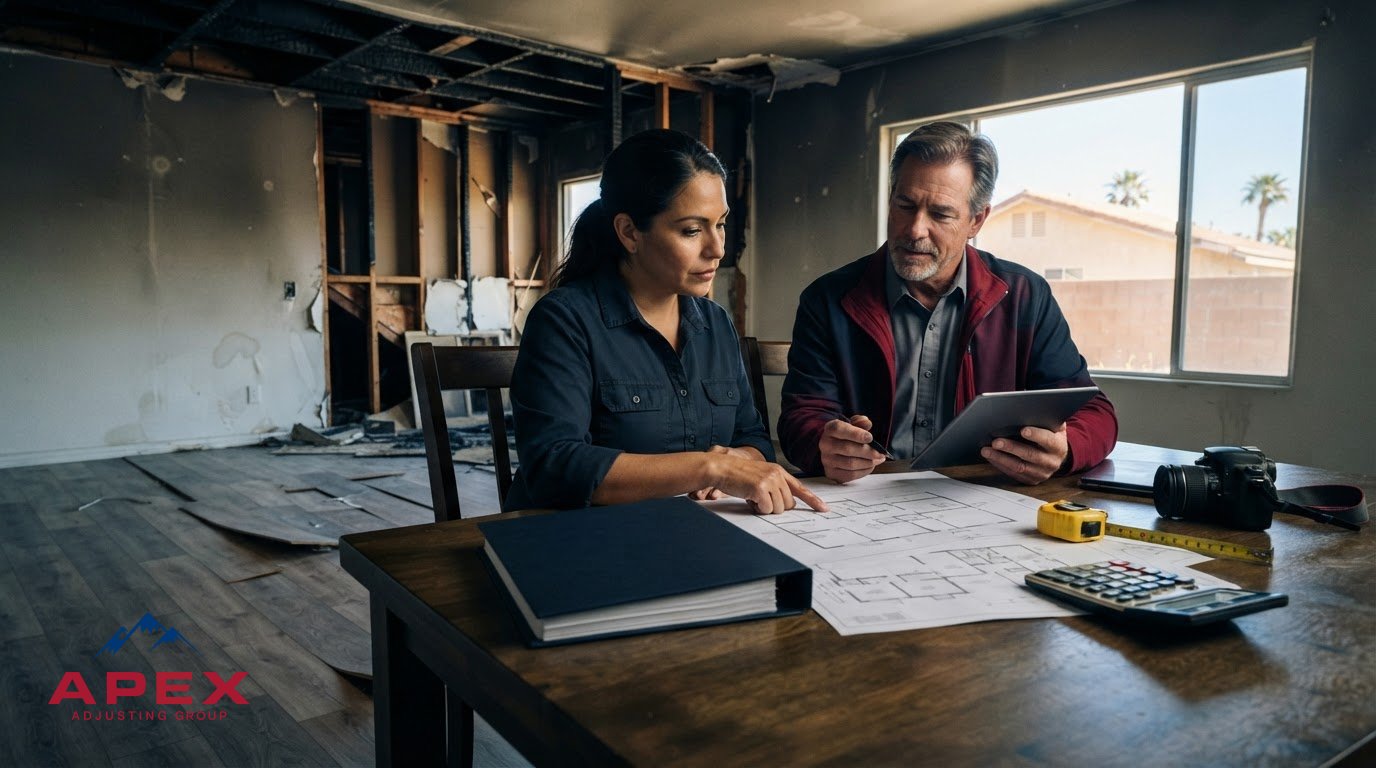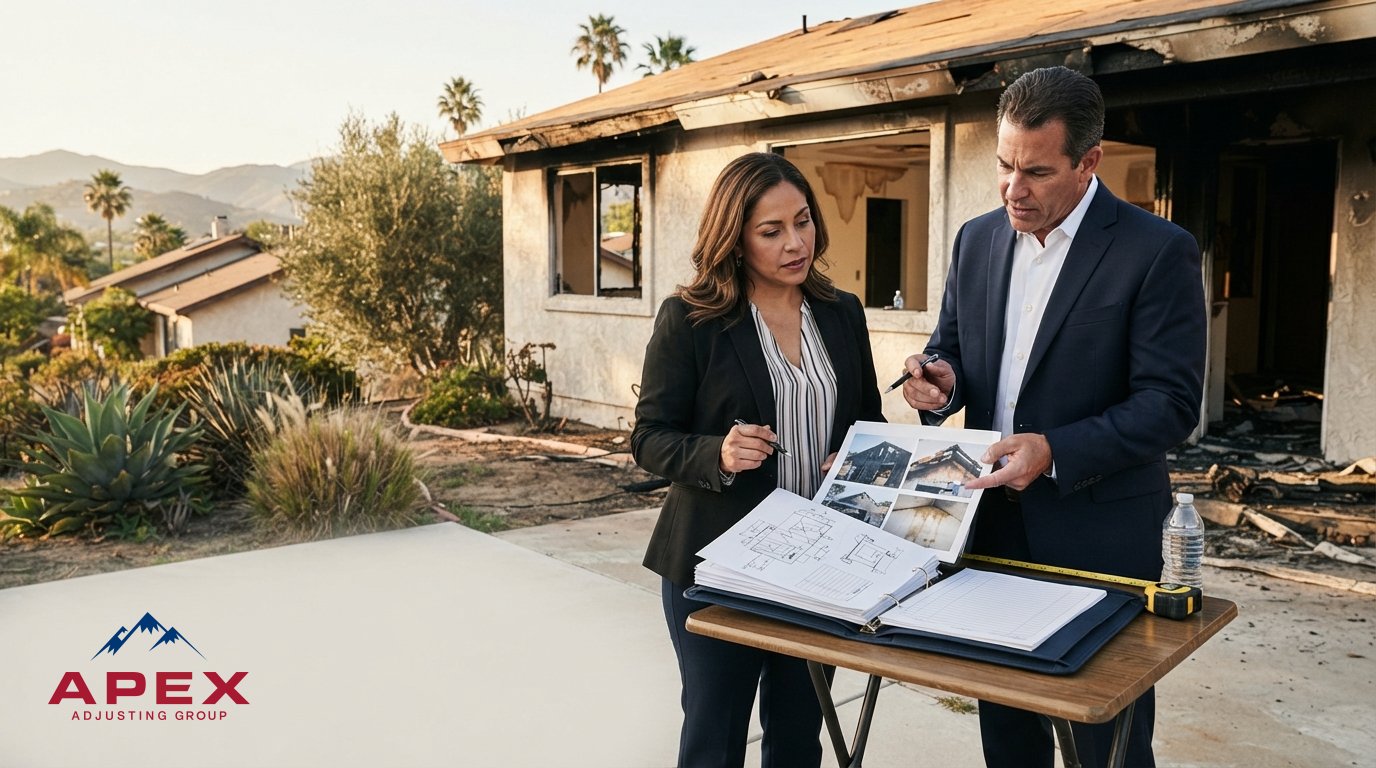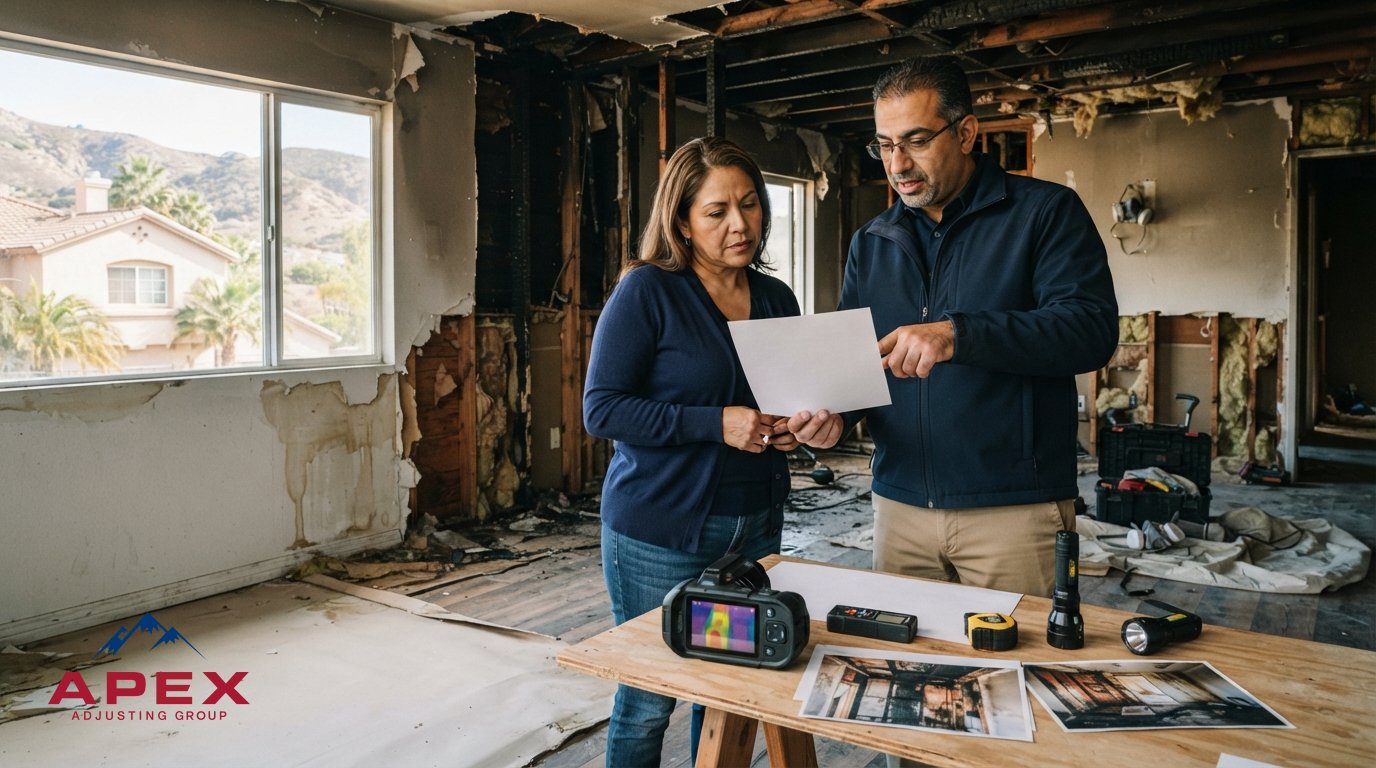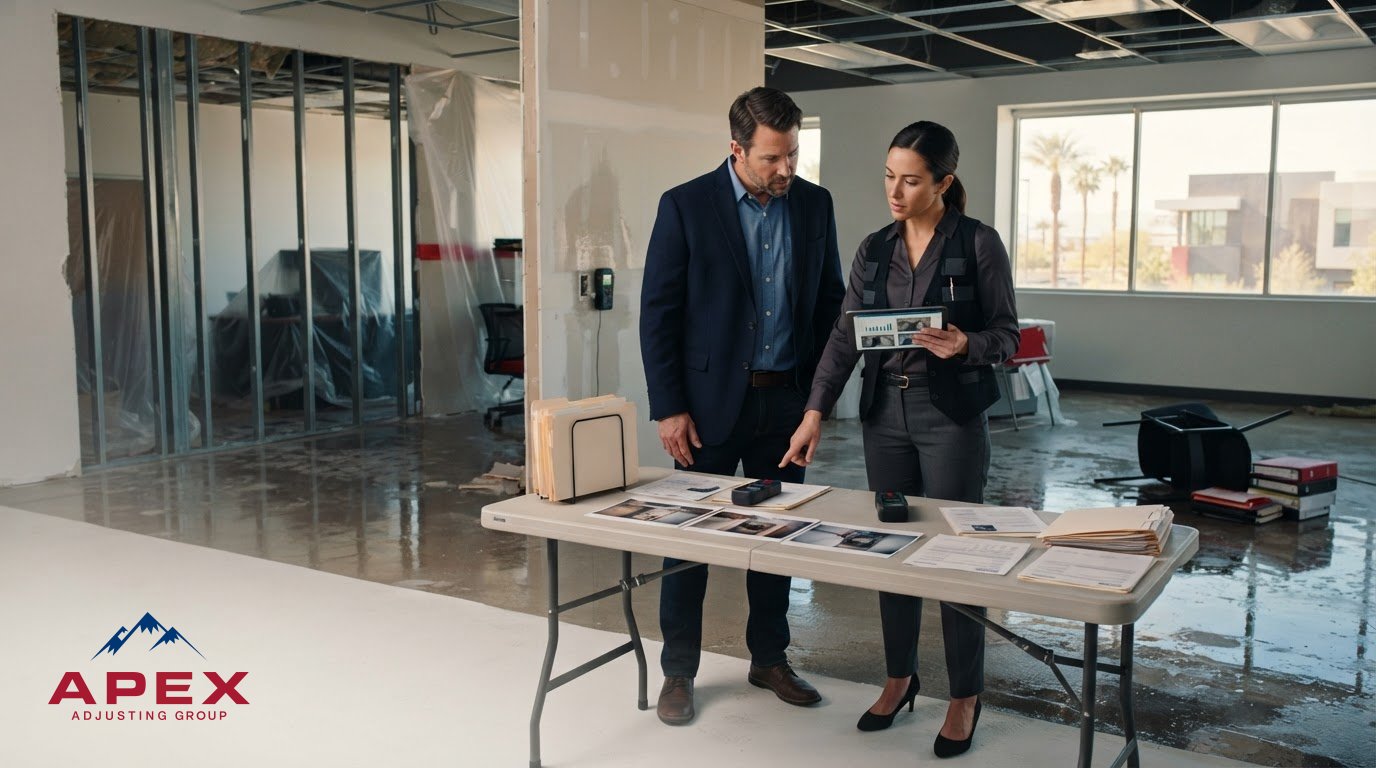
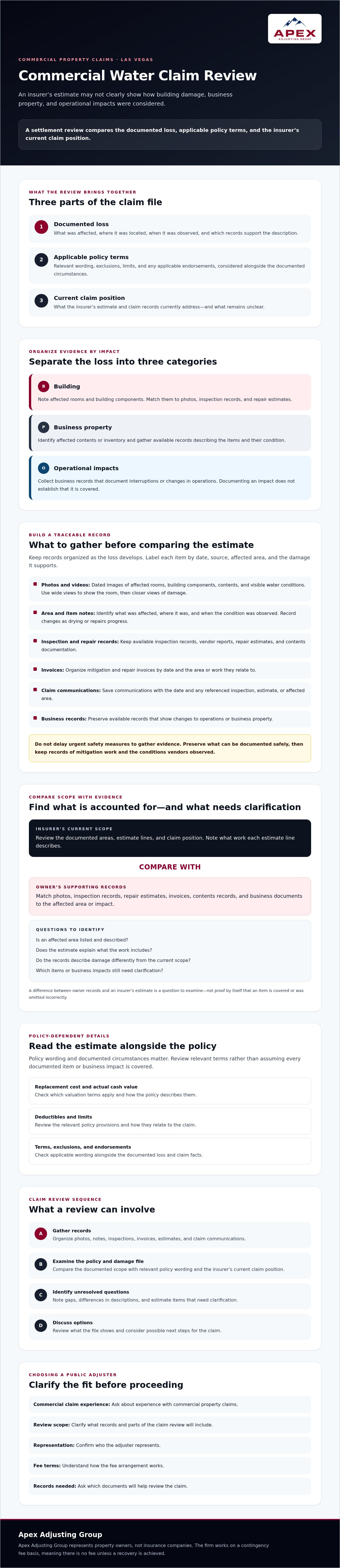
An insurer’s estimate can leave a commercial property owner unsure whether it reflects the visible damage and disruption to operations. A defensible Las Vegas commercial water damage settlement review compares the documented loss with the applicable policy terms and the insurer’s current claim position.
Water can affect building components, business property, and operations in ways that aren’t fully clear from one estimate. Photos, inspection records, invoices, and business documents help show what was affected and what questions remain.
This guide explains how to organize claim records, compare the settlement scope with policy language, and assess whether a public adjuster may help review an active or recent claim. Apex Adjusting Group represents property owners, not insurance companies, and offers free claim evaluations on a contingency basis, with no fee unless a recovery is achieved.
Key Takeaways
- A Las Vegas commercial water damage settlement review compares the documented loss, applicable policy terms, and the insurer’s current claim position.
- Organize dated photos, affected-area notes, inspection records, invoices, estimates, and claim communications so each item can be matched to the damage it supports.
- Compare the insurer’s scope with the owner’s records, then identify gaps and questions about policy-dependent terms such as replacement cost, actual cash value, deductibles, limits, and endorsements.
- A claim review can move from gathering records to examining the policy and damage file, identifying unresolved questions, and discussing options.
- Before choosing a public adjuster, clarify their commercial claim experience, review scope, representation, fee terms, and the records they need.
Las Vegas Commercial Water Damage Settlements: What the Review Covers
A business owner may compare an insurer’s assessment with visible water damage and find that the estimate doesn’t clearly account for affected rooms, damaged business property, or interrupted operations. A Las Vegas commercial water damage settlement review helps organize those separate parts of the loss and compare them with the policy and the insurer’s current claim position. It doesn’t assume that every item or business impact is covered.
What makes a commercial water claim different?
One incident can affect building components, business contents, and records used to track operations. For example, a property owner may document damage to interior finishes, while a tenant records affected inventory and operational records show a disruption. Those accounts may cover different parts of the event, so label each record by source and affected area. For general background, see this Water damage overview.
Build a clear chronology that connects the incident to observed damage, mitigation, inspections, and claim communications. Owner, tenant, and property manager records can fill different gaps, but they should be compared rather than treated as interchangeable. Keep the documents together with the relevant water damage claim information.
What does a settlement review examine?
A settlement review compares the documented loss, applicable policy terms, and the insurer’s current claim position to identify what is accounted for and what remains unclear. The review can compare the insurer’s documented scope with photographs, repair estimates, invoices, and inspection records. It may flag an area not listed, damage described differently by each party, or an estimate line that doesn’t explain what work it includes.
Separate the evidence into three categories before weighing the estimate:
- Building: Note affected rooms and building components, and match them to photos, inspection records, and repair estimates.
- Business property: Identify affected contents or inventory and gather available records that describe the items and their condition.
- Operational impacts: Collect business records that document interruptions or changes in operations, without assuming those impacts are covered.
Then check the relevant policy wording alongside the claim facts. Terms, exclusions, limits, and any applicable endorsements can affect how a loss is evaluated; the policy and documented circumstances control. A difference between an owner’s records and the insurer’s estimate is a question to examine, not proof by itself that an item is covered or omitted incorrectly.
Keep the focus on traceable evidence: what was affected, where it was located, when it was observed, and which record supports the description. That structure makes it easier to identify what the current assessment addresses and what needs clarification.
Document Water Damage and Business Impacts Before Evaluating the Offer
A settlement review is only as useful as the records behind it. A Las Vegas commercial water damage settlement may involve building damage, affected contents, and changes to business operations, so owners should preserve evidence for each category before comparing the file with the insurer’s offer. Keep records organized as the loss develops.
Which property evidence should owners preserve?
When it’s safe and practical, document the affected areas before cleanup or repairs change what can be seen. Capture wide views to show the room, then closer images of damaged components and items. Include dates and locations in the filenames or notes, and record changes as drying or repairs progress.
- Dated photos and videos of affected rooms, building components, contents, and visible water conditions.
- Notes identifying each affected area, item, and observed change, with the date recorded.
- Available inspection records, vendor reports, repair estimates, and contents documentation.
- Mitigation and repair invoices, organized by date and the area or work they relate to.
- Claim communications, saved with the date and any referenced inspection, estimate, or area.
Don’t delay urgent safety measures to gather evidence. Preserve what can be documented safely, then keep records of mitigation work and the conditions vendors observed. Apex Adjusting Group’s water damage claim services may be relevant when an owner wants claim-specific support reviewing the documentation.
How should a business document operational impacts?
Keep operational records separate from physical damage evidence, but connect both to the same dates and affected areas. Depending on what the business maintains, useful records may include schedules, closure or access records, inventory notes, and other business documents showing what changed during the disruption.
- Record which areas were affected and how their use changed.
- Note dates of closures, schedule changes, or other documented operational disruptions.
- Separate recorded impacts from estimates or assumptions about future losses.
- Keep source documents together so each recorded change can be traced to its supporting record.
Contemporaneous records make a claim easier to evaluate by connecting observed damage and operational changes to dates, locations, and supporting documents. They don’t establish coverage on their own; policy wording and claim facts still matter.
For a separate resource on possible disaster assistance, businesses can review the U.S. Small Business Administration’s SBA Disaster Loans information. Owners assessing their claim records may also request a free claim review to discuss what documentation is available and what questions remain.
Compare the Settlement Scope With Policy Terms and Claim Records
An estimate difference is a reason to ask for clarification, not proof that a payment is wrong. For a Las Vegas commercial water damage settlement review, compare each area and item in the insurer’s written scope with the owner’s records, then check the relevant policy language. The goal is to identify what is documented, what is unclear, and what additional record may help explain the difference.
How can owners spot gaps in the settlement scope?
Work through the estimate line by line. Match its descriptions to the affected areas, photos, inspection records, invoices, and repair estimates. If a room, building component, or item appears in the owner’s documentation but not in the estimate, note the discrepancy and identify the supporting record. Don’t treat a difference alone as proof of underpayment.
A comparison table keeps the review focused and makes follow-up questions specific:
| Insurer scope | Owner documentation | Unresolved question | Next record to request |
|---|---|---|---|
| Estimate describes a damaged ceiling area | Dated photos and inspection notes show the affected location | Does the estimate address the full documented area? | Clarification of the estimate description or inspection scope |
| Contents are not listed in the scope | Inventory notes and photos identify affected business property | Were these items assessed or addressed separately? | Contents documentation or a written explanation of the current position |
| Repair work is described broadly | Vendor report and repair estimate specify observed conditions and work | What does the estimate include, and what remains unaddressed? | An itemized estimate or supporting inspection record |
Which policy provisions can affect a commercial water claim?
Coverage depends on the actual policy wording, the facts of the loss, and applicable provisions. Review only the terms that appear in the policy. Replacement cost generally refers to a method of valuing covered property without the same deduction for depreciation used in actual cash value calculations; the policy determines how either term applies. A deductible is an amount the policy may require the policyholder to bear, while limits cap coverage under specified terms. Endorsements can modify policy provisions, and exclusions may describe circumstances or losses the policy does not cover.
Record questions about these provisions rather than assuming how they apply. For each relevant term, note the policy section, the insurer’s explanation, and the claim document that raises the question. Broader information about Apex’s commercial property claims is available alongside the file-specific review.
Keep the comparison factual: identify the difference, point to the record, and ask what remains to be clarified. That approach helps owners assess the settlement scope without presuming that every documented item is covered or that an estimate difference establishes an amount owed.
What to Expect During a Las Vegas Commercial Water Claim Review
An unclear estimate, delayed response, or disputed damage description can leave a business owner unsure what to address next. A claim review creates an orderly way to examine the file. It does not guarantee coverage, a settlement increase, or a particular timeline.
What happens in an initial claim review?
The review generally moves through a series of steps, using the records available rather than assumptions about the claim:
- Collect records. Gather the policy, claim communications, insurer estimates, inspection materials, and damage documentation already available.
- Review the policy and damage file. Compare relevant policy wording and the insurer’s current position with the documented property loss and business impacts.
- Identify questions. Note unclear estimate descriptions, gaps in the records, or items that may need additional evaluation.
- Discuss options. Review what the file shows and what possible next steps may be appropriate for the claim.
The review can help clarify what the existing documents address and what remains uncertain. The property owner is still responsible for providing accurate information, responding to requests, and preserving available records as the claim proceeds.
When may a public adjuster be useful?
A public adjuster may be useful for an active or recent commercial water claim when the scope is unclear, documentation is disputed, or the claim has been delayed or denied. A public adjuster represents the policyholder in a first-party property claim, not the insurance company. Apex Adjusting Group reviews property damage documentation and can represent property owners during claim handling. More information is available on its Las Vegas public adjuster services page.
Before choosing representation, the owner can ask what records the adjuster needs, what the review covers, and how the fee works. Apex operates on a contingency basis, with no fee unless a recovery is achieved. That fee arrangement does not guarantee a recovery or any particular claim result.
For a Las Vegas commercial water damage settlement, a focused review can help the owner understand the file’s documented strengths, unresolved questions, and possible next steps without assuming what the policy covers.
Choose a Claim Review That Fits Your Las Vegas Commercial Property
A public adjuster may help when a commercial water claim has an unclear scope, disputed documentation, or a claim position the owner doesn’t understand. But not every claim needs outside representation. The owner can first ask clear questions about the adjuster’s role, experience, review scope, and fee arrangement, then decide whether that support fits the claim.
What should owners ask before engaging a public adjuster?
Start with representation and scope. A public adjuster represents the property owner in a first-party property claim, not the insurance company. Ask whether the adjuster has experience reviewing commercial property and water damage files, and what claim tasks are included in the proposed engagement.
- Who do you represent? Confirm that the adjuster represents property owners.
- What does the review cover? Clarify whether it includes the policy, insurer estimate, damage records, and relevant business documentation.
- How does the fee work? Ask for a clear explanation of the contingency fee, when it applies, and the written terms. Apex Adjusting Group’s fee is contingency-based, with no fee unless a recovery is achieved.
- Which records are useful? Confirm what policy documents, claim correspondence, estimates, photos, invoices, inspection records, and business records the adjuster needs.
Specific answers help the owner understand what the review involves before deciding. For an overview of Apex’s commercial property claims service, owners can review the service information and consider whether it matches their needs.
How can a free claim review reduce uncertainty?
An initial review can help identify questions in the available file, such as an unclear estimate description, a missing record, or a policy term that needs closer examination. It doesn’t establish coverage or promise a particular result. Its value is in helping the owner understand what the current documents show and what may need further review.
Before the review, gather the policy, claim correspondence, insurer estimate, and available damage documentation. Organize them by date or affected area where practical, and note the main questions the owner wants answered. This gives the adjuster a clearer starting point without requiring the owner to resolve every gap first.
A free review is an option, not an obligation to hire representation. Owners can request one to discuss an active or recent Las Vegas commercial water damage settlement claim and decide whether further support makes sense.
Take the Next Step With a Clearer Claim File
A strong claim review connects the documented damage and operational changes to the records that support them. Comparing that evidence with the insurer’s estimate and the policy wording can help clarify what has been addressed and which questions remain.
Apex Adjusting Group represents property owners in first-party property damage claims and handles commercial and water damage claims in Nevada. Its free claim evaluation can help an owner assess an active or recent claim. The firm uses a contingency-based fee, with no fee unless a recovery is achieved.
A careful review can make a complex file easier to assess without assuming a particular outcome. Owners can choose the next step that fits their claim.
Frequently Asked Questions
Is commercial water damage covered by property insurance in Nevada?
Commercial water damage may be covered, but the policy wording and facts of the loss determine how coverage applies. Review the policy’s covered causes of loss, exclusions, limits, deductibles, and any endorsements that may affect the claim. For example, a policy may treat different sources or types of water damage differently. An adjuster can compare the specific policy provisions with the documented damage, but coverage shouldn’t be assumed before that review.
Can a commercial water damage settlement include business interruption?
It may, if the policy includes applicable business-income or interruption coverage and the loss meets the policy terms. The owner should document how operations changed, which areas were affected, and when disruptions occurred. Schedules, closure records, inventory notes, and other relevant business documents can help explain the impact. Keep documented changes separate from estimates or assumptions about future losses, and review the policy before treating any business impact as covered.
What should I document after commercial water damage?
Document the physical conditions, mitigation, inspections, repairs, and operational changes. Take dated photos and videos of affected rooms, building components, and business property when safe and practical. Add notes identifying locations and changes over time. Keep inspection records, vendor reports, estimates, invoices, contents documentation, and claim communications, organized by date and affected area. Preserve available evidence, but don’t delay urgent safety measures to take photos.
How do I know if a commercial water damage settlement is too low?
Compare the insurer’s estimate and written claim position with the documented loss and applicable policy terms. Check whether affected areas and items appear in the scope, and flag descriptions that are unclear or don’t match available photos, inspection records, invoices, or estimates. A difference alone doesn’t establish that the settlement is too low or that an item is covered. It identifies a question to clarify with supporting records.
Can a public adjuster help with a Las Vegas commercial water damage claim?
A public adjuster can review claim records and represent a property owner in a first-party property damage claim. This may help when the damage scope is unclear, documentation is disputed, or a claim has been delayed or denied. Apex Adjusting Group handles commercial and water damage claims in Nevada, including Las Vegas. It also serves property owners in its stated markets across California, Arizona, Washington, Idaho, Colorado, and Texas.
What records should I bring to a free commercial claim review?
Bring the policy, claim correspondence, the insurer’s estimate or written position, and available damage records. Photos, videos, inspection documents, mitigation invoices, vendor reports, repair estimates, and contents records can help show the scope. Business schedules, closure records, inventory notes, and other documents may help explain operational changes. Organize the file by date or affected area if practical, and include a short list of questions the owner wants reviewed.
How does a public adjuster charge for a commercial water damage claim?
Apex Adjusting Group uses a contingency-based fee, meaning there is no fee unless a recovery is achieved. Before engaging a public adjuster, the property owner should ask for a clear explanation of the fee terms, when they apply, and which claim tasks are included. Review the written agreement before deciding. Apex also offers free claim evaluations, which can help an owner understand what questions the available records raise.
Need Help with Your Insurance Claim?
Our licensed public adjusters can help you get the maximum settlement you deserve. Contact us today for a free claim evaluation.
Related Articles