An attorney is not automatically part of a commercial property appraisal focused on the amount of a loss. The key distinction is the issue in dispute: appraisal addresses valuation, while questions about coverage, policy wording, or legal rights may call for an attorney. An Idaho commercial property insurance appraisal expert evaluates property and equipment damage and supports the disputed value with documentation.
A disagreement over value can leave a business unsure what its damaged building, machinery, or contents are worth for an insurance claim. This article explains how those items are valued, what affects appraisal fees, and how appraisal differs from legal representation. It also covers the records and damage details that shape an evaluation, including repair scope, equipment condition, and supporting estimates. You’ll learn when appraisal may help clarify a valuation dispute and when the central issue is coverage or policy interpretation instead.
Key Takeaways
- Separate a dispute over the amount of damage from disputes about coverage or policy interpretation; that distinction helps clarify whether appraisal addresses the issue.
- Build a clear valuation record by documenting damage to the building, equipment, and business property, then matching each item to estimates and supporting records.
- Appraisal fees depend on the work required, the property and equipment involved, and how the appraisal process is structured.
- Understand the roles of each appraiser and the neutral umpire before the panel reviews disputed values.
- Use Idaho-specific claim considerations to organize the valuation dispute and decide what professional support may fit the situation.
Income, asset-based, and market valuation approaches
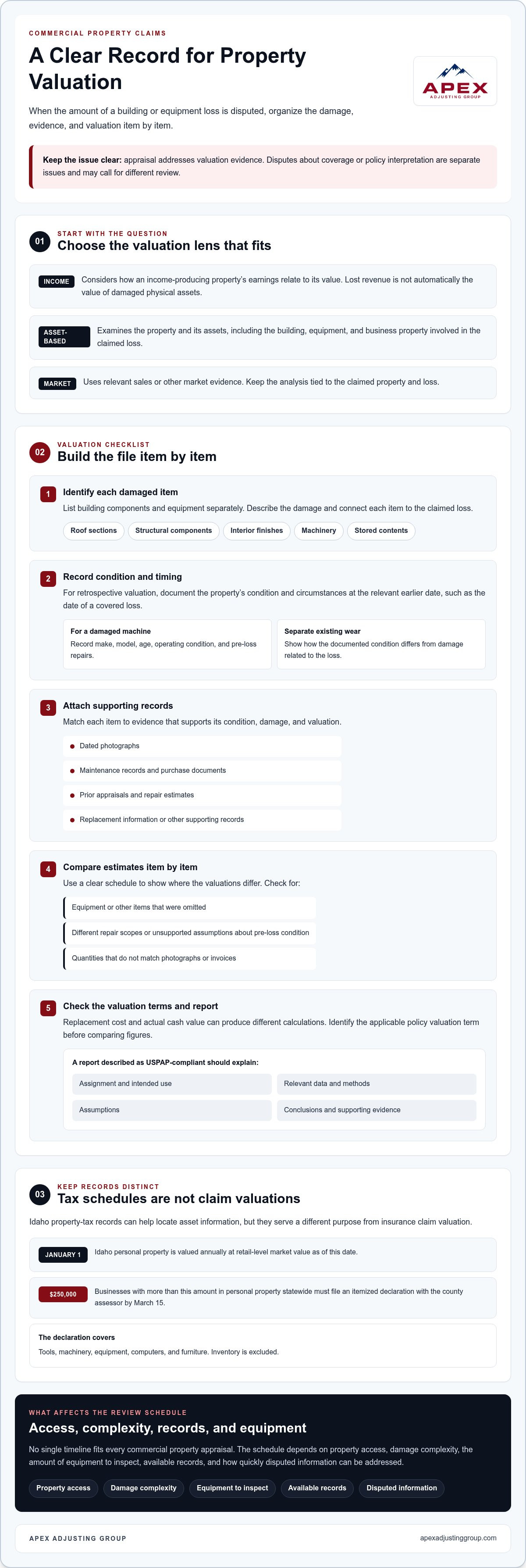
Idaho Code § 41-1329 governs unfair insurance settlement practices in Idaho, according to the Idaho Legislature. For claim disputes, the policy’s appraisal provision and the specific question being disputed also matter. An appraisal addresses valuation evidence; questions about coverage or policy interpretation are separate issues and may require different review.
Commercial property valuation may use income, asset-based, and market approaches, each of which answers a different question. The income approach considers how an income-producing property’s earnings relate to its value. The asset-based approach examines the property and its assets. The market approach compares relevant sales or other market evidence. Business valuation professionals may consider all three, but an insurance loss calculation for a building is not automatically the same as a business valuation.
For example, a warehouse owner might document damage to the building, production equipment, and stored contents separately. Income evidence may help assess business value, while equipment records and comparable property information support other parts of the analysis. Tie the valuation to the claimed property and loss, rather than treating lost revenue as the value of damaged physical assets.
Retrospective valuation asks what a property was worth at an earlier relevant date, such as the date of a covered loss. It requires evidence of the property’s condition and circumstances at that time, not simply its current state. Assemble dated photographs, maintenance records, purchase documents, prior appraisals, and repair estimates. For a damaged machine, note its make, model, age, operating condition, and pre-loss repairs. These details help distinguish existing wear from damage related to the loss.
Build the loss calculation item by item. Identify each building component or piece of equipment, describe its damage, and connect it to a repair estimate, replacement information, or other supporting record. Compare the estimate with the applicable policy valuation terms. Replacement cost and actual cash value can produce different calculations, so identify which term applies before comparing figures. Keep disputed items separate: a disagreement over roof repairs should not obscure documented machinery damage.
Idaho’s property-tax rules provide a separate valuation context. Idaho Code § 63-201 defines personal property as property subject to ownership that is not real property. Idaho personal property is valued annually at retail-level market value as of January 1. Businesses with more than $250,000 in personal property statewide must file an itemized declaration with the county assessor by March 15. The declaration covers tools, machinery, equipment, computers, and furniture, but excludes inventory.
Tax declarations can help locate asset records, but they serve a different purpose from insurance claim valuation. An Idaho commercial property insurance appraisal expert should distinguish tax schedules from evidence of loss and connect each claimed item to its condition, damage, and supporting documentation. Separating these records makes valuation disputes clearer and prevents business assets, inventory, and building damage from being blended into one unsupported figure.
Property and equipment valuation for insurance claims
A useful claim appraisal connects each damaged building component or business asset to evidence and a valuation method. The report should explain what was inspected, how values were determined, and which issues remain disputed.
Insurance and Damage Claim Appraisals
An insurance property claim appraisal evaluates claimed damage and supports a loss valuation. For a commercial building, this may involve examining roof sections, structural components, and interior finishes. For equipment, the review may identify each machine, its condition, and the damage attributed to the loss.
Compare the appraisal with the insurer’s estimate item by item. Check for omitted equipment, different repair scopes, unsupported assumptions about pre-loss condition, and quantities that do not match photographs or invoices. A clear schedule shows exactly where the valuations differ.
USPAP-Compliant Damage Assessments
The Uniform Standards of Professional Appraisal Practice, known as USPAP, provides standards for appraisal work. A report described as USPAP-compliant should identify its assignment, intended use, relevant data, methods, assumptions, and conclusions. This structure helps readers understand how the appraiser reached the valuation.
Check whether the report explains the evidence behind each conclusion. For example, an assessment of a damaged production machine should connect inspection findings and available records to the reported condition and value. A label alone does not explain the analysis.
Credentials and Appraisal Timelines
Look for an appraiser with relevant experience valuing commercial buildings or the equipment involved in the claim. Ask about appraisal education, professional designations, experience with insurance damage assessments, and familiarity with the property type. A machinery-heavy claim calls for different expertise than a building-only assessment.
No single timeline fits every Idaho commercial property appraisal. The schedule depends on property access, damage complexity, the amount of equipment to inspect, available records, and how quickly disputed information can be addressed. A complete equipment inventory and organized photographs help keep the review focused.
Appraisal and Claim Resolution
An appraisal can help resolve a disagreement about the amount of property damage by documenting a valuation for disputed items. It does not answer every claim question. Coverage, policy interpretation, and the cause of damage may involve issues outside the valuation assignment.
Before proceeding, identify the exact items in dispute and compare the policy’s appraisal language with the claim documents. Keep photographs, estimates, equipment records, and inspection findings together. If the damage scope or valuation remains unclear, a free claim review can help assess the file and identify the next practical step.
Appraisal fees
Appraisal fees depend on the assignment’s scope, the property involved, and the available records. Reviewing one damaged machine differs from analyzing a commercial building, specialized equipment, and disputed repair estimates. Before work begins, get the fee arrangement and expected tasks in writing so you understand the cost basis and scope.
Ask what the engagement includes. Does the fee cover a site inspection, document review, valuation analysis, written findings, and follow-up discussions? If the claim involves production equipment, clarify whether the appraiser has relevant experience evaluating it. For assignments covering several buildings or complex systems, confirm how additional inspections or expanded analysis affect the agreed fee.
Fee structures vary. An agreement may describe hourly billing, a fixed assignment fee, or another arrangement. Read the terms for billing increments, travel, expenses, deposits, and supplemental work. Ask how a change in scope, such as concealed damage or equipment omitted from the original inventory, affects the fee. Clear terms help owners understand what the agreed fee covers.
For personal-property valuation expert-witness work, the retaining attorney and expert agree on fees. That arrangement concerns expert-witness services, not a universal rate for every commercial insurance appraisal. If attorneys are involved, keep the appraisal assignment distinct from legal representation. A valuation professional analyzes property and damage evidence; an attorney handles legal questions.
Compare proposals by scope, not just by the bottom-line figure. A lower quote may cover fewer inspections or a narrower written analysis. A more detailed engagement may include itemized findings explaining conclusions about damaged contents, equipment condition, or repair scope. Match each proposal to the disputed issues in the claim.
- List the buildings, equipment, and contents included in the assignment.
- Identify inspections, records review, analysis, and written deliverables.
- Clarify expenses, billing terms, and how added work is handled.
- Confirm the appraiser’s relevant experience and any claimed credentials.
- Keep appraisal fees separate from attorney fees and other claim expenses.
Do not treat a “certified” label as a substitute for relevant expertise. Ask what the credential covers and whether the appraiser has handled comparable property and equipment. A qualified appraisal file should connect the agreed scope, evidence reviewed, and conclusions delivered. For help organizing a disputed property claim before that review, owners can request a claim file review.
Appraisal panels and neutral umpires
A valuation dispute may involve competing estimates for the same building or equipment. If the policy’s appraisal clause provides for a panel, read its wording before appointing anyone. The clause determines who selects appraisers, how unresolved differences go to a neutral umpire, and what the panel may evaluate. Do not assume every policy uses the same procedure.
What the Appraisers and Umpire Do
Each appraiser develops and explains a valuation position using claim evidence. For a damaged production line, that evidence might include inspection notes, equipment records, photographs, and repair estimates. The neutral umpire’s role depends on the clause. If the clause assigns the umpire unresolved differences, that person reviews disputed valuation issues rather than automatically deciding coverage or policy meaning.
Keep the assignment focused. Identify each disputed building component or piece of equipment, then state the competing amounts and the basis for each. If one estimate includes replacement of a damaged control panel while another includes repair, show the inspection findings and documents supporting each position. A clear comparison makes the disagreement specific.
Choosing Qualified Participants
Review relevant experience, appraisal training, and familiarity with the property. A commercial building appraiser may not have the same equipment expertise as someone who values industrial machinery. Professional affiliations, such as the American Society of Appraisers, can help identify an appraiser’s field, but do not replace reviewing their qualifications for the assignment.
Before an appointment, confirm the proposed participant’s role, independence, fee arrangement, and ability to review the claim file. Ask whether they have handled similar property or equipment valuations. Record potential conflicts and make sure each participant understands the disputed items and the policy language governing the process.
Organizing Evidence for Panel Review
Prepare a shared evidence file with the policy appraisal clause, estimates, inspection reports, photographs, repair records, and equipment schedules. Label each item by location or asset identifier. For example, distinguish the damaged rooftop unit from other units and match its photographs to the repair scope and inspection notes.
Separate agreed facts from disputed conclusions. Both appraisers may agree that a machine was damaged but disagree about repair scope or pre-loss condition. A concise issue list helps the panel focus on valuation questions instead of revisiting uncontested details.
What to Clarify Before Proceeding
Check the clause for selection steps, deadlines, umpire selection, and responsibility for expenses. Terms vary by policy, so use the actual contract rather than assuming an institute’s general practice applies. Keep written records of appointments, exchanged evidence, and agreements about the review process.
Appraisal can address a defined disagreement about loss value, but it does not resolve every claim issue. If the dispute concerns coverage, causation, or policy interpretation, separate that question from the valuation record and identify it clearly for appropriate review.
Commercial property insurance appraisal in Idaho
For Idaho businesses, appraisal is a valuation process governed by the policy wording and the disputed claim issues. The key is to choose a qualified professional and understand what appraisal can and cannot resolve.
Appraiser, Adjuster, and Public Adjuster Roles
An appraiser evaluates disputed property values, such as the repair scope for a damaged commercial roof. An insurance adjuster investigates and evaluates a claim for the insurer. A public adjuster represents the property owner in a first-party claim, reviewing damage and supporting the owner’s claim documentation.
These roles differ in whom they represent and what work they perform. An appraiser focuses on valuation; an adjuster evaluates the claim, while a public adjuster advocates for the insured property owner. Ask who selected each professional and what the policy’s appraisal clause assigns them to determine.
Choosing an Appraiser or Firm
Choose an individual or firm with experience that matches the property and disputed items. A warehouse claim involving structural damage requires different expertise from a claim centered on specialized manufacturing equipment. Review relevant credentials, inspection experience, sample report structure, and the proposed scope of work.
To find a qualified Idaho appraiser, identify the disputed assets and look for professionals with experience assessing them. Ask how they document inspections, analyze estimates, and explain valuation conclusions. Compare firms by qualifications, independence, communication, and fee terms, not by title alone.
Factors Affecting Appraisals
Property type, damage extent, access, and available documentation all affect an appraisal. A commercial building with concealed water damage may require more investigation than visible damage to one piece of equipment. Repair scope, equipment condition, pre-loss records, and the policy’s valuation language also shape the analysis.
For an accurate review, organize dated photographs, maintenance records, estimates, invoices, and an itemized equipment list. Coverage terms matter because replacement-cost and actual-cash-value provisions can affect calculations. Policy language and appraisal procedures vary by state, so Idaho owners should read their own contract.
Appraisal Process and Its Limitations
The process generally starts by reviewing the policy clause and identifying the dispute over the amount of loss. The parties then select appraisers as the clause directs, exchange relevant evidence, inspect the property when needed, and compare valuation positions. If the appraisers cannot resolve their differences, the clause may provide for a neutral umpire.
Before invoking appraisal, identify the issues it can address and the costs or procedural commitments described in the policy. Appraisal focuses on valuation; it may not decide whether damage is covered, what caused it, or how policy language applies. Those issues can remain unresolved even after disputed values are assessed. Keep coverage questions separate and seek legal advice from an attorney when legal interpretation is needed.
Apex Adjusting Group: Fire Damage Claims
Apex Adjusting Group represents property owners in first-party fire damage claims, including disputes over the documented scope and value of building damage. When fire, smoke, or related damage appears underpaid, delayed, or denied, the firm can review the claim and organize supporting evidence. Its licensed public adjusters represent property owners, not insurance companies.
For commercial properties, that work may involve examining estimates and claim records for damaged structures, equipment, and contents. Apex Adjusting Group also handles commercial property claims and insurance appraisal services. Its fee is a percentage of what it recovers, with no fee unless it obtains a settlement.
Contact Apex Adjusting Group for a free claim review, without pressure.
Choose the Next Step for Your Claim
Turn the appraisal discussion into a clear action plan. Before taking another step, organize the current estimate, policy, adjuster correspondence, inspection records, and any open questions about the loss. Mark which items concern property value and which concern a different claim issue. That distinction helps keep the next discussion focused and makes it easier to explain what remains unresolved.
An Idaho commercial property insurance appraisal expert can assess valuation evidence, while a claim review can identify where the file needs closer attention. The right next step depends on the disagreement and the claim’s stage. Base decisions on the documents, not just one total or estimate.
A well-organized file gives you a stronger starting point for deciding how to move forward.
Frequently Asked Questions
Do I need an attorney for the appraisal process?
Not automatically. A property owner may take part in an appraisal focused on the amount of a covered loss without having an attorney on the appraisal panel. If the disagreement concerns policy interpretation, coverage, or legal rights rather than valuation, an attorney can address those legal questions. For example, a dispute about the cost to repair a damaged roof differs from a dispute about whether the policy covers the damage.
Is the appraisal decision legally binding?
The effect of an appraisal decision depends on the policy’s appraisal clause and the issues submitted. Review the clause for the appraisers’ authority, the umpire’s role, and how agreement is reached. A valuation decision should not be treated as deciding every aspect of a claim. For example, a decision about repair value may leave a separate coverage disagreement unresolved.
What types of property claims qualify for appraisal?
A claim may be eligible for appraisal when the policy allows it and the disagreement concerns the amount of property loss. Commercial fire, water, wind, or hail claims may involve valuation disputes over building repairs, damaged equipment, or business contents. The cause of damage and whether the policy covers it are separate questions. Check the policy clause and identify the exact disputed items before proceeding.
What does a commercial property insurance appraisal expert do in Idaho?
An Idaho commercial property insurance appraisal expert evaluates disputed property damage values and explains the basis for the assessment. The assignment may involve comparing repair scopes, inspecting damaged areas, and reviewing records for affected assets. For example, an appraiser assessing a damaged commercial electrical system may review inspection findings and estimates to clarify differences in repair scope. The role focuses on valuation, not legal representation.
How much does a commercial property insurance appraisal cost in Idaho?
Appraisal cost depends on the case and is provided after a quote request. Factors include the property’s size and complexity, the number and type of damaged assets, inspection needs, records to review, and the written analysis required. A building-only assignment differs from one involving several locations and specialized equipment. Ask for the proposed scope and fee terms in writing so you can understand what the quote covers.
Need Help with Your Insurance Claim?
Our licensed public adjusters can help you get the maximum settlement you deserve. Contact us today for a free claim evaluation.
Related Articles