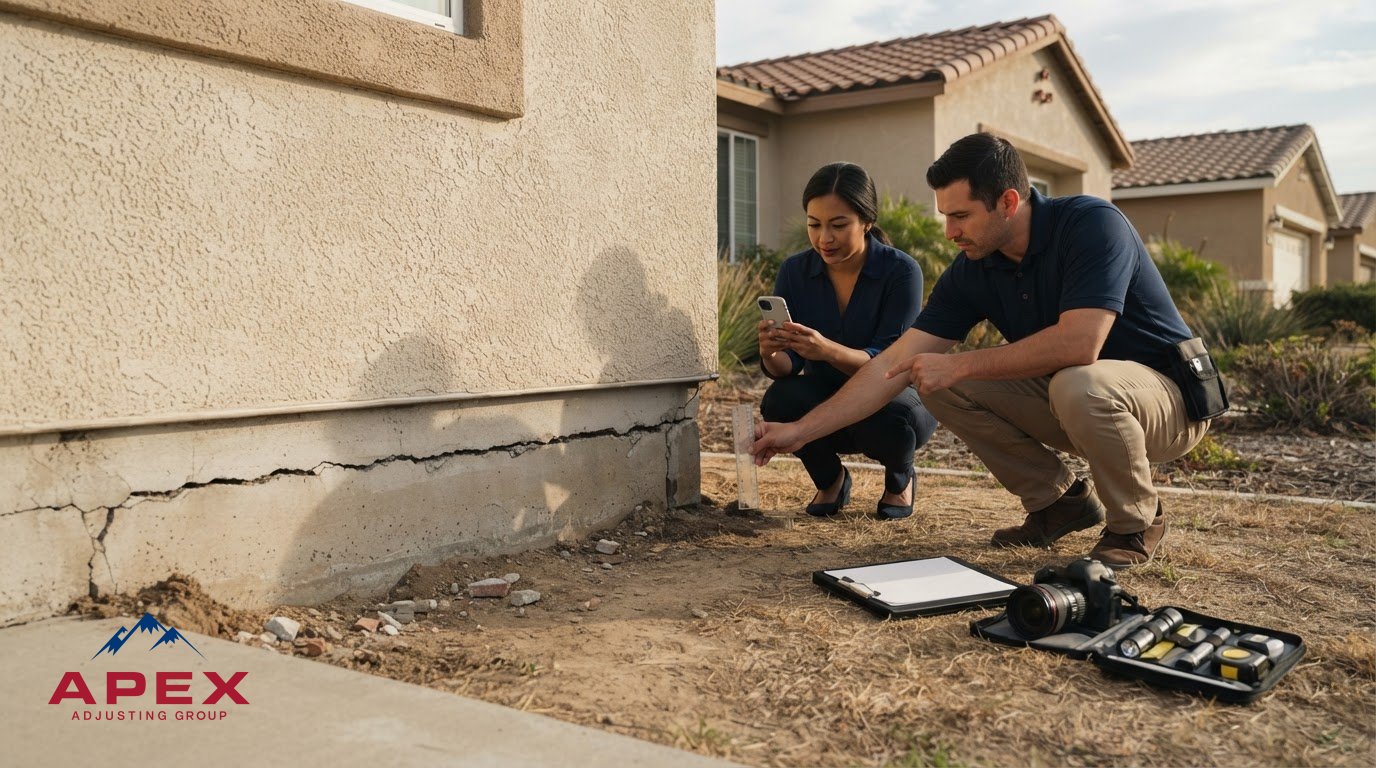
In 2025, the severity of fire and lightning claims surged by over 67%, leaving thousands of property owners struggling to rebuild. You didn't pay premiums for years just to be abandoned when your home or business is in ruins. It's a high-stakes battle against a corporation protecting its bottom line, and the stress of displacement only makes the fight harder. You need a strategy that forces the insurance company to recognize every cent of your loss. These fire damage insurance claim tips are designed to give you that edge in 2026.
You deserve a settlement that covers actual replacement costs and uncovers hidden structural or smoke damage that adjusters often "miss." We will show you how to dismantle complex policy language and document your losses with the precision of an expert. This guide breaks down high-impact negotiation tactics and insider strategies to ensure you aren't just another statistic in a corporate ledger. From identifying invisible damage to mastering the itemization process, you're about to learn how to secure the full payout you've earned. Stop being the victim and start being the victor in your recovery.
Key Takeaways
- Secure your property within the first 48 hours and request an immediate cash advance for living expenses to maintain financial stability.
- Build an irrefutable evidence trail by photographing every room and creating a detailed inventory that includes age, condition, and replacement costs.
- Learn essential fire damage insurance claim tips to identify common lowball tactics like unfair depreciation and the "divide and conquer" method.
- Utilize a licensed public adjuster to handle the complex burden of proof and lead negotiations against the insurance company's interests.
- Partner with an expert advocate on a contingency basis to ensure your settlement is maximized without any upfront out-of-pocket costs.
Immediate Post-Fire Survival: The Critical First 48 Hours
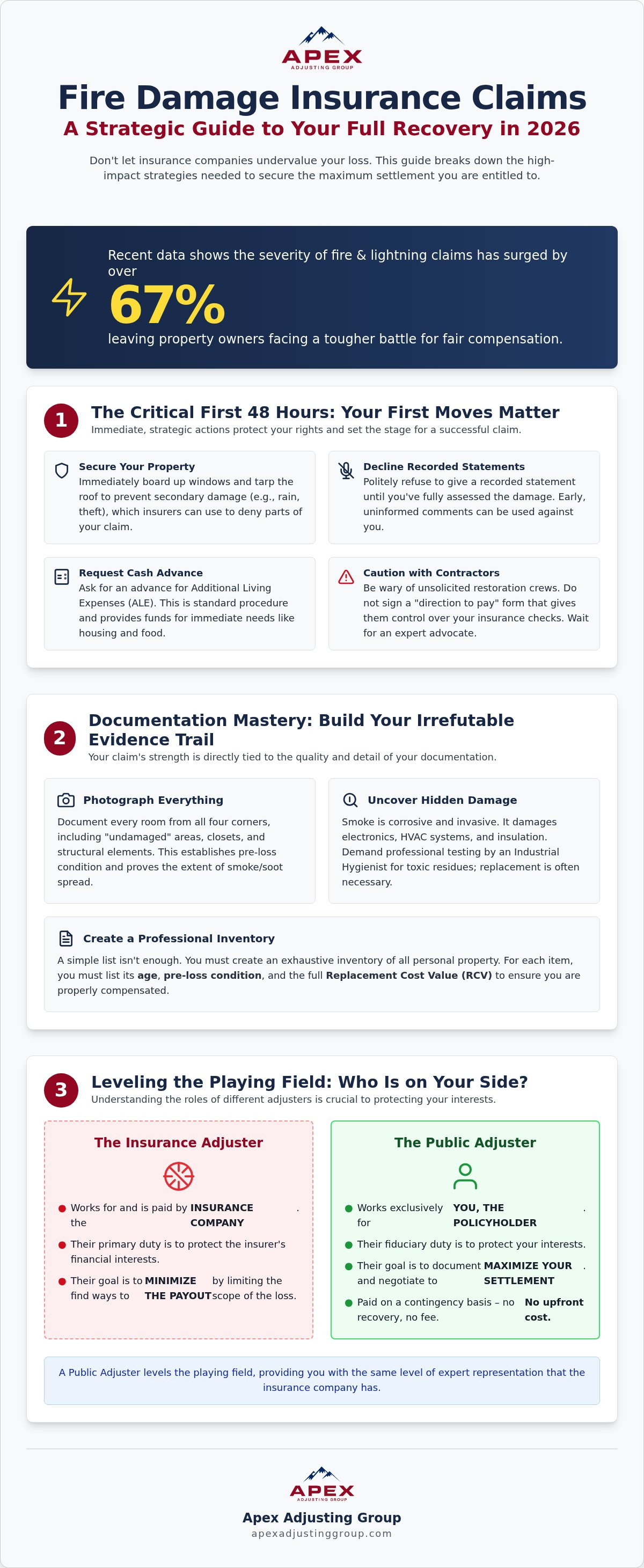
The first 48 hours after a fire are a high-stakes battleground. Your actions during this window dictate the trajectory of your entire insurance claim process. Don't let shock lead to silence. Insurance companies often use this period of confusion to set traps that reduce their financial exposure. They are already calculating how to pay you less. You must start calculating how to recover more. Secure your property immediately to prevent "secondary damage" from rain, mold, or theft. If you fail to board up windows or tarp the roof, the insurer will likely deny any subsequent losses, claiming you failed your duty to protect the asset.
One of the most vital fire damage insurance claim tips is to control the narrative. The insurance adjuster will likely call you within hours. They may sound empathetic, but they're fishing for a recorded statement. Politely decline. You haven't fully assessed the damage, and a single misspoken word about the fire's origin or the extent of the loss can be used to slash your payout later. Demand a complete, certified copy of your insurance policy immediately. You need the full declarations page and every endorsement to understand the specific limits of your coverage.
Securing Your Emergency Funds
Request an "Advance Payment" right away. This is a standard procedure, not a favor from the insurer. It provides the liquid capital needed for Additional Living Expenses (ALE) or Business Interruption costs. Track every single penny of out-of-pocket expenses. Save every receipt for meals, hotels, and temporary relocation. Insurers often try to reimburse based on "fair market value" for housing, but your policy typically covers the "actual costs" required to maintain your standard of living. Don't settle for their low estimates when your life has been turned upside down.
Mitigating Further Loss
You have a contractual obligation to mitigate damage, which means preventing the situation from getting worse. However, mitigation is not the same as restoration. Be extremely cautious with emergency restoration crews who show up uninvited. They often pressure stressed owners to sign a "direction to pay" form. Signing this gives the contractor total control over your insurance checks before the full scope of the fire damage is even known. Stick to essential board-up services for security. Wait until you have an independent expert on your side before authorizing invasive cleanup or debris removal that might destroy evidence of your loss.
Documentation Mastery: Building an Irrefutable Evidence Trail
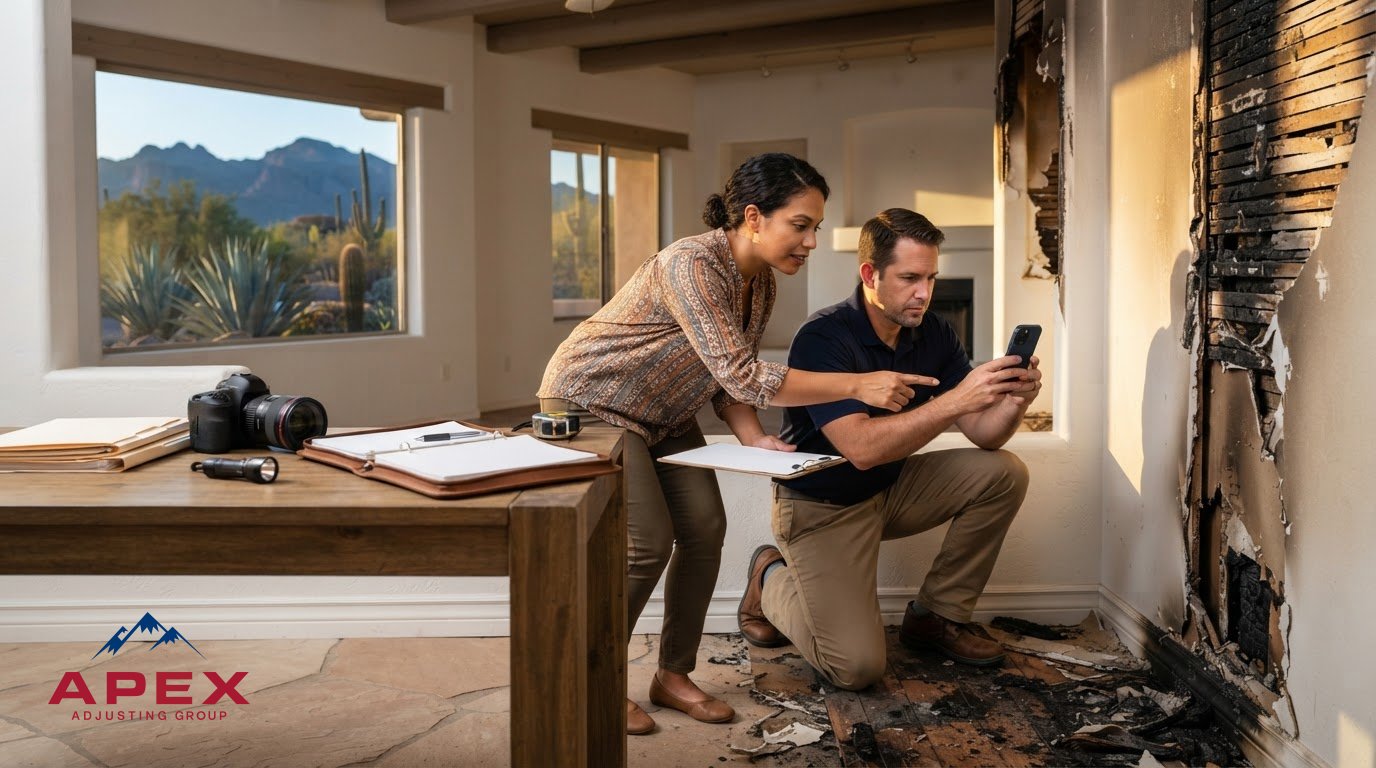
Documentation isn't just a chore; it's your primary weapon in a high-stakes negotiation. Most homeowners think a few photos of charred furniture are enough. They're wrong. One of the most critical fire damage insurance claim tips is to document what wasn't burned just as thoroughly as what was. Baseline photos of "undamaged" areas prove the pre-loss condition and highlight the subtle spread of smoke and soot. Photograph every room from four corners. Capture ceiling joints, floorboards, and the inside of closets. This creates a visual record that prevents the insurer from claiming your property was already in disrepair.
Hidden damage is where insurance companies save billions of dollars every year. Look for charred structural members behind drywall or compromised wiring that looks functional but has lost its insulation integrity. A standard contractor's estimate is usually just a bid for work. You need a Scope of Loss. A Scope of Loss is the technical blueprint of your recovery, detailing every material and labor hour required to restore your property to its original state. If you feel overwhelmed by these technical requirements, a free claim evaluation can help you identify exactly what's missing from your evidence file.
The Hidden Enemy: Smoke and Soot
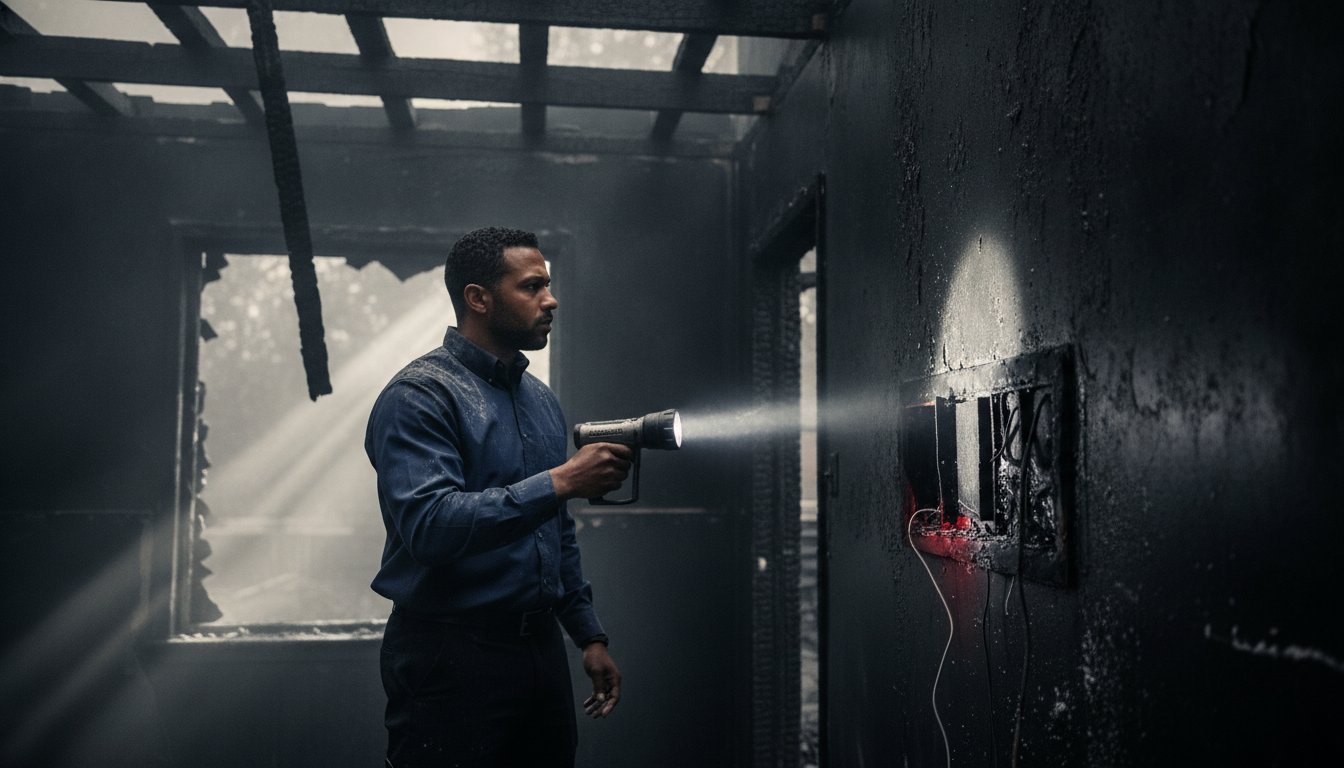
Smoke is a corrosive, invasive force. It penetrates electronics, settles into HVAC ductwork, and embeds itself deep within wall cavities. Don't assume a surface is clean just because the black soot is gone. Demand that an Industrial Hygienist test the air quality and surfaces for toxic residues. Porous materials like insulation and unfinished wood often cannot be cleaned; they must be replaced to ensure your health and safety. Fight for replacement over cleaning whenever the integrity of the material is compromised by acidic smoke particles.
Professional Inventory Standards
Your Content Inventory must be exhaustive and precise. List the age, condition, and Replacement Cost Value (RCV) of every item, from major appliances to the contents of your junk drawer. Insurers will try to push you toward Actual Cash Value (ACV), which slashes your payout based on depreciation. Don't let them undervalue your life. Leverage "Matching" and "Line of Sight" rules. If the fire damaged one section of your continuous hardwood flooring, the insurer may be required to replace the entire floor to ensure a uniform appearance. Detail these requirements in your evidence trail to prevent the patchwork repair tactics insurance adjusters love to propose.
Decoding the Lowball: How Insurers Undervalue Fire Claims
Insurance companies are profit-driven corporations answering to shareholders, not your family or your business. Their primary objective is minimizing "claim leakage," a cold industry term for the money they pay to policyholders. One of the most critical fire damage insurance claim tips is to recognize their "Divide and Conquer" strategy. By breaking your massive loss into hundreds of tiny, itemized line items, they can shave a few dollars off each one. Individually, these underpayments seem small. Collectively, they represent a staggering deficit that can stall your recovery for years. They also rely on aggressive depreciation traps, unfairly slashing the value of your belongings by claiming extreme wear and tear on items that were in excellent condition.
Don't fall for the "Preferred Vendor" myth. These contractors depend on the insurance company for a steady stream of referrals. Their loyalty is bought and paid for by the insurer, creating a financial incentive to cut corners and minimize repair costs. If you encounter unreturned calls, baseless denials, or extreme payment delays, you are likely facing bad faith tactics. Recent industry surveys show that nearly 8 in 10 insured fire survivors report serious claim problems a year after their loss, with 50% specifically citing lowball settlement offers. These aren't administrative errors; they are calculated corporate strategies designed to wear you down until you accept a fraction of what you're owed.
The Conflict of Interest in 'Company Adjusters'
The adjuster inspecting your property works for the entity writing the check. Their performance is often measured by how much money they save the company, not how well they help you rebuild. Even "Independent Adjusters" are typically third-party firms hired by the insurer to handle overflow. They aren't independent of the insurance industry; they are hired guns. They often ignore hidden structural damage or acidic smoke infiltration to keep the estimate low. They prioritize the company’s bottom line over your safety. You need an advocate whose only loyalty is to your recovery.
Common Lowballing Techniques
Adjusters use software like Xactimate to generate repair estimates, but this tool is only as accurate as the data they input. They often use outdated local labor rates and material costs that don't reflect the current market. They may also refuse to pay for required "Code Upgrades." Most modern policies include coverage to bring your building up to current safety standards, yet adjusters often conveniently overlook this. Finally, beware the "Partial Repair" fallacy. Patching a fire-damaged roof or merely cleaning a charred wall is often a recipe for future failure. If the property isn't restored to its true pre-loss condition, the repair is incomplete and your asset remains compromised.
Public Adjusters vs. Insurance Adjusters: Leveling the Playing Field
Insurance companies have teams of experts. You should too. A Public Adjuster is the only licensed professional who represents you, the policyholder, rather than the insurance company. While the company adjuster looks for reasons to limit the payout, a Public Adjuster looks for every possible way to maximize it. They are the equalizers in a system designed to favor the insurer. One of the most effective fire damage insurance claim tips is to stop treating the insurance company like a partner. They are your opponent in a high-stakes financial negotiation. A Public Adjuster takes over the entire burden of proof, documenting the damage and interpreting complex policy language that insurers often use to hide coverage.
The statistical advantage of professional representation is clear. Policyholders who utilize expert adjusters often secure significantly higher settlements than those who attempt to negotiate alone. This isn't just about knowing what to say; it's about knowing what the policy requires the insurer to pay. Public adjusters identify coverage for items you might overlook, such as code upgrades or temporary power costs, ensuring no money is left on the table.
When to Hire a Public Adjuster
Don't wait for a lowball offer. Hiring an expert before the first check arrives prevents the insurance company from setting an artificially low baseline for your recovery. In complex commercial losses, calculating business interruption and lost revenue requires a level of forensic accounting that most business owners lack. Even if you have already received a settlement, a Public Adjuster can often reopen a claim if you discover hidden smoke or structural damage that the company adjuster missed. Acting early protects your rights and forces the insurer to take your claim seriously from day one.
The ROI of Professional Representation
The "No-Recovery, No-Fee" model ensures that your interests are perfectly aligned with your adjuster's goals. We don't get paid unless we successfully increase your settlement. This eliminates financial risk and provides you with a seasoned negotiator who understands the insurance industry's tactics. Beyond the final payout, the value of your time is immeasurable. Letting an expert handle the hundreds of emails, phone calls, and site inspections allows you to focus on your family or your business. If you are tired of the runaround and want to fight for what you're owed, request a free claim evaluation to see how an expert can change the outcome of your recovery.
The Apex Advantage: Why Your Recovery Starts Here
Apex Adjusting Group acts as your fierce advocate in a system designed to protect corporate profits. When your home or business is charred, the insurance company isn't looking for ways to pay you more; they're looking for ways to close the file cheaply. We change that dynamic immediately. We take the crushing burden of documentation, policy analysis, and negotiation off your shoulders. Our deep expertise in both residential and high-stakes commercial property claims ensures that no detail is overlooked, from smoke-damaged electronics to compromised structural integrity. We don't just ask for a fair settlement. We demand it.
Our commitment to your recovery is absolute. We operate on a "No-Recovery, No-Fee" promise. This means we don't get paid unless we successfully maximize your settlement. There are no upfront costs and no financial risks to you. This model perfectly aligns our interests with yours. We are motivated to uncover every cent of damage because your success is our success. These fire damage insurance claim tips are only the beginning; having a professional fighter in your corner is what actually moves the needle. We provide a free claim evaluation to review your policy and your damage with zero obligation.
Our Results-Driven Process
We conduct a comprehensive, independent damage assessment that insurers simply cannot ignore. While company adjusters use biased software with outdated labor rates, we utilize current market data and forensic techniques to prove the true cost of your loss. Our negotiation strategy is aggressive and uncompromising. We don't settle for "good enough" or "close enough." We stay focused on the technical evidence and the specific language of your policy to force the insurer's hand. You stay informed through every step of the process while we do the heavy lifting, providing the transparency you need during a high-stress recovery.
Ready to Fight for Your Settlement?
Don't sign a settlement check until you've had a professional evaluation. Once you sign, you may be signing away your right to claim for hidden damage that appears months later. The insurance company wants you to settle quickly and move on. We want you to settle fully and recover completely. Getting started is simple. Contact Apex Adjusting Group today to secure the representation you deserve. Stop being the underdog and start being the policyholder who gets paid. Get Your Free Claim Evaluation Now and take the first step toward a full recovery.
Take Control of Your Recovery Today
Recovery isn't a passive process; it's a battle for your future. You've learned that documenting every charred beam and hidden smoke trail is non-negotiable to prevent being underpaid. You also know that the insurance company's adjuster isn't there to maximize your check. These fire damage insurance claim tips are your blueprint for resisting lowball offers and demanding the replacement costs you're actually owed. Don't let corporate tactics stall your life or business.
As licensed public adjusters and specialists in fire and smoke damage, we handle the heavy lifting so you don't have to. We understand the system and we know how to challenge it effectively. With our No Recovery, No Fee Guarantee, you gain a fierce advocate without any upfront financial risk. Take control of your claim before the insurer dictates the terms of your future. You have the facts and the strategy. Now, get the expert support you deserve to rebuild with confidence.
Get Your Free, No-Obligation Claim Evaluation
Frequently Asked Questions
How long do I have to file a fire damage insurance claim?
You must notify your insurer immediately, but the specific deadline to file a formal "Proof of Loss" statement varies by policy and state law. Most policies require notification within 24 to 48 hours of the event to initiate the process. Failing to meet these strict contractual timelines gives the insurance company a reason to deny your claim entirely. Always demand a certified copy of your policy to verify these critical dates and ensure you don't miss your window for recovery.
Can I hire my own contractor, or do I have to use the insurance company's choice?
You have the right to hire any licensed contractor you choose for your repairs. The insurance company's "preferred vendors" often prioritize the insurer's bottom line over your property's integrity. These contractors depend on the insurance company for steady work, which creates a massive conflict of interest. By selecting an independent contractor and following expert fire damage insurance claim tips, you ensure the repairs meet your standards rather than the insurer's budget constraints.
What if the insurance company's offer is too low to cover my repairs?
Don't sign a settlement check or a release form if the offer is insufficient. You have the right to dispute any valuation that fails to cover true replacement costs. This is where professional representation becomes essential. A public adjuster can conduct an independent assessment to prove the actual scope of loss. If negotiations stall, you can invoke the "appraisal" clause in your policy to force a resolution through an impartial third-party process.
What exactly does a Public Adjuster do that a contractor doesn't?
A Public Adjuster is a licensed professional who manages the entire financial recovery and negotiation process, whereas a contractor focuses solely on physical repairs. Contractors cannot legally interpret insurance policies or negotiate claim settlements in most states. Public adjusters handle the "burden of proof" by documenting every cent of damage and advocating for your interests. They ensure the settlement is high enough to actually pay for the quality work your contractor provides.
Is smoke damage covered if there was no actual fire in my specific unit?
Smoke damage is a covered peril even if the flames never touched your specific unit. Corrosive soot and acidic smoke particles often travel through HVAC systems and wall cavities, compromising electronics and air quality in adjacent areas. You must document these "invisible" losses immediately. Demand professional testing from an industrial hygienist to prove the presence of toxic residues. Insurers often try to minimize smoke-only claims, but the damage to your health and property is real.
How much does a public adjuster cost for a fire damage claim?
Public adjusters typically work on a contingency fee basis, meaning they earn a percentage of the final settlement they recover for you. This "no-recovery, no-fee" model ensures that your advocate is highly motivated to maximize your payout. You don't have to worry about upfront out-of-pocket costs during a crisis. This structure aligns the adjuster's success directly with your recovery, making expert representation accessible to property owners facing high-stakes losses without added financial strain.
What happens if I find more damage after I've already signed the settlement?
You can often reopen a claim to file a "supplemental" request if you discover hidden damage after the initial settlement. Fire damage is notorious for revealing itself weeks or months later, particularly regarding structural integrity or lingering odors. However, this becomes much harder if you signed a "full and final release" form. Avoid signing any documents that waive your right to future claims until you've had a comprehensive, independent evaluation of the entire property.
Can the insurance company cancel my policy for filing a fire claim?
An insurance company generally cannot cancel your policy mid-term simply because you filed a legitimate fire claim. Most states have consumer protection laws that prohibit such retaliatory actions against policyholders. However, they may choose not to renew your policy at the end of the term or increase your premiums. Don't let the fear of non-renewal stop you from seeking the full settlement you've paid for. Your priority must be securing the funds necessary to restore your property.
Need Help with Your Insurance Claim?
Our licensed public adjusters can help you get the maximum settlement you deserve. Contact us today for a free claim evaluation.
Related Articles