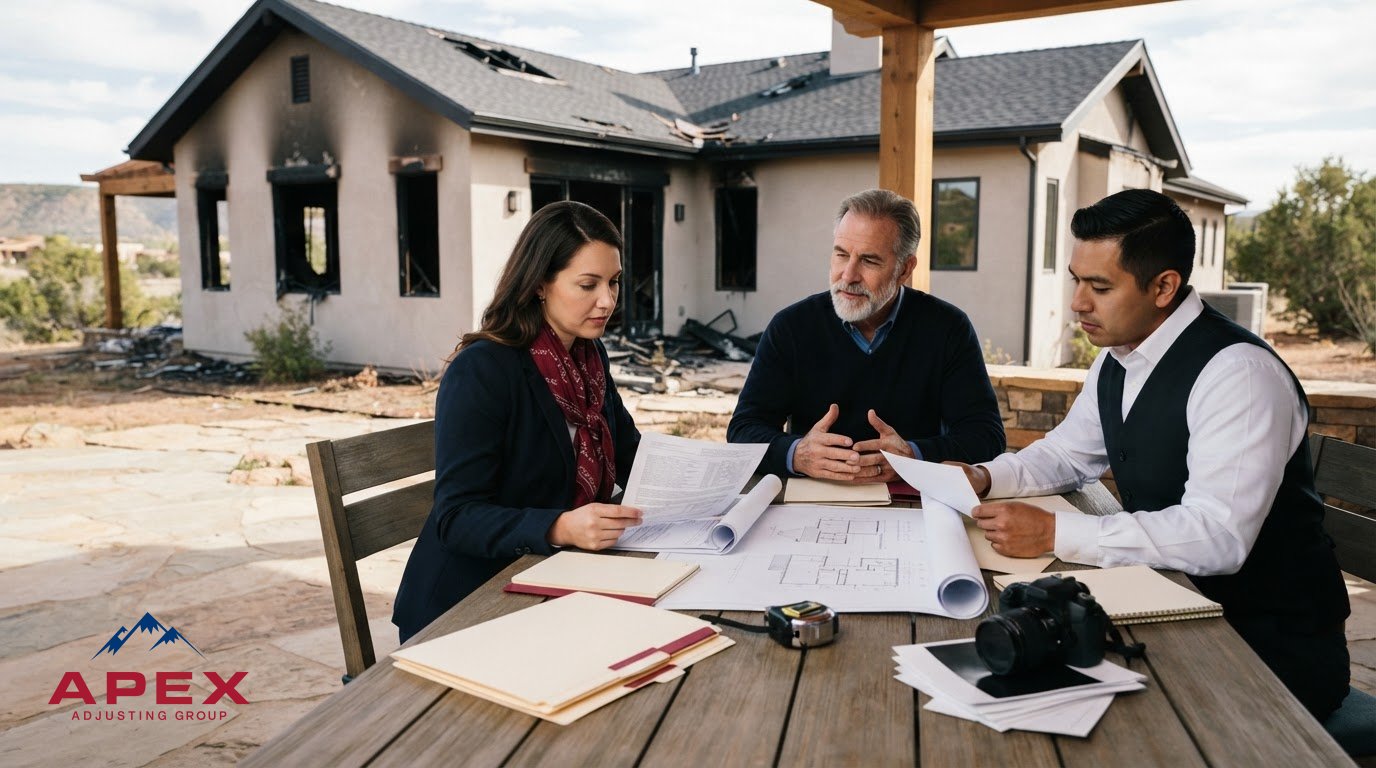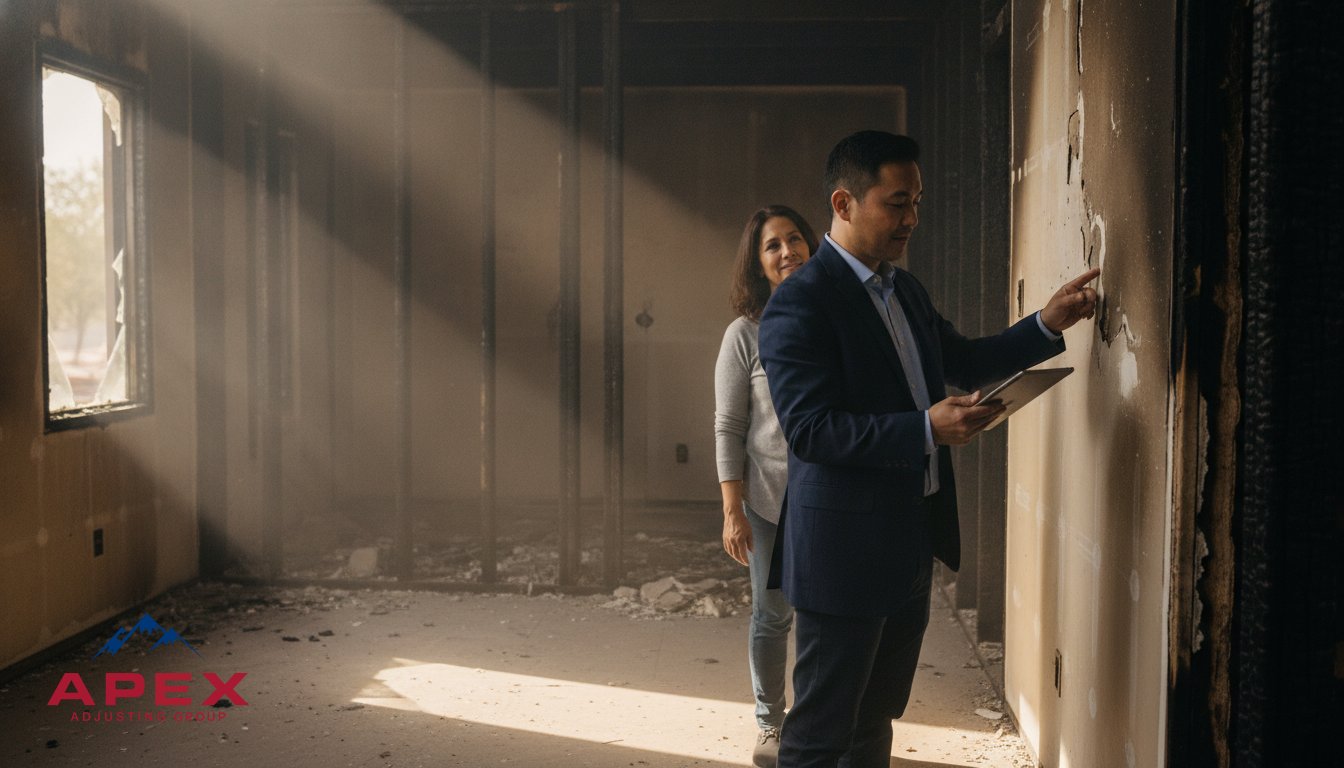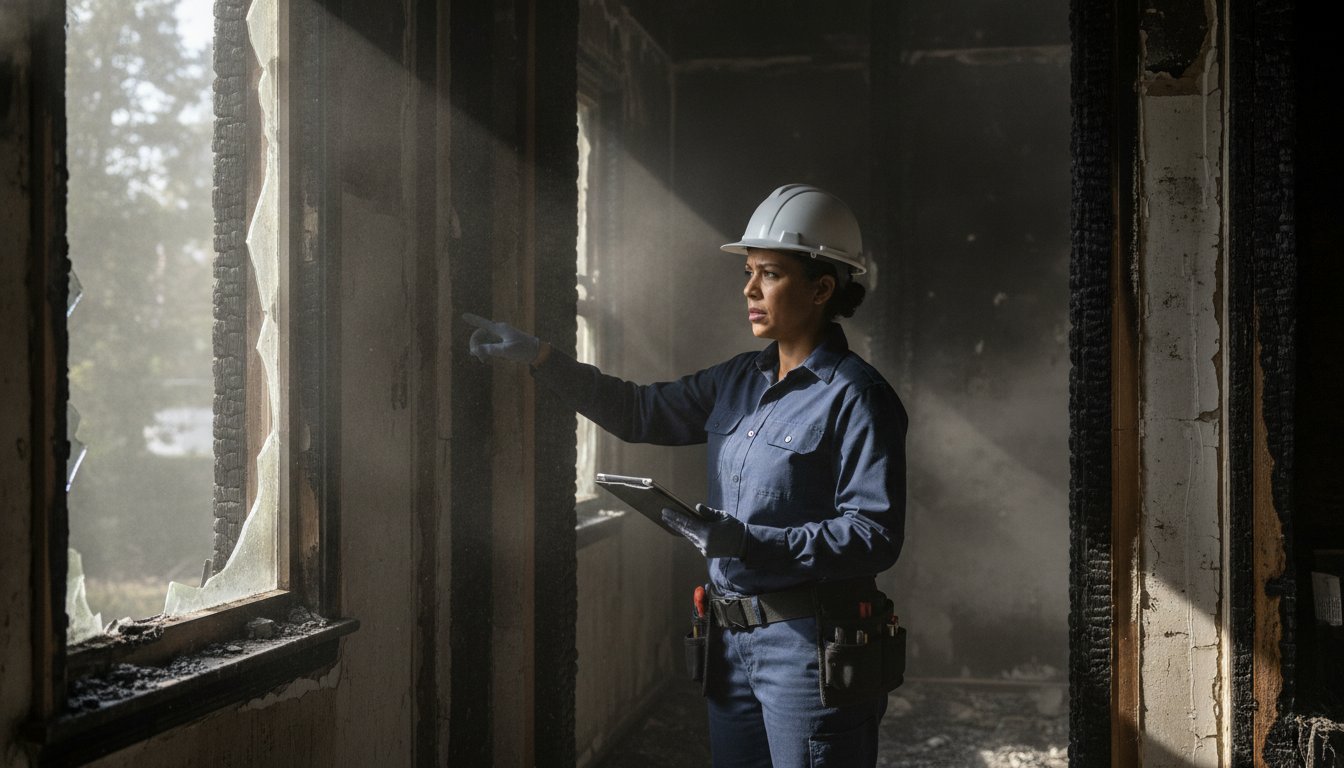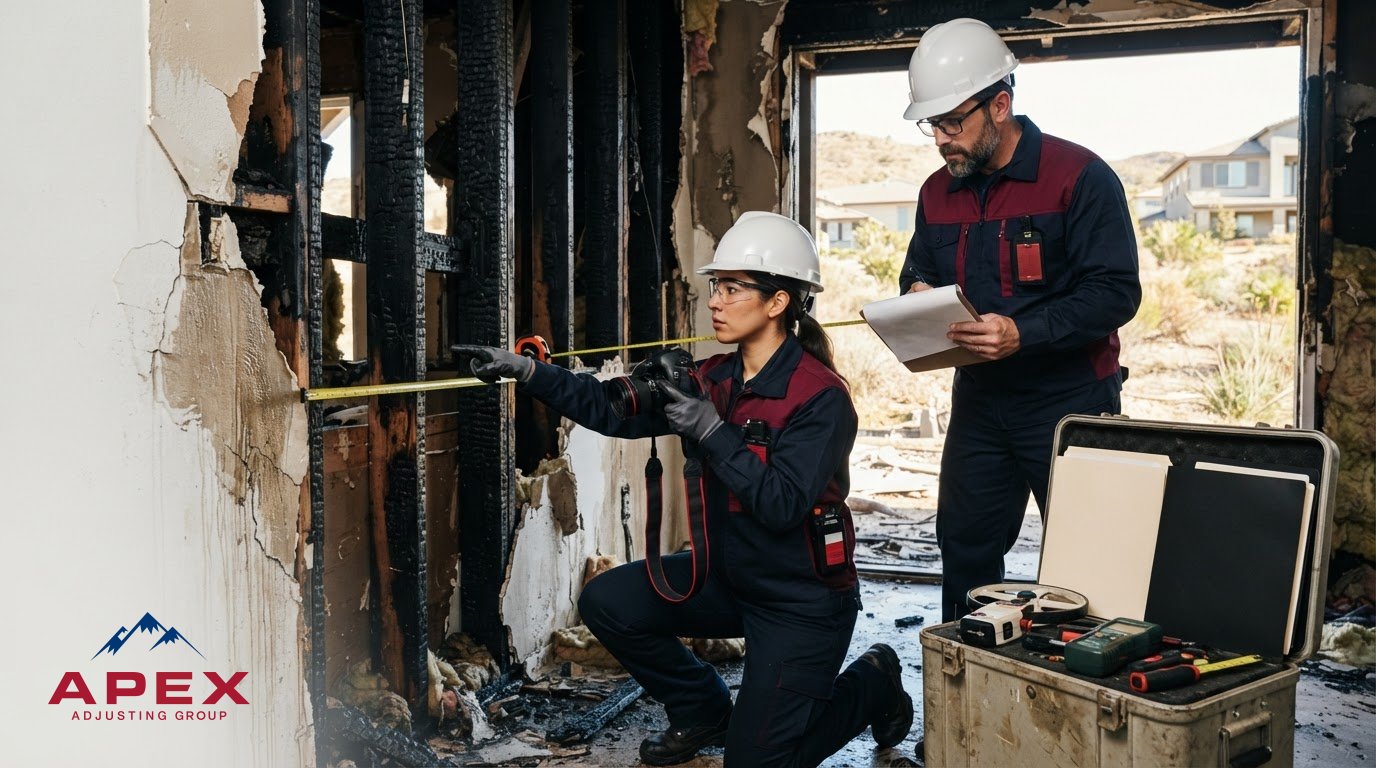
A strong expert opinion starts with the disputed issue, not a broad résumé. When a property claim is underpaid, delayed, or denied, choosing insurance expert witness services can feel like another high-stakes decision. The right fit depends on whether the expert’s documented experience matches the question at issue, such as the cause, extent, or valuation of property damage. A title alone doesn’t show whether someone’s analysis fits the claim.
Before engaging an expert, get clear about their role, independence, scope, and fees. An expert may analyze records and damage evidence, then explain technical findings in a formal proceeding. That is different from a public adjuster’s claim advocacy or an appraiser’s work on loss value. This guide explains how to compare relevant qualifications, define an assignment, and prepare records, photographs, videos, estimates, and invoices. It also explains how an expert’s analysis may be used, so property owners can assess fit without assuming an expert can determine coverage or guarantee a result.
Key Takeaways
- Match insurance expert witness services to the specific disputed issue, such as damage cause, scope, or valuation.
- Define the assignment question first. The damage type and scope determine which records and observations may matter.
- Compare an expert witness, appraiser, and public adjuster by their role and scope, then confirm which function fits the claim.
- Verify relevant experience and ask about analysis methods, deliverables, testimony scope, and fee terms before engaging an expert.
- Organize claim records and damage documentation, and confirm that the service is available for the property’s location.
When do insurance expert witness services fit a property claim?
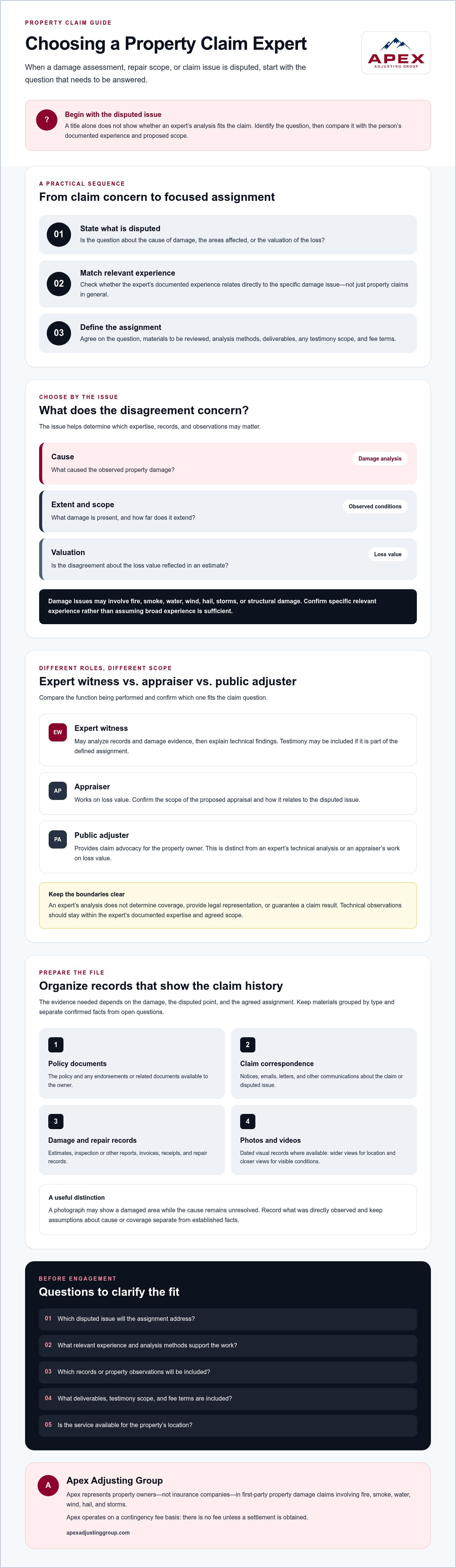
A disputed damage assessment, repair scope, or claim issue can leave a property owner unsure what evidence is missing. Insurance expert witness services may be useful when a defined question calls for technically grounded analysis of property damage or an insurance claim. Start by stating the question in plain language, then check whether a prospective expert’s documented experience relates directly to it.
An expert witness may provide relevant analysis or, if included in the assignment, testimony. The Expert witness overview offers general background, but it cannot establish whether a particular person is qualified for a specific property claim. That depends on the issue, the person’s actual experience, and the agreed scope.
What property claim issues may call for an expert?
Start with what is disputed, not a broad label like “property damage.” The disagreement might concern what damage is present, how far it extends, or whether observations support a particular assessment. Issues may involve fire, smoke, water, wind, hail, storm, or structural damage. Verify that the expert has relevant experience with the specific issue rather than assuming that general property experience is enough.
Keep technical observations separate from policy interpretation and legal conclusions. An expert may address physical conditions within their verified area of expertise. That doesn’t make the expert a legal representative or establish whether a policy provision applies.
What does an insurance expert witness do?
A defined assignment connects the expert’s work to the claim question. Depending on the engagement, the expert may review claim records and damage documentation, then provide analysis or testimony within the agreed scope. The work and evidence required depend on the disputed issue and the expert’s qualifications.
An insurance expert witness provides specialized analysis or testimony on a defined property damage or insurance claim issue.
Before engagement, confirm what the expert is being asked to assess, which materials they’ll review, and whether testimony is part of the assignment. An opinion may help explain technical evidence, but it doesn’t guarantee a claim result or decide coverage. Expert witness services are not legal representation. The expert’s work should stay within their documented expertise and agreed scope.
How do experts assess property damage and claim evidence?
A useful assessment begins with a precise assignment question. Is the disagreement about the damage observed, the areas affected, or the scope reflected in an estimate? The answer helps determine which records and property observations matter. Insurance expert witness services should have a defined scope tied to the issue, not a broad request to review a file without a clear purpose.
The evidence needed depends on the damage, the disputed point, and the engagement. An expert might compare dated photographs with estimates or reports, for example. Which materials are reviewed and whether an inspection is included depend on the agreed assignment and the expert’s relevant qualifications. A document’s presence in the file does not, by itself, establish what it proves.
Which claim records should an owner organize?
Gather records that show what was reported, observed, estimated, and done. Keep originals where available, and group materials by type so the expert can follow the claim history.
- Policy documents: The policy and any endorsements or related documents available to the owner. These provide context for a claim review, but an expert’s analysis is not legal advice about what a provision means.
- Claim correspondence: Notices, emails, letters, and other communications about the claim or disputed issue. Keep them in date order when possible.
- Damage and repair records: Estimates, inspection or other reports, invoices, receipts, and records of completed or ongoing repairs.
- Visual documentation: Dated photos or videos of visible damage and affected areas, where available. Include wider views that show the location and closer views that show the condition.
Separate confirmed facts from open questions. Note what was directly observed, when photographs were taken if known, and which points still need evaluation. For example, a photograph may show a damaged area, while the cause remains unresolved. Don’t present an assumption about cause or coverage as an established fact.
How should the expert’s analysis stay focused?
Before work begins, ask which disputed issue the proposed scope addresses and what the engagement includes. Clarify which records or observations will be considered, whether an inspection is included, and what deliverables or testimony, if any, are part of the assignment. The legal standard for expert testimony is separate from organizing the claim file. This overview doesn’t replace advice from a qualified legal professional.
A defined scope connects the disputed claim question to relevant records and observations, giving the expert a clear basis for analysis. An expert’s conclusions can inform a dispute, but they don’t guarantee insurer acceptance, payment, or a particular claim result.
Expert witness vs. appraiser vs. public adjuster: which service fits?
A disputed property claim can raise different questions. What does the damage evidence show? Is the amount of loss being addressed through an appraisal process? Who represents the property owner as the claim is handled? The right service depends on the assignment, the applicable policy and process, and the work the owner needs done. These roles are not interchangeable.
| Role | Typical purpose | Scope | Questions to ask |
|---|---|---|---|
| Expert witness | Provide expert analysis or testimony on a defined technical issue. | Limited to the agreed assignment and the person’s relevant expertise. | Does the person have experience with this damage issue? What analysis and testimony, if any, are included? |
| Appraiser | Participate in an appraisal process addressing the amount of loss, where applicable. | Set by the applicable policy and appraisal process. It is not a general claim advocacy role. | What does the appraisal provision say? What issue is being submitted, and what does the process require? |
| Public adjuster | Represent the property owner in a first-party property damage claim. | Claim representation, distinct from expert testimony and the appraisal role. | Does the adjuster represent property owners, and is the claim within their service scope and location? |
When is an expert witness different from an appraiser?
An expert witness is engaged to address a defined issue through analysis or, if included in the engagement, testimony. An appraiser’s role relates to an appraisal process, subject to the applicable policy and process. A person’s expertise does not automatically make these assignments the same. Before choosing an appraisal route, owners should review the applicable appraisal provision with a qualified adviser.
For more background, see Insurance Appraisal Process: Breaking the Claim Deadlock and Insurance Appraisal Clause: A Property Owner’s Guide. The phrase insurance appraisal process refers to the policy-based process, not expert testimony generally.
How does a public adjuster’s role differ?
A public adjuster represents the property owner in a first-party property damage claim. Apex Adjusting Group is a licensed public adjusting firm that represents property owners, not insurance companies. Public adjusting is not legal representation, and it is different from providing expert testimony. For a business property loss, owners can review commercial property claim support to understand the relevant service.
Use the disputed issue to guide the choice. A technical question may call for an expert; an appraisal question depends on the applicable policy and process; claim representation is the public adjuster’s role. Confirm the scope and fit before engaging any service.
How should property owners evaluate and prepare for an expert engagement?
A clear engagement starts with a clear question. Before comparing insurance expert witness services, use this checklist to assess whether a candidate’s qualifications, assignment, and terms fit the disputed issue.
- Define the issue. State what needs analysis, such as a disputed damage assessment or repair scope, without assuming the answer.
- Verify relevant experience. Ask how the expert’s documented experience relates to the specific damage and claim question.
- Confirm the scope. Identify the records and observations the expert will consider, the analysis included, and any expected deliverables or testimony.
- Review the written terms. Confirm the scope, fee structure, and whether testimony-related work is included or addressed separately.
- Organize the claim file. Gather key documents and prepare a concise timeline, separating known facts from unresolved questions.
Apex lists expert witness fees as hourly or flat-rate. That does not establish the fee for a particular engagement or which work is included. Confirm the terms directly before proceeding.
What should owners ask before hiring?
Ask how the expert’s experience relates to the disputed damage, what methods they use to assess the issue, and which documents or observations inform the analysis. Confirm the expected deliverables and whether testimony is within the assignment. Request written terms that explain the work, fees, and any testimony-related scope before the engagement begins.
For business property context, the guide Commercial Property Insurance Claim may help owners organize broader claim questions. It does not replace checking whether a proposed expert’s specific assignment fits the dispute.
What should owners prepare for the first discussion?
Bring the policy, claim letters, estimates, photographs, and available inspection reports. A concise timeline can clarify when damage was discovered, what mitigation or repairs took place, when inspections occurred, and how claim communications unfolded.
Label uncertain details as questions, not established facts. For example, distinguish a dated photograph showing visible damage from an unverified conclusion about its cause. That distinction helps the expert understand what the records establish and where further analysis may be needed.
When may Apex Adjusting Group insurance expert witness services be a fit?
Apex Adjusting Group is a licensed public adjusting firm that represents property owners in first-party property damage claims and offers expert witness services concerning property damage and insurance claims. Fit depends on the specific claim, the issue in dispute, the requested assignment, and the property’s location. A general service description alone does not confirm that a particular expert’s experience matches a particular question.
Which property claims and locations should readers ask about?
Apex Adjusting Group handles property damage claims, including fire, water, earthquake, structural collapse, commercial, and residential claims. Its stated service areas include Southern California, Los Angeles, Orange County, San Jose, San Francisco, Oakland, Sacramento, Spokane, Seattle, Phoenix, Tucson, Las Vegas, Reno, and Idaho. Property owners should confirm current availability for their location and claim circumstances, then ask whether the requested expert scope fits the damage issue.
For a business loss, readers can review commercial property claims. Property owners in Southern California, Los Angeles, Orange County, San Jose, San Francisco, Oakland, Sacramento, Spokane, Seattle, Phoenix, Tucson, Las Vegas, Reno, and Idaho can ask whether the service is available for their claim. The initial discussion can clarify what is disputed and what analysis or testimony is requested. It should not be treated as confirmation of qualifications or suitability until those details are reviewed.
What happens during a free claim review?
A free claim review is an initial opportunity to discuss the claim and consider whether Apex Adjusting Group’s services may be relevant. Property owners can outline the damage, the issue in dispute, the records available, and the location. They can also ask what an expert engagement would cover and how its terms would be confirmed.
The review does not commit Apex Adjusting Group to provide expert testimony. It is not legal representation or a promise of a claim outcome. Any proposed engagement should have its own clearly discussed scope and terms. A review can help identify what to clarify next while leaving the property owner free to assess fit.
Property owners can request a free claim review to discuss their claim and ask whether Apex Adjusting Group may be relevant.
Choose the Right Support for the Disputed Issue
The right next step depends on what the property owner needs resolved. Insurance expert witness services may help address a defined technical question, while appraisal and public adjusting serve different functions. Match the assignment to the dispute before choosing a service.
Before engaging an expert, verify relevant experience, define the scope, review written terms, and organize claim records and damage documentation. A clear file helps keep the proposed analysis focused, but no expert opinion guarantees a claim outcome.
Apex Adjusting Group represents property owners in first-party property damage claims and offers expert witness and insurance appraisal services. Its free claim review is an initial evaluation to discuss the claim and whether Apex may be relevant, not a commitment to an expert engagement or a promised result.
Frequently Asked Questions
Is an insurance expert witness the same as a public adjuster?
No. An expert witness is engaged to provide analysis or testimony within a defined scope. A public adjuster represents property owners in first-party property damage claims. Apex offers both services, but they serve different purposes and are not interchangeable. A public adjuster is not an attorney, and neither role promises a particular claim outcome. The appropriate service depends on the owner’s needs, the disputed issue, and the agreed scope of work.
When can a property owner use insurance expert witness services?
A property owner may consider insurance expert witness services when a defined damage or claim issue needs relevant technical analysis or testimony. Fit depends on the specific dispute, the expert’s verified experience with that issue, and the engagement scope. Not every claim needs an expert. Hiring one does not guarantee a changed damage assessment, settlement, or insurer decision, so owners should clarify what the expert is being asked to address.
What documents should I provide to an insurance expert witness?
Gather the policy, claim correspondence, estimates, inspection reports, dated damage photographs, and available repair or mitigation records. The expert or firm should clarify which materials are relevant to the agreed scope. Identify missing records and separate confirmed facts from assumptions, such as what a photograph shows versus an unverified conclusion about the cause. No single document determines coverage or the claim result.
How much do insurance expert witness services cost?
The fee depends on the engagement and its agreed scope. Apex describes its expert witness fees as hourly or flat-rate, but the applicable terms need to be confirmed for the specific assignment. Before deciding, request written clarification of the work covered, any testimony-related services, and payment terms. Do not assume analysis, reports, testimony, or related work are all included unless the written engagement terms say so.
Can an insurance expert witness guarantee a claim settlement?
No. An expert witness cannot guarantee a settlement, insurer decision, or other claim outcome. The expert’s work is limited to the agreed analysis or testimony scope, while a claim decision depends on the circumstances and relevant process. Before engaging an expert, confirm the assignment, deliverables, and limits of the work. An expert opinion may inform a dispute, but it does not determine the result or promise payment.
Does Apex offer insurance expert witness services in my state?
Apex lists California, Arizona, Washington, Idaho, Colorado, Texas, and Nevada as its service states. Property owners in Southern California, Los Angeles, Orange County, San Jose, San Franciso, Oakland, Sacramento, Spokane, Seattle, Phoenix, Tucson, Las Vegas, Reno, and elsewhere in those states should confirm current availability and claim fit. A free claim review can start that discussion, but it does not commit Apex to an expert engagement or testimony.
Need Help with Your Insurance Claim?
Our licensed public adjusters can help you get the maximum settlement you deserve. Contact us today for a free claim evaluation.
Related Articles