
An estimate that leaves out visible damage or prices repairs below the documented scope can make it difficult for a property owner to decide what to do next. Insurance appraisal dispute resolution may help address a disagreement about the amount of a covered loss, but it does not resolve every claim dispute.
Appraisal generally concerns the value or scope of damage. Whether the policy covers the loss is a separate question. The policy’s wording and applicable requirements determine what appraisal can address, so it helps to identify the exact point of disagreement before starting the process.
This guide explains how appraisal works, how it differs from negotiation and coverage disputes, and what to expect from the appraisers and umpire. It also covers the records that can clarify a loss, including estimates, repair documents, and photographs. A public adjuster can help review and present the property owner’s damage claim.
Key Takeaways
- Insurance appraisal dispute resolution may address disagreements about the amount of a loss, while coverage questions involve a different issue.
- Review the policy’s appraisal wording to understand whether the process fits the disputed damage.
- Organize photographs, repair estimates, policy documents, and claim correspondence so the damage and estimate differences are clear.
- Understand the separate roles of each party’s appraiser and the umpire before the process begins.
- A public adjuster can review the claim file and help document and present the property damage.
When Insurance Appraisal Dispute Resolution May Fit a Property Claim
The insurer’s estimate and the documented property damage don’t appear to match. One estimate may leave out repair work, affected materials, or areas shown in the claim file. In that situation, insurance appraisal dispute resolution may be relevant if the disagreement concerns the amount of loss and the policy provides for appraisal.
Appraisal is a policy-dependent process for evaluating certain disagreements about the amount of property damage. It does not guarantee payment or serve as a legal remedy. It may help clarify a valuation dispute, but it doesn’t automatically resolve every issue in a claim. The policy wording and applicable rules matter.
What kind of disagreement may lead to appraisal?
Appraisal may fit a dispute over the scope or value of damage, such as differences in the repair work included in estimates or the assessed damage to building materials. After a water loss, for example, estimates may differ about which affected areas or materials belong in the repair scope. Whether appraisal can address that disagreement depends on the policy and the facts of the claim.
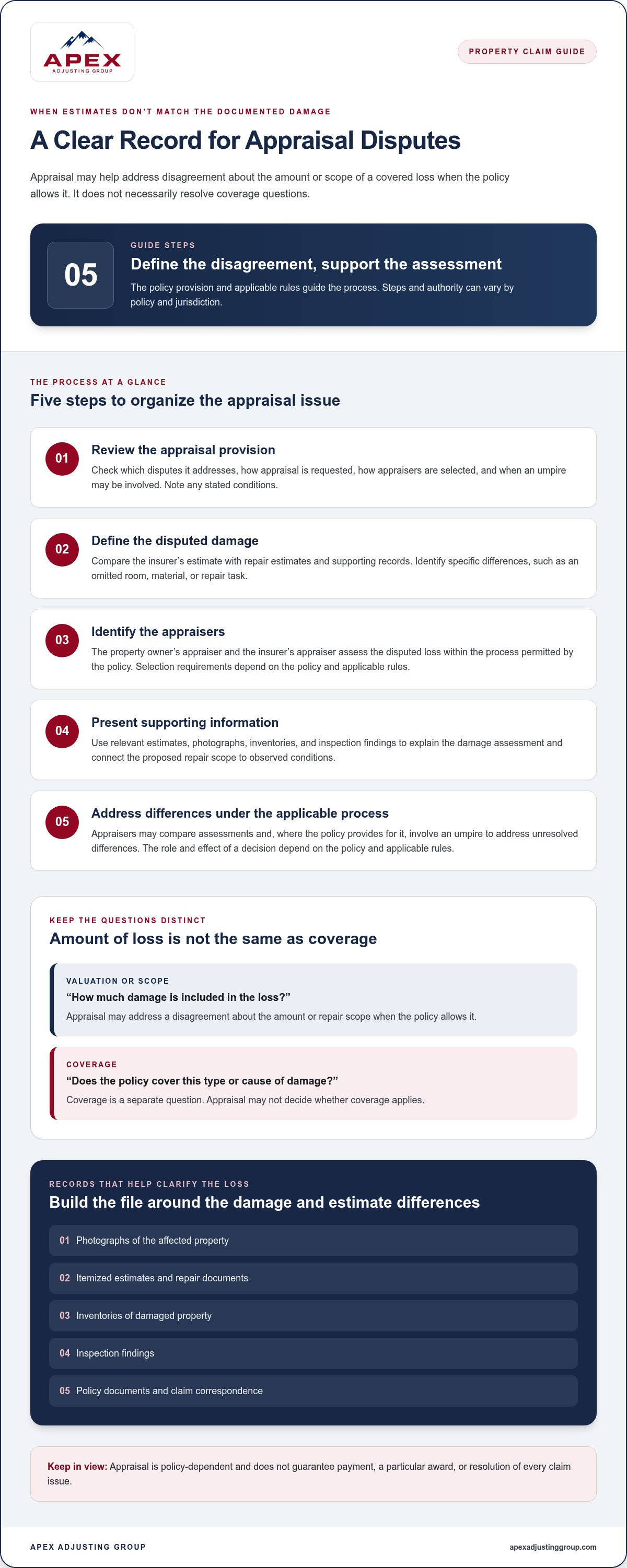
Separate the estimate dispute from the coverage question. “How much damage is included in the loss?” is a valuation issue. “Does the policy cover this type or cause of damage?” is a coverage issue. Appraisal may address the first when the policy allows it, but it may not decide whether coverage applies.
Why the policy wording matters
The policy’s appraisal provision and related claim language can explain how the process applies. The provision may identify the issues subject to appraisal, how appraisers are selected, and when an umpire may be involved. These details vary by policy, so the process in another property owner’s claim may not apply to a different claim.
Policy conditions and state-specific rules can also affect the process. Compare the policy language with the insurer’s written claim position to help identify whether the disagreement concerns valuation, coverage, or both. The Appraisal Clause in Property Insurance offers general background, but the wording in the applicable policy is central to a specific claim.
Before considering appraisal, define the disputed items: which damage is included, how the repair scope differs, and whether the parties disagree about coverage. A clear distinction can keep the issue focused and help determine whether appraisal may fit.
How the Insurance Appraisal Process Works, Step by Step
When appraisal appears relevant, first define the disagreement and follow the process described in the policy. Steps can vary, so the policy’s appraisal provision and applicable rules should guide each action. The appraisal clause definition from the International Risk Management Institute provides general context, but it doesn’t replace the wording in a specific policy.
- Review the appraisal provision. Identify the types of dispute it addresses and its instructions for requesting appraisal, selecting appraisers, and involving an umpire. Note any conditions that apply.
- Define the disputed damage. Compare the insurer’s estimate with repair estimates and supporting records. List specific differences in scope or assessed damage, such as an omitted room, material, or repair task.
- Identify the appraisers. The property owner’s appraiser and the insurer’s appraiser assess the disputed loss within the process permitted by the policy. Selection requirements depend on the policy and applicable rules.
- Present supporting information. Appraisers may use relevant estimates, photographs, inventories, and inspection findings to explain their damage assessments. Clear records connect the proposed repair scope to observed conditions.
- Address differences under the applicable process. The appraisers may compare assessments and, where the policy provides for it, involve an umpire to address unresolved differences. The process and effect of any decision depend on the policy and applicable rules.
Appraisers, estimates, and areas of disagreement
An appraiser evaluates the loss within the scope allowed by the policy. A useful assessment identifies what was observed, which repair items are included, and where the estimates differ. For example, a water-damage assessment might document affected flooring and adjoining materials, then explain how the proposed repair scope accounts for those conditions.
Photographs, itemized estimates, inventories of damaged property, and inspection findings can support the assessment. Appraisal shouldn’t be treated as a way to decide every question about cause, coverage, or policy interpretation. Distinguish those issues from the disagreement about the amount of loss.
The umpire role and possible outcomes
An umpire may participate when the applicable appraisal process calls for one. The policy and applicable rules determine the umpire’s role, selection, and authority. Participation doesn’t guarantee agreement, a specific award, or payment.
Appraisal steps and authority depend on the policy and jurisdiction. Property owners organizing a claim file before considering a next step can request a free claim review.
Appraisal vs. Negotiation and Coverage Disputes: What Changes?
A property claim disagreement can involve different questions, and the appropriate process depends on what the parties dispute. A difference between repair estimates is not the same as a disagreement about whether the policy covers the damage. Insurance appraisal dispute resolution is not necessarily a remedy for every underpayment, delay, or denial.
Appraisal generally concerns the value or scope of a loss. A coverage dispute concerns whether the policy applies to that loss. The policy’s terms determine the limits of appraisal.
Appraisal and claim negotiation address different steps
Negotiation involves discussing the claim assessment and the evidence supporting each position. A property owner may submit a detailed repair estimate and photographs to explain why particular work belongs in the damage scope. That exchange can help identify what remains disputed.
Appraisal is a separate, policy-dependent process for specified disagreements about the amount of loss. It may follow discussion, but the approaches aren’t interchangeable. The policy’s wording and the facts of the claim determine whether appraisal may address an unresolved valuation issue.
A coverage disagreement may need separate review
A claim may involve both a disagreement over repair costs and questions about exclusions, causation, or whether the damage is covered. Distinguish those issues rather than treating them as one appraisal question. Whether appraisal can address any part of the dispute depends on the policy’s scope. Don’t assume it will resolve coverage.
State rules can also affect appraisal procedures. The Colorado General Assembly’s homeowner appraisal bill materials illustrate why statutory language should be considered separately from the terms and rules applicable to a particular claim. Property owners can review residential property claim support for information about help with a residential property loss.
How to Prepare Evidence for an Insurance Appraisal Dispute
An organized claim file makes it easier to see what damage is documented, what the estimates include, and where the scope differs. For insurance appraisal dispute resolution, group evidence by type and connect each disputed item to a photograph, estimate entry, inspection finding, or other record. Keep original files and note the source and date of each document.
Damage photographs and property records
Photograph affected areas when they’re safely accessible. Take wide views that show the location, then close-up images of damaged materials and visible conditions. Don’t move damaged items or enter unsafe areas to take photographs.
- Damage evidence: Sort images by room, area, or building section. Label what each image shows, and retain the original files.
- Contents inventory: If damaged personal or business property is part of the claim, record each item, its location, its visible condition, and any available identifying details.
- Repair documentation: Keep estimates, inspection findings, invoices, and repair records together. Note who prepared each record and when.
Estimates and disputed scope
Compare the insurer’s estimate with repair estimates and other documented scope information, item by item. Look for differences such as an affected area missing from one estimate, a damaged material that isn’t included, or repair work described differently. Record the estimate page or line item and the evidence related to it.
- Separate items included in both estimates from items that appear in only one.
- Note whether a difference concerns quantity, material, location, or repair task.
- Keep supporting photographs or inspection notes with the relevant estimate entry.
This approach keeps the disagreement specific instead of leaving the file as a collection of unrelated documents. A guide to commercial property claim support may also help commercial owners understand how claim documentation fits into a broader property loss review.
Policy and claim-file documents
Keep the policy and claim correspondence in the same organized file as the damage records. Include the insurer’s estimates, inspection records, and written claim decisions or explanations. The appraisal provision and related policy language can help show which issue is being reviewed, while correspondence preserves how the claim position has been explained or changed.
- Policy documents: Save the policy and note the pages containing appraisal and related claim provisions.
- Claim correspondence: Keep letters, emails, and other written communications in date order.
- Dispute list: Create a concise list of missing damage, disputed estimate items, and questions that need clarification.
For related context on responding to an estimate that appears incomplete, read the guide to a low insurance claim settlement.
How a Public Adjuster Can Help Clarify the Dispute
An estimate that doesn’t reflect reported damage can leave a property owner unsure what is missing or which process may fit. A public adjuster can review the claim file, compare documented damage with the estimates, and help identify whether the disagreement centers on damage scope, valuation, or another claim issue. That review can bring structure to the file before the property owner considers a next step.
Apex Adjusting Group represents property owners, not insurance companies, in first-party property damage claims in California, Arizona, Washington, Idaho, Colorado, Texas, and Nevada. Its services include public adjusting and insurance appraisal. Apex serves property owners across Southern California, Arizona, Spokane, San Jose, Phoenix, San Francisco, Las Vegas, Oakland, Tucson, Seattle, Orange County, Idaho, Sacramento, Los Angeles, and Reno. These services can support insurance appraisal dispute resolution, but public adjusting is not legal representation, and a public adjuster does not provide legal advice.
Claim review and appraisal support have distinct roles
A claim review can examine available policy documents, estimates, photographs, inspection information, and claim correspondence. It can help organize the reported damage, identify gaps between the documented scope and the insurer’s estimate, and clarify which points remain disputed. It can also help distinguish valuation questions from coverage issues that may need separate attention.
Public adjusting and formal appraiser services are distinct. Public adjusting involves representing the property owner in the property claim, while an appraiser assesses the loss within the policy-based appraisal process. Claim representation uses a contingency fee basis, with no fee unless a settlement is obtained. Appraisal services are a separate engagement, so their terms should be reviewed independently rather than assumed to follow the same fee arrangement.
A public adjuster’s role focuses on documenting and presenting the property loss. It does not extend to interpreting the law or acting as an attorney. For property owners whose damage issues intersect with landlord-tenant or leasing conflicts, you can learn more about Botelho Law Group and their legal resources. For more context on a public adjuster’s role in a property claim, read the public adjuster guide for property owners.
A practical next step for property owners
Before a claim review, gather the policy, insurer estimate, photographs, and key claim correspondence. Include repair estimates or inspection records that show the disputed damage, and note specific items that appear omitted or assessed differently. An organized file makes the points of disagreement easier to assess.
Property owners with an active or recent claim can request a no-pressure free claim review from Apex Adjusting Group. The review can help clarify the documented dispute without promising a particular result or timeline.
Take a Clear Next Step With Your Claim
Appraisal may help address a disagreement about the amount of a property loss when the policy’s terms allow it. It isn’t a universal answer to claim disputes: questions about coverage, exclusions, or causation may need separate review. Clear photographs, estimates, policy documents, and claim correspondence can show what damage is documented and where the estimates differ.
Before choosing a path for insurance appraisal dispute resolution, identify the specific disagreement and review the applicable policy language. Apex Adjusting Group is a licensed public adjusting firm representing property owners in first-party property claims. Free claim evaluations are available, and claim representation uses a contingency fee basis, with no fee unless a settlement is obtained.
A well-organized claim file can make the next step clearer. Property owners can get help reviewing their documentation.
Frequently Asked Questions
What is insurance appraisal dispute resolution?
Insurance appraisal dispute resolution is a policy-dependent process for addressing certain disagreements about the amount of a property loss. The parties use appraisers to assess disputed damage within the process described by the policy, and an umpire may be involved if the policy provides for one. Appraisal does not guarantee payment or resolve every claim issue. The policy wording and applicable rules shape its scope.
When may appraisal be used in a property insurance claim?
Appraisal may be relevant when the disagreement concerns the scope or assessed amount of covered property damage and the policy’s appraisal provision applies. For example, estimates may differ about which damaged materials or repair tasks belong in the loss assessment. The policy terms and applicable rules determine whether appraisal fits the dispute. A disagreement about whether the policy covers the damage is a separate issue.
Does insurance appraisal resolve coverage disputes?
Generally, appraisal addresses the amount of loss, not whether the policy covers the reported damage. A dispute about repair scope or damage valuation differs from a question about an exclusion, causation, or how policy language applies. The policy’s wording controls what appraisal may address, so don’t assume it resolves coverage issues. If a claim involves both valuation and coverage questions, keep them distinct in the file.
Who chooses the appraisers in an insurance appraisal?
The policy and applicable rules describe how appraisers are selected and what each party must do. In many policy-based processes, the property owner and insurer each select an appraiser, but the policy determines the procedure. The appraisers assess the disputed loss within the permitted scope. If an umpire is involved, the policy or applicable rules also determine the selection process and role.
What documents help with an insurance appraisal dispute?
Useful records include the policy and appraisal provision, the insurer’s estimate, repair estimates, photographs, inspection findings, and claim correspondence. Organize photos by room or affected area and label the visible damage. Compare estimates item by item, noting omitted areas, materials, or repair tasks and the evidence supporting each concern. Keep the source and date of documents clear so the disputed scope is easier to understand.
Can a public adjuster help with an appraisal dispute?
A public adjuster can review the claim file, damage documentation, estimates, and policy records, then help clarify the property owner’s reported loss and points of disagreement. Public adjusting and formal appraiser services are distinct roles, and neither is legal representation. Apex Adjusting Group represents property owners in first-party claims in its licensed states, with local relevance across Southern California, Arizona, Spokane, San Jose, Phoenix, San Francisco, Las Vegas, Oakland, Tucson, Seattle, Orange County, Idaho, Sacramento, Los Angeles, and Reno.
Is insurance appraisal the same as mediation?
No. Appraisal is a policy-dependent process focused on assessing specified disagreements about the amount of loss. Mediation generally involves a neutral facilitator helping parties discuss a dispute, though procedures can vary. These terms aren’t interchangeable with claim negotiation, and the policy’s appraisal language determines whether appraisal may fit a particular property claim. Identify the issue in dispute before considering which process, if any, may apply.
How much does insurance appraisal dispute resolution cost?
There isn’t one universal cost for appraisal. Fees and payment terms depend on the services engaged and their agreement. Formal appraisal services may have separate fees, so review those terms before proceeding. Apex offers free claim evaluations, while claim representation uses a contingency fee basis, with no fee unless a recovery is achieved. That representation arrangement is separate from formal appraiser fees and shouldn’t be assumed to cover them. Property owners with an active or recent claim can request a free claim review from Apex Adjusting Group.
Need Help with Your Insurance Claim?
Our licensed public adjusters can help you get the maximum settlement you deserve. Contact us today for a free claim evaluation.
Related Articles