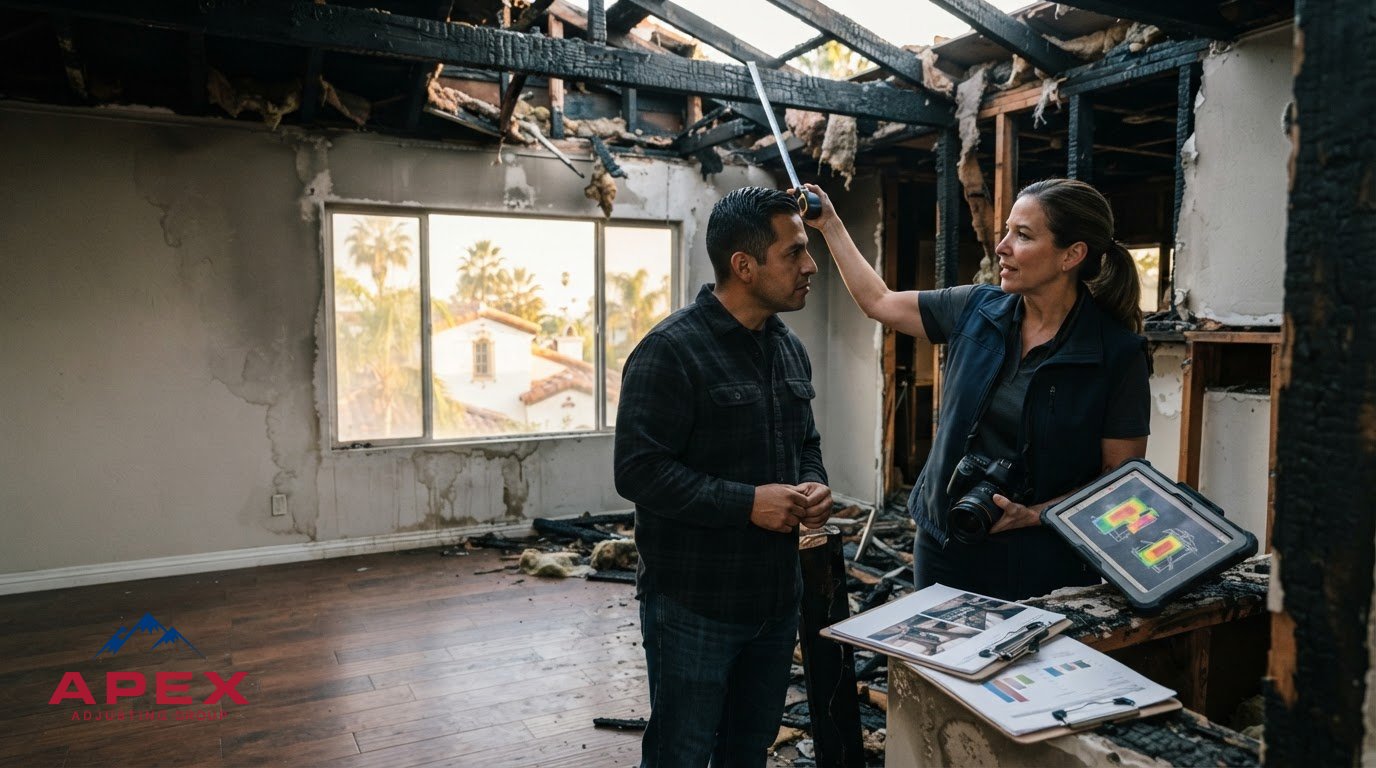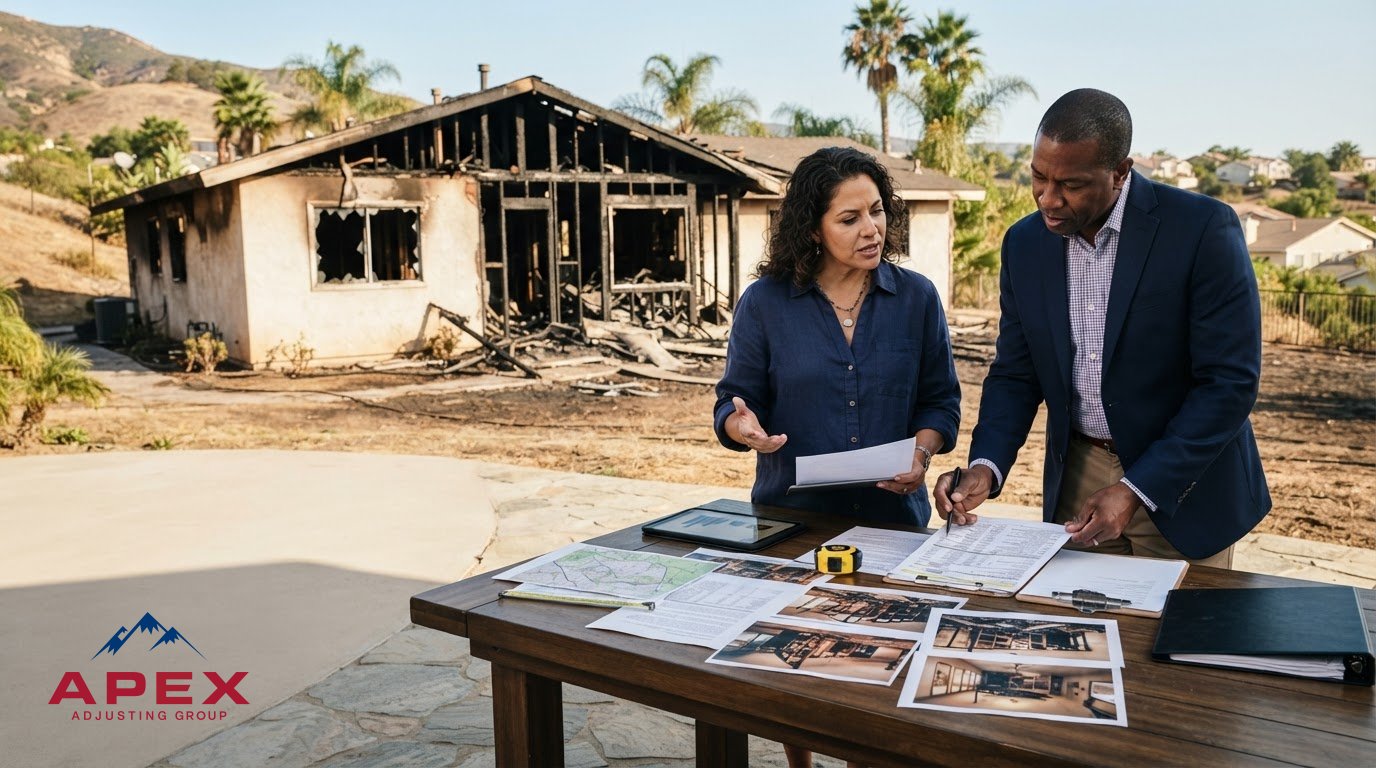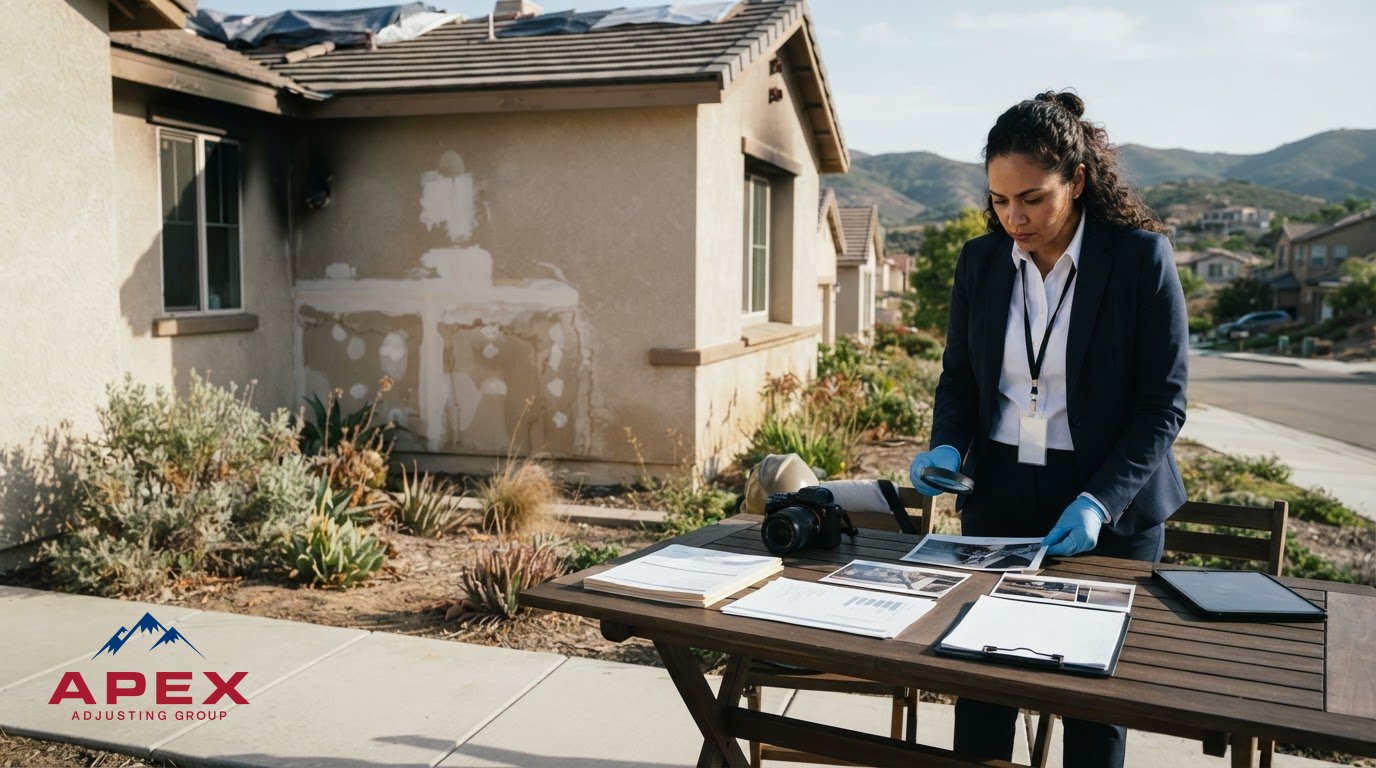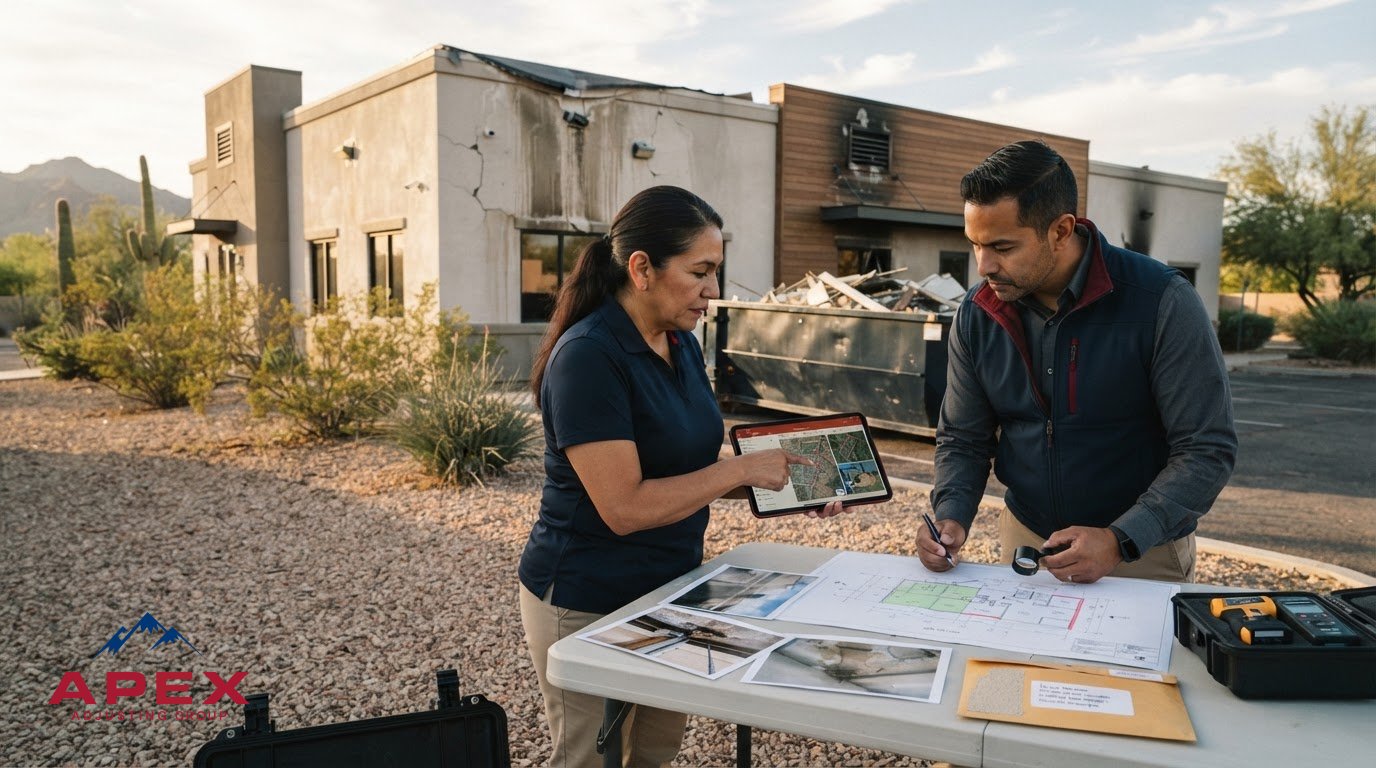
A commercial claim can be documented and still leave important questions unanswered. An Arizona commercial insurance claim second opinion compares the insurer’s estimate with observed damage, supporting records, and relevant policy terms to assess whether the file accounts for the loss. It may identify gaps in repair scope, damaged contents, or business interruption documentation without assuming the claim decision must change.
Uncertainty about an estimate, or pressure to respond before the file is clear, can make the next step difficult. An independent review helps separate what the claim already supports from what may need more documentation. A public adjuster represents the property owner in a first-party claim, not the insurance company.
This article explains what a second opinion can examine, which damage and business records may help substantiate a commercial loss, and how to weigh possible next steps. The goal is a clearer view of the claim’s strengths and gaps, so decisions can be based on the policy, estimate, and available evidence rather than assumptions.
Key Takeaways
- An Arizona commercial insurance claim second opinion can identify differences between the insurer’s estimate and the documented loss.
- Compare estimate line items with observed damage and supporting records before drawing conclusions about a proposed settlement.
- Gather the policy, insurer communications, damage photos and videos, inspection reports, estimates, invoices, and temporary repair records.
- Review relevant policy wording and endorsements alongside the damage documentation. Coverage depends on the specific policy.
- A public adjuster represents the property owner and can assess the claim file, documented damage, and potential next steps without promising a particular outcome.
When an Arizona Commercial Insurance Claim Needs a Second Opinion
The insurer’s estimate may not account for every area or item documented after a commercial property loss. A repair scope might address visible damage but omit affected building systems, contents, or related damage. An Arizona commercial insurance claim second opinion independently reviews the claim file, supporting evidence, and applicable policy terms to assess whether the estimate and documentation align.
The review is specific to the file. It does not assume the insurer’s assessment is wrong, and it cannot guarantee a different claim decision or additional payment. Arizona business owners should compare the actual estimate, damage records, and policy language rather than rely on general assumptions about claim handling. Apex Adjusting Group reviews commercial property claims from the property owner’s side, focusing on the documented loss and claim file.
Signs the commercial claim file may need another review
Start with the insurer’s written scope and inspection notes. Compare them with conditions observed at the property, then flag specific differences for review. A missing item is a question to investigate, not automatic proof that the estimate is inadequate.
- Check whether the scope addresses each affected room, area, and building system.
- Compare listed contents and other damaged property with the items documented after the loss.
- Note related damage that appears in photographs, videos, or inspection records but not in the estimate.
- Set repair estimates or reports beside the insurer’s estimate and identify differences in scope, materials, or described work.
Specific comparisons are more useful than a general sense that the estimate seems low. Record what differs and which document supports the observation.
What a second opinion can, and cannot, do
A thorough review can examine damage documentation, inspection notes, estimates, claim communications, and relevant policy provisions or endorsements. Together, those materials help clarify what the file supports, what remains unresolved, and whether additional documentation may explain a difference. Policy wording matters, and coverage depends on the specific policy.
A public adjuster represents the property owner in a first-party property damage claim, not the insurance company. The role is to assess and document the claim from the owner’s side, not to provide legal representation or promise a particular outcome. Insurance bad faith is a legal concept; a difference in scope or valuation alone does not establish it. Keep the review grounded in the evidence and policy terms.
What an Arizona Commercial Claim Review Examines
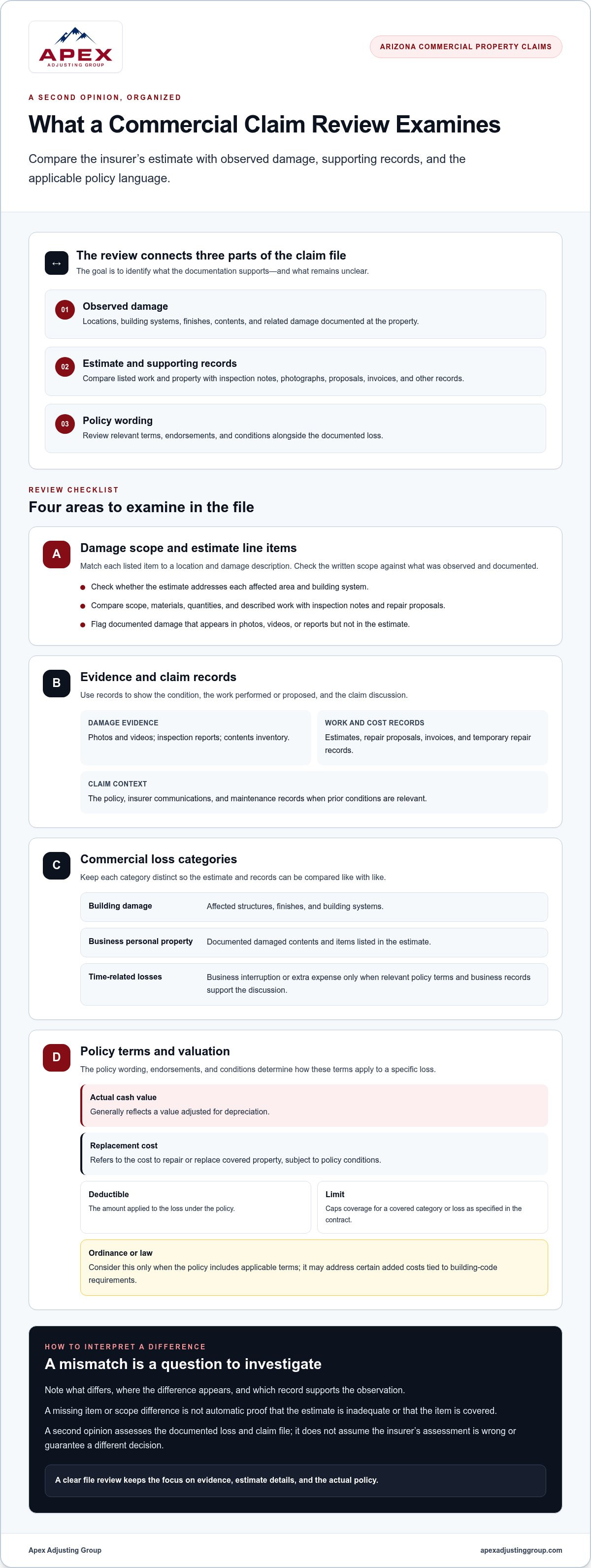
An estimate can list repair work without making clear whether every observed loss is accounted for. A careful review traces each documented damage area to the insurer’s estimate, then checks how the applicable policy language addresses the loss. A claim review compares the documented loss with the estimate and the applicable policy language.
Damage scope, estimates, and supporting records
Review the estimate line by line against inspection notes, photographs, repair proposals, and other records. Match each item to a location and damage description. For example, if photos show water damage in a storage area but the estimate describes only an adjacent room, note the difference and identify the supporting inspection or photo record.
Descriptions matter, too. A broad line item may not make clear which building materials, systems, or contents it covers. Dated photographs can show visible conditions, while invoices and repair proposals can document work performed or anticipated. Maintenance records may help establish prior conditions when relevant. The goal is to identify what the file supports and where the scope or evidence needs clarification, not to assume every difference is covered.
Policy terms and commercial loss categories
Keep the categories distinct so the review compares like with like:
- Building damage: Review affected structures, finishes, and building systems against the inspection notes and estimate.
- Business personal property: Compare documented damaged contents with the inventory and any listed items in the estimate.
- Time-related losses: Consider business interruption or extra expense only when relevant policy terms and business records support the discussion.
Then examine the valuation terms. Actual cash value generally reflects a value adjusted for depreciation, while replacement cost refers to the cost to repair or replace covered property, subject to the policy’s conditions. A deductible is the amount applied to the loss under the policy, and a limit caps coverage for a covered category or loss as specified in the contract. The policy wording, endorsements, and conditions determine how these terms apply.
Consider ordinance or law coverage only if the policy includes applicable terms. It may address certain added costs tied to building-code requirements, but it is not an assumed benefit. An Arizona commercial insurance claim second opinion can organize these questions around the actual file. Owners seeking a file-specific assessment can request a free commercial claim review.
How to Compare the Insurer’s Estimate With Your Commercial Loss
A clear comparison turns “the estimate seems low” into specific questions about scope, quantities, and evidence. Build a side-by-side worksheet with four columns: insurer estimate, observed damage, supporting record, and unresolved question. Review unclear or disputed items individually before drawing conclusions about a proposed settlement.
Build an estimate-to-evidence comparison
For each estimate item, identify the corresponding damage location and supporting documentation. Match a repair proposal or invoice to the room, building system, or contents it describes. If the estimate lists a limited repair but another proposal describes additional work, note the difference and the evidence or scope detail that may explain it.
- Insurer estimate: Record the line item, quantity, material, and work description.
- Observed damage: Describe what was found and where, using clear location details.
- Supporting record: Cite the relevant photo, inspection note, repair proposal, or invoice.
- Unresolved question: Flag a quantity, material, or work description that needs clarification.
Keep the wording neutral. A mismatch is a point to investigate, not automatic proof of an error. Dated photographs and inspection documentation can connect a reported condition to a specific estimate item. For broader claim-process context, review the information on commercial property claims.
Separate property damage from business interruption questions
Property repairs and time-related business losses require different records. Keep building damage, damaged business personal property, and possible business interruption or extra expense in separate parts of the comparison. This makes it easier to see which evidence supports each category and which questions remain open.
- Note dates when operations were affected and describe the specific operational impact.
- Gather relevant sales, payroll, operating, and expense records for the period under review.
- Connect each claimed impact to available business records and the applicable policy terms.
Do not estimate a covered loss from disruption alone. Policy wording, supporting records, and the claim’s status all matter. A second opinion does not automatically delay or change a claim. Any effect depends on where the claim stands and the process set out in the policy. An Arizona commercial insurance claim second opinion can help organize the comparison and identify questions to address. Owners seeking a file-specific assessment can request a free claim review.
What Arizona Business Owners Should Prepare for a Claim Review
A claim review is easier to follow when key records are gathered in a clear order. Start with the policy and insurer communications, then assemble evidence of the damage, repair work, and any documented effect on business operations. An organized file connects each damage item to dated evidence.
Assemble the property and claim records
Put the complete policy first, including the declarations and any endorsements. Add the claim number, letters, emails, adjuster reports, and other communications so the reviewer can follow the claim history and identify which estimate or decision each record addresses.
Next, group evidence by location or damage category. Label photographs and videos with dates and locations where available. Include wide views that establish the affected area and close-up images showing details such as damaged finishes, equipment, inventory, or visible water, smoke, or fire effects.
- Inspection reports and notes that describe observed conditions
- Insurer and repair estimates, with proposals tied to specific locations
- Invoices, receipts, and records of temporary repairs or mitigation
- Maintenance records or other documents that help explain the property’s prior condition, when relevant
Keep original files when possible, and avoid combining unrelated damage into a single unexplained folder. Clear labels help connect a document to the estimate item or area it supports.
Document business operations and review decisions
If the loss affected operations, organize relevant sales, payroll, operating expense, and interruption records separately from building repair documents. Note the dates and operational impacts the records show, then identify which policy provisions or claim questions relate to them. Do not estimate a covered loss from business records alone; coverage depends on the policy and claim documentation.
Before the review, write down unresolved questions and point to the related estimate section or communication. For example, note whether a listed repair matches the documented location or whether a business interruption question lacks records for a particular period. This keeps the review focused on evidence rather than general concerns.
A file-specific commercial claim review can organize damage documentation, policy terms, and claim records into a clearer assessment. Arizona-specific deadlines or requirements should not be assumed from a checklist; evaluate the actual policy and claim circumstances.
Apex Adjusting Group serves property owners across its licensed western-state footprint, including Arizona, California, Washington, Idaho, and Nevada. Its listed markets include Phoenix, Tucson, Southern California, Los Angeles, Orange County, San Jose, San Francisco, Oakland, Sacramento, Las Vegas, Reno, Seattle, and Spokane, as well as Idaho. Local claim documentation still needs to be assessed against the specific property, policy, and loss.
How Apex Reviews an Arizona Commercial Insurance Claim
An insurer’s adjuster handles the claim on behalf of the insurance company. Apex Adjusting Group is a licensed public adjusting firm that represents the property owner in a first-party property damage claim. Its review provides an independent assessment of the individual file, not a promise that the claim decision or payment will change.
What to expect from an owner-side review
Apex reviews the available claim documents and considers the policy and applicable endorsements alongside the insurer’s estimate, inspection information, photographs, repair records, and claim communications. This helps clarify how the documented damage and policy terms relate to the estimate, and which questions may need further attention.
The assessment may identify supported gaps or areas where the available records leave uncertainty. Findings and potential next steps depend on the claim file, its documentation, and the policy. A review does not guarantee a revised decision or additional recovery.
Decide whether to take the next step
For a focused evaluation, gather the policy, estimate, photographs, inspection reports, repair proposals, and insurer correspondence. If the claim includes business interruption or extra expense, include relevant operational and expense records. Organize questions around specific damage areas or estimate items.
Apex offers a free claim evaluation. If the property owner engages the firm, Apex works on a contingency fee basis. The fee is a percentage of the recovery, and Apex receives a fee only when the property owner receives a settlement. The review can clarify what the file supports and inform a next step without assuming a particular outcome.
Move Forward With a Clearer Claim File
A commercial claim review is most useful when it replaces broad concerns with specific questions. Compare the insurer’s estimate against documented damage, then check the relevant policy wording and endorsements. Keep building damage, damaged contents, and any documented business interruption impacts distinct so each issue can be assessed against the right records.
An Arizona commercial insurance claim second opinion can clarify what the current file supports, where documentation may be incomplete, and what questions remain. It does not guarantee a change in the claim decision. The assessment depends on the policy, evidence, and status of the individual claim.
Apex Adjusting Group is licensed in Arizona and represents property owners, not insurance companies. The firm offers free claim evaluations and works on a contingency fee basis, receiving a fee only when the property owner receives a settlement. A review can give business owners a clearer foundation for deciding what to do next.
Gather the policy, estimate, photographs, and claim communications. A more organized file can make the next conversation more focused and help you move forward with greater clarity.
Frequently Asked Questions
Is a second opinion on an Arizona commercial insurance claim worth considering?
Yes. It can help a business owner see whether the insurer’s estimate, documented damage, and relevant policy terms align. An Arizona commercial insurance claim second opinion may also identify unanswered questions or records that could help clarify a discrepancy. Its value is a clearer understanding of the claim file and possible next steps. It does not guarantee a different claim decision or additional payment.
What does a commercial insurance claim second opinion include?
A second opinion may review the insurer’s estimate, inspection documents, photographs, repair proposals, policy terms, endorsements, and claim correspondence. If business interruption or extra expense is part of the claim, relevant operational and expense records may also be considered. The review can flag discrepancies and documentation gaps for discussion. Its scope depends on the file, and it is not legal representation or a promise of a particular outcome.
Can a second opinion change an insurer’s claim decision?
No. The review itself does not change the insurer’s decision. It can help the property owner understand how the estimate relates to the documented damage and identify evidence or questions that may be relevant to further claim discussions. Any response depends on the policy, claim status, and insurer’s review process. Assess the file before assuming the scope or settlement will change.
What documents should I prepare for a commercial claim review?
Gather the policy and endorsements, insurer’s estimate, inspection reports, claim letters, photographs, repair proposals, invoices, and records of temporary repairs. For a claim involving business interruption or extra expense, organize relevant sales, payroll, operating, and expense records. A simple timeline of claim communications and a list of unresolved questions can help connect each document to the issue being reviewed.
How much does a free commercial claim review cost?
Apex Adjusting Group offers a free claim evaluation. If the property owner engages the firm, Apex works on a contingency fee basis and receives a fee only when the property owner receives a settlement. The fee is calculated as a percentage of the recovery. Review the specific fee terms before deciding whether to proceed.
Is a public adjuster the same as an attorney?
No. A public adjuster represents the property owner in a first-party property damage insurance claim; an attorney provides legal representation. Apex Adjusting Group is a licensed public adjusting firm, not a law firm, and is licensed in Arizona. Its role focuses on evaluating and documenting property claims and assisting with claim matters. This general distinction is not legal advice for an individual dispute.
When should an Arizona business request a commercial claim review?
Consider a review if the estimate appears inconsistent with documented damage, affected property or contents may be missing, or claim communications leave important questions unanswered. Beforehand, gather the available records and identify the estimate sections or damage areas that concern you. Apex Adjusting Group offers commercial claim evaluations in Arizona. Policy terms and claim circumstances vary, so do not rely on a general article for deadlines or legal requirements.
Need Help with Your Insurance Claim?
Our licensed public adjusters can help you get the maximum settlement you deserve. Contact us today for a free claim evaluation.
Related Articles