
A storm surge claim is decided by more than the waterline it leaves behind. Seattle waterfront property storm surge claim help begins with documenting what was damaged and how. A policy may treat flood or surge damage differently from wind damage or wind-driven rain, so the wording and endorsements matter. Apex’s Seattle property claim information explains how the firm represents property owners with first-party claims.
The uncertainty is real. One storm can leave overlapping damage, while an initial estimate may miss concealed structural issues or affected contents. Clear photos of water marks, debris, damaged openings, interior areas, and belongings can help preserve evidence for review. Keep relevant claim records and note which areas were affected.
This article explains how policy language and documented causes shape a waterfront storm claim, what damage categories and evidence to review, and how Apex can assess claim scope and supporting records. As a licensed public adjusting firm representing property owners in Washington, Apex can help organize and represent a first-party property damage claim when an assessment seems incomplete.
Key Takeaways
- Separate and document signs of surge, wind, and rain damage so the reported cause and damage scope are easier to assess.
- Review policy definitions, exclusions, and endorsements; coverage depends on the actual wording and documented cause of loss.
- Build a clear claim file with photos, a damage inventory, policy documents, correspondence, inspection records, and receipts.
- Before responding to an incomplete assessment or denial, identify unaddressed damage, unclear findings, and missing supporting records.
- Seattle waterfront property storm surge claim help from Apex can include a review of the policy, damage documentation, claim assessment, and supporting records.
Seattle Waterfront Storm Damage: Separate Surge, Wind, and Rain Evidence
Storm damage may be obvious while its cause and full scope remain uncertain. A water line on a wall, a damaged window, and wet flooring are useful observations, but they don’t by themselves establish whether surge, wind, rain intrusion, or a combination caused the loss. For Seattle-specific claim representation, see Apex’s Seattle property claim services.
Build a record that shows what happened at the property without treating observations as a definitive cause finding. Surge is a rise of water pushed toward shore by a storm; the overview What is a Storm Surge? explains the phenomenon and factors that influence it. For a claim file, the distinction between water entering from outside, rain passing through a damaged opening, and interior water damage can matter. Document each area and let the evidence support the assessment.
Record the Damage Pattern Before Cleanup Changes the Evidence
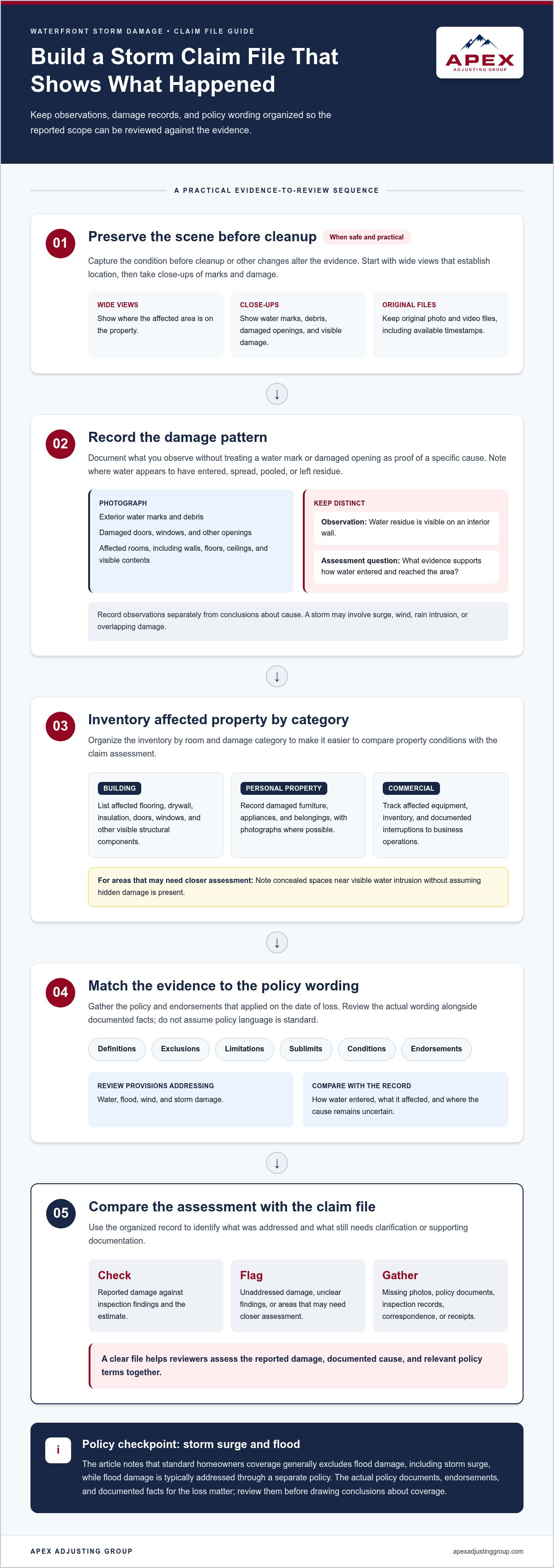
Photograph the property before cleanup or other changes where it’s safe and practical to do so. Take wide shots that show the location, then close-ups of marks and damage. Keep the original photo and video files, including available timestamps.
- Capture exterior water marks, debris, damaged doors or windows, and other affected openings.
- Photograph each affected room, including walls, floors, ceilings, and visible contents.
- Note where water appears to have entered, spread, pooled, or left residue.
- Record what you observed separately from conclusions about the cause.
A water mark or damaged opening can help show the pattern, but it shouldn’t be presented alone as proof of which storm condition caused the damage. Preserve the evidence and describe it accurately.
Track Damage to Structure, Contents, and Business Operations
Separate the inventory by room and damage category. This makes it easier to compare the physical condition of the property with the items and areas addressed in a claim assessment.
- Building materials: List affected flooring, drywall, insulation, doors, windows, and other visible structural components.
- Personal property: Record damaged furniture, appliances, and belongings, with photographs where possible.
- Commercial property: Track affected equipment, inventory, and documented interruptions to business operations.
Don’t assume hidden damage is present, but note areas that may need closer assessment, such as concealed spaces near visible water intrusion. For commercial properties, keep business contents and operational impacts distinct from building damage. This organized record gives a reviewer a clearer basis to assess the reported scope and supporting evidence.
Storm Surge Coverage Depends on the Policy and the Cause of Loss
The phrase “storm surge” alone doesn’t determine coverage. The policy’s definitions, exclusions, limitations, endorsements, and conditions matter, along with the documented facts about how water entered and what it damaged. Standard homeowners coverage generally excludes flood damage, including storm surge, while flood damage is typically addressed through a separate policy. Review the actual documents in force for the property before drawing conclusions.
A storm can cause overlapping damage. Wind may damage an opening, rain may enter through it, and rising water may affect lower areas. Record these conditions separately rather than labeling them covered or excluded based on appearance alone. The assessment depends on the policy terms and evidence for the specific loss.
Compare the Policy Terms That May Shape a Storm Claim
Gather the policy and any endorsements that applied on the date of loss. Review definitions and provisions addressing water, flood, wind, and storm damage, then note any exclusions, limitations, sublimits, or conditions that may apply. Don’t assume the wording is standard across policies.
Read the policy alongside the documented facts. A provision may define a type of water damage or describe an exclusion, but its relevance depends on the specific wording and circumstances recorded for the claim.
Why Cause-of-Loss Documentation Matters
Photographs, inspection notes, and a damage inventory can help show the pattern and extent of observed damage. They don’t automatically establish where water originated or determine coverage. Keep observations distinct from technical conclusions.
- Observation: Water residue is visible on an interior wall.
- Observation: A window or door opening appears damaged.
- Assessment question: What evidence supports how water entered and reached the affected area?
That distinction gives reviewers a clearer record to compare with the policy. Seattle waterfront property storm surge claim help starts with preserving the facts, identifying relevant policy language, and noting where the cause remains uncertain. A careful, property-specific review can clarify what the file supports without promising coverage or a particular claim outcome.
Build a Strong Seattle Storm Surge Claim File
A well-organized claim file makes it easier to compare the reported damage with the inspection findings and estimate. Keep evidence in one place, label it clearly, and separate confirmed observations from questions that still need review. Seattle waterfront property storm surge claim help often starts with a record that shows what was affected, what steps were taken, and which items or areas may need follow-up.
Photographs, Inventories, and Property Records
Use a simple sequence to build the file. Preserve evidence first, then document the loss, gather records, and compare the assessment against what the documentation shows.
- Preserve evidence. Photograph affected rooms, visible water intrusion, damaged materials, and contents before items are discarded, when practical. Keep original files.
- Inventory the damage. Record each item’s description, location, condition, and ownership evidence. Include available purchase or maintenance records that help identify the item or its prior condition.
- Collect claim and property records. Save the policy and endorsements, insurer correspondence, inspection records, and receipts for expenses related to the loss. Keep copies rather than relying on a single paper or digital version.
- Compare the assessment. Match documented rooms, materials, contents, and other damage categories against the inspection notes and estimate. List specific gaps for follow-up.
Maintain a dated log of observations, communications, inspections, and steps taken after the storm. If emergency actions or cleanup change the property, record what was done and keep related receipts or records. The log preserves context; it doesn’t need to make a technical finding about the cause of damage.
Compare the Damage Assessment With the Documented Loss
Review the estimate line by line against the evidence. Note whether each affected room appears, whether listed materials match the observed damage, and whether documented contents are addressed. Keep the comparison factual and specific.
- Identify rooms or areas absent from the inspection notes.
- Flag materials, contents, or damage categories that appear to be missing or described differently.
- Record unclear findings and the evidence that supports a request for clarification or further review.
For commercial property, keep building damage, business contents, and operational records in separate sections of the file. For example, group damage to the building apart from affected equipment or inventory, and retain relevant records of operational interruption. A clear discrepancy list helps focus a review on scope and supporting documentation, without relying on unsupported accusations about how the claim was handled.
Respond to Delays, Denials, or an Underpaid Storm Claim
A delay, denial, or estimate that seems incomplete calls for a focused review, not guesswork. Uncertain coverage doesn’t make that review pointless. Comparing the decision with the policy, damage records, and inspection findings can help clarify what was addressed, what remains unexplained, and what supporting information may be missing.
Prepare a Focused Request for Review
Organize the questions before responding. Tie each concern to a specific area or record, and keep the tone factual. That gives the reviewer a clear path from the concern to the available evidence.
- List each disputed area. Identify the room, building component, contents, or damage category that appears unaddressed.
- Connect it to evidence. Reference relevant photographs, inventories, receipts, or inspection records.
- Request clarification. Ask which findings support an unclear conclusion or how a damage category was handled.
- Keep a dated record. Save copies of communications and note when they were sent or received.
A concise discrepancy list is more useful than a broad allegation. For example, identify an affected room that does not appear in the estimate, then point to the corresponding photographs and inspection notes. Don’t state a technical cause as certain if the available evidence only supports an observation.
Know What a Public Adjuster Does
A public adjuster represents the property owner, not the insurance company, in a first-party property damage claim. Apex can review the policy and claim records, assess the documented damage scope, and represent the owner in claim discussions. That work is distinct from legal representation, and it doesn’t guarantee a particular coverage decision or settlement.
Even where the policy’s application is uncertain, a structured review can identify what facts are documented, which policy terms may be relevant, and where the claim file has unresolved questions. Seattle waterfront property storm surge claim help can include examining the assessment against the reported damage and organizing evidence to support follow-up. Apex offers a free claim review for property owners who want an assessment of their storm claim file.
How Apex Helps Seattle Waterfront Owners Review Storm Claims
A storm claim can involve overlapping damage, policy questions, and an assessment that doesn’t address every affected area. Apex Adjusting Group is a licensed public adjusting firm representing property owners, never insurance companies, in first-party property damage claims. For Seattle waterfront property storm surge claim help, Apex can examine the claim file against the property’s documented damage and the policy terms.
The review is specific to the loss, not to assumptions about waterfront properties in general. Apex can assess the policy and endorsements, photographs, inventories, inspection records, claim correspondence, and estimate. The goal is to identify what the documentation supports, which damage categories appear in the assessment, and where clarification or additional records may be useful.
What to Prepare for a Free Claim Review
Gather the records already available. A complete file is useful, but property owners can start with what they have and identify missing items as questions for review.
- The policy and any endorsements relevant to the loss
- Claim correspondence, inspection documents, and the estimate or decision received
- Photographs, videos, and available damage inventories
- A short summary of the storm date, observed damage, and unresolved questions
Apex can review these materials without promising a particular coverage decision, settlement, or timeline. The actual policy wording and documented facts remain central to the assessment.
Keep Claim Support Specific to the Property
Waterfront location alone doesn’t establish how damage occurred or whether a policy provision applies. Apex considers the evidence for the individual property, including the observed damage pattern and records relevant to the reported loss. If a property includes both residential and commercial areas, separate the records so building damage, personal belongings, business contents, and operational impacts can each be assessed clearly.
Apex charges a contingency fee, a percentage of the recovery, and receives no fee unless it obtains a settlement. Property owners can submit their storm claim for a free claim review without pressure to proceed.
Move Forward With a Clearer Storm Claim Record
A waterfront storm claim can involve overlapping damage and unanswered questions about cause, scope, or policy terms. Preserve photographs and records, distinguish observations from conclusions, and compare the documented damage with the inspection findings and estimate. Those steps give a claim review a stronger factual foundation.
Seattle waterfront property storm surge claim help should account for the specific property and the policy in force, not assumptions based on location alone. Apex Adjusting Group is a licensed public adjusting firm representing property owners in first-party claims, including in Washington. The firm can assess the policy, damage documentation, claim assessment, and supporting records. Apex charges a contingency fee based on recovery, with no fee unless it obtains a settlement.
A careful review can help clarify what the file supports and where questions remain. There’s no need to have every answer before organizing the records and taking the next step.
With a clear record and experienced claim representation, property owners can move forward with greater confidence.
Frequently Asked Questions
Does homeowners insurance cover storm surge damage in Seattle?
Standard homeowners insurance generally doesn’t cover flood damage, including storm surge. Wind damage or rain entering through a storm-damaged opening may be treated differently, depending on the policy wording and documented cause. Review the policy’s definitions, exclusions, limitations, and endorsements rather than relying on the damage label alone. If the property has separate flood insurance, review that policy too, since its terms and coverage provisions may differ.
Can storm surge damage be covered under a flood insurance policy?
Storm surge damage may be covered under a flood insurance policy, subject to that policy’s terms, exclusions, limits, and covered property categories. Check the declarations and coverage provisions to understand what applies to the building and belongings. Keep evidence of the water’s path and affected areas, but avoid treating a photograph as a final cause determination. The policy and documented facts should be reviewed together to assess the claim.
How do I document storm surge damage to a waterfront property?
Photograph the property before cleanup changes the evidence, when safe and practical. Take wide and close views of exterior water marks, damaged openings, affected rooms, building materials, and belongings. Keep original files and note dates, locations, and where water appeared to enter or spread. Make a room-by-room inventory, retain relevant receipts, and record observations separately from conclusions about the source of the water or coverage.
What should I do if my storm damage claim is denied or underpaid?
Compare the decision and estimate with the policy, inspection notes, photographs, inventory, and other supporting records. Make a focused list of specific concerns, such as an omitted room, an unclear finding, or contents not addressed, and connect each item to available evidence. Keep communications factual and dated. Coverage questions depend on the policy and loss documentation, so an organized review can help identify gaps without assuming the outcome.
Can a public adjuster help with a Seattle waterfront storm claim?
Yes. A public adjuster represents the property owner in a first-party property damage claim, not the insurance company. Seattle waterfront property storm surge claim help can include reviewing policy terms, assessing documented damage scope, organizing claim records, and representing the owner in claim discussions. Apex Adjusting Group is licensed in Washington. A public adjuster can help evaluate the claim file, but can’t guarantee coverage, a settlement amount, or a timeline.
What documents should I gather for a storm surge claim review?
Gather the policy and endorsements, claim correspondence, inspection records, and any estimate or coverage decision. Add original photographs and videos, a room-by-room damage inventory, and receipts related to the loss. For damaged belongings, include available ownership or purchase records. A dated log of observations, communications, inspections, and actions taken after the storm can provide useful context. Organize records by date and damage category so gaps are easier to spot.
Does a storm surge claim cover both building damage and damaged belongings?
It may, but coverage depends on the policy and the type of coverage in force. Building materials and personal belongings can be addressed under different provisions, with separate terms, limits, or exclusions. List structural damage separately from damaged contents, and document each item with photographs and available ownership records. Don’t assume that coverage for one category means the other is covered; check the applicable policy wording and endorsements.
Need Help with Your Insurance Claim?
Our licensed public adjusters can help you get the maximum settlement you deserve. Contact us today for a free claim evaluation.